🖍️Shop Nature Coloring Books –>
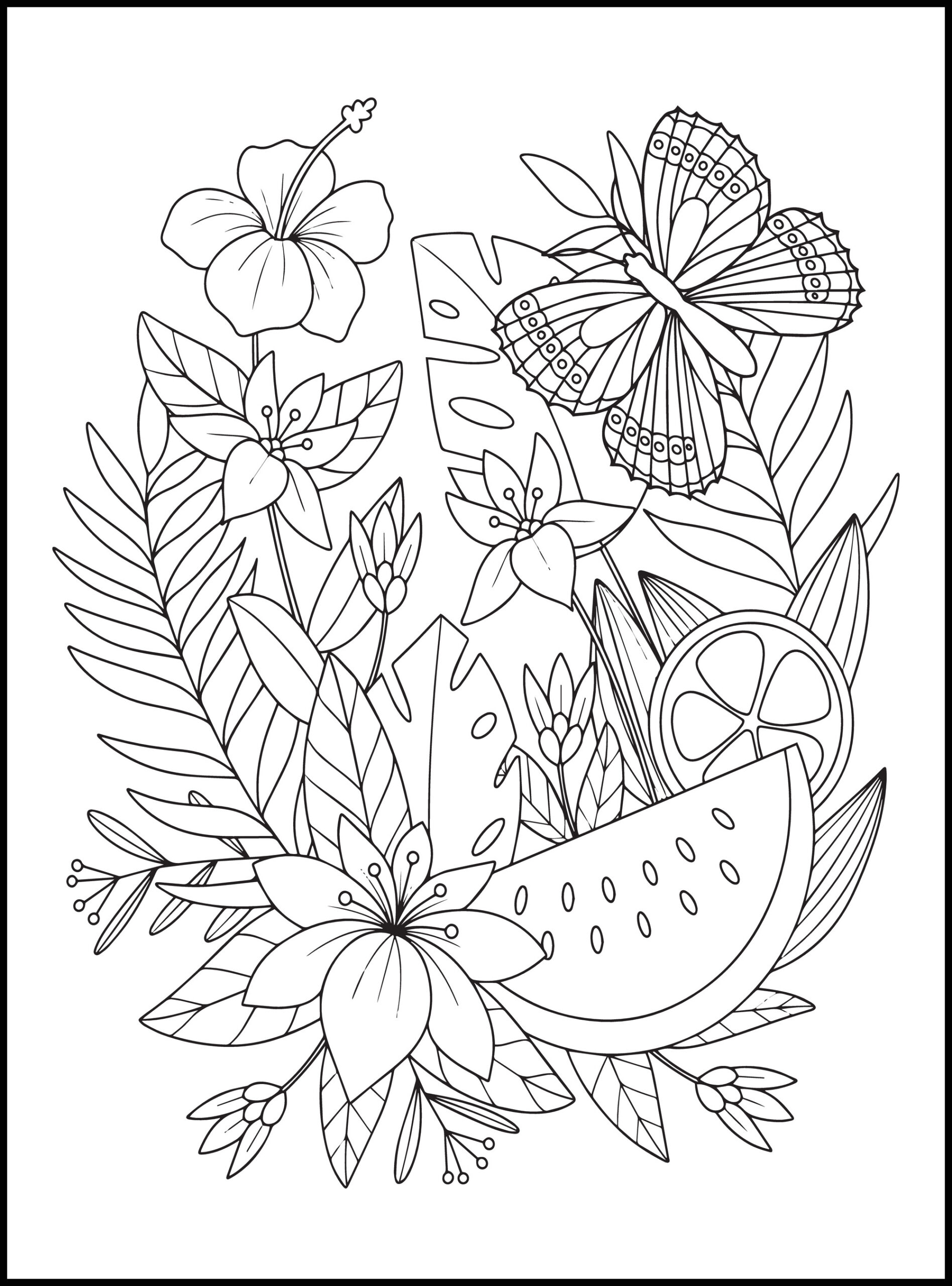
Step outdoors through art with our collection of nature coloring pages, filled with butterflies, birds, trees, mushrooms, lakes, gardens, wildlife, flowers, and peaceful landscapes waiting for color.
Nature gives us almost unlimited inspiration. One coloring page might feature a tiny butterfly fluttering among flowers, while another opens onto a broad summer landscape or a quiet lake with a boat drifting across the water. Some of these designs are playful and simple enough for kids, while others feature intricate zentangle, floral, and mehndi-inspired patterns that older children and adults can spend much longer coloring.
You can follow the colors you see outside or create a completely imaginary version of nature. Turn a summer landscape purple and gold, give a butterfly rainbow wings, fill a lake with shades of turquoise, or create a tree whose leaves change color from one branch to the next.
Grab your crayons, markers, or colored pencils and see where nature takes you.
🌿 Explore Our Nature Coloring Pages
This collection brings together many different parts of the natural world rather than focusing on one animal or plant.
There are butterflies, hummingbirds, otters, mushrooms, flowers, trees, gardens, lakes, boats, and broad outdoor landscapes. Several designs feel realistic and peaceful, while others turn natural subjects into decorative patterns filled with swirls, shapes, and intricate details.
That variety makes these printables useful for many ages. Younger children can concentrate on familiar things such as mushrooms, animals, trees, and flowers, while older colorists can practice blending, shading, patterns, and carefully coordinated palettes.
If you want to explore even more outdoor themes, visit our complete Nature Coloring Pages hub.
🦋 Magical Butterfly Coloring Page
Butterflies are naturally colorful, which makes them some of the most freeing subjects to color.
One design in this collection features magical butterflies surrounded by intricate decorative details. Their wings provide plenty of room for experimenting with symmetry, gradients, patterns, and unusual color combinations.
Try coloring both sides of a butterfly’s wings with matching colors to create symmetry. Begin with blue near the body and gradually move through turquoise and green toward the edges, or combine pink, purple, orange, and gold for a warmer look.
Of course, a magical butterfly does not have to resemble any real species.
Try:
- Rainbow wings
- Pink and lavender
- Blue and silver
- Orange and purple
- Turquoise and gold
- Pastel colors
- Neon colors
You can even add tiny stars, dots, hearts, or additional patterns inside the wings.
For another butterfly activity, visit our Butterflies Coloring Page.
🐦 Hummingbird and Butterfly Coloring Page
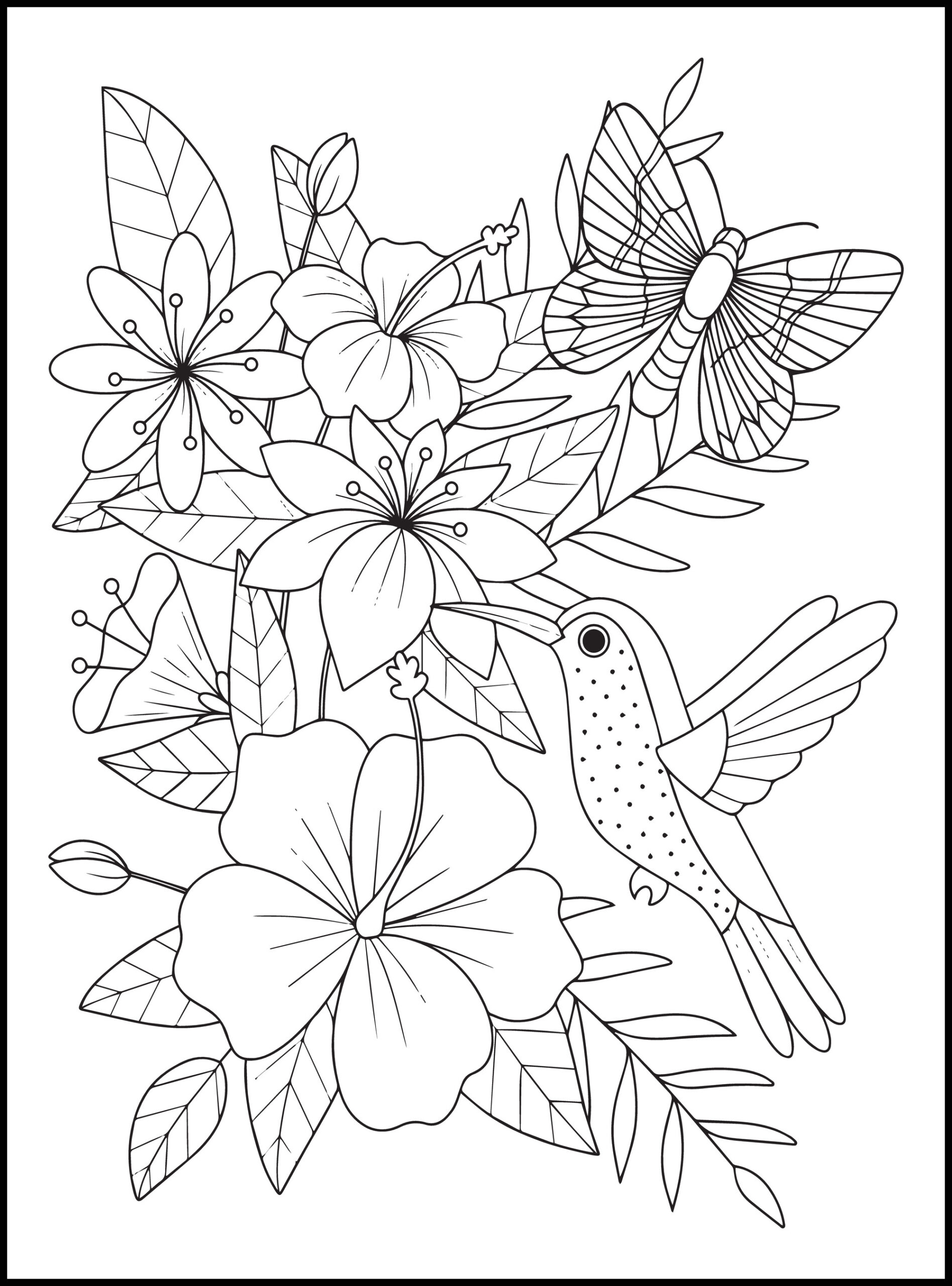
Another beautiful design combines a hummingbird and butterfly, bringing two graceful garden visitors together on one page.
This picture offers a wonderful opportunity to use bright jewel tones. Hummingbirds can inspire greens, blues, reds, purples, and shimmering-looking combinations, while the butterfly can either coordinate with the bird or provide a completely different burst of color.
Try a hummingbird in emerald green and turquoise beside an orange-and-black butterfly. Or create a fantasy scene with a violet bird and pink-and-blue butterfly surrounded by brightly colored flowers.
If there is open space around the animals, add extra blossoms, leaves, clouds, sunshine, or even another tiny hummingbird.
You can find more feathered inspiration in our Hummingbird Coloring Pages.
☀️ Summer Nature Landscape Coloring Page
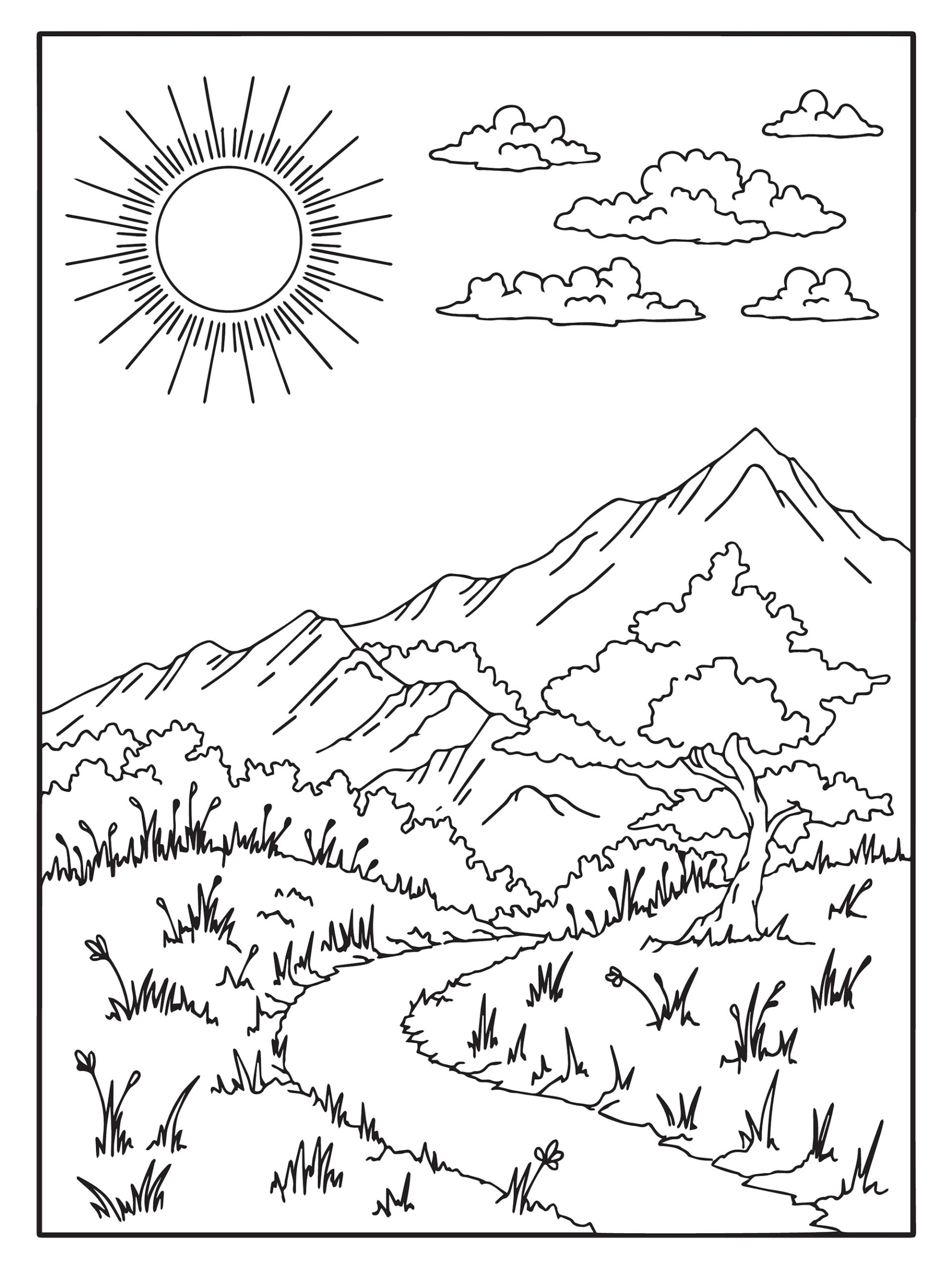
The summer landscape gives you an entire outdoor world to color rather than one central subject.
Landscapes can include trees, plants, distant hills, paths, grass, clouds, and sky, giving colorists the chance to think about how all the different parts of a picture work together.
For a classic summer scene, try:
- Bright blue sky
- Fresh green grass
- Darker green trees
- Yellow sunlight
- Colorful wildflowers
- Brown or gray paths and rocks
Then experiment with light and shadow. Trees can be darker underneath and brighter where sunlight reaches the leaves.
You can also completely change the time of day. Turn the same summer landscape into sunset using orange, coral, gold, lavender, and deep blue.
🌅 Create a Nature Sunset
Almost any outdoor coloring page can become a sunset scene simply by changing the sky.
Begin with yellow or pale gold near the horizon. Gradually move into orange, coral, pink, lavender, and finally deeper purple or blue higher in the sky.
Then repeat small touches of those colors throughout the landscape.
A lake might reflect pink and orange. Tree trunks may become darker silhouettes. Flowers in the foreground can remain bright while distant scenery fades into softer colors.
Using the same picture for both daytime and sunset coloring is also a fun way to see how much a color palette can change the mood of a scene.
🌀 Zentangle Nature Coloring Page
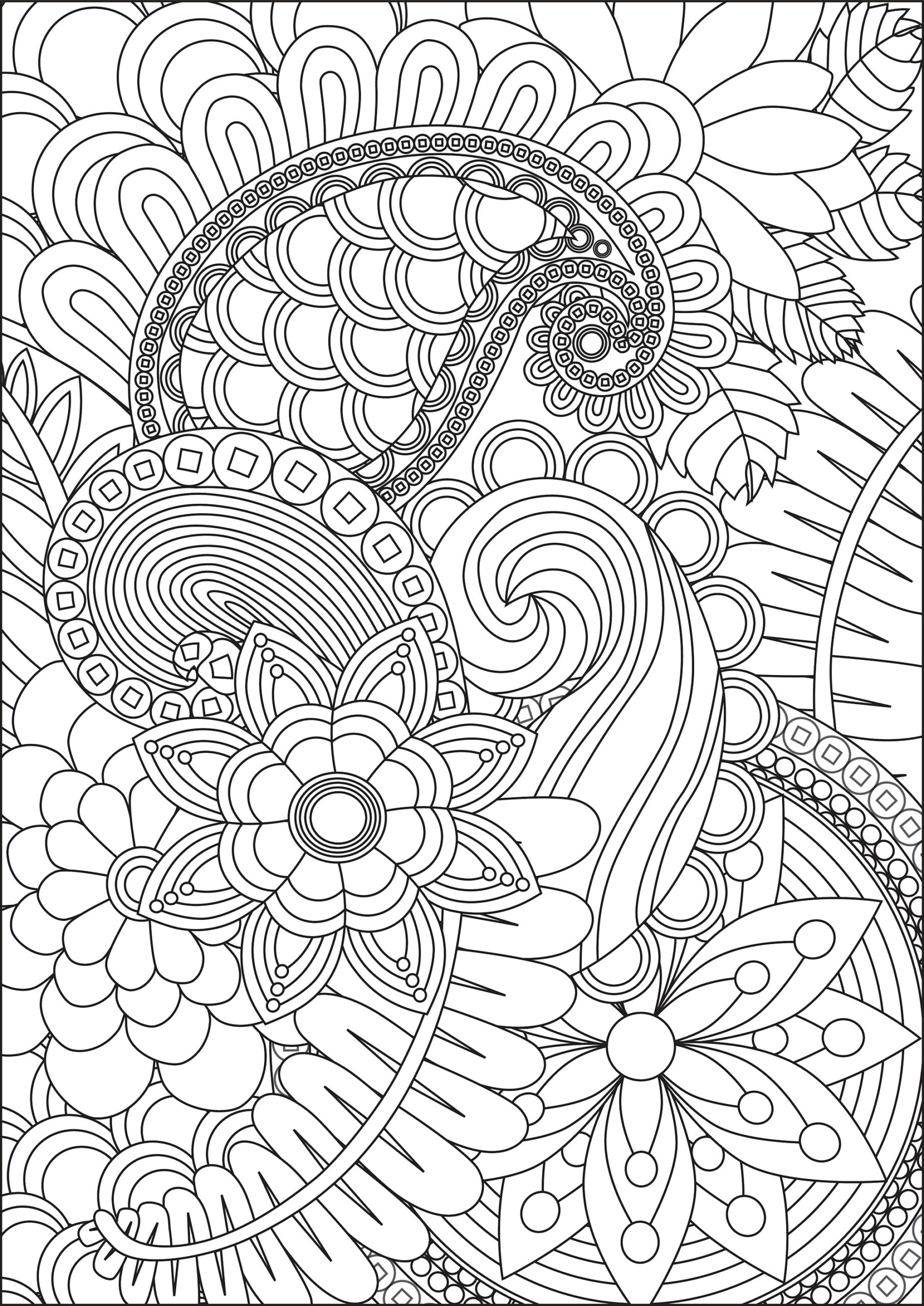
The collection also includes a zentangle-style coloring design filled with smaller decorative patterns.
Detailed pages like this can be approached very differently from a simple landscape. Instead of thinking about realistic colors, concentrate on repetition and pattern.
Choose four or five colors and use them throughout the design.
For example:
Forest Palette
Sage, emerald, brown, gold, and cream
Ocean Palette
Navy, turquoise, aqua, teal, and lavender
Sunset Palette
Orange, coral, pink, purple, and gold
Pastel Palette
Mint, peach, pale blue, lavender, and pink
Repeating a small palette can make a complicated page look coordinated without requiring a different color choice for every tiny section.
Colored pencils and fine-tip markers work especially well for intricate designs.
🌳 Abstract Tree Coloring Page
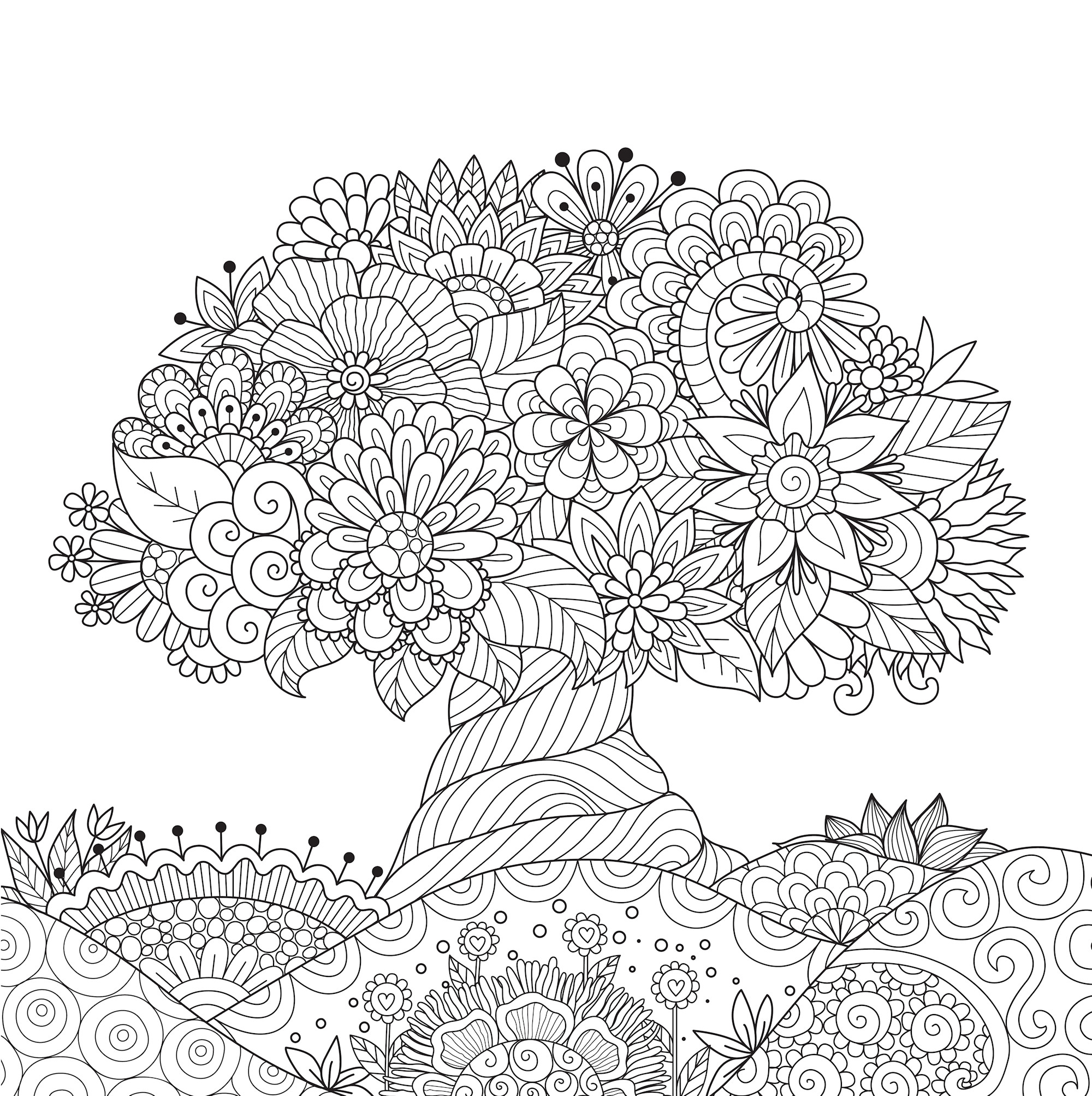
A beautiful abstract tree gives you the freedom to forget realistic tree colors completely.
Trees outdoors may have brown or gray bark and green leaves, but an abstract tree can become almost anything.
Make the trunk:
- Purple
- Navy
- Turquoise
- Red
- Gold
- Rainbow-striped
Then change colors from branch to branch.
One especially fun idea is to turn the tree into a four-season tree. Divide it into four sections and give each part a different time of year.
Spring can have pale green leaves and pink flowers. Summer can be deep green. Fall can glow with orange, red, and gold. Winter can use bare branches, icy blue, white, and silver.
One tree can tell the story of an entire year.
🍃 Trees, Leaves and the Changing Seasons
Trees are an easy way to connect coloring with observation outdoors.
Look at a real tree before choosing colors. Is the bark smooth or rough? Are the leaves light green, dark green, yellow-green, or blue-green? Do all the leaves look exactly the same?
Then imagine how the same tree might change through the seasons.
Pair nature printables with our Seasonal Coloring Pages to explore spring, summer, fall, and winter through color.
Kids could even color four copies of a tree and create one picture for each season.
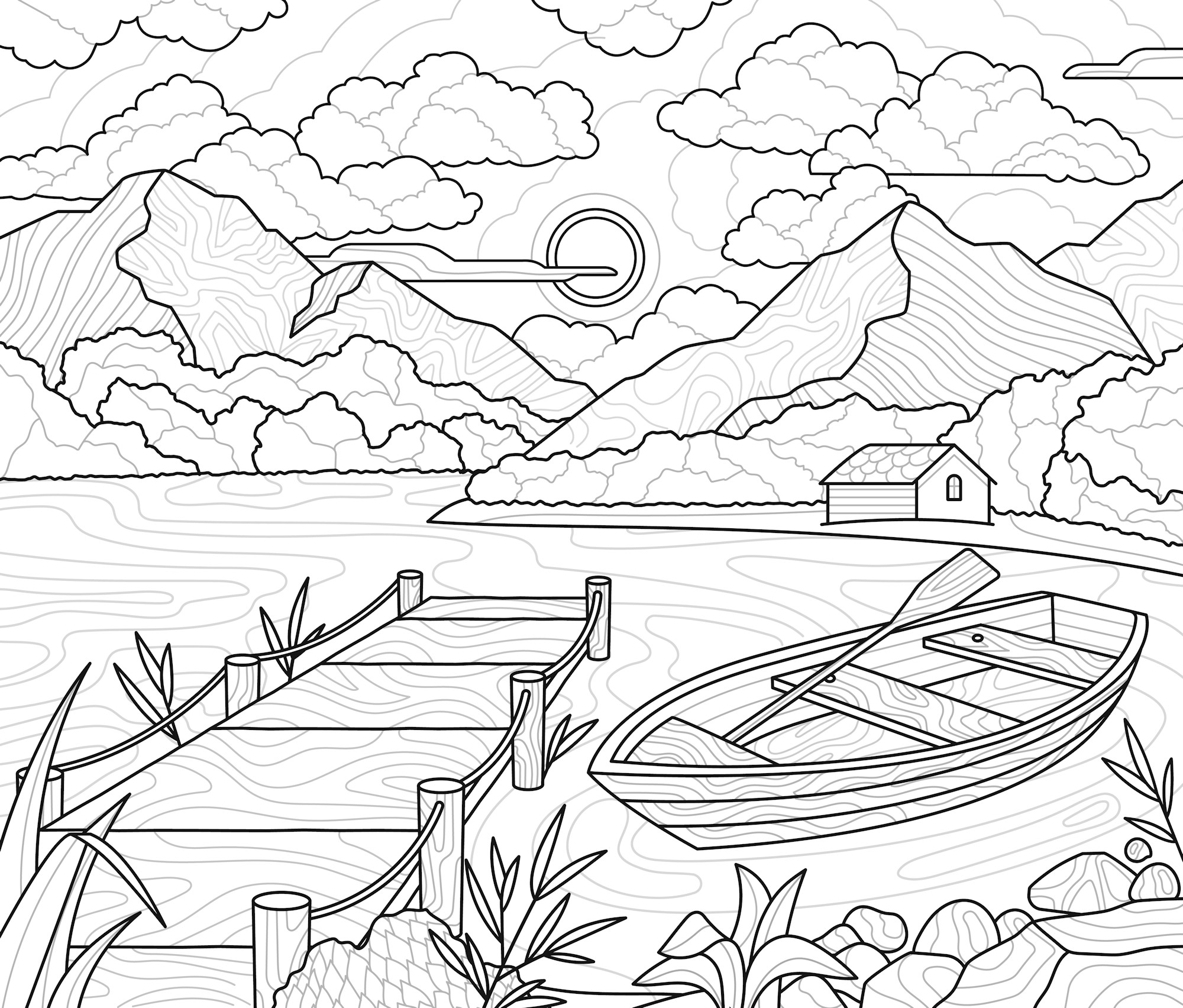
🚣 Boat on a Lake Coloring Page
One of the most peaceful scenes in the collection features a boat on a lake.
Water scenes offer some wonderful coloring possibilities because a lake does not need to be filled with one flat shade of blue.
Try combining:
- Deep blue
- Sky blue
- Turquoise
- Aqua
- Blue-green
- Lavender
Use horizontal strokes to help suggest the surface of the water.
Then think about reflections. If trees grow along the shore, add hints of green or brown to the water beneath them. If the sky is orange at sunset, let some orange and pink appear on the lake as well.
The boat can become the brightest part of the picture or blend naturally into the quiet scenery.
🌊 Color Reflections in the Water
Reflection is an easy technique that can make lake scenes feel more interesting.
After coloring the sky and shoreline, look at the colors directly above the water. Repeat those shades lightly beneath them.
A green tree might create broken patches of green in the lake. A pink sunset can make the surface glow with rose and coral. White clouds can create pale areas in blue water.
You do not need to create a perfect mirror image. Small horizontal patches of the same colors are enough to suggest that the water is reflecting the world around it.
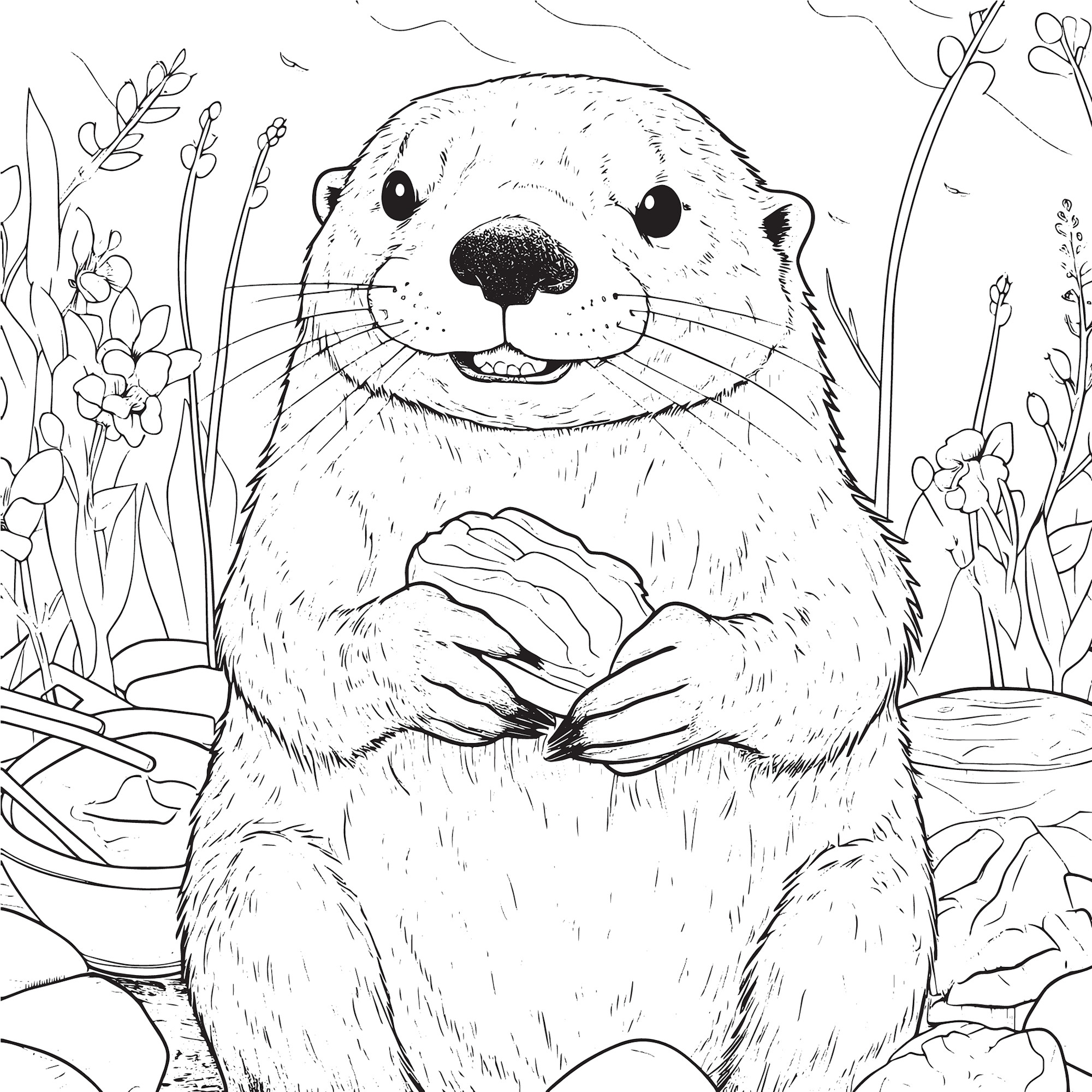
🦦 Cute Otter Coloring Page
Animal lovers can spend some time with the otter coloring page.
Otters are wonderfully expressive animals, and their rounded faces and bodies make them fun coloring subjects for kids.
For a nature-inspired otter, try several browns rather than using only one:
- Chocolate brown
- Warm brown
- Tan
- Gray-brown
- Cream
Keep parts of the face and underside slightly lighter and use darker shades where the fur might be in shadow.
Then build a watery habitat around the otter. Add ripples, river rocks, plants, fish, or a leafy shoreline.
For even more wildlife, explore our Animal Coloring Pages.
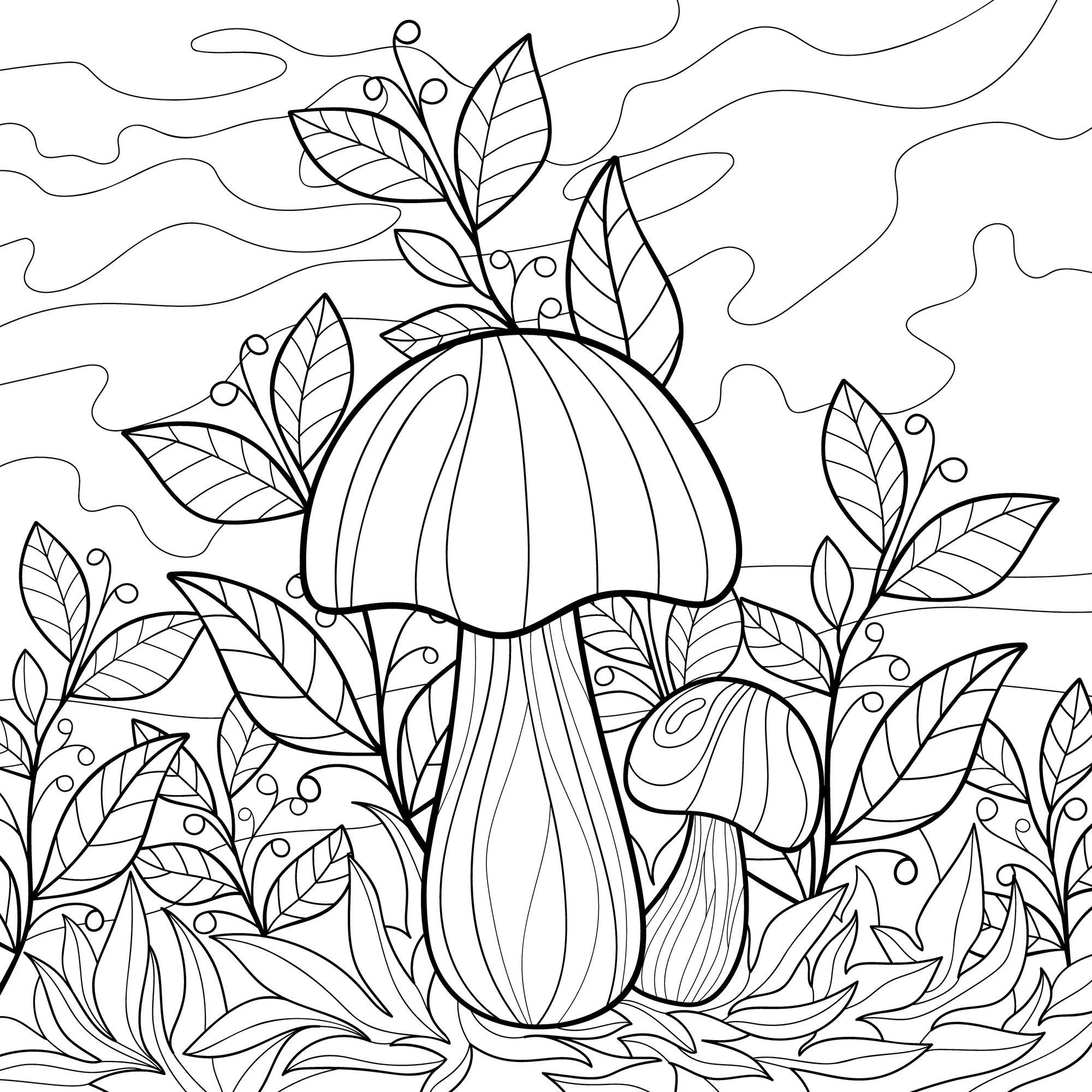
🍄 Cute Mushrooms With Leaves and Berries
The cute mushrooms surrounded by leaves and berries are perfect for a woodland coloring palette.
Traditional mushroom colors can include red, brown, tan, cream, orange, and white, but coloring-page mushrooms can be far more imaginative.
Try purple mushroom caps with yellow spots, turquoise mushrooms surrounded by pink berries, or a complete rainbow patch.
The leaves and berries add even more opportunities for color.
For an autumn woodland look, use:
- Rust
- Burgundy
- Orange
- Mustard yellow
- Brown
- Olive green
For an enchanted forest, switch to lavender, turquoise, blue, pink, and gold.
Continue into the forest with our Coloring Pages of Mushrooms.
🧚 Turn the Mushrooms Into an Enchanted Forest
Mushrooms already have a slightly magical appearance, so it does not take much to turn the page into a fantasy scene.
Add tiny doors to the stems. Draw little windows beneath the mushroom caps. Surround the mushrooms with sparkling stars, miniature lanterns, or tiny footprints.
Perhaps fairies live there.
Maybe a gnome is hiding behind the leaves.
A small mushroom coloring page can become the starting point for an entire imaginary woodland.
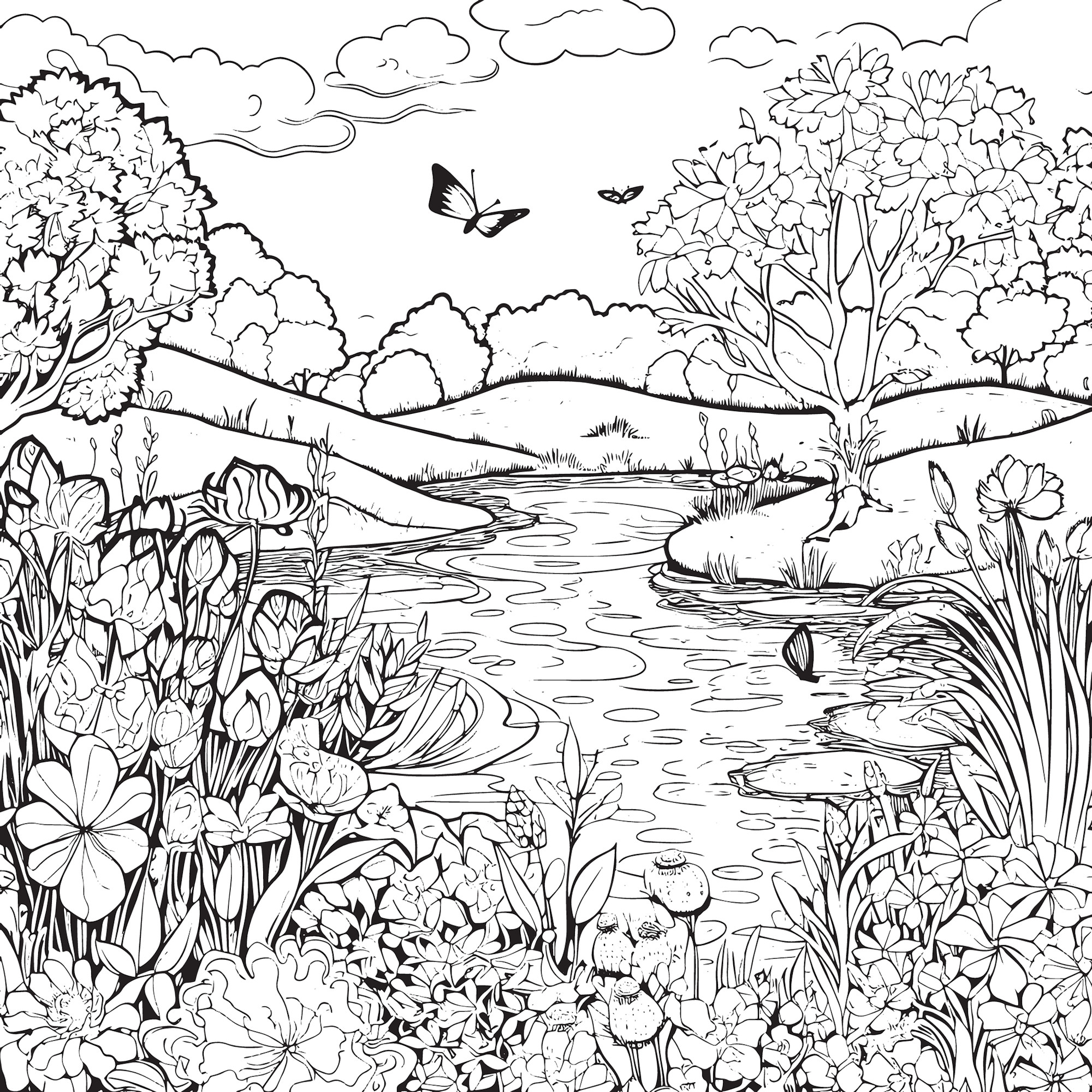
🌻 Garden With a Lake View
Another scenic page combines a garden with a beautiful lake view, bringing flowers, water, plants, and distant scenery into one picture.
This is a wonderful page for creating layers of color.
Begin with the foreground garden, where flowers can contain the brightest shades. Move into greens for shrubs and trees, then use blues and turquoise for the water. Distant hills and scenery can be slightly softer to create the feeling of depth.
You can also decide what season the garden represents.
Spring might feature pastel flowers and fresh green growth. Summer can be bright and lush. Autumn can introduce gold, orange, burgundy, and rust.
For more flower-filled outdoor scenes, visit our Coloring Pages of Gardens.
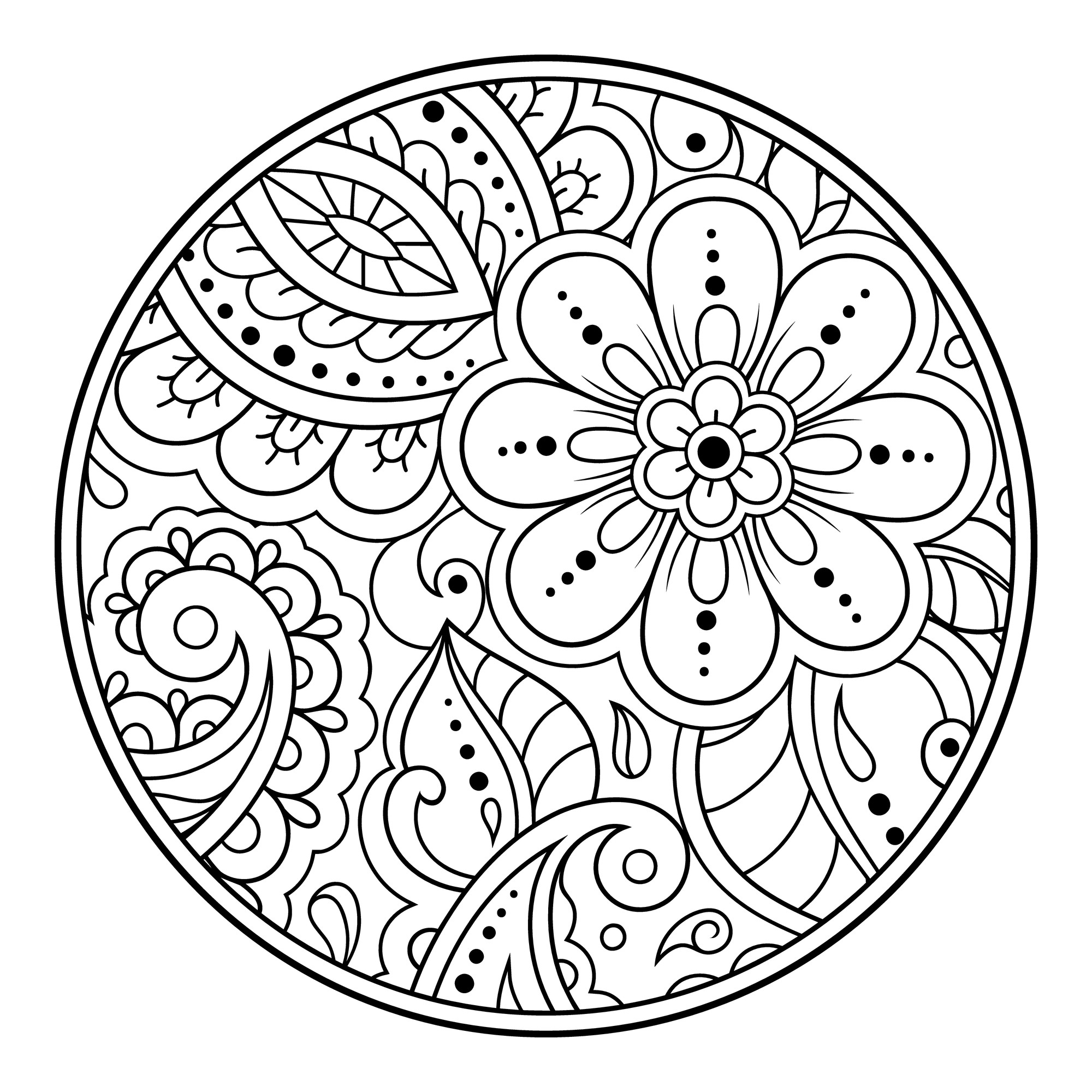
🌸 Mehndi-Style Flower Coloring Page
The round flower pattern in mehndi style is one of the more decorative designs in the collection.
Rather than depicting one realistic flower, this kind of artwork uses floral shapes and repeating patterns to create an intricate circular composition.
Coloring it can be almost like designing a piece of decorative art.
Choose several colors and repeat them around the pattern. Using the same colors in corresponding sections can emphasize the symmetry.
Try combinations such as:
- Pink, purple, teal, and gold
- Navy, turquoise, aqua, and silver
- Orange, yellow, burgundy, and olive
- Lavender, mint, peach, and pale blue
You can also use just one color family, moving from pale to dark shades throughout the design.
For more botanical coloring, explore our Coloring Pages of Flowers.
🎨 Nature Coloring Ideas
Nature contains so many colors that choosing a palette can sometimes be harder than the coloring itself.
If you are not sure where to begin, try one of these themes.
Fresh Spring
Pale green, pink, lavender, yellow, and sky blue
Sunny Summer
Emerald, turquoise, bright yellow, orange, and blue
Autumn Woodland
Rust, gold, burgundy, orange, brown, and olive
Winter Nature
Icy blue, navy, gray, silver, white, and evergreen
Magical Forest
Purple, turquoise, pink, emerald, and gold
Peaceful Lake
Blue, teal, sage, lavender, cream, and gray
Or simply choose your favorite colors and see where they lead.
🌼 Nature Doesn’t Have Just One Green
One easy way to make nature coloring pages more interesting is to stop thinking of plants as simply “green.”
Look outside and you may notice many different greens at once.
Leaves can appear:
- Yellow-green
- Lime
- Olive
- Sage
- Emerald
- Forest green
- Blue-green
- Almost gray
Try using at least three different greens on a landscape or garden page.
Color younger leaves slightly lighter, shaded foliage darker, and distant trees in softer tones.
This simple change can make an outdoor picture feel much richer.
🪴 Explore Plants While You Color
Plants make up a large part of many of these scenes, from trees and garden flowers to mushrooms growing among woodland leaves.
Children can use the pictures to practice recognizing parts of plants such as leaves, stems, flowers, branches, and roots.
Then continue exploring with our Coloring Pages of Plants, which includes houseplants, flowers, trees, autumn foliage, botanical patterns, and other plant-inspired designs.
After coloring, look at a real plant and compare it with the drawing.
What shapes do the leaves have? How many shades of green can you find? Are there flowers, buds, seeds, or fruit?
Coloring can encourage kids to notice details they might otherwise overlook.
🦋 Look for Pollinators
Butterflies and hummingbirds are not only beautiful additions to a nature page. They can also inspire kids to learn about the relationships between plants and animals.
After coloring the butterfly or hummingbird scene, visit a garden, park, or backyard and watch flowers for a few minutes.
You might spot:
- Butterflies
- Bees
- Hummingbirds
- Beetles
- Other insects
Children do not need to identify every species. Simply observing which animals visit flowers can turn a coloring activity into a small nature investigation.
🐦 Listen for Birds
A nature walk does not have to be entirely about what you can see.
After coloring the hummingbird picture, head outside and listen.
How many different bird sounds can you hear?
Some may be short chirps, while others sound like whistles, trills, or repeated calls. You might hear birds that you cannot see at all.
Kids can make a simple tally mark for every different sound they notice.
Later, they can draw an imaginary bird that might make their favorite call.
🔎 Go on a Nature Scavenger Hunt
A coloring page can become the beginning of an outdoor adventure.
After finishing a nature picture, take a short walk and see how many things from the natural world you can find.
Look for:
- A flower
- A bird
- An insect
- Three different leaves
- A mushroom
- A tree
- Something smooth
- Something rough
- Something yellow
- Something tiny
- Something moving
- Something growing
There is no need to collect anything. Looking, listening, and noticing are enough.
Older children can bring a notebook and draw or write about what they discover.
✏️ Create Your Own Nature Journal
Nature coloring pages can also become the first pages of a homemade nature journal.
Choose a picture, color it, and write the date underneath.
Then add something you observed outdoors that day.
You could record:
- Weather
- Flowers blooming
- Birds spotted
- Insects
- Interesting leaves
- Clouds
- Mushrooms
- Animal tracks
- Seasonal changes
Kids can add drawings, pressed leaves where appropriate, or short descriptions.
Over time, the journal becomes a colorful record of how the natural world changes.
🌎 Learn About Habitats
Animals and plants do not all live in the same kinds of places.
Nature coloring pages can introduce simple habitat ideas.
A landscape might represent:
- Forest
- Lake
- Garden
- Meadow
- Wetland
- Woodland
- Mountain
- Coastal habitat
Ask children which plants and animals might live in the environment they are coloring.
The otter belongs near water, while mushrooms may grow on a damp woodland floor. Hummingbirds visit flowering plants, and different trees thrive under different environmental conditions.
Then let children invent their own habitat by drawing several plants and animals together.
🌊 Explore Nature Beneath the Water
Nature continues far beneath the surface of lakes, rivers, and oceans.
If water is your favorite part of the collection, continue with our Ocean Coloring Pages for sea creatures, underwater habitats, waves, beaches, and other marine themes.
Kids can compare a lake scene with an ocean scene.
What might live in each?
Which plants would be different?
Would the water look the same?
Comparing environments is an easy way to add learning without taking away from the fun of coloring.
🍂 Color Nature Through the Seasons
One of the wonderful things about the natural world is how dramatically it can change during the year.
A summer landscape may be filled with green leaves, flowers, and bright sunshine.
By autumn, the same place could have red, yellow, and orange leaves.
Winter may bring bare branches, frost, or snow.
Spring begins the cycle again with new leaves and flowers.
Try coloring the same landscape four times—once for each season—and place all four pictures side by side.
Our Seasonal Coloring Pages offer even more ways to follow those changes throughout the year.
🏫 Nature Coloring Pages for the Classroom
Nature printables work beautifully with many classroom and homeschool topics because they can connect art with science, observation, geography, and seasonal learning.
They can be used for:
- Plant lessons
- Animal studies
- Habitat units
- Earth Day activities
- Seasonal lessons
- Outdoor education
- Early-finisher activities
- Indoor recess
- Art centers
- Nature journals
- Classroom bulletin boards
A butterfly page can accompany an insect lesson, while the lake scene can introduce conversations about aquatic habitats.
The activity can remain creative while still helping children notice connections in the world around them.
🏠 Easy Nature Activities at Home
You do not need a formal lesson to extend a nature coloring session.
Try pairing one page with one simple activity.
Color + Walk: Finish a landscape and then take a short walk outside.
Color + Observe: Color the hummingbird page and spend a few minutes watching birds.
Color + Plant: Finish the garden scene and then plant a seed.
Color + Research: Color the otter and learn three facts about otters.
Color + Draw: Finish the mushroom picture and design your own enchanted forest.
Color + Photograph: Look for colors outdoors that match the crayons used in your picture.
Simple combinations like these can turn a short coloring activity into a longer afternoon of exploration.
📖 Turn a Nature Scene Into a Story
Landscapes can also become story settings.
Imagine that the boat on the lake is beginning an adventure. Where is it going?
Perhaps the otter discovers something unusual beneath the water. Maybe the butterfly knows the way to a hidden garden, or the mushrooms grow beside a secret path through an enchanted forest.
Give the setting a name and decide who lives there.
Kids can write a few sentences below the completed picture or tell the story aloud.
Older children could use several nature pages as illustrations for different chapters of the same adventure.
✂️ Nature Coloring Page Crafts
Finished nature pages can be reused for all kinds of projects.
Try turning them into:
- Nature journals
- Homemade cards
- Classroom displays
- Seasonal decorations
- Bookmarks
- Scrapbook pages
- Wildlife posters
- Garden collages
- Storybook illustrations
- Science notebooks
Children can also cut individual flowers, butterflies, mushrooms, leaves, and animals from several pages and arrange them on one large sheet of paper.
Add a forest, lake, garden, or meadow in the background and create one enormous nature collage.
🖍️ Coloring Tips for Detailed Nature Pages
Simple landscapes and animal pages work well with almost any coloring tools, but the zentangle and mehndi-style designs contain smaller sections that may be easier with sharpened colored pencils or fine-tip markers.
For landscapes, try working from the background toward the foreground. Color the sky and distant scenery first, then move toward closer trees, flowers, animals, and other details.
Use lighter colors for distant objects and stronger colors in the foreground if you want to create a feeling of depth.
Most importantly, do not worry about matching nature perfectly.
Realistic green trees are beautiful, but so are purple forests and rainbow butterflies.
🖨️ How to Use Your Nature Coloring Pages
Choose the nature design you like best and print it at home or in the classroom.
Regular printer paper works well for crayons and colored pencils. Heavier paper can be helpful if you plan to use markers, paint, glue, or additional craft materials.
Then decide how you want your natural world to look.
Will you create a bright summer landscape? A peaceful blue lake? A magical forest filled with colorful mushrooms? A jewel-toned hummingbird? A glowing sunset behind an abstract tree?
Nature provides the inspiration. The colors are entirely yours.
🌿 Let Nature Inspire Your Next Colorful Adventure
From magical butterflies and hummingbirds to summer landscapes, abstract trees, peaceful lakes, playful otters, whimsical mushrooms, gardens, zentangle patterns, and decorative floral designs, these nature coloring pages offer many different ways to bring the outdoors to the coloring table.
Use them for a quiet afternoon of art, a classroom nature lesson, an outdoor observation activity, or the beginning of a completely imaginary world.
Choose your favorite printable, grab your colors, and let the natural world inspire what happens next.
🔗 Related Articles
- Nature Coloring Pages
- Coloring Pages of Plants
- Coloring Pages of Gardens
- Coloring Pages of Flowers
- Coloring Pages of Mushrooms
- Butterflies Coloring Page
- Hummingbird Coloring Pages
- Animal Coloring Pages
- Ocean Coloring Pages
📚 Sources
- U.S. National Park Service — Plants, Animals & More
- U.S. National Park Service — Explore by Topic
- U.S. Forest Service — What’s That Plant? Educational Module
- Smithsonian’s National Zoo — Kids, Families, and Schools