
🖍️Shop Ladybug Coloring Books –>
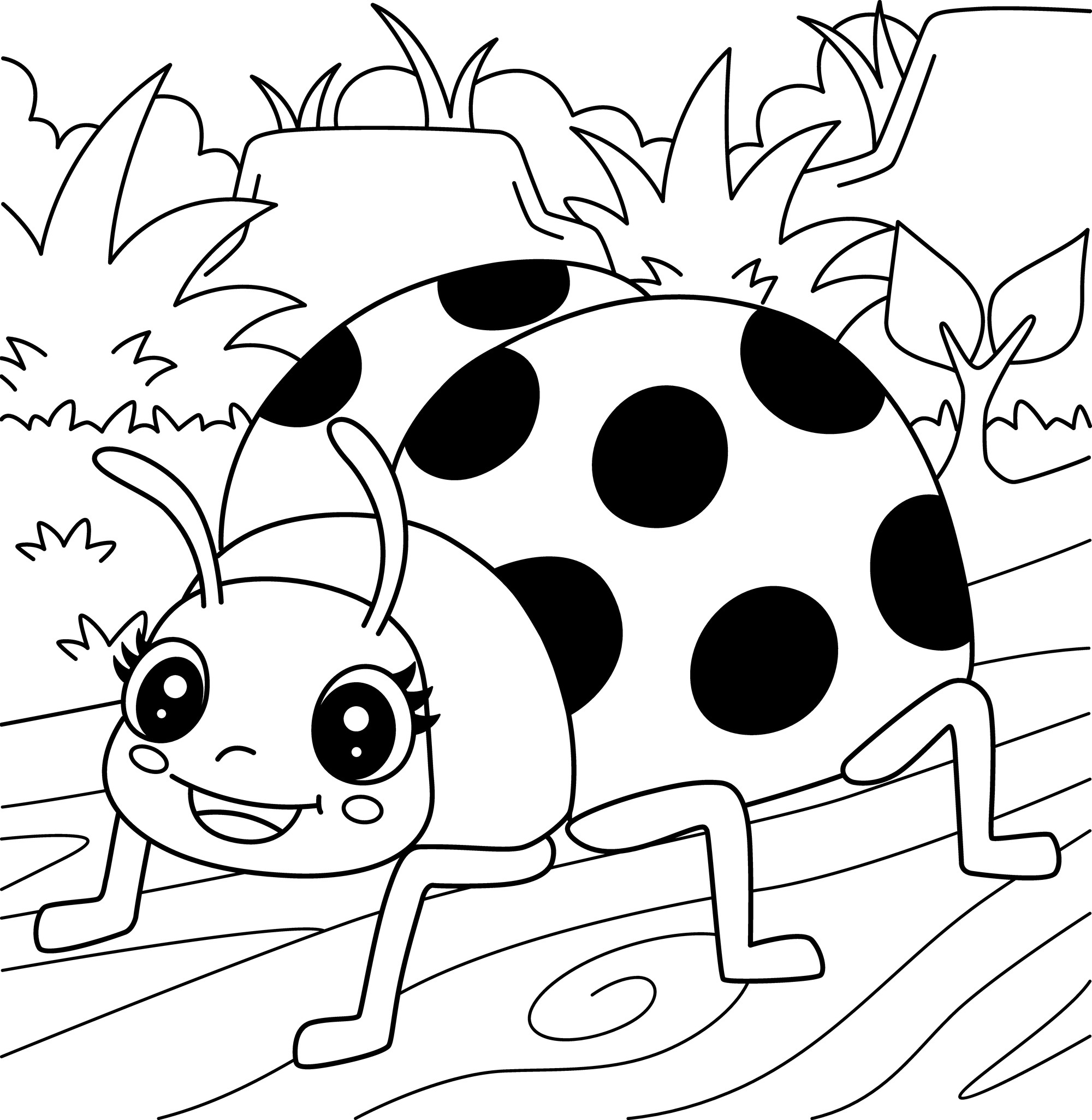
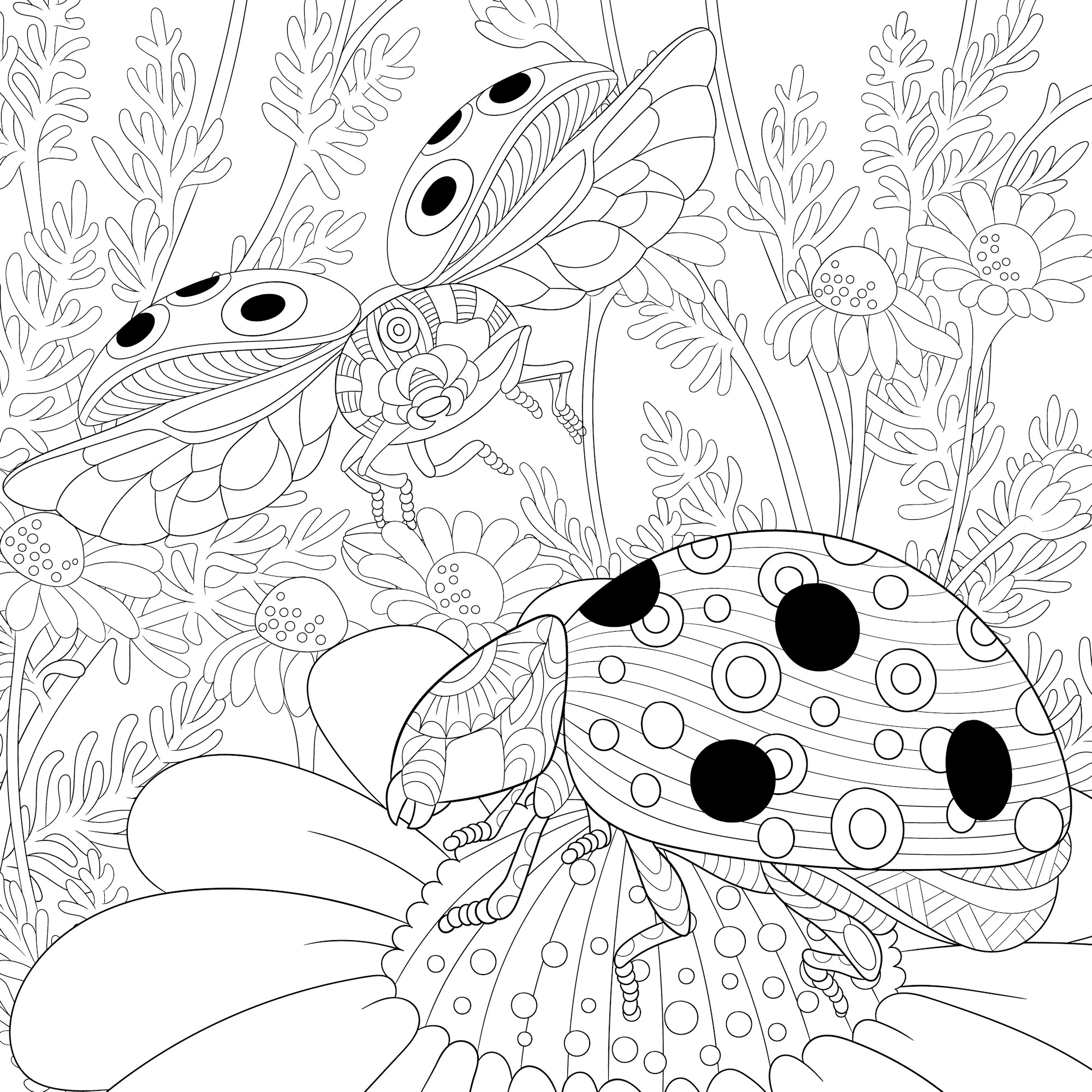
Bring a little garden cheer to coloring time with our collection of ladybug coloring pages, featuring adorable spotted beetles, spring flowers, pairs of ladybugs, and detailed zentangle-inspired designs.
Ladybugs are naturally perfect for coloring. Their rounded bodies, bold spots, tiny legs, and bright colors make them recognizable even in the simplest designs, while more detailed illustrations provide lots of opportunities for patterns, shading, and creative color combinations.
You can give your ladybugs the familiar red-and-black look, experiment with orange or yellow, or create a completely imaginary ladybug in pink, purple, turquoise, rainbow stripes, or pastel colors.
Grab your crayons, markers, or colored pencils and crawl into a colorful garden adventure.
🖍️ Shop Ladybug Coloring Books
🐞 Explore Our Ladybug Coloring Pages
This collection includes several different styles of ladybug artwork, making it easy to find a page for different ages and coloring moods.
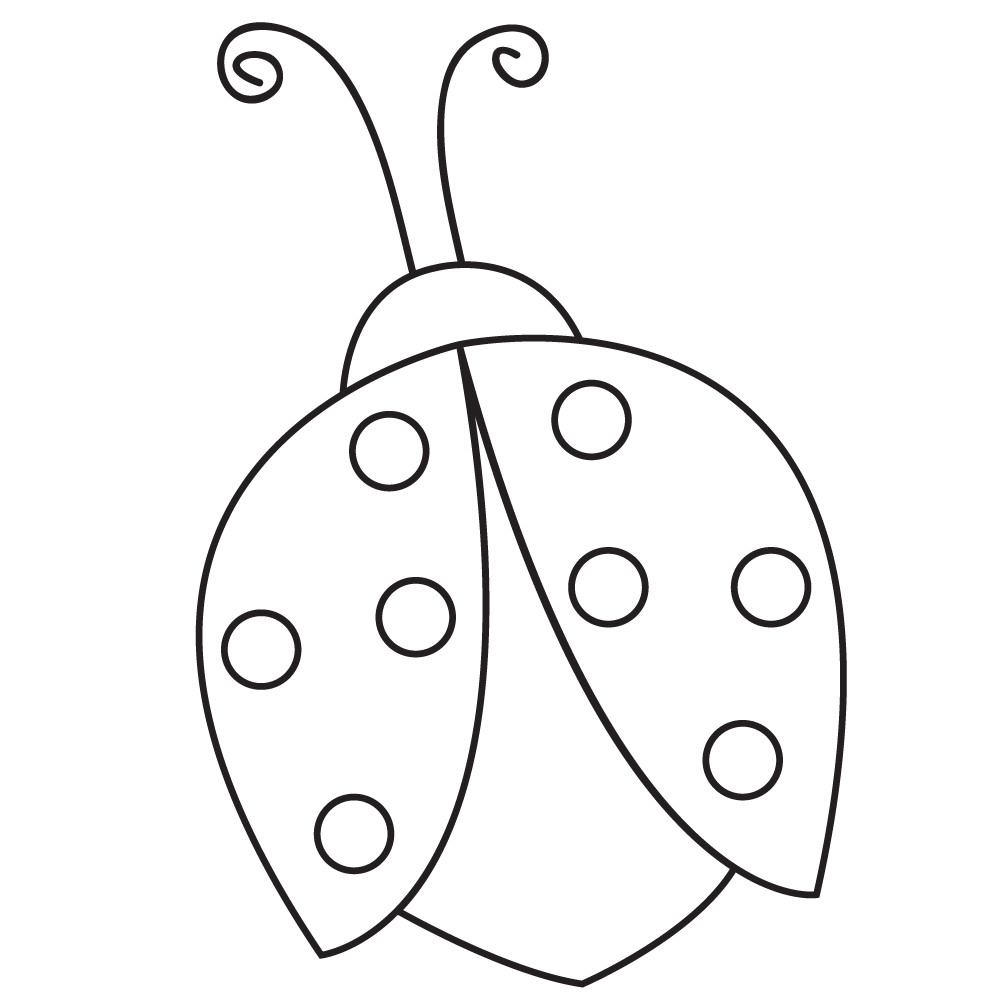
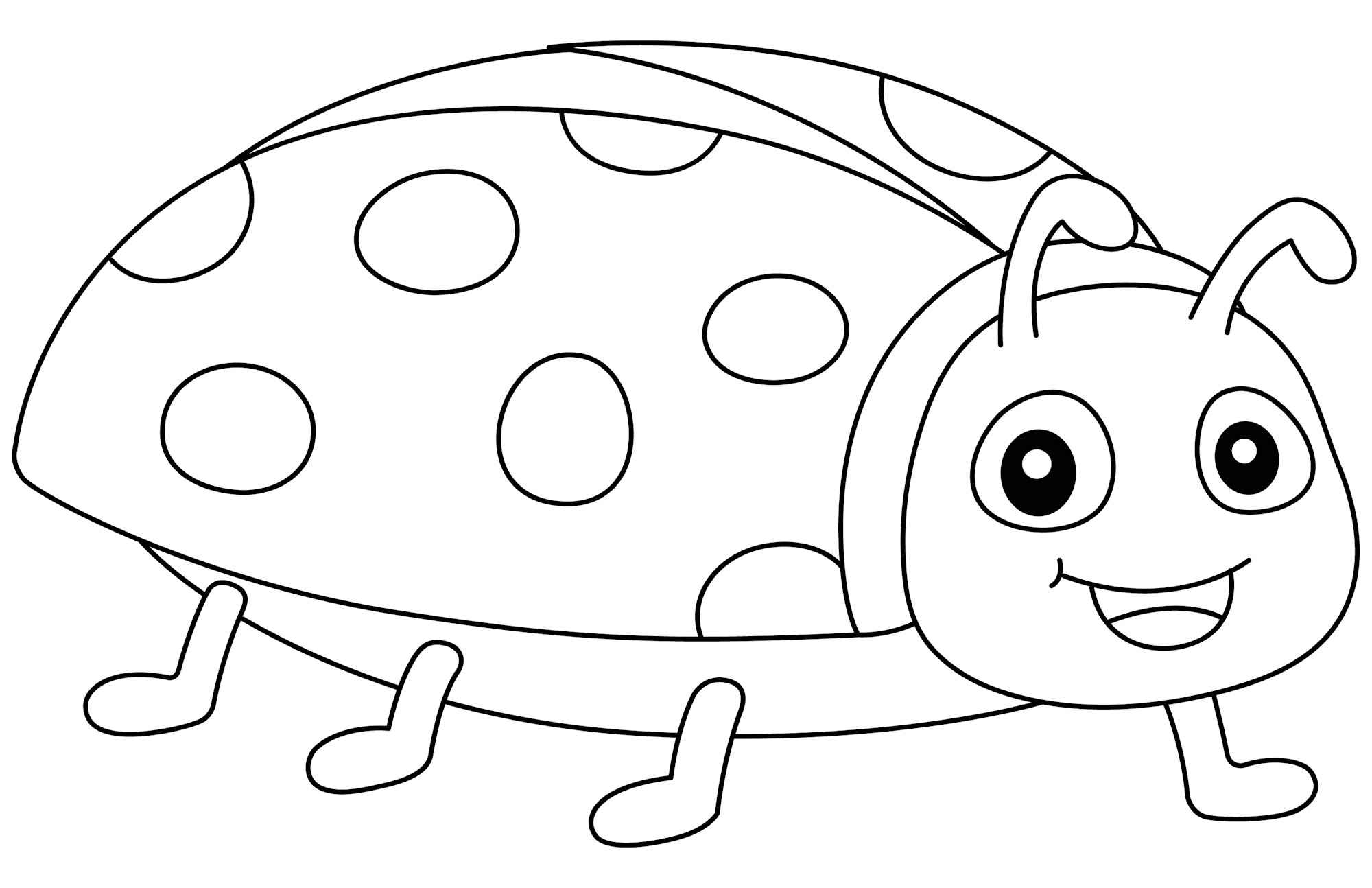
You’ll find a simple outlined ladybug, cheerful spring designs for children, a cute ladybug beside an oversized flower, two ladybugs together, and a decorative zentangle-style page featuring flying ladybugs and daisies.
The simpler designs have large open spaces that are easy to fill with crayons or broad markers. The more intricate page gives older children and adults smaller patterns and floral details to work on.
For even more tiny creatures, visit our Coloring Pages of Insects.
🌷 Spring Ladybug Coloring Pages
Ladybugs seem right at home in spring scenes, especially when they are surrounded by fresh leaves and colorful flowers.
The spring ladybug pages in this collection are perfect for pastel palettes. Try pairing traditional red-and-black ladybugs with pale pink, lavender, yellow, blue, and fresh green surroundings.
You could also create an entirely pastel ladybug.
Try:
- Pink with purple spots
- Lavender with blue spots
- Yellow with orange spots
- Mint green with turquoise spots
- Pale blue with silver spots
Add sunshine, clouds, grass, tiny flowers, or butterflies around the finished design to create a larger spring scene.
For more seasonal fun, explore our Spring Coloring Pages.
🌼 Cute Ladybug With a Big Flower
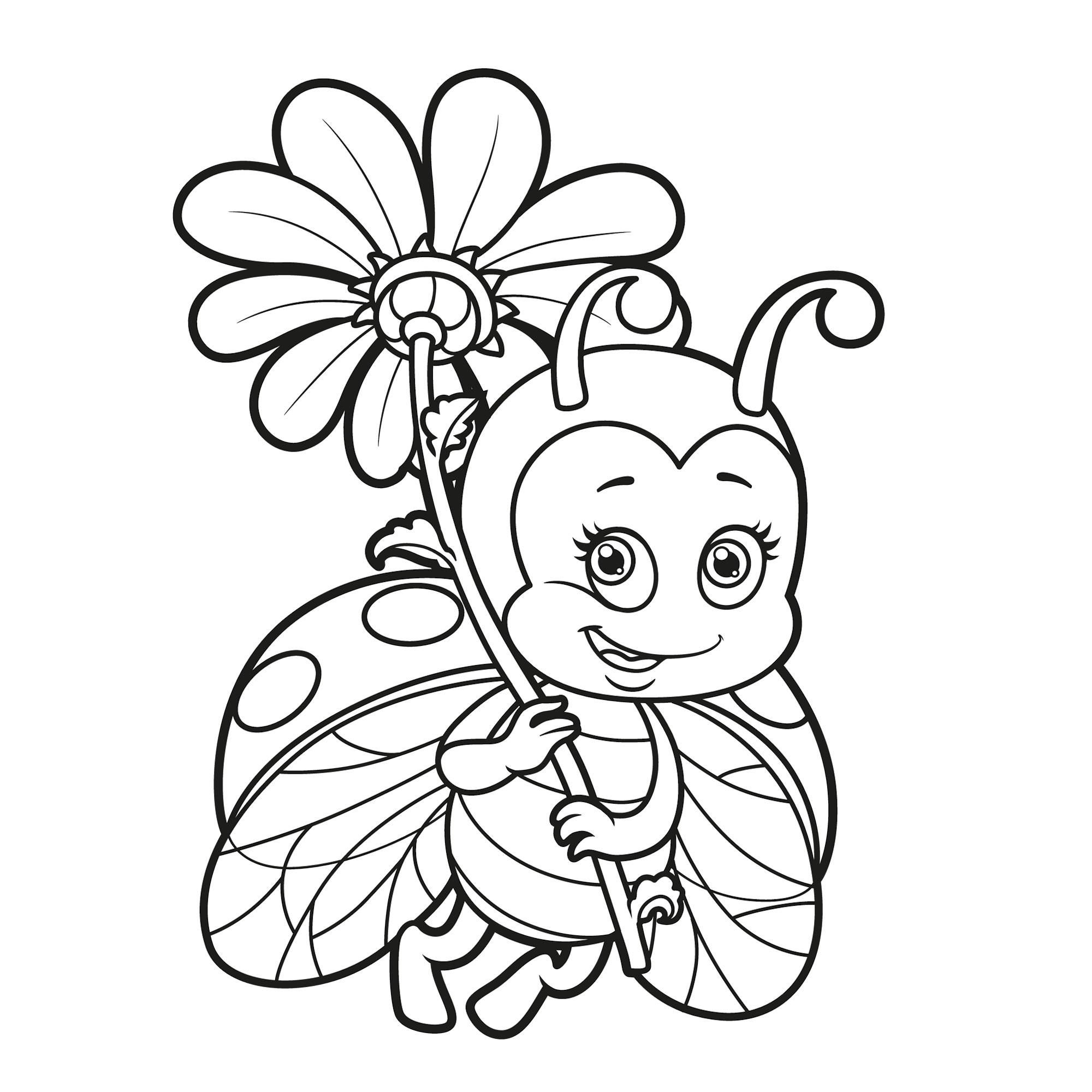
One of the sweetest designs pairs a cute ladybug with a large flower.
This is a wonderful page for experimenting with contrasting colors. A bright red ladybug will stand out against a yellow, purple, blue, or pink flower.
Or coordinate the two.
A lavender flower could have a pink-and-purple ladybug beside it, while a sunny yellow flower might pair beautifully with orange and red.
The flower also gives children extra opportunities to practice coloring petals, leaves, stems, and flower centers.
Continue the garden theme with our Coloring Pages of Flowers.
🐞 Two Ladybugs Coloring Page
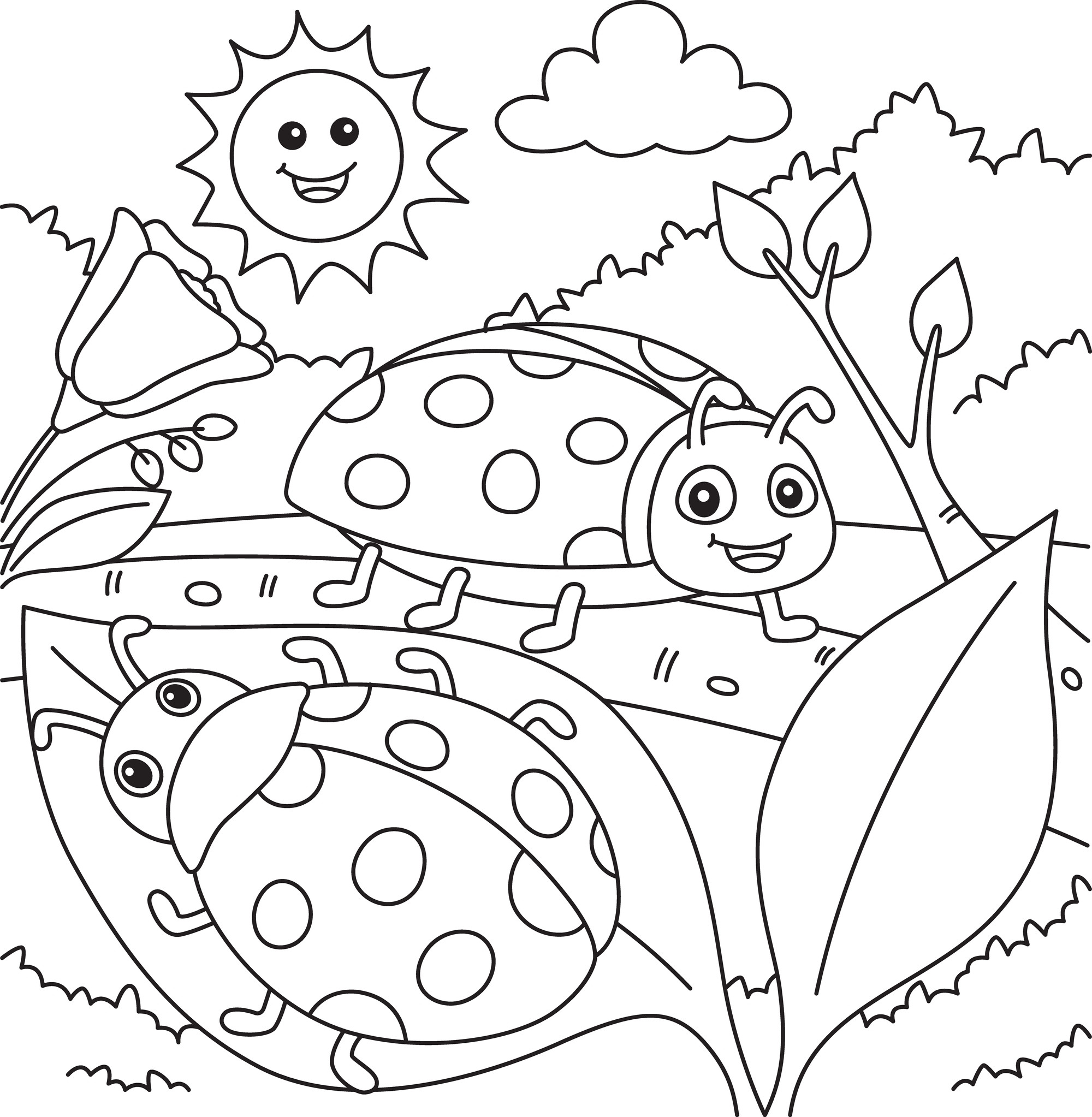
A page with two ladybugs together provides an easy opportunity to make each insect unique.
One can have the classic red body and black spots, while the other might be orange, yellow, pink, or completely imaginary.
Children could even give the two ladybugs names and personalities.
Maybe they are best friends exploring a garden. Perhaps they are racing toward the biggest flower or searching for the perfect leaf for lunch.
Drawing an extra background around them can turn the coloring page into the beginning of a story.
🌀 Zentangle Ladybugs and Daisy Flowers
The zentangle-style flying ladybugs and daisies are ideal for anyone who enjoys more detailed coloring.
Instead of filling every ladybug with the same colors, treat individual patterns and flowers as separate areas.
Try limiting yourself to four or five colors and repeating them throughout the page.
For example:
Garden Palette: red, yellow, green, pink, and purple
Cool Palette: turquoise, blue, lavender, teal, and silver
Spring Palette: pale pink, mint, yellow, lavender, and sky blue
Bold Palette: red, black, orange, emerald, and gold
Fine-tip markers and sharpened colored pencils can make the smaller sections easier to fill.
🎨 What Colors Are Ladybugs?
The familiar red ladybug with black spots is only one possible look.
Lady beetles come in a variety of colors and patterns. Depending on the species, adults may be red, orange, yellow, pink, black, or combinations of several colors.
That means even a nature-inspired ladybug coloring page can include more variety than you might expect.
Try:
- Red and black
- Orange and black
- Yellow and black
- Pink and black
- Black with red markings
And because this is a coloring page, there is no reason to stop with colors found in nature.
A turquoise ladybug with purple spots is perfectly welcome here.
🔴 Do All Ladybugs Have the Same Number of Spots?
No! Different species of lady beetles can have very different markings.
Some have only a few spots, while others have many. Some have very small markings, and a few species may appear almost entirely dark.
That makes the spots on a ladybug coloring page a perfect place for creativity.
You could make:
- Large spots
- Tiny spots
- Heart-shaped spots
- Star-shaped spots
- Rainbow spots
- Stripes
- Swirls
Children can even invent a brand-new species and give it a name based on its pattern.
🪲 Ladybugs Are Beetles
Although we usually call them ladybugs, these little animals are actually beetles. They belong to the beetle family Coccinellidae and are also commonly called lady beetles or ladybird beetles.
Like other insects, adult ladybugs have six legs and antennae.
The colorful shell-like structures that we notice first are hardened wing covers called elytra. Their delicate flying wings are folded underneath.
Ask children to look closely at their coloring page and see how many insect body parts they can spot.
🪽 Ladybugs Can Fly
A ladybug may look like a tiny walking beetle when it crawls across a leaf, but adults can also fly.
When a ladybug prepares for flight, its hard wing covers lift and the thinner wings underneath unfold.
That makes the flying-ladybug coloring page especially fun.
Add motion lines behind the insect, draw clouds in the background, or imagine that several ladybugs are traveling across a giant garden.
Maybe they are flying toward a field filled with daisies—or setting off on an adventure somewhere completely unexpected.
🌱 Why Gardeners Like Ladybugs
Many lady beetles are helpful garden visitors because both adults and larvae feed on small insects and other garden pests.
Aphids are an especially familiar part of the ladybug diet for many species.
Because aphids feed on plants, predatory lady beetles can play an important role in garden and agricultural ecosystems.
That makes the flower and garden scenes in this coloring collection especially fitting.
After coloring a ladybug, children can draw a whole garden around it filled with leaves, flowers, and stems.
Explore even more outdoor scenes with our Coloring Pages of Gardens.
🌿 Create a Ladybug Garden
Start with one of the simpler ladybug pages and build an entire garden around it.
Add:
- Flowers
- Leaves
- Grass
- Herbs
- Berry plants
- Trees
- Butterflies
- Bees
A large green leaf can become a ladybug’s resting place, while flowers provide lots of opportunities for additional color.
You can even draw several tiny aphids on a stem and imagine that your ladybug has just discovered lunch.
For more plant-filled designs, explore our Coloring Pages of Plants.
🥚 The Ladybug Life Cycle
Ladybugs go through complete metamorphosis, which means their lives include four very different stages:
- Egg
- Larva
- Pupa
- Adult
A newly hatched ladybug larva does not look much like the round adult insect most children recognize.
The larval stage is longer and more elongated, sometimes looking a little like a tiny alligator. Eventually the larva becomes a pupa before emerging as an adult beetle.
Kids can create a four-part drawing showing every stage of the life cycle and color each picture.
🐛 Ladybug Larvae Look Very Different
A surprising ladybug fact is that the babies do not start out looking like miniature versions of the adults.
Ladybug larvae have elongated bodies and six legs and may have dark coloring with orange, red, or lighter markings.
If children see one outdoors, they may not realize they are looking at a young lady beetle.
After coloring an adult ladybug, try drawing what you imagine its larva looks like before looking at a photograph.
Then compare the two.
This is a fun reminder that animal babies do not always resemble their parents.
🔍 Go on a Ladybug Hunt
A ladybug coloring session can lead naturally to a little outdoor exploration.
Head into a garden, park, schoolyard, or other green space and look carefully at leaves, stems, and flowers.
See whether you can spot:
- Ladybugs
- Beetles
- Butterflies
- Bees
- Caterpillars
- Ants
- Spiders
Avoid handling unfamiliar insects, and observe them where they are.
Kids can bring a notebook and make a tally mark for each different creature they see.
Back inside, draw the most interesting discovery.
🌼 Look Closely at Flowers
The flower-filled pages also make good observation activities.
After coloring the large flower or daisy design, find a real flower and compare it with the drawing.
Look for:
- Petals
- Stem
- Leaves
- Flower center
- Buds
Then see whether any insects visit while you watch.
You might spot bees, butterflies, beetles, or other tiny garden creatures.
Coloring can be a surprisingly good way to encourage children to slow down and notice details outdoors.
🌈 Create a Rainbow Ladybug
Real ladybugs are colorful enough, but fantasy ladybugs can be even brighter.
Divide the wing covers into several sections and fill each section with a different rainbow color.
Or keep the body one color and turn every spot into a different shade.
Try:
Rainbow Ladybug: red, orange, yellow, green, blue, and purple
Candy Ladybug: pink, lavender, mint, peach, and pale blue
Galaxy Ladybug: navy, purple, turquoise, silver, and black
Sunset Ladybug: yellow, orange, coral, pink, and violet
Give your imaginary insect a name when you are finished.
🔢 Count the Ladybug Spots
Ladybug pages make easy counting activities for younger children.
Ask kids to count every spot they can see.
Then try simple questions such as:
- How many spots are on the left side?
- How many are on the right?
- How many are there altogether?
- What happens if you draw two more spots?
Children could also draw a certain number of spots based on a number you call out.
This combines early math practice with coloring without requiring a separate worksheet.
🔤 L Is for Ladybug
Ladybugs also work well for alphabet activities.
Write a large uppercase L and lowercase l beside the coloring page.
Practice saying:
L is for ladybug.
Then think of other words beginning with L, such as:
- Leaf
- Lemon
- Lion
- Lake
- Lamb
- Light
Children can draw one or two of those objects around the page.
For more early-learning printables, visit our Educational Coloring Pages & Activities.
🌷 Ladybug Coloring Pages for Spring
Ladybugs, flowers, green leaves, and warmer weather make these pages a natural fit for spring.
They can be used for:
- Spring classroom activities
- Garden units
- Insect lessons
- Early-finisher pages
- Rainy-day activities
- Nature studies
- Art centers
- Bulletin boards
Use pastel flowers and fresh greens for a spring palette, then let the ladybug’s bright red shell become the center of attention.
🏫 Ladybug Coloring Pages for the Classroom
Ladybugs are especially useful classroom subjects because they connect easily with several early-learning topics.
Teachers and homeschool families can pair the printables with lessons about:
- Insects
- Beetles
- Life cycles
- Gardens
- Plants
- Spring
- Animal adaptations
- Counting
- Patterns
A child could color a ladybug and then write three facts underneath.
Another option is to have every student create a different spot pattern and combine all the finished pictures into one giant classroom ladybug display.
✏️ Design Your Own Ladybug
After coloring the printable pages, try creating an original ladybug.
Begin with a large oval for the body.
Add a smaller head, six legs, antennae, and a line down the middle of the wing covers.
Then comes the best part: design the pattern.
Maybe your new species has:
- Three enormous spots
- Twenty tiny spots
- Stripes instead of spots
- Hearts
- Stars
- Swirls
- Flower shapes
Write a name for your imaginary ladybug underneath the picture.
📖 Turn Your Ladybug Into a Story
Tiny animals can have enormous adventures.
Imagine that your ladybug has just landed on the biggest flower in the garden.
What happens next?
Perhaps it meets a butterfly who needs help finding home. Maybe a gust of wind carries the ladybug somewhere unfamiliar, or a pair of ladybugs discovers a secret miniature garden hidden beneath the leaves.
Children can tell the story aloud or write several sentences underneath their finished coloring page.
Several different ladybug pictures can even become illustrations for different parts of the same story.
✂️ Ladybug Coloring Page Crafts
Finished ladybug coloring pages can become part of all kinds of simple crafts.
Try turning them into:
- Spring decorations
- Garden collages
- Homemade cards
- Bookmarks
- Classroom displays
- Insect notebooks
- Life-cycle projects
- Storybook characters
- Nature journals
- Animal fact cards
Kids can also cut out several finished ladybugs and glue them onto a large piece of green paper.
Add flowers and leaves to create an enormous classroom garden.
🖍️ Coloring Tips for Ladybug Pages
For the simpler designs, crayons and broad markers make it easy to fill the larger shapes.
Colored pencils and fine-tip markers work especially well for the zentangle page and smaller flower details.
If you want a traditional ladybug, color the wing covers red or orange and make the spots dark. Leave small sections uncolored or add a tiny white highlight to make the surface appear shiny.
For fantasy ladybugs, ignore the rules completely.
The perfect ladybug might be purple with turquoise spots simply because those are your favorite colors.
🖨️ How to Use Your Ladybug Coloring Pages
Choose your favorite ladybug design, print it, and gather crayons, markers, or colored pencils.
Regular printer paper works well for most coloring activities. Heavier paper can be useful if children plan to add paint, glue, glitter, or other craft decorations.
Then decide what sort of ladybug will crawl onto your page.
It can be realistic, pastel, rainbow-colored, covered in unusual spots, or flying through a garden that exists entirely in your imagination.
🐞 Let Your Creativity Take Flight
From simple outlined ladybugs and spring printables to a cute ladybug with a big flower, two ladybugs together, and intricate zentangle ladybugs flying among daisies, this collection has plenty for both young artists and more experienced colorists.
Color the familiar red-and-black beetle, invent a brand-new ladybug species, learn about its life cycle, create a garden around it, or use the finished picture as the beginning of a story.
Choose your favorite printable, gather your colors, and let these tiny spotted garden visitors inspire your next creative adventure.
🖍️ Shop Ladybug Coloring Books
🔗 Related Articles
- Coloring Pages of Insects
- Animal Coloring Pages
- Nature Coloring Pages
- Coloring Pages of Gardens
- Coloring Pages of Flowers
- Coloring Pages of Plants
- Butterflies Coloring Page
- Spring Coloring Pages
📚 Sources
- Cornell University — Lady Beetles
- University of Minnesota Extension — Lady Beetles
- Colorado State University Extension — Lady Beetles
- UC Statewide Integrated Pest Management Program — Lady Beetles