🖍️Shop Insect Coloring Books –>
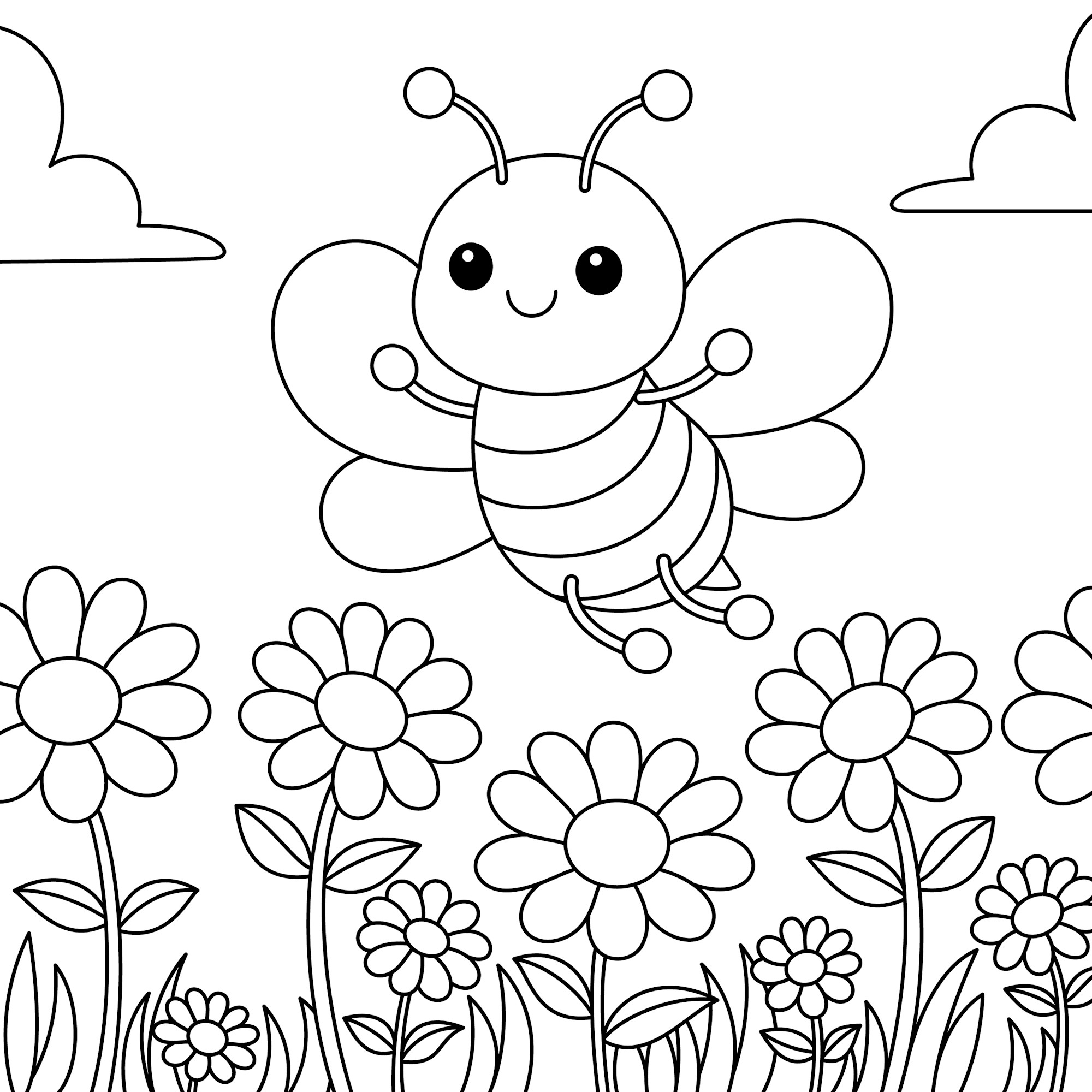
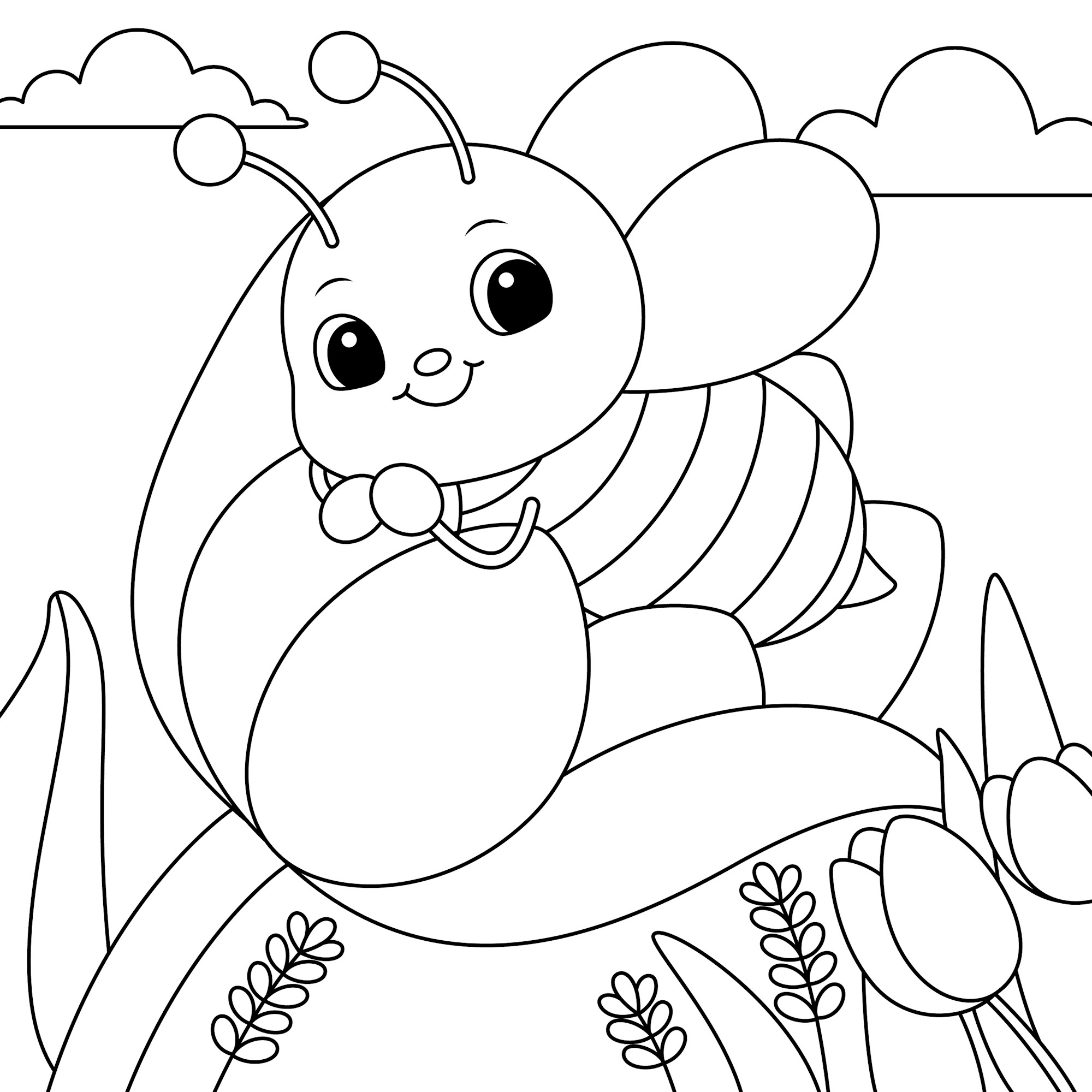

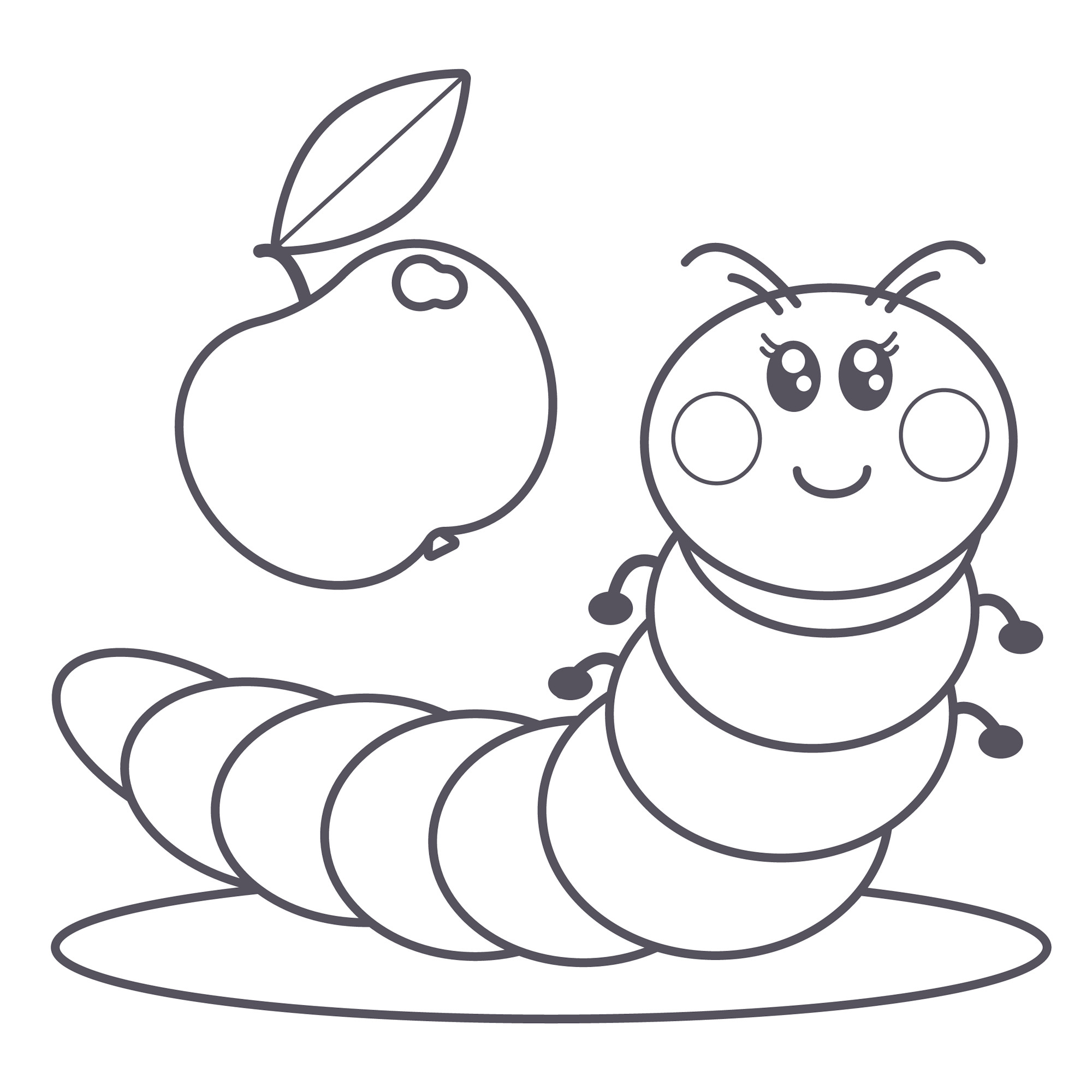
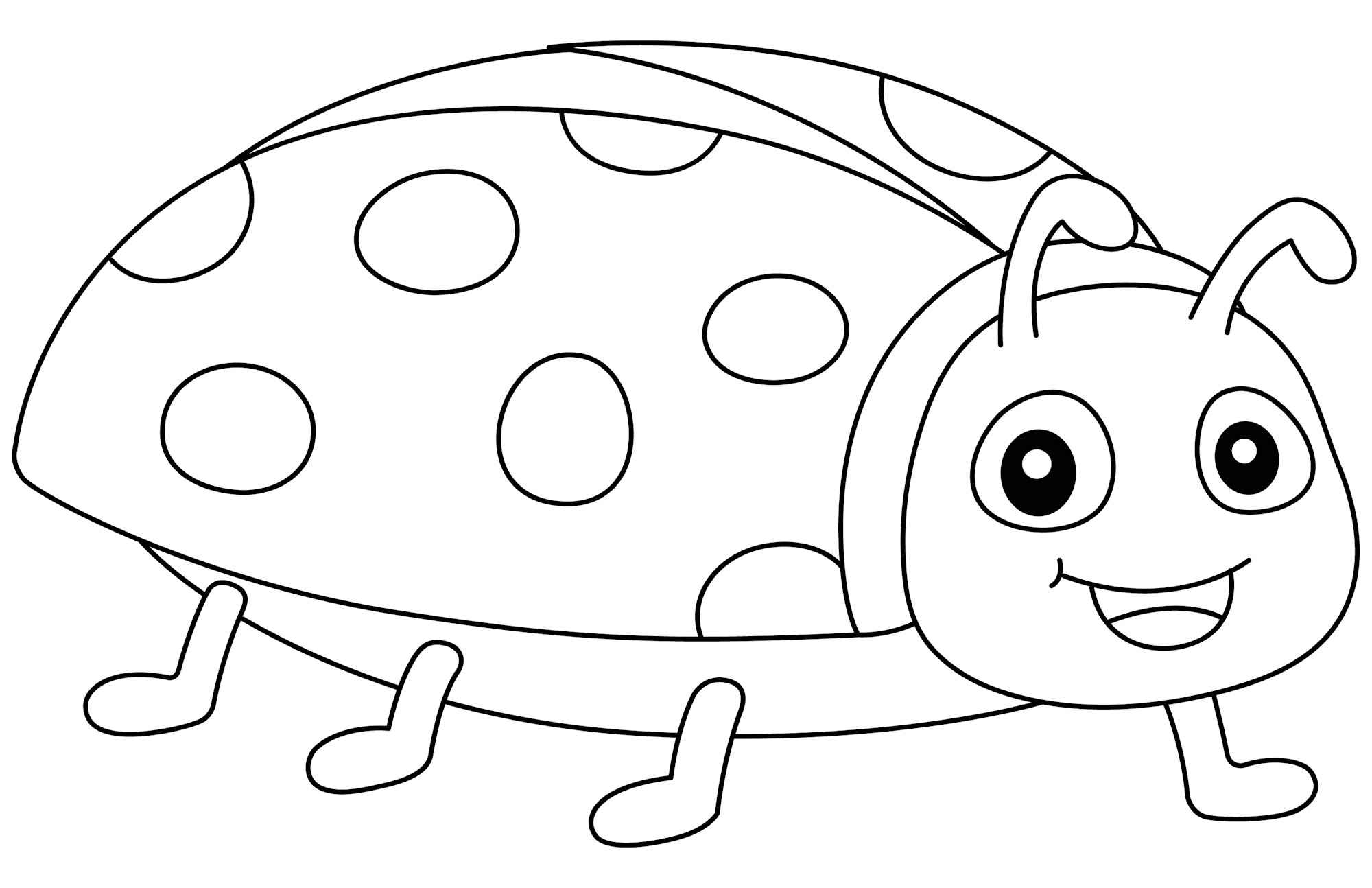
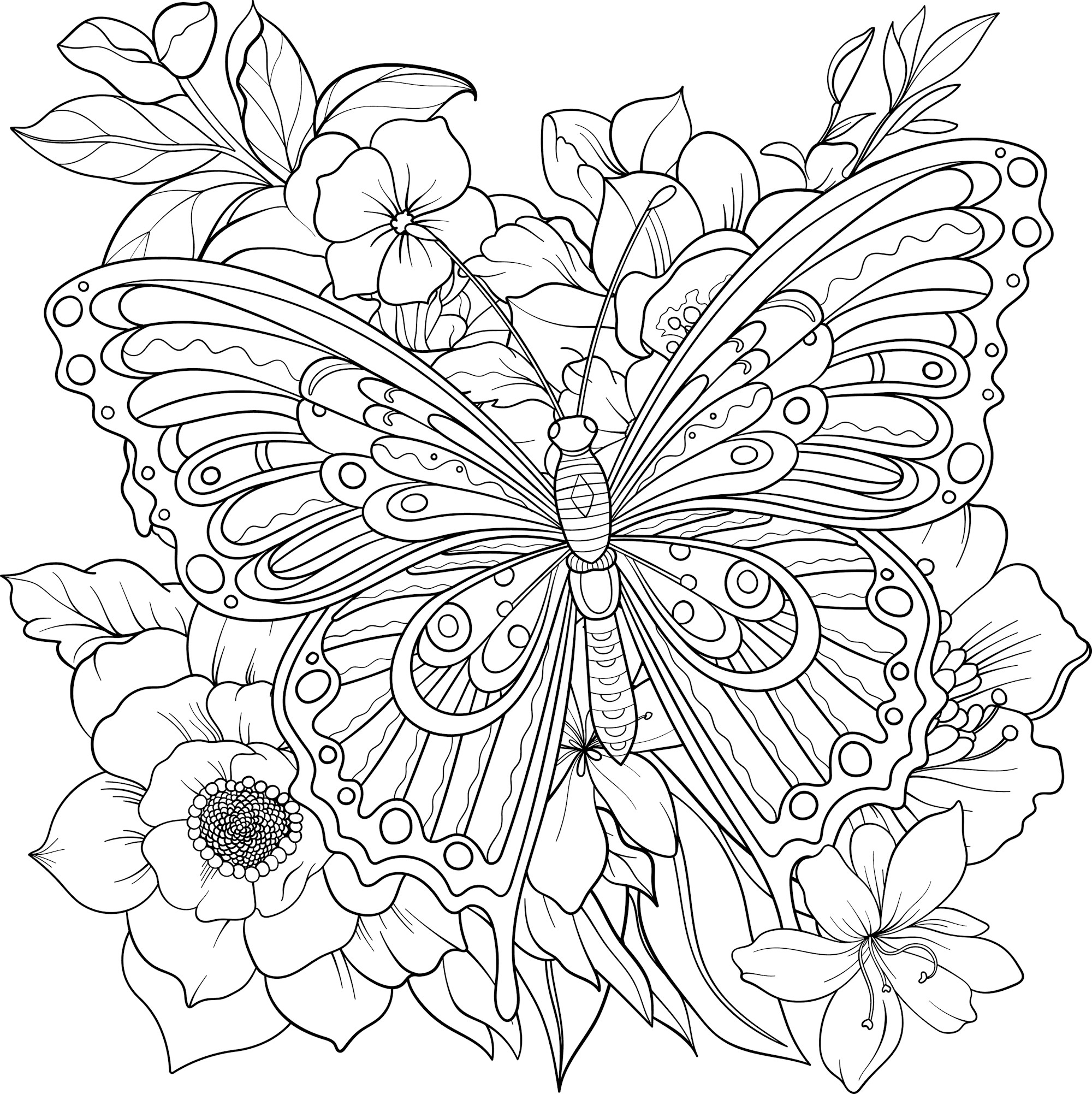
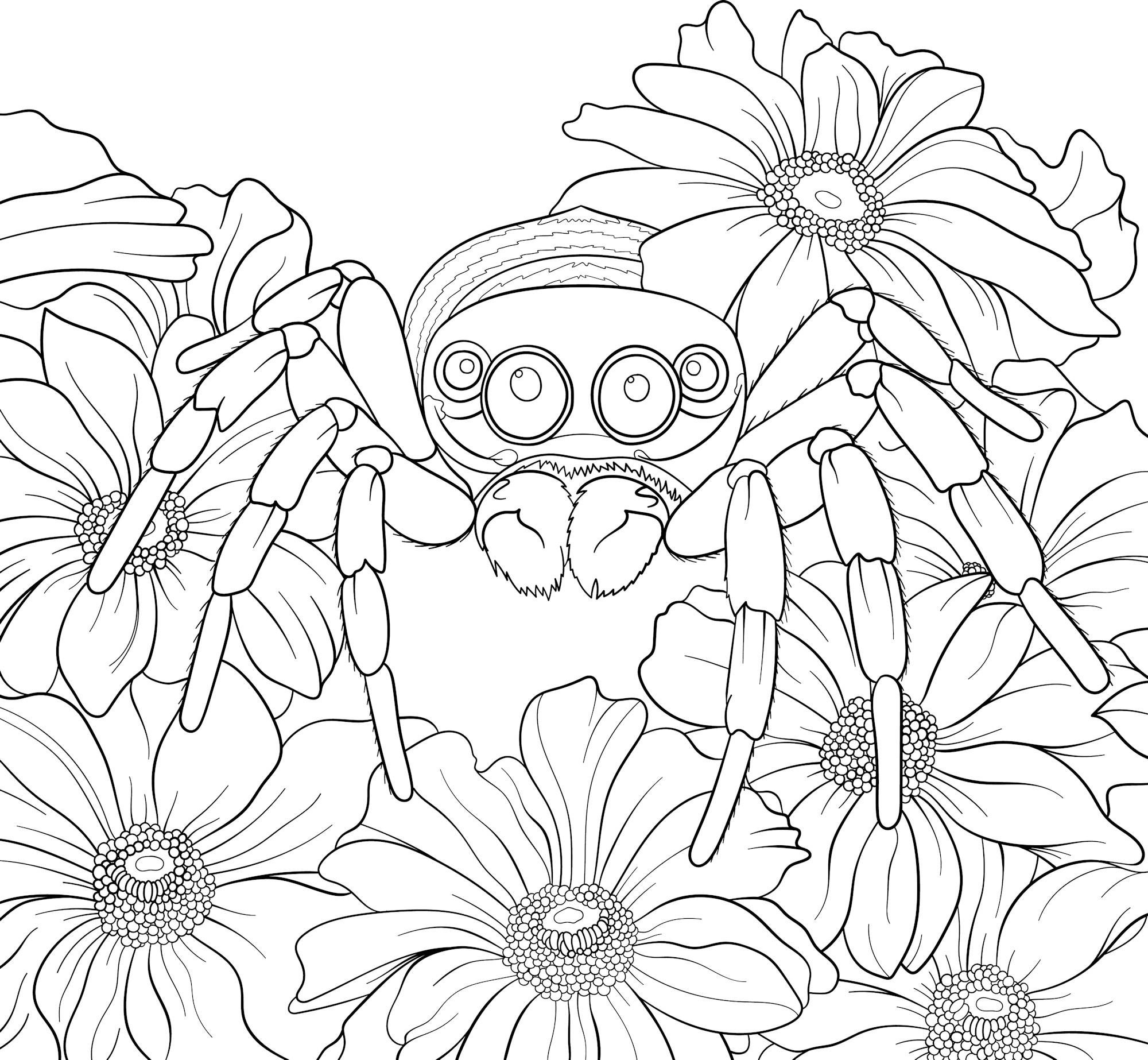
Crawl, flutter, and buzz into a tiny world of creativity with our collection of insect coloring pages, featuring cheerful bees, beautiful butterflies, colorful ladybugs, fascinating beetles, dragonflies, caterpillars, and other little garden visitors.
Insects come in an incredible variety of shapes, patterns, and colors, which makes them especially fun to color. Some of these printable pages feature adorable kawaii characters that are perfect for younger children, while others include intricate floral, mandala, and zentangle-inspired designs for older kids and adults.
You can give a butterfly realistic wing markings, color a ladybug red and black, create a shimmering blue dragonfly, or forget about nature entirely and invent a rainbow beetle covered in flowers and stars.
Grab your crayons, markers, or colored pencils and get ready to explore the wonderful world of bugs.
🐝 Explore Our Insect Coloring Pages
This collection includes an especially fun assortment of small creatures and coloring styles.
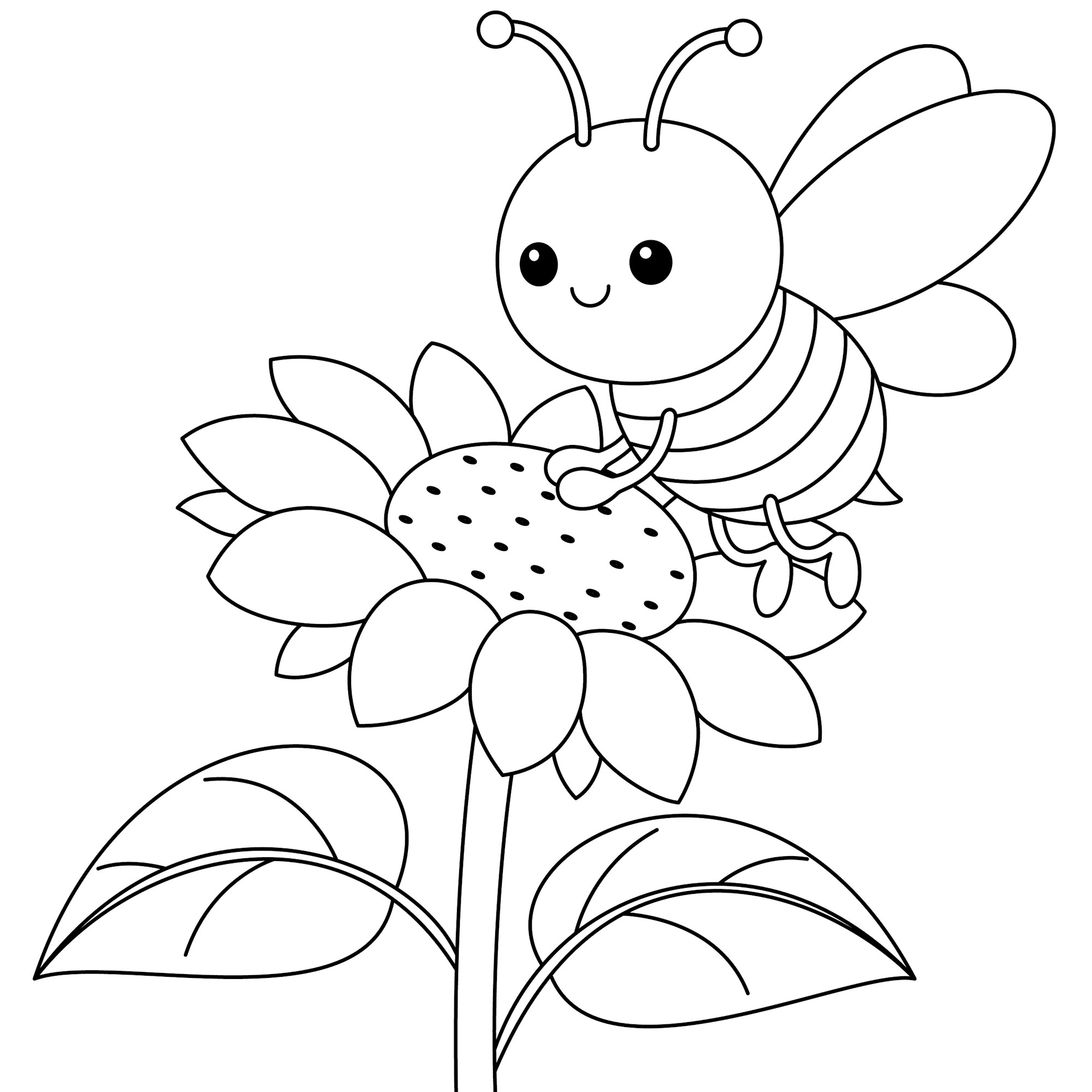
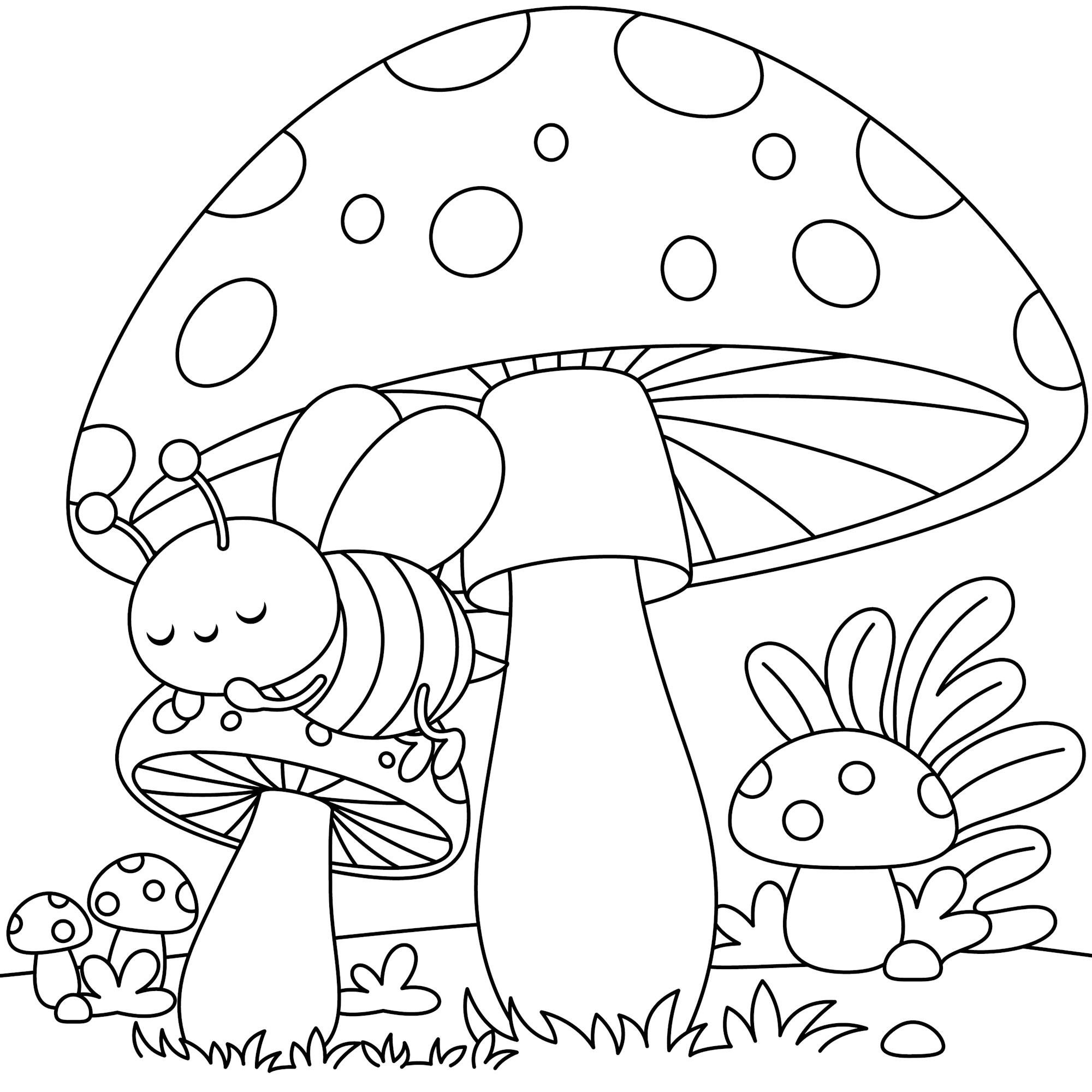
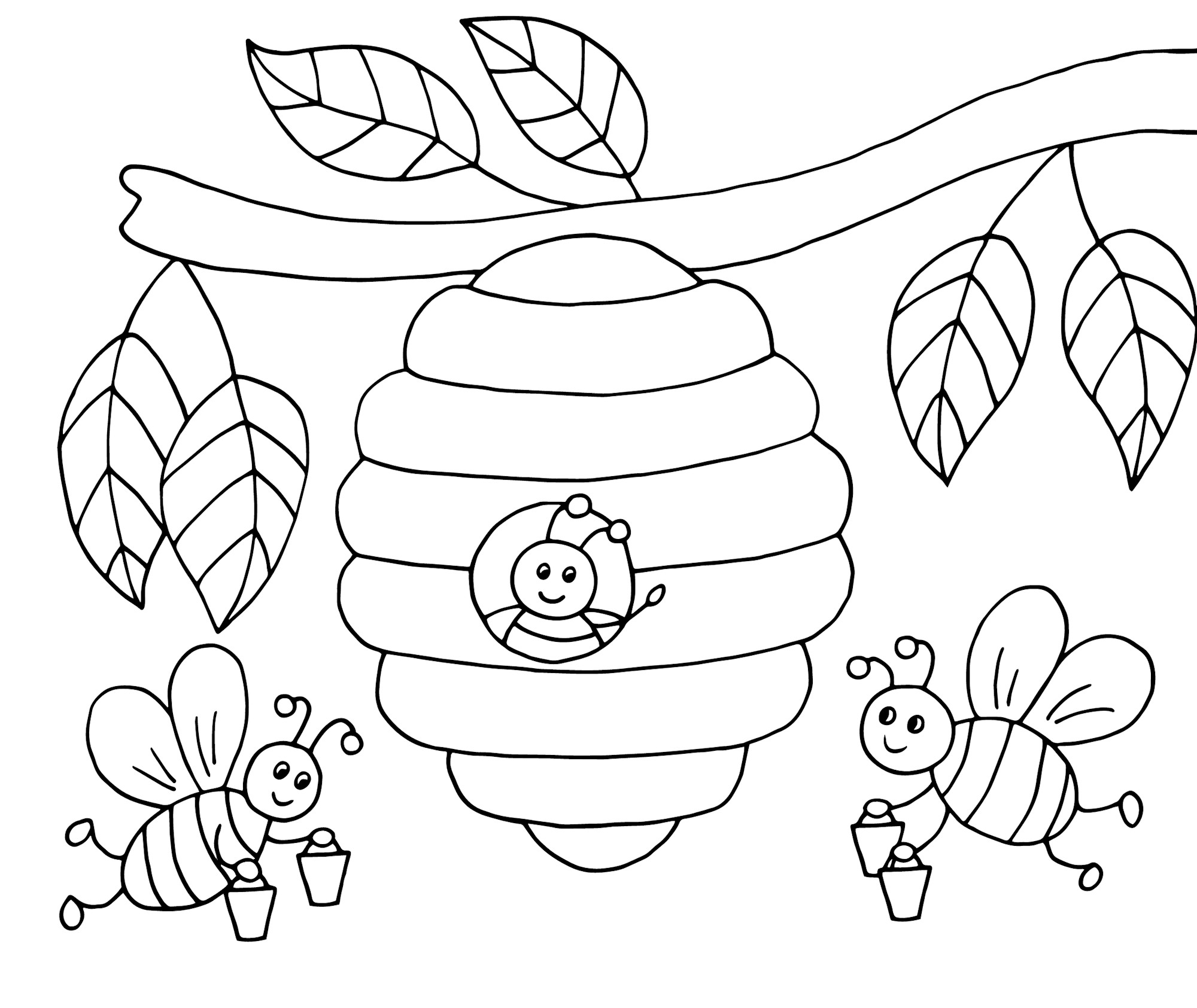
Bee lovers can choose from several cute kawaii bee coloring pages, including bees visiting flowers, resting on blossoms, sitting on sunflowers, and even sleeping on a mushroom. There is also a more detailed scene featuring cartoon bees, honey, and a beehive in a tree.
Butterflies appear in both easy children’s designs and elaborate floral and zentangle-style illustrations. You will also find a caterpillar with an apple, spring ladybugs, decorative beetles, dragonflies surrounded by flowers, a scarab mandala, and several intricate designs suited to longer coloring sessions.
The collection even includes an adorable jumping spider hiding among flowers. Although spiders are not technically insects, this little garden visitor fits perfectly into a broader bug-themed coloring adventure.
🐝 Cute Bee Coloring Pages
The collection includes several charming kawaii bee coloring pages, and each one has its own personality.
One little bee explores a flower garden, another relaxes on a flower, and another sits on a large sunflower. There is even a sleepy bee curled up on a mushroom.
Classic bee colors of yellow and black are always fun, but kawaii characters are perfect for experimenting with something different.
Try:
- Yellow and brown
- Pink and purple
- Blue and yellow
- Mint and lavender
- Orange and black
- Rainbow stripes
You can also give the bees rosy cheeks, colorful wings, or tiny patterns on their bodies.
Add more flowers, clouds, hearts, stars, and sunshine around the picture to create an entire cheerful garden scene.
🌻 Bee on a Sunflower Coloring Page
A bee and sunflower make a wonderfully bright combination.
Begin with golden yellow petals around a rich brown flower center, then use several greens for the stem and leaves. A traditional yellow-and-black bee will stand out beautifully against the flower.
Or switch things around.
Give the sunflower coral, pink, or orange petals and create a pastel-colored bee buzzing nearby.
You can also expand the scene by drawing extra sunflowers, butterflies, little clouds, or more bees visiting the garden.
This page works especially well for spring and summer coloring activities.
🍯 Bees, Honey and a Beehive
The more detailed bee and beehive coloring page gives children a chance to explore more than the insect itself.
Color the tree, hive, honey, bees, leaves, and surrounding details to create a complete scene.
Honey can range from pale golden yellow to deep amber. Tree bark can include brown, gray, and tan, while leaves become much more interesting when several shades of green are used instead of just one.
This page can also inspire simple conversations about how honey bees live together in colonies and visit flowers as they search for nectar and pollen.
🌼 Bees and Flowers
Flowers and bees are closely connected, making these coloring pages a natural choice for garden and pollinator themes.
After coloring one of the bee pictures, add a larger flower garden around it.
Try drawing:
- Sunflowers
- Daisies
- Roses
- Lavender
- Clover
- Wildflowers
- Herbs
Give each flower a different color and see how many shades you can fit into the garden.
For even more flower-filled scenes, explore our Coloring Pages of Gardens and Coloring Pages of Flowers.
🦋 Butterfly Coloring Pages
Butterflies provide almost unlimited opportunities for color.
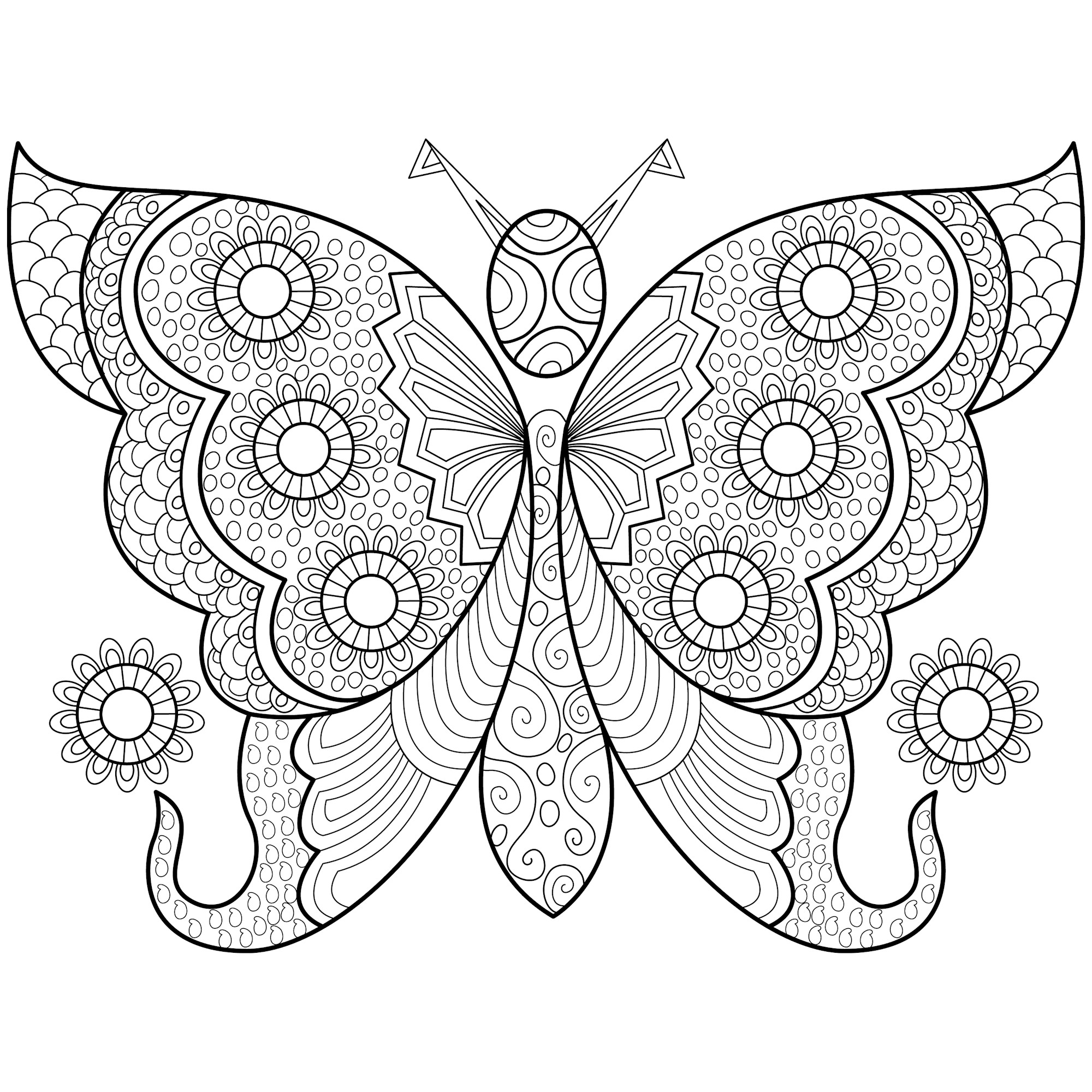
Our insect collection includes a simpler butterfly coloring page for kids as well as elaborate designs surrounded by flowers, leaves, and decorative patterns.
The two sides of a butterfly’s wings often mirror each other, so children can practice creating symmetrical patterns.
Color one side first and then try to match it on the other.
Or deliberately make the wings different.
A fantasy butterfly could have warm sunset colors on one wing and cool ocean colors on the other.
Try combinations such as:
- Orange and black
- Pink and purple
- Blue and turquoise
- Yellow and red
- Green and gold
- Rainbow colors
For even more fluttering designs, visit our Butterflies Coloring Page.
🌸 Butterfly With Flowers and Leaves
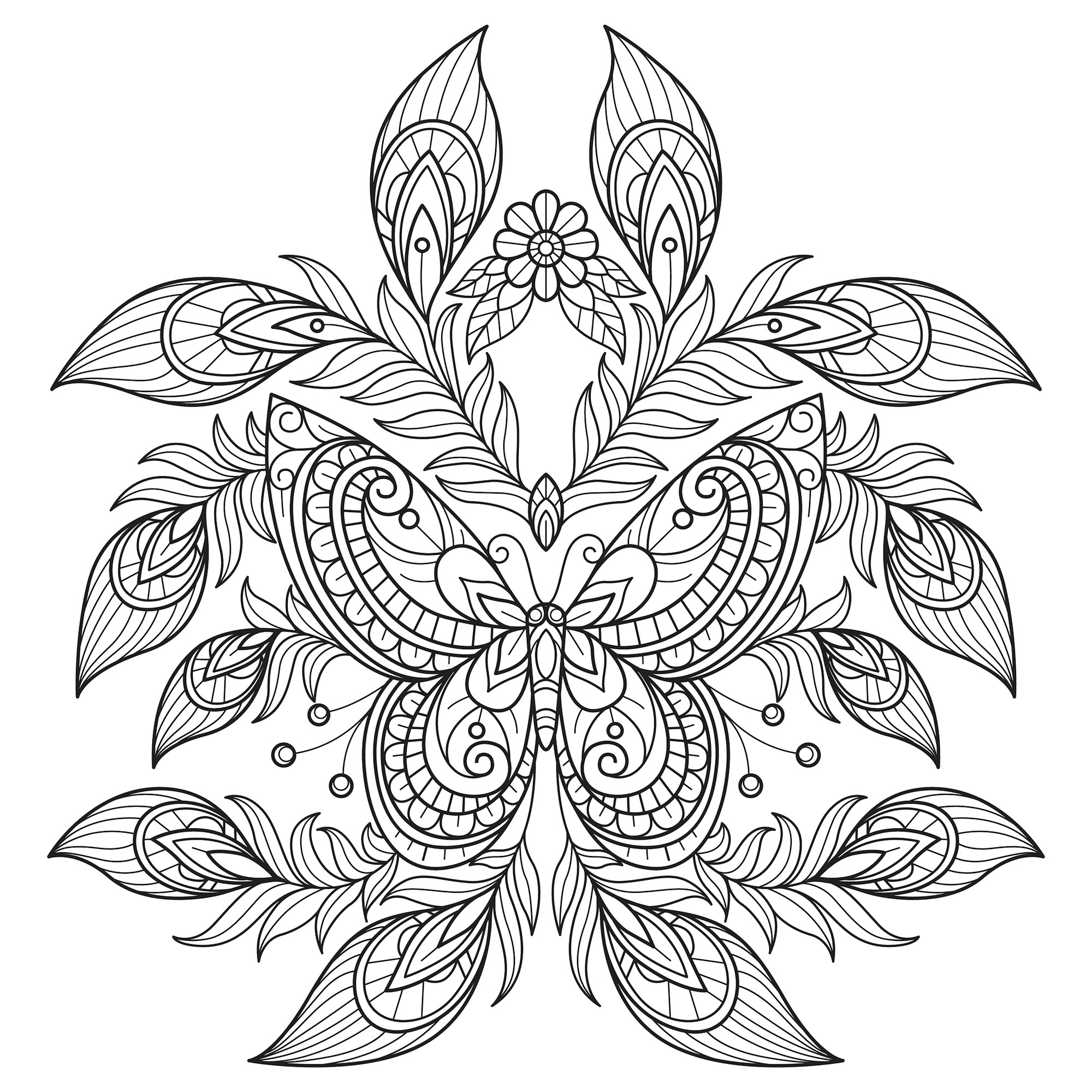
One of the more detailed butterfly designs features the insect surrounded by flowers and leafy botanical details.
This is an especially good choice for older children and anyone who enjoys spending longer on one page.
Instead of choosing colors for the butterfly first, try designing a complete palette for the whole picture.
For example:
Spring Garden: pink, lavender, yellow, mint, and pale blue
Summer Garden: turquoise, purple, orange, bright green, and yellow
Autumn Butterfly: rust, burgundy, gold, brown, and olive
Fantasy Garden: violet, teal, magenta, silver, and blue
Repeating the same colors throughout both the butterfly and flowers can make the finished page feel beautifully coordinated.
🪶 Butterfly and Peacock Feather
Another decorative design combines a butterfly with a peacock feather, giving colorists two naturally intricate patterns to work with.
Peacock-inspired shades of blue, turquoise, green, gold, and purple can look especially striking here.
You could use similar colors across both the butterfly and feather so they feel connected, or make the butterfly stand out with warm colors such as red, coral, orange, and yellow.
Colored pencils work particularly well for this page because you can layer several shades together and add darker details gradually.
🐛 Caterpillar and Apple Coloring Page
Before some insects become beautiful winged adults, they spend part of their lives as larvae.
The collection includes a cute caterpillar and apple coloring page that is perfect for younger children.
Give the caterpillar alternating body colors or make every segment different.
Try:
- Green and yellow
- Blue and purple
- Rainbow colors
- Pink and orange
- Several shades of green
Then color the apple bright red, green, or golden yellow.
This simple picture can also introduce children to the amazing transformation that occurs when a caterpillar eventually becomes a butterfly or moth.
🦋 The Butterfly Life Cycle
Butterflies undergo complete metamorphosis, passing through four very different stages:
- Egg
- Caterpillar, or larva
- Chrysalis, or pupa
- Adult butterfly
Children can create their own four-picture life-cycle project after coloring the caterpillar and butterfly pages.
Draw an egg on a leaf, a growing caterpillar, a chrysalis hanging from a plant, and finally a colorful butterfly.
Color each stage and arrange the pictures in order.
This is an easy way to combine science, art, and sequencing skills.
🐞 Ladybug Coloring Pages
Ladybugs bring another burst of cheerful color to the insect collection.
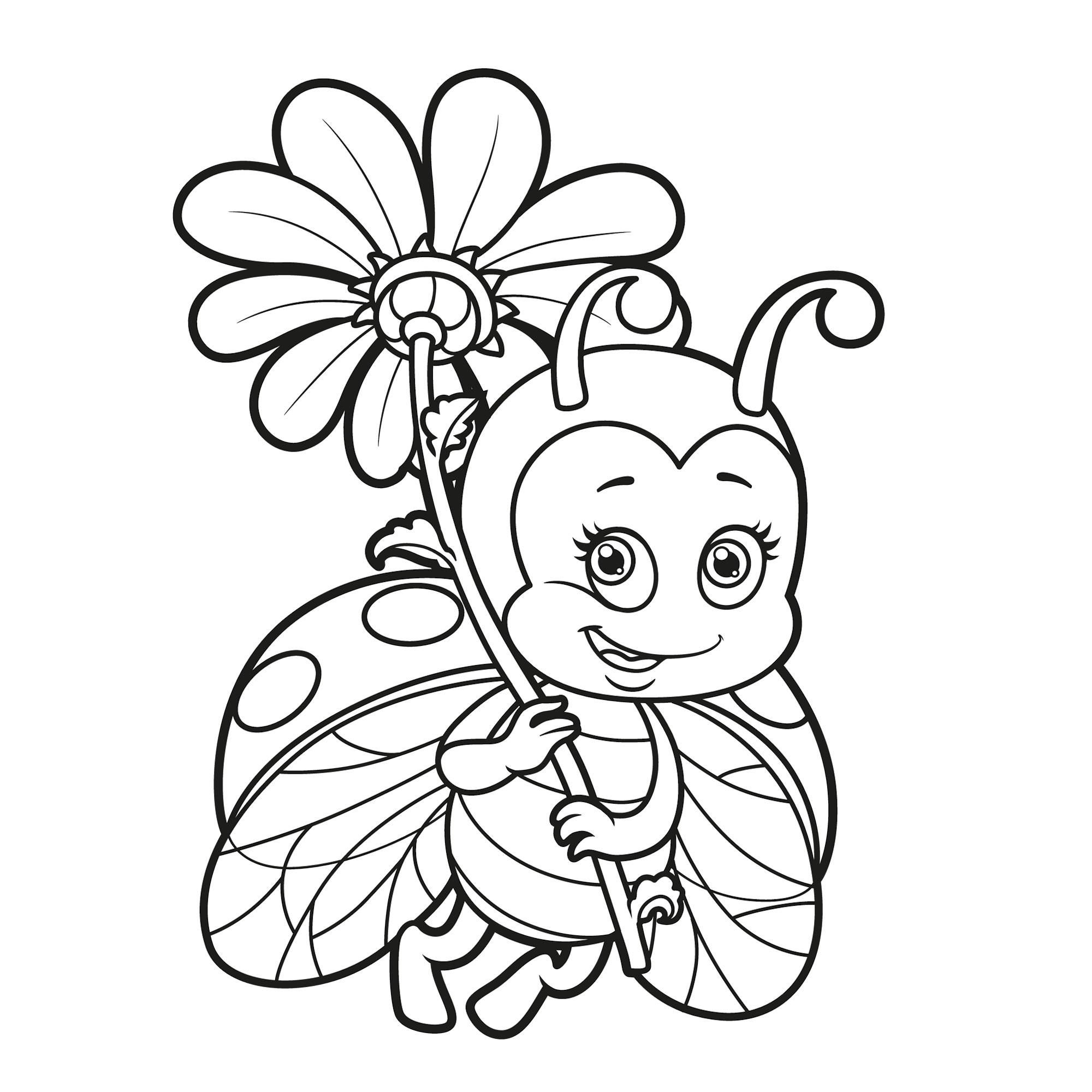
You will find a spring ladybug coloring page, a cute ladybug beside a large flower, and an intricate design with ladybugs flying among daisies.
Classic red and black is always recognizable, but real lady beetles come in more color combinations than many people realize.
And fantasy ladybugs can be anything you want.
Try:
- Orange and black
- Yellow and black
- Pink and purple
- Blue and silver
- Rainbow spots
You can even replace round spots with tiny hearts, stars, or flowers.
For more spotted beetles, explore our full collection of Ladybug Coloring Pages.
🌼 Ladybugs and Daisies
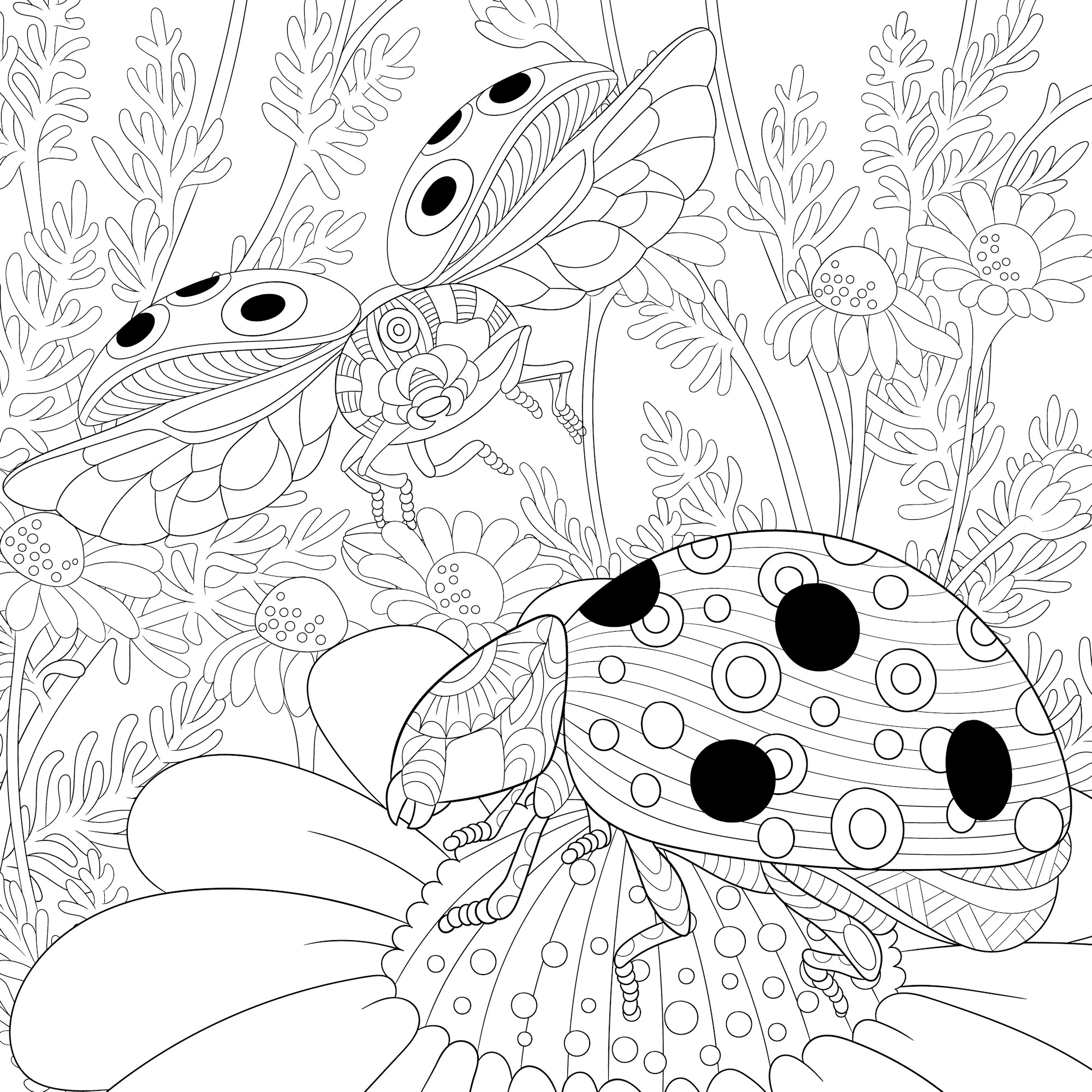
The detailed zentangle ladybugs and daisy flowers page combines insects with intricate floral patterns.
Choose a smaller palette and repeat the colors throughout the design.
For example, red ladybugs can become the brightest part of a page filled with yellow, white, green, and blue flowers.
Or abandon realism and make each ladybug a different jewel tone.
Fine-tip markers and sharpened colored pencils are especially useful for working inside smaller patterns.
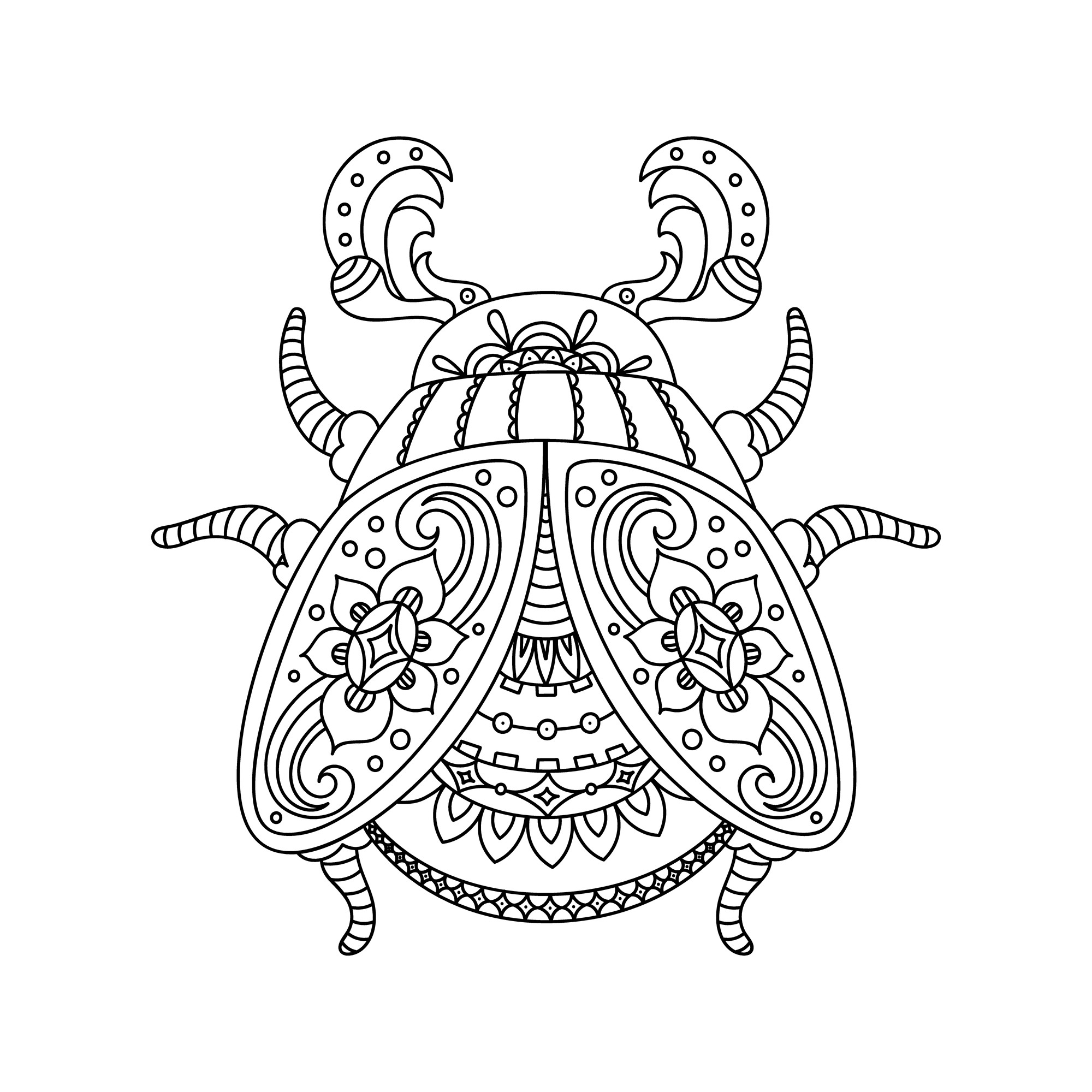
🪲 Decorative Beetle Coloring Page
Beetles are among the most varied insects in the world, and the decorative beetle page takes advantage of their wonderful shapes.
This particular design includes floral mandala patterns, turning the beetle into a piece of decorative artwork.
Try using jewel tones:
- Emerald
- Sapphire blue
- Ruby red
- Amethyst purple
- Turquoise
- Gold
Metallic-looking colors can work particularly well on beetle designs because many real beetles have glossy or iridescent appearances.
You could even make the entire beetle rainbow-colored while keeping the floral background more subdued.
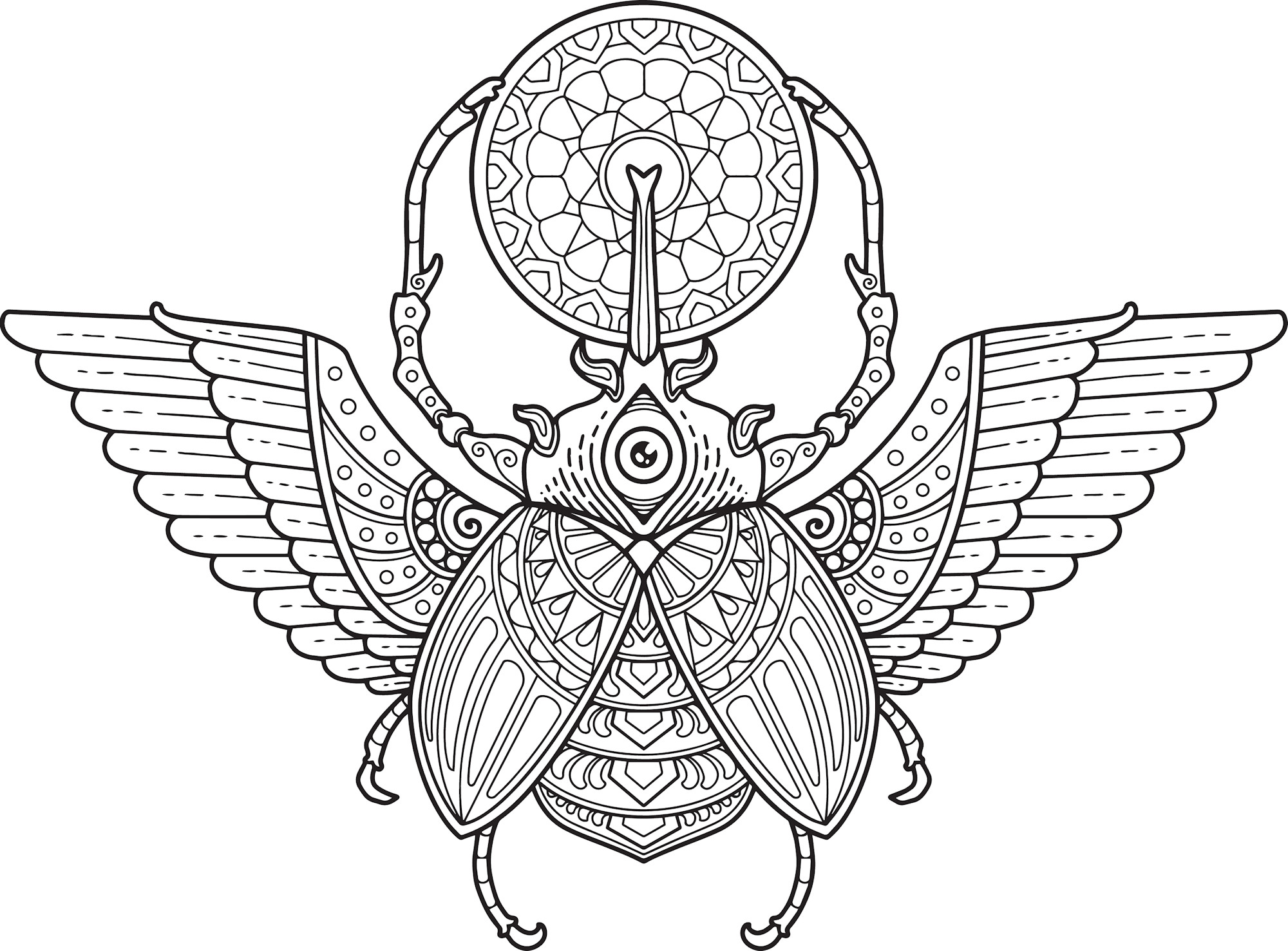
✨ Scarab Beetle Mandala
The scarab beetle mandala is one of the more intricate pictures in the collection.
Rather than thinking about what a realistic beetle looks like, concentrate on symmetry, repetition, and color balance.
Choose four or five colors before beginning.
For example:
Egyptian-Inspired Palette: turquoise, gold, navy, red, and black
Jewel Palette: emerald, sapphire, ruby, violet, and gold
Pastel Palette: lavender, mint, pale pink, peach, and blue
Earth Palette: brown, rust, olive, cream, and gold
Repeat those colors around the pattern to create a balanced finished design.
🪲 Beetles Come in Amazing Variety
Beetles form an enormously diverse group of insects.
They live in habitats ranging from forests and gardens to deserts, freshwater environments, rotting wood, and leaf litter.
Their food choices are just as varied. Depending on the species, beetles may eat plants, fungi, decaying material, or other animals.
That diversity makes beetles perfect inspiration for creative coloring.
An imaginary beetle could be tiny and golden, enormous and blue, covered in spots, decorated with flowers, or shining like a jewel.
🪷 Dragonfly Coloring Pages
Dragonflies look almost as though they were designed for coloring.
Their long bodies and four delicate wings provide lots of spaces for gradients, patterns, and metallic-looking shades.
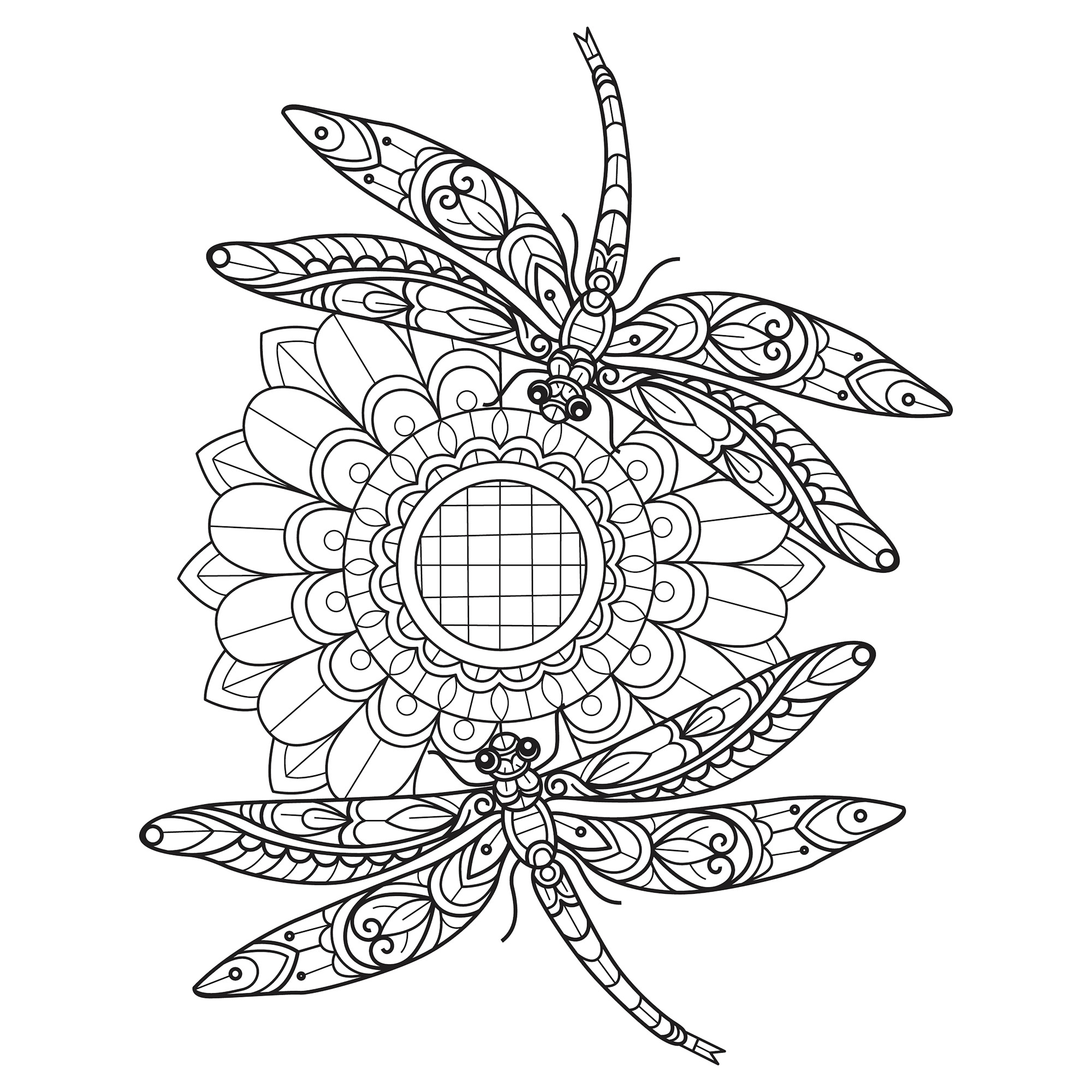
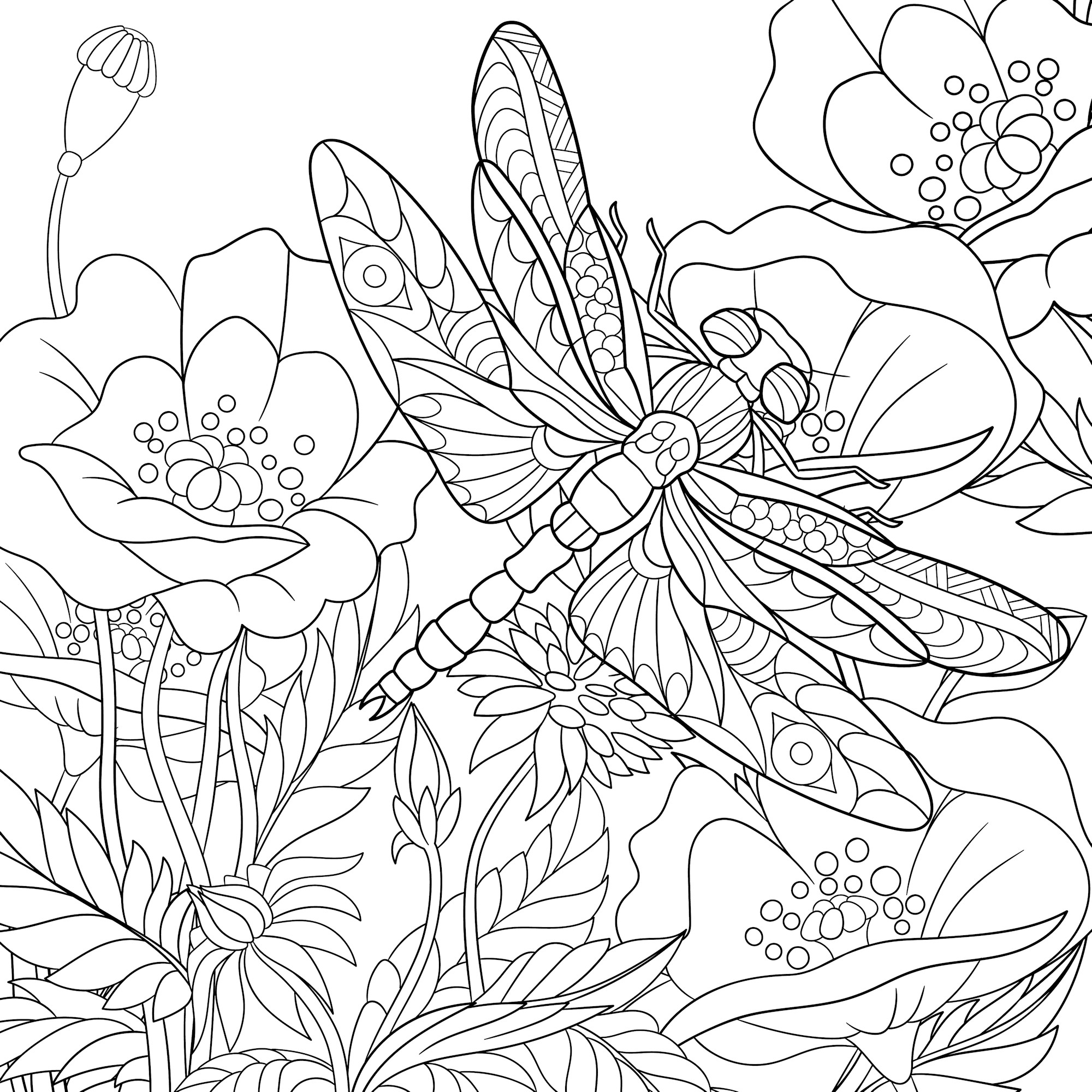
The collection includes dragonflies with a large flower and a zentangle-style dragonfly flying around poppies.
Real dragonflies can appear in striking shades of blue, green, red, yellow, brown, and black.
Fantasy versions can go even further.
Try coloring the wings pale blue and silver while giving the body brilliant turquoise, purple, or emerald tones.
🌺 Dragonfly and Poppy Flowers
The zentangle-style dragonfly surrounded by poppy flowers creates a particularly colorful garden scene.
Bright red poppies can contrast beautifully with a cool blue or green dragonfly.
Or make the flowers pink, orange, purple, or yellow.
For a more decorative result, repeat one of the flower colors inside the dragonfly wings so the two parts of the picture feel connected.
Because the design contains smaller details, colored pencils and fine-tip markers may be easier to control than broad crayons.
💧 Dragonflies and Water
Dragonflies have a fascinating connection to freshwater.
Their young stages develop in water, so dragonflies are commonly associated with ponds, lakes, rivers, streams, and wetlands.
After coloring a dragonfly, try drawing a habitat around it.
Add:
- A pond
- Water lilies
- Reeds
- Cattails
- Rocks
- Grasses
- Flowers
You could even draw the dragonfly flying just above the water with its reflection beneath it.
🕷️ Is a Spider an Insect?
One page in the collection features an adorable jumping spider sitting among flowers.
But here is a fun fact: a spider is not actually an insect.
Spiders are arachnids.
One easy way to tell the difference is to count the legs.
Adult insects have six legs, while spiders have eight.
Insects also have three major body sections—the head, thorax, and abdomen—and a pair of antennae. Spiders have a different body plan and do not have antennae.
That makes the jumping-spider page perfect for a simple sorting activity.
Ask children:
Insect or arachnid?
Then count the legs together.
🕷️ Cute Jumping Spider Among Flowers
Even though our jumping spider is the odd one out scientifically, it is far too cute to leave out of a bug-themed coloring session.
Jumping spiders often have large forward-facing eyes, which give them an almost cartoon-like appearance even in real life.
For the coloring page, give your spider whatever look you want.
Try brown and black for something natural, or create a bright fantasy spider in turquoise, pink, purple, orange, or rainbow colors.
Then make the flowers around it just as colorful.
🔍 What Makes an Insect an Insect?
With bees, butterflies, beetles, ladybugs, dragonflies, and other tiny creatures on the page, this is a perfect opportunity to learn the basic insect body plan.
Adult insects have:
- Six legs
- Three main body sections: head, thorax, and abdomen
- One pair of antennae
- An exoskeleton
Many insects also have wings, although not every insect species or life stage does.
Try looking at several coloring pages and finding these features.
Can you see the butterfly’s antennae?
How many legs does the beetle have?
Where are the dragonfly’s wings attached?
Observation turns coloring into a small science investigation.
🌎 Insects Are Everywhere
Insects are extraordinarily diverse and can be found in an enormous range of habitats.
They live in:
- Gardens
- Forests
- Meadows
- Deserts
- Wetlands
- Freshwater habitats
- Underground
- Beneath tree bark
- Among leaves
- Around flowers
Different body shapes and behaviors help insects survive in very different environments.
After coloring one insect, draw the habitat where you imagine it lives.
A dragonfly might hover beside a pond, while a butterfly visits a sunny meadow and a beetle crawls across the forest floor.
🌻 Insects in the Garden
Gardens can be filled with insect life.
Spend a few minutes near flowering plants and you might notice bees, butterflies, beetles, ladybugs, flies, or other tiny visitors.
Use one of the coloring pages to design your own insect garden.
Add several different flowers, leafy plants, grasses, trees, and perhaps a small pond.
Then decide which insects live there.
For more inspiration, explore our Coloring Pages of Gardens and Nature Coloring Pages.
🌸 Create a Pollinator Garden
Some insects visit flowers as they search for nectar or pollen, and in doing so they may help move pollen between flowers.
Turn one of the bee or butterfly pages into a pollinator garden.
Draw several kinds of flowers at different heights and fill them with bright colors.
Add:
- Bees
- Butterflies
- Beetles
- Other flower visitors
Older children could find out which native flowering plants grow in their own area and draw some of them into the scene.
🔎 Go on an Insect Hunt
After coloring your favorite page, head outside for a simple insect observation activity.
Look carefully around:
- Flowers
- Leaves
- Tree trunks
- Grass
- Sidewalks
- Garden plants
See whether you can find:
- A bee
- Butterfly
- Beetle
- Ladybug
- Ant
- Dragonfly
- Caterpillar
Observe insects where they are rather than handling unfamiliar creatures.
Children can make a tally mark for every type they find or draw one of their discoveries afterward.
🔢 Count the Legs
Younger children can turn the insect pages into an easy counting activity.
Choose an insect and count its legs.
1, 2, 3, 4, 5, 6!
Then look at the jumping spider.
1, 2, 3, 4, 5, 6, 7, 8!
That simple difference provides an easy way for young children to begin distinguishing insects from spiders.
You can also count:
- Spots on a ladybug
- Butterfly wing patterns
- Flowers
- Bees
- Caterpillar body segments
Coloring pages can become quick math practice without feeling like worksheets.
🔤 I Is for Insect
These pages can also work with alphabet learning.
Write a large:
I i
Then practice saying:
I is for insect.
Think of other words beginning with I, such as:
- Ice
- Igloo
- Ink
- Island
- Ivy
Children can decorate the letter I with tiny insects or turn each dot into a little ladybug.
For more learning-focused printables, visit our Educational Coloring Pages & Activities.
🎨 Insect Coloring Ideas
The insect world offers almost every color imaginable.
If you need some inspiration, try one of these palettes.
Flower Garden
Red, yellow, pink, purple, green, and blue
Jewel Beetle
Emerald, turquoise, sapphire, purple, and gold
Kawaii Bugs
Pink, mint, lavender, peach, and baby blue
Woodland
Brown, olive, rust, cream, and forest green
Rainbow
Red, orange, yellow, green, blue, and purple
Night Garden
Navy, violet, turquoise, silver, and black
You can use one palette for an entire page or give every insect its own combination.
🌈 Invent a Brand-New Insect
Once you have colored several real or realistic insects, create one that has never existed before.
Start with three body sections and six legs.
Then decide:
Does it have wings?
What kind of antennae does it have?
Is it covered in spots, stripes, or scales?
What color is it?
Where does it live?
What does it eat?
Give your new insect a name and draw its habitat around it.
You might invent the Rainbow Flower Beetle, Silver Moon Bee, or Purple Forest Flutterbug.
✏️ Practice Symmetry With Butterfly Wings
Butterfly coloring pages are a simple introduction to symmetry.
Color one half of the butterfly first.
Then try to repeat the same colors and patterns on the opposite wing.
Children can use:
- Matching stripes
- Matching dots
- Matching shapes
- Matching color sequences
Afterward, create a second butterfly where the two wings deliberately do not match.
Comparing the pictures can help children notice what symmetry means while still keeping the activity playful.
📖 Turn Your Insects Into a Story
Tiny creatures can have very big adventures.
Imagine that the sleeping bee wakes up and discovers that all the flowers have disappeared.
Perhaps the caterpillar and ladybug decide to search for them.
A dragonfly could guide the group across a pond while the jumping spider watches from the garden.
Or perhaps every insect in the collection lives in one enormous magical garden.
Children can give each character a name and tell the story aloud or write several sentences beneath their finished pictures.
Multiple coloring pages can become illustrations for different chapters.
🏫 Insect Coloring Pages for the Classroom
Insect printables can connect naturally with many classroom and homeschool topics.
Use them for:
- Insect units
- Butterfly life-cycle lessons
- Pollinator activities
- Spring themes
- Garden studies
- Animal classification
- Counting practice
- Pattern activities
- Early-finisher pages
- Nature journals
- Creative writing
- Classroom bulletin boards
Students could each choose one insect, color it, and add three interesting facts.
Then combine the finished pages into a classroom insect field guide.
🌷 Insect Coloring Pages for Spring
Spring is an especially fun time for insect coloring.
Flowers begin blooming, leaves return, and many familiar little garden creatures become easier to spot.
Use soft greens, pinks, yellows, blues, and purples to create a cheerful spring palette.
Pair the insect pages with our Spring Coloring Pages for an even larger seasonal activity.
Kids can create a complete spring scene filled with insects, flowers, birds, sunshine, and fresh leaves.
✂️ Insect Coloring Page Crafts
Finished insect pages can be reused for plenty of simple projects.
Turn them into:
- Butterfly decorations
- Garden collages
- Insect fact cards
- Homemade books
- Classroom displays
- Nature journals
- Bookmarks
- Story characters
- Spring decorations
- Life-cycle projects
Children can also cut out several completed insects and attach them to a large piece of green or blue paper.
Draw flowers, trees, ponds, and grass around them to create an enormous garden habitat.
📚 Create an Insect Field Guide
One especially fun long-term project is to create a homemade insect field guide.
Choose a different coloring page for each insect and add the insect’s name beneath the picture.
Then write one or two facts.
For example:
Butterfly
Has six legs and four wings. Begins life as an egg before becoming a caterpillar.
Ladybug
A type of beetle. Many species eat aphids and other small insects.
Dragonfly
Spends its early life in water and becomes an aerial predator as an adult.
Continue adding pages until you have your own colorful reference book.
🖍️ Coloring Tips for Detailed Insect Pages
Simple kawaii bees, caterpillars, and ladybugs work wonderfully with crayons and broad markers.
The zentangle butterflies, floral beetles, scarab mandalas, and detailed dragonflies may be easier with fine-tip markers or sharpened colored pencils.
For intricate pages, choose a limited palette before beginning. Four or five colors repeated across a complicated pattern can create a more coordinated result than choosing a new color every time.
You can also experiment with:
- Gradients
- Shading
- Metallic accents
- Repeated patterns
- Symmetry
- Contrasting colors
The tiny details are part of the fun.
🖨️ How to Use Your Insect Coloring Pages
Choose your favorite design, print it, and gather crayons, markers, colored pencils, or other favorite art supplies.
Regular printer paper works well for everyday coloring. Heavier paper may be helpful if you plan to use wet markers, paint, glue, glitter, or other craft materials.
Then decide what sort of bug world you want to create.
It can be realistic and nature-inspired, soft and kawaii, filled with rainbow colors, or transformed into an imaginary garden where every creature looks completely different.
🐝 Let Your Creativity Buzz, Flutter & Fly
From kawaii bees and beautiful butterflies to caterpillars, ladybugs, beetles, scarabs, dragonflies, floral designs, zentangle patterns, and even a cute jumping spider, this collection celebrates the enormous variety of tiny creatures we find around us.
Color a cheerful bee resting on a flower, create symmetrical butterfly wings, decorate an elaborate beetle mandala, learn the difference between insects and spiders, or design an entirely new species of your own.
Choose your favorite printable, grab your colors, and discover just how much creativity can fit into the smallest corner of the natural world.
🔗 Related Articles
- Coloring Pages of Ladybugs
- Butterflies Coloring Page
- Bee Happy Coloring Page
- Animal Coloring Pages
- Nature Coloring Pages
- Coloring Pages of Gardens
- Coloring Pages of Flowers
- Coloring Pages of Plants
- Educational Coloring Pages & Activities
📚 Sources
- Smithsonian National Museum of Natural History — What Is an Insect?
- Smithsonian Institution — Beetles
- Smithsonian Institution — Butterflies
- Smithsonian Gardens — About Butterflies
- Smithsonian Gardens — Dragonflies