
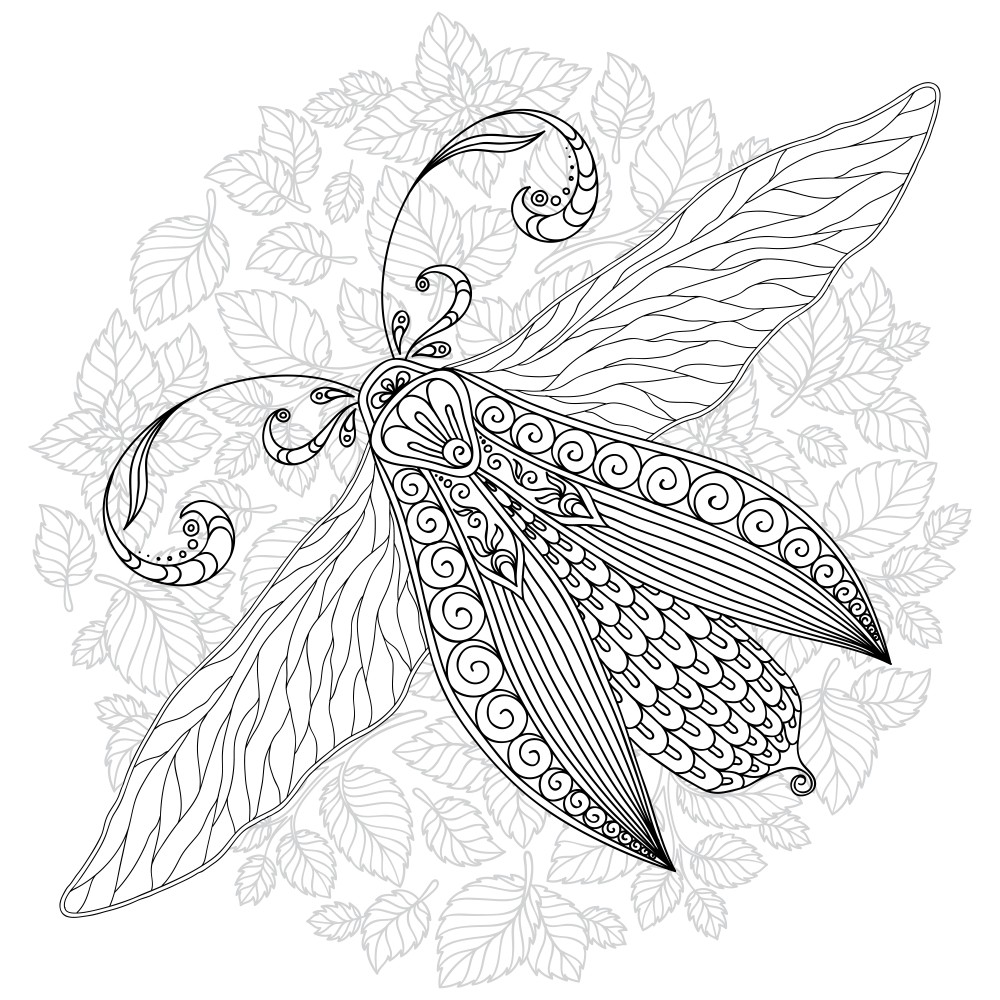
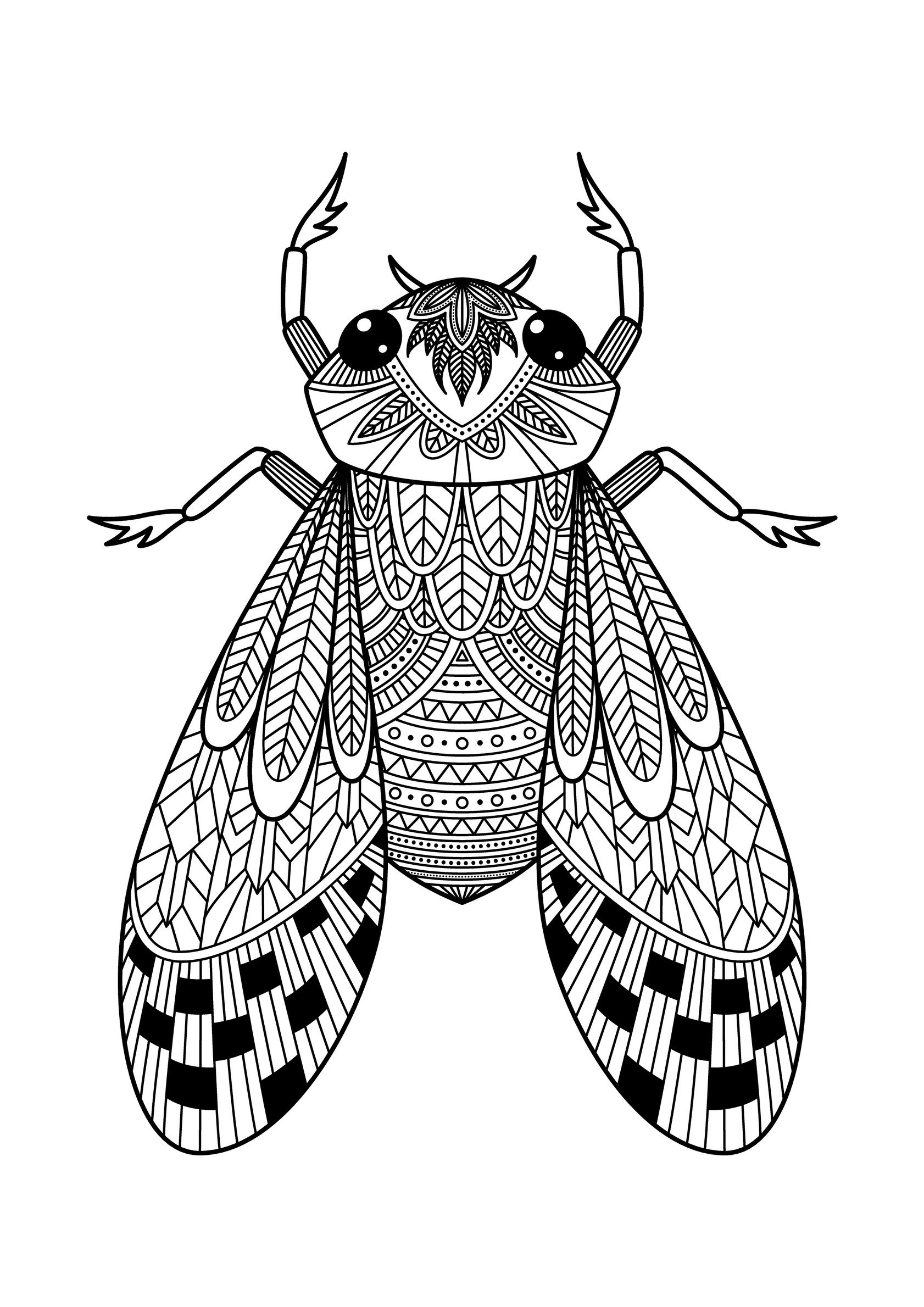
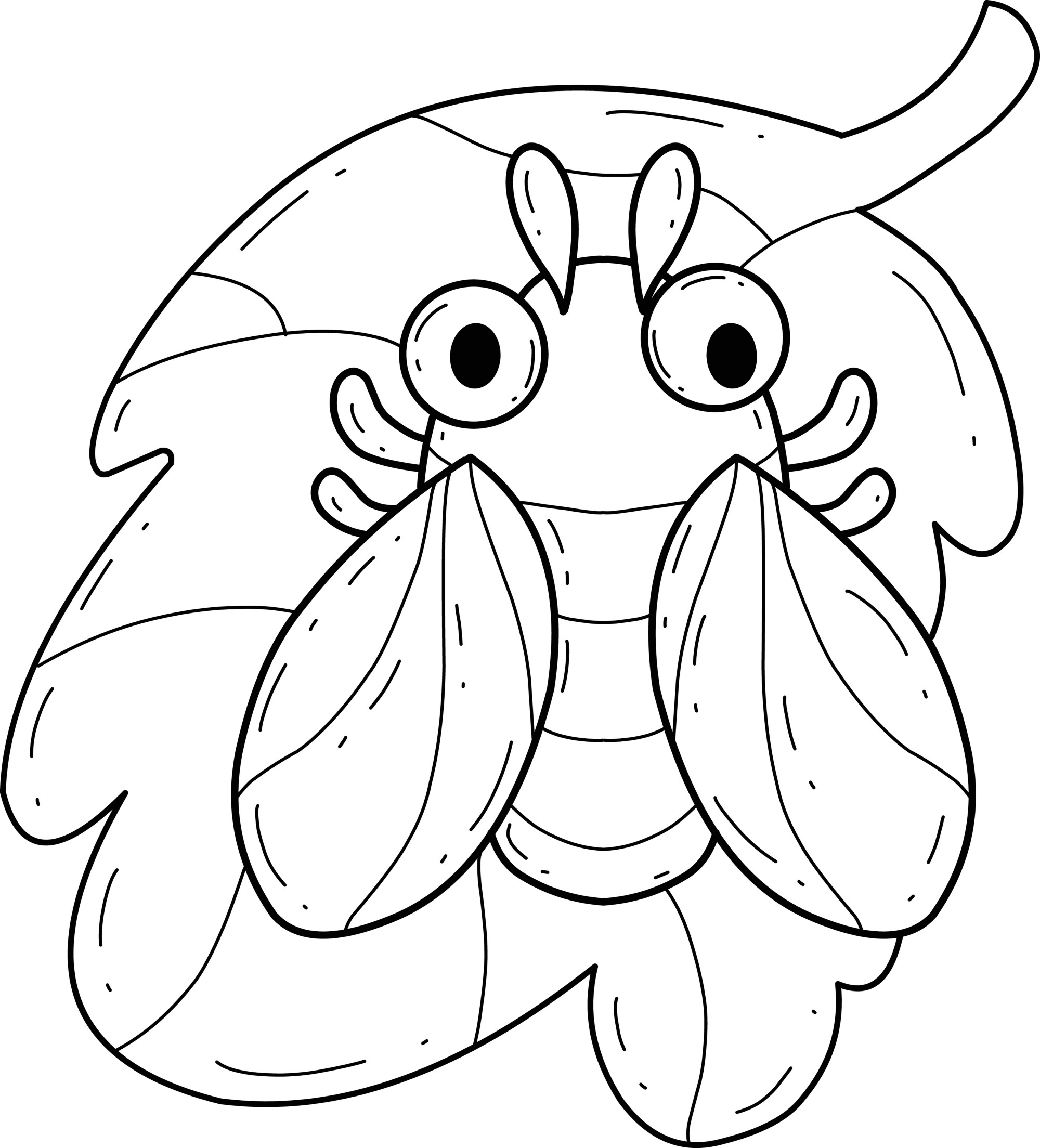
Fill summer with color—and maybe a little imaginary buzzing—with our free printable cicada coloring pages, featuring three different cicada designs ready for crayons, colored pencils, or markers.
Cicadas are some of the most recognizable insects of warm weather. Their large transparent wings, sturdy bodies, wide-set eyes, and famously loud calls make them very different from butterflies, bees, or ladybugs. Some cicadas appear every summer, while the extraordinary periodical cicadas of eastern North America emerge in enormous numbers after spending 13 or 17 years developing underground.
Our small cicada collection gives you several ways to explore these unusual insects. Recreate the black, orange, and red colors of a periodical cicada, try the green and brown shades often seen in annual cicadas, carefully trace the intricate veins across the wings, or forget nature completely and create a pink, purple, turquoise, or rainbow cicada.
Print one favorite or color all three as a miniature cicada collection.
🪲 Explore Our Cicada Coloring Pages
This collection currently includes three designs:
- Two cicada illustrations
- One cute cicada design
The cicada’s unusual shape gives you plenty to work with. You can experiment with transparent-looking wings, bold eyes, segmented bodies, patterned legs, and realistic or imaginary color combinations.
The cute cicada design is especially easy to turn into a playful summer character, while the other cicada illustrations can inspire closer observation of real insects.
For an even larger collection of bees, butterflies, ladybugs, dragonflies, beetles, caterpillars, and other tiny creatures, explore our Insect Coloring Pages.
🎨 Choose a Cicada Color Palette
Real cicadas come in more colors than you might expect.
Depending on the species, you might see combinations of:
- Black
- Brown
- Green
- Olive
- Orange
- Red
- Cream
Their wings are usually clear or translucent-looking, with darker veins running through them.
For a fantasy cicada, try lavender, turquoise, pink, gold, or every color of the rainbow.
A coloring page gives you permission to explore both approaches.
❤️ Color a Periodical Cicada
The famous periodical cicadas of the genus Magicicada are especially distinctive.
Try:
Body: Black
Eyes: Red
Legs: Orange-brown
Wing veins: Orange
Wings: Mostly white or very pale gray
Rather than coloring the entire wing a dark shade, keep most of it very light so it still looks transparent.
Add darker orange along the veins and outer edges.
A leafy green background will make the black-and-orange insect stand out beautifully.
👁️ Make the Red Eyes Stand Out
Bright red eyes are one of the easiest ways to recognize a periodical cicada.
Try:
- Scarlet
- Cherry red
- Orange-red
Add a darker edge and leave a tiny pale highlight.
The eyes can become one of the brightest parts of the entire page.
Not every cicada has red eyes, though, so you can also use brown, black, greenish, or completely imaginary colors depending on the style you want.
🧡 Add Orange Wing Veins
Periodical cicadas have striking orange-colored veins running through their otherwise translucent wings.
Use a sharpened orange or reddish-brown pencil to follow the printed lines.
Keep the spaces between the veins:
- White
- Pale cream
- Very light gray
- Nearly colorless
That contrast helps create the appearance of delicate transparent wings.
💚 Color an Annual Cicada
The cicadas commonly heard during summer are often larger and may show more green and brown than periodical species.
Try:
Thorax: Green and black
Abdomen: Brown, green, or black
Wings: Clear with dark veins
Legs: Brown or olive
Add different greens rather than filling the whole insect with one shade.
Try lime, olive, leaf green, and deep forest green.
Then place the cicada against tree bark or leaves.
🤎 Create a Woodland Cicada
Use an earthy palette:
- Bark brown
- Olive
- Tan
- Cream
- Charcoal
Add mottled patches to the body.
Color the background like a tree trunk with gray-brown bark.
A cicada using similar colors may seem to disappear into its surroundings.
💜 Create a Purple Cicada
Nature-inspired coloring is optional.
Try:
Body: Violet
Wings: Lavender
Eyes: Gold
Legs: Plum
Add silver-looking wing veins.
Maybe this cicada only appears beneath a full moon.
Draw stars and a dark blue summer sky around it.
🌈 Create a Rainbow Cicada
Divide the body into sections.
Try:
Red
Orange
Yellow
Green
Blue
Purple
Keep the wings pale or continue the rainbow across them.
Another idea is to make every wing vein a different color.
The complicated network of lines can become almost like stained glass.
✨ Create a Galaxy Cicada
Use:
- Navy
- Indigo
- Purple
- Magenta
- Turquoise
across the body.
Add tiny white stars.
Make the wings pale blue with silver-gray veins.
Perhaps this cicada came from another planet where insects sing beneath two moons.
🪽 Color the Cicada Wings
Cicada wings are one of the most interesting parts of the insect.
Adults have broad, membranous wings crossed by a network of veins.
Instead of filling them with one strong color, try using:
- White
- Pale gray
- Pale blue
- Cream
very lightly.
Then emphasize the vein pattern with a sharper pencil.
The goal is to suggest transparency rather than create a solid butterfly-like wing.
🌈 Turn the Wings Into Stained Glass
For a fantasy version, use every little wing section as its own coloring space.
Try:
- Pink
- Purple
- Blue
- Green
- Yellow
Keep the veins black or gold.
The finished cicada can look like a tiny stained-glass window.
🔍 Follow the Wing Veins
Look carefully at the printed wing pattern.
Trace the lines slowly with a colored pencil.
How many enclosed sections can you see?
Color alternating sections lightly.
Leave some completely white.
This can turn one detailed part of the insect into its own mini pattern activity.
🪲 What Makes a Cicada an Insect?
Cicadas are true insects.
Like other adult insects, they have:
- Six legs
- A head
- A thorax
- An abdomen
- One pair of antennae
- An exoskeleton
Adult cicadas also have wings.
Try finding the three main body sections on one of the coloring pages.
Then count the legs:
1, 2, 3, 4, 5, 6
Compare the cicada with a spider, which has eight legs rather than six.
🐞 Cicadas Are True Bugs
Cicadas belong to the insect order Hemiptera, commonly called the true bugs.
Other members of this broad group include insects such as:
- Leafhoppers
- Treehoppers
- Aphids
- Stink bugs
Cicadas have piercing-sucking mouthparts that allow them to feed on plant fluids.
They are not grasshoppers, even though periodical cicadas have sometimes historically been called “17-year locusts.”
True locusts are a type of grasshopper.
🌳 Where Do Cicadas Live?
Cicadas occur in many parts of the world.
Different species inhabit different regions and environments, but trees and other woody plants are especially important to many cicadas because their life cycles are closely connected with plant tissues and roots.
Create a cicada habitat with:
- Tree trunk
- Branches
- Green leaves
- Grass
- Summer sky
Maybe your cicada has just emerged from underground and climbed onto the nearest tree.
🌿 Draw a Cicada on a Tree
Add a large branch beneath the insect.
Use:
- Gray
- Brown
- Tan
for the bark.
Draw leaves around it in several shades of green.
Maybe another cicada is hiding on the opposite side of the trunk.
Add its eyes or wings peeking around the edge.
☀️ Create a Summer Cicada Scene
For many people, cicadas are part of the soundtrack of summer.
Draw:
- Bright sun
- Green trees
- Tall grass
- Blue sky
Use warm yellows and rich greens.
Add several cicadas to the branches.
You could even draw wavy lines around them to represent sound filling the air.
Pair the page with our Summer Coloring Pages for an entire warm-weather coloring collection.
🌅 Create a Cicada at Sunset
Use:
- Yellow
- Orange
- Coral
- Pink
- Purple
across the sky.
Make the tree branch a dark silhouette.
Keep the cicada darker too, with just a little orange or red showing in the wings and eyes.
The insect can look as though it is beginning its evening chorus just as daylight fades.
🌙 Create a Cicada Summer Night
Use:
- Navy
- Indigo
- Deep purple
for the background.
Add:
- Moon
- Stars
- Dark leaves
Make the cicada green or brown so it stands out from the sky.
Draw tiny musical notes or sound waves around it.
🎵 How Do Cicadas Make Their Sound?
Male cicadas are responsible for the familiar loud calling songs.
They do not create the sound by rubbing their wings together like some other insects.
Instead, males have specialized structures called tymbals on their bodies. Rapid movement of these structures produces sound, while spaces within the body help amplify it.
Different cicada species produce different calls.
That means a summer evening may contain several different insect songs at once.
🎶 Draw the Cicada’s Song
You cannot color sound, but you can draw it.
Add curved lines around the cicada:
~~~~~~
Make each line a different color.
Or draw musical notes.
Maybe:
Blue = quiet
Purple = medium
Red = loud
Turn the invisible cicada chorus into something you can see.
👂 Go on a Cicada Listening Walk
During cicada season, head outside with an adult and listen.
Try a:
- Backyard
- Park
- Wooded trail
- Tree-lined neighborhood
Can you hear cicadas?
Do you hear one insect or an entire chorus?
Try describing the sound.
Is it:
- Buzzing?
- Pulsing?
- Rising and falling?
- Continuous?
There is no need to catch the insects.
Listening is enough.
⏳ Not Every Cicada Lives Underground for 17 Years
One of the most important cicada facts is also one of the easiest to misunderstand.
Not every cicada follows a 17-year cycle.
The famous periodical cicadas of eastern North America have synchronized life cycles of either 13 or 17 years.
Other cicadas appear in adult form every year and are commonly called annual cicadas or dog-day cicadas.
The word “annual” does not necessarily mean one individual completes its entire life cycle in exactly one year. Different generations overlap, allowing adults to appear every summer.
So:
13 or 17 years = certain periodical cicadas
Seen every year = annual cicadas
🔴 Periodical vs. Annual Cicadas
One simple way to compare them is color.
Periodical Cicada
Often:
- Black body
- Bright red eyes
- Orange wing veins
Annual Cicada
Often:
- Green or brown body
- Clear wings
- Darker eyes
These are useful general clues rather than rules for every cicada in the world.
There are thousands of cicada species, so real cicada diversity is much greater than two simple color schemes.
📅 What Is a Cicada Brood?
Periodical cicadas are organized into groups called broods.
A brood contains cicadas in a particular geographic region that emerge during the same year.
Different broods emerge in different years.
Some follow 13-year cycles.
Others follow 17-year cycles.
That is why one part of the United States may experience an enormous cicada emergence while another area has very few periodical cicadas that year.
🌱 The Cicada Life Cycle
A cicada’s life begins with an egg.
A simplified life cycle looks like this:
Egg → Nymph → Adult
Female cicadas lay eggs in plant twigs.
When the young cicadas hatch, the tiny nymphs fall to the ground and burrow into the soil.
They spend their immature lives underground feeding from plant roots.
When development is complete, the nymphs tunnel upward, climb onto a tree or another surface, and molt one final time into winged adults.
The adults eventually mate and begin the cycle again.
🥚 Draw the Cicada Life Cycle
Divide another sheet into four sections.
Draw:
1. Eggs
Tiny eggs inside a twig.
2. Nymph
A young cicada underground.
3. Emerging Cicada
The nymph climbing a tree.
4. Adult
A winged cicada.
Connect everything with arrows.
Color each stage differently.
🟤 What Is That Empty Cicada Shell?
You may sometimes find a brown insect-shaped shell stuck to a tree trunk.
It can look as though a cicada has been frozen in place.
It is actually the shed exoskeleton, or exuvia, left behind when a cicada nymph molts into its adult form.
The adult crawls out of the old skin.
Its new wings expand and harden.
The empty shell may remain attached to the tree long afterward.
🤎 Color a Cicada Exoskeleton
Draw another cicada shape beside the adult.
Color it:
- Tan
- Amber
- Light brown
Label it:
Shed Exoskeleton
Keep the adult cicada much more colorful.
This creates an easy before-and-after comparison.
🌳 Draw a Cicada Emerging
Add a vertical tree trunk.
Draw the empty nymphal shell attached to the bark.
Place the newly emerged cicada above it.
New adults can initially look pale before their bodies and wings finish hardening and darkening.
Use soft cream or pale green on your freshly emerged imaginary cicada.
Then draw a fully colored adult beside it.
🌎 Cicadas Around the World
There are roughly 3,000 known cicada species worldwide, and scientists continue studying their enormous diversity.
Most cicadas are not the famous red-eyed periodical cicadas.
Cicadas occur across many warm and temperate regions, with different sizes, colors, calls, and life histories.
That makes this coloring page a good starting point rather than a complete picture of what cicadas look like.
After coloring, look at photographs of several cicada species.
How many color combinations can you find?
🔬 Compare the Coloring Page With a Real Cicada
Look at a clear photograph.
Compare:
- Eyes
- Wings
- Legs
- Body shape
- Antennae
- Wing veins
Which features did the coloring-page artist include?
Which were simplified?
A cute cartoon cicada does not need perfect anatomy.
Comparing it with the real insect simply helps you notice how artists transform nature into character designs.
😊 Color the Cute Cicada
The cute cicada design is perfect for completely imaginary colors.
Try:
Body: Mint
Wings: Lavender
Eyes: Pink
Or:
Body: Turquoise
Wings: Rainbow
Eyes: Gold
Add a smiling sun, flowers, or tiny stars around it.
Maybe your cute cicada has a name.
🌈 Invent a Cicada Character
Complete:
Name: ______
Favorite color: ______
Favorite tree: ______
Favorite song: ______
Special talent: ______
Maybe your cicada sings opera.
Perhaps it plays drums.
Maybe it sleeps all day and performs concerts at sunset.
Draw something beside it that reveals its personality.
🎤 Create a Cicada Band
Draw several cicadas.
Give them instruments:
- Guitar
- Drums
- Piano
- Tambourine
Maybe the lead singer does not need a microphone because cicadas are already famous for being loud.
Give the band a name.
Try:
The Summer Buzz
The Tymbals
Brood Beats
or invent your own.
🎼 Make a Cicada Rhythm
Try creating a simple visual rhythm:
Buzz – Buzz – Pause – Buzz
Represent it with colors:
Blue – Blue – White – Blue
Repeat the sequence.
Or clap the pattern.
Different cicada species have different calls, so imagining rhythm is a fun way to connect sound with pattern.
🔤 C Is for Cicada
Write a large:
C
Practice:
C is for Cicada.
Think of other C words:
- Cat
- Cloud
- Crab
- Cake
Decorate the C with little wing patterns.
For more alphabet and learning activities, visit our Educational Coloring Pages & Activities.
🔢 Count Six Cicada Legs
Adult cicadas are insects, so count:
1, 2, 3, 4, 5, 6
Then draw six circles.
Color:
- 2 red
- 2 blue
- 2 yellow
How many altogether?
Add another insect and count again.
👀 Find the Cicada Body Parts
Look for:
- Head
- Thorax
- Abdomen
- Eyes
- Antennae
- Six legs
- Wings
You do not need to label every tiny anatomical detail.
The goal is simply to look closely at how the insect is built.
🔍 Create a Cicada I Spy Page
Hide around the picture:
- 6 leaves
- 5 stars
- 4 flowers
- 3 cicadas
- 2 shells
- 1 moon
Color everything.
Then give the finished page to someone else.
Can they find every hidden object?
🎲 Play Cicada Roll-and-Color
Assign one color to each number on a six-sided die:
1 — Green
2 — Brown
3 — Orange
4 — Red
5 — Purple
6 — Your choice
Roll.
Color one part of the cicada or background using the matching shade.
Continue until the picture is complete.
You may end up with a fairly natural cicada—or a spectacularly strange one.
🎯 Try the Periodical Cicada Challenge
Use only:
- Black
- Orange
- Red
- White
- Green
Color the cicada with a periodical-inspired palette.
Then use green for leaves and branches.
Print another copy and color it with every fantasy shade you want.
Compare the two.
🌈 Try a No-Brown Cicada Challenge
Color the page without using brown.
Try:
- Green
- Turquoise
- Purple
- Red
- Yellow
Can it still look insect-like?
Of course.
The challenge is about experimenting rather than reproducing nature.
📖 Write a Cicada Story
Try:
The cicada had waited underground for years, but when it finally climbed into the sunlight…
or:
Everyone in the forest could hear the mysterious song except…
or:
The tiny cicada shell began glowing at midnight because…
Finish the story.
Use the coloring page as the first illustration.
🌳 The Cicada Beneath the Tree
Imagine a young cicada living beneath a giant tree.
What does the underground world look like?
Draw:
- Roots
- Stones
- Soil
- Tiny tunnels
Maybe the cicada wonders what exists above the ground.
Write what happens when it finally reaches the surface.
🎵 The Cicada That Couldn’t Find Its Song
Every other cicada begins singing.
One cicada cannot remember its song.
Maybe it listens to:
- Birds
- Frogs
- Crickets
- Wind
before inventing a completely new tune.
Draw musical notes around it.
🕰️ The 17-Year Time Capsule
Imagine a periodical cicada disappears underground.
What might change above the ground before its descendants emerge many years later?
Draw two scenes:
Before
and:
Years Later
Keep the same tree in both pictures.
Change everything else you want.
🏫 Cicada Coloring Pages for the Classroom
These printables can work naturally with:
- Insect units
- Life-cycle lessons
- Summer themes
- Nature study
- Animal adaptations
- Sound and vibration
- Early finishers
- Creative writing
- Art centers
The three-page collection is especially useful because children can approach it at different levels.
Younger kids can simply color the cute cicada.
Older students can compare annual and periodical cicadas, study wing anatomy, or create a life-cycle diagram.
📚 Make a Cicada Fact Card
Write:
Animal: Cicada
Group: Insect
Order: Hemiptera
Legs: 6
Young stage: Nymph
Then add one favorite fact.
Maybe:
Male cicadas make calls using tymbals.
or:
Some periodical cicadas emerge every 13 or 17 years.
Keep the card beside the finished coloring page.
🌿 Create an Insect Field Guide
Combine the cicada with other insect printables.
Add:
- Butterflies
- Ladybugs
- Beetles
- Dragonflies
- Bees
Write one or two facts beneath each page.
Staple them together as:
My Insect Field Guide
Continue exploring with our Insect Coloring Pages.
🐞 Pair Cicadas With Ladybugs
Cicadas and ladybugs are both insects, but they look very different.
Compare:
Cicada
Large wings, long body, loud male calls.
Ladybug
Rounded beetle body with hardened wing covers.
Color both and look for the features all adult insects share.
Continue with our Ladybug Coloring Pages.
🦋 Compare Cicadas & Butterflies
Both have wings, but those wings are very different.
Butterfly wings are covered with tiny scales and often display broad colorful patterns.
Cicada wings are usually transparent-looking and crossed with obvious veins.
Color one of each.
Which design has more open wing space?
Which has more detailed lines?
Explore more with our Butterfly Coloring Page.
🌿 Explore More Nature Coloring Pages
Cicadas are only one small part of the outdoors.
Our Nature Coloring Pages connect insects with:
- Flowers
- Plants
- Birds
- Animals
- Gardens
- Beaches
- Weather
- Landscapes
Color the cicada first.
Then build the entire environment around it.
👣 Look for Cicada Shells Outside
During cicada season, examine tree trunks and fences.
You may find empty nymphal shells still attached.
Look closely without disturbing living animals.
If you find a cicada, observe:
- Body color
- Eye color
- Wing veins
- Size
Take a photograph or make a sketch.
Then compare your observation with the coloring page.
📓 Make a Cicada Nature Journal
Write:
Date: ______
Location: ______
Weather: ______
Did I hear cicadas? ______
Did I see one? ______
Color: ______
Draw what you noticed.
Return another day and compare.
A simple journal can turn one coloring page into a longer summer nature activity.
🖍️ Best Supplies for Cicada Coloring Pages
Crayons work well for the larger body areas and the cute cicada design.
Colored pencils are especially useful for:
- Wing veins
- Eyes
- Legs
- Body shading
- Bark and leaves
Fine-tip markers can make orange or black wing veins stand out, although slightly heavier paper may help if marker ink tends to bleed through regular printer paper.
For translucent-looking wings, colored pencils are often easiest because you can keep the shading very light.
🖨️ How to Use These Free Cicada Coloring Pages
Choose one of the three cicada designs and print it.
For a periodical-inspired cicada, gather:
- Black
- Red
- Orange
- White
For an annual-cicada-inspired palette, try:
- Green
- Brown
- Black
- Cream
Or create a rainbow cicada.
Color the insect first.
Then add a habitat with:
- Tree
- Leaves
- Summer sky
- Grass
Finish with sound waves, musical notes, another cicada, or a shed exoskeleton.
You can keep the activity entirely artistic or add a simple life-cycle diagram, insect fact card, or nature-journal entry.
🪲 Bring the Sound of Summer to the Coloring Table
With three printable cicada designs, including a cute cicada, these free Cicada Coloring Pages provide a fun way to explore one of summer’s most remarkable insects.
Color a black-and-orange periodical cicada with bright red eyes, create a green annual cicada sitting on tree bark, carefully shade transparent-looking wings, or invent a purple galaxy cicada whose song can be heard from another planet.
Along the way, you can learn that cicadas are true bugs with six legs, that males make their famous calls using specialized tymbals, and that the celebrated 13- and 17-year life cycles belong specifically to periodical cicadas rather than every cicada species.
You may even find the empty shell of a cicada nymph attached to a tree outside.
Look closely.
Listen carefully.
Then return to the coloring table and create the loudest-looking insect on the page.
Happy coloring!
🔗 Related Articles
- Insect Coloring Pages: Free Printable Bees, Butterflies, Ladybugs, Beetles & More
- Nature Coloring Pages
- Butterfly Coloring Page
- Ladybug Coloring Pages
- Bee Happy Coloring Page for World Bee Day
- Coloring Pages of Flowers
- Garden Coloring Pages
- Educational Coloring Pages & Activities
- Animal Coloring Pages
📚 Sources
- Smithsonian National Museum of Natural History — Periodical Cicadas
- Smithsonian Institution — Cicadas
- Smithsonian National Museum of Natural History — Cicada Life Cycle Infographic
- U.S. Forest Service — Here Come the Cicadas!