🖍️Shop Zebra Coloring Books –>

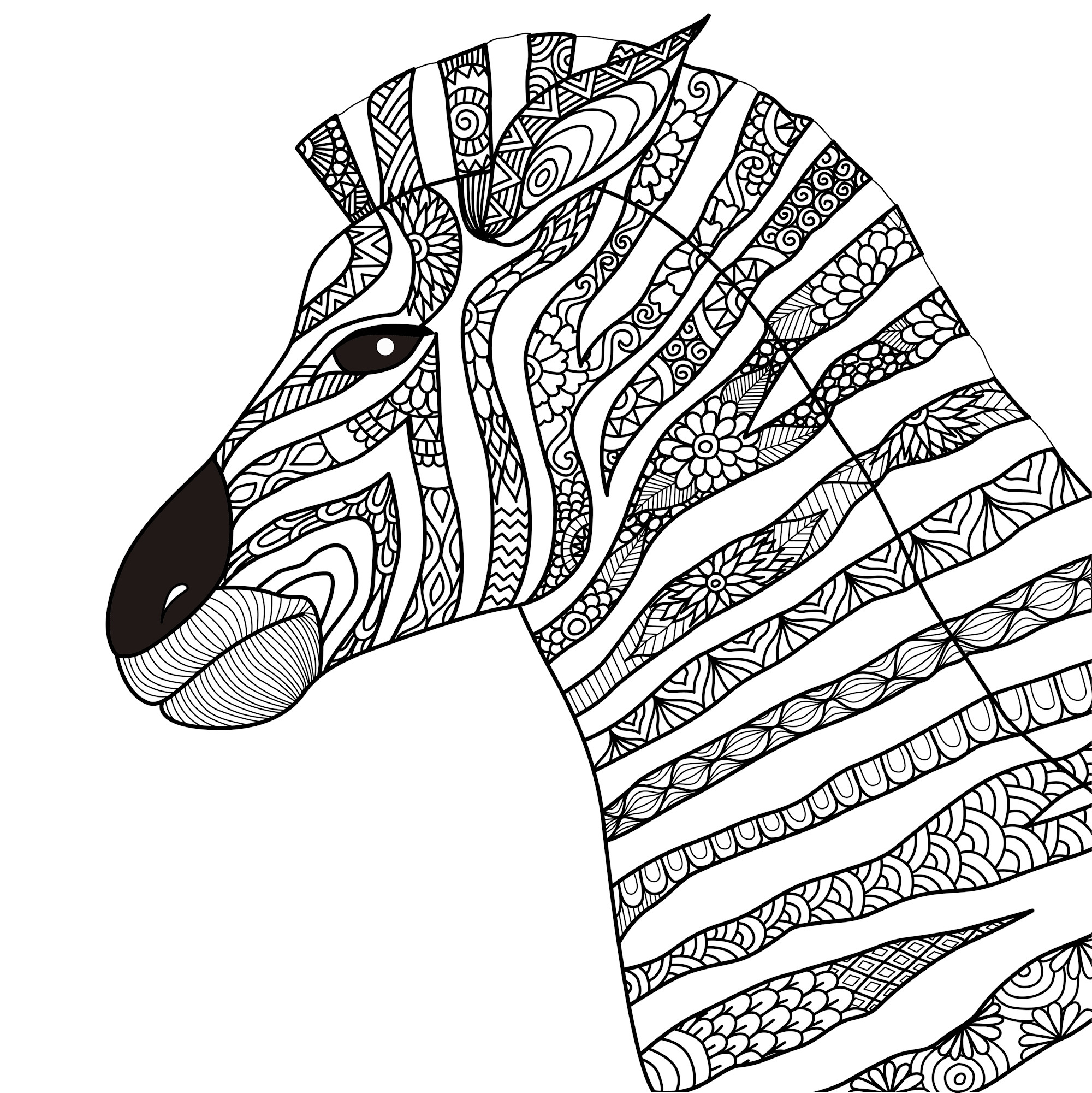
With their bold black-and-white stripes, upright manes, long legs, and horse-like shape, zebras are some of the easiest animals in the world to recognize. They are also wonderfully fun to color—even though nature has already given them one of the most dramatic patterns around.
Our Coloring Pages of Zebras collection includes six different designs for a variety of ages and coloring styles. You’ll find a Letter Z zebra page, cheerful smiling zebras, cute and simple designs for younger children, a more traditional zebra illustration, and an intricate zentangle-style zebra filled with decorative patterns.
You can keep the famous black-and-white stripes, add an African grassland background, or forget realism entirely and create the world’s first pink, purple, turquoise, or rainbow-striped zebra.
Grab your crayons, markers, or colored pencils and let the stripes begin.
🦓 Color a Classic Black-and-White Zebra
Zebra stripes are already nature’s coloring-book design.
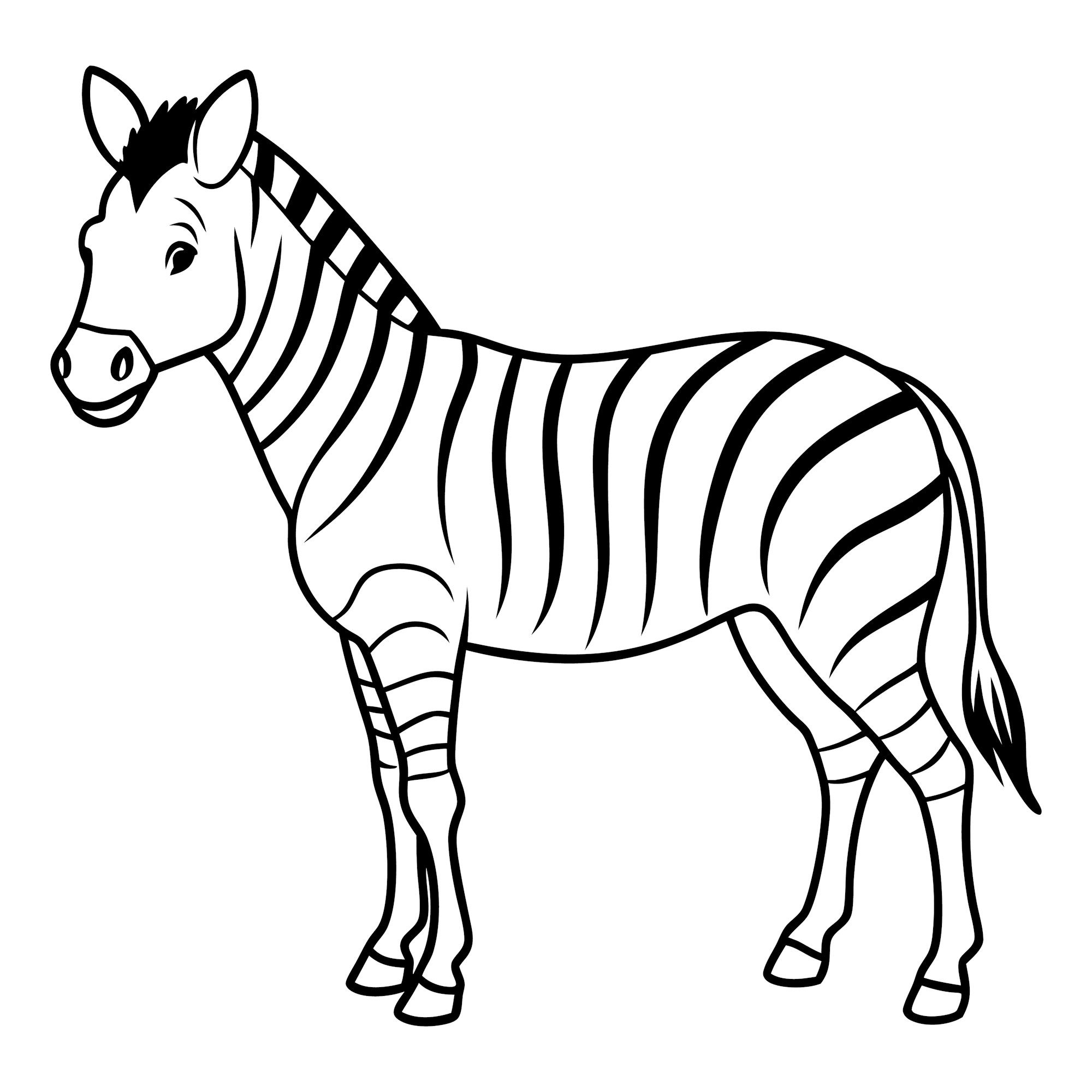
For a realistic zebra, leave the lighter sections white and carefully fill the dark stripes with black, charcoal gray, or very dark brown. You don’t necessarily have to make every dark stripe exactly the same shade. Adding a little charcoal or gray can help show the shape of the animal.
Then use pale gray around the belly, legs, muzzle, and other areas where you’d like a little shading without losing the zebra’s distinctive appearance.
The mane can be dark, while the eyes, nose, and hooves provide additional details to color.
Once the zebra itself is complete, add a landscape around it. Golden grasses, green vegetation, dusty brown earth, and a bright blue sky can create a warm African scene.
🖤 Every Zebra Has Its Own Stripes
One of the coolest things about zebras is that individual stripe patterns are unique.
That means there isn’t one perfect arrangement you need to recreate when adding details to your coloring page. Real zebras already come with plenty of natural variation.
There are also three living zebra species:
- Plains zebra
- Mountain zebra
- Grévy’s zebra
Their stripe patterns differ. Grévy’s zebras, for example, have especially narrow stripes, while other species may have broader patterns.
Older kids can look at photographs of each species and compare them before coloring.
Which stripes are widest?
Which zebra has the largest ears?
How far down the legs do the stripes extend?
A simple coloring page can quickly become a mini wildlife observation activity.
🔤 Learn the Letter Z With a Zebra
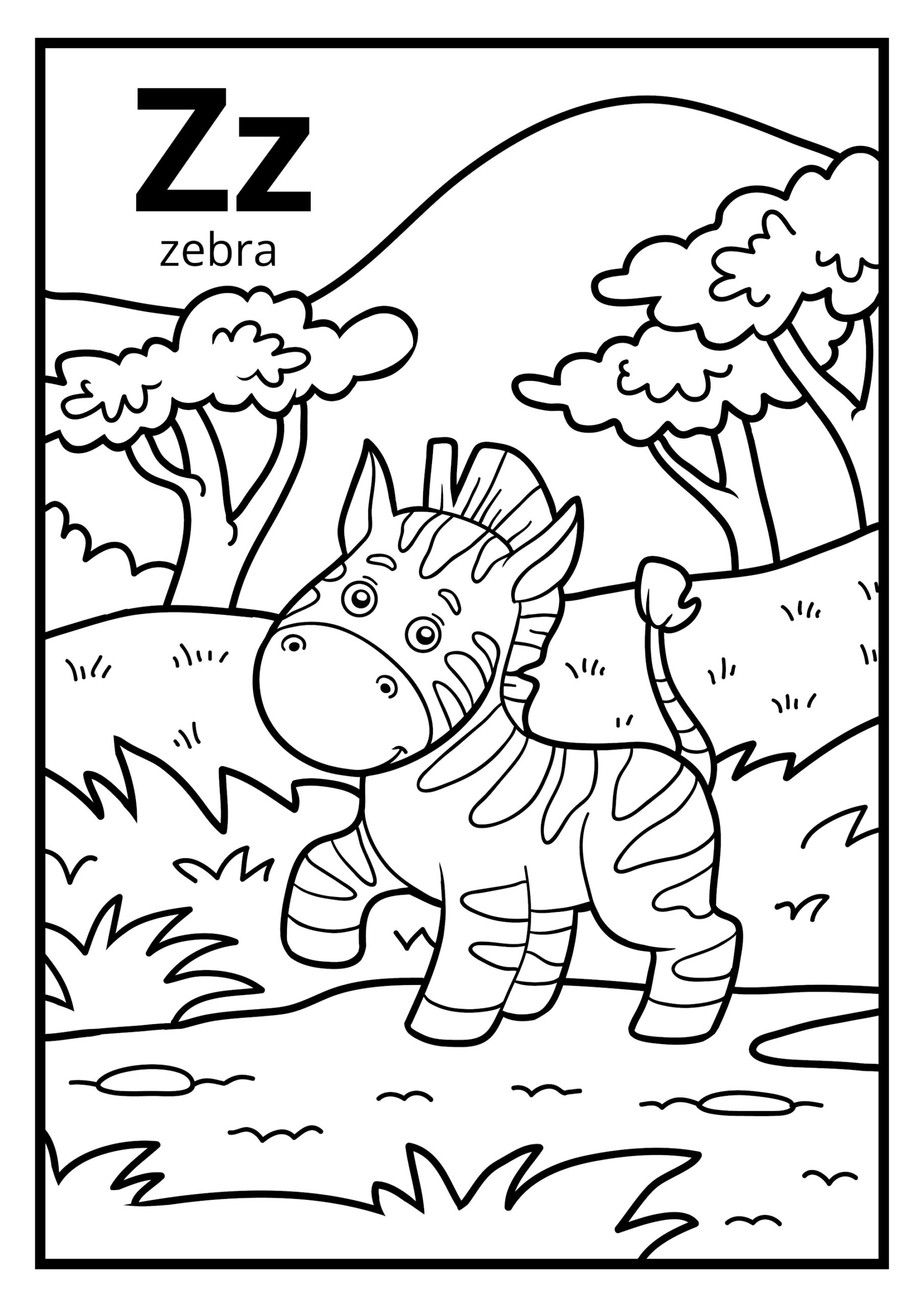
One of the pages in this collection combines a zebra with the Letter Z, making it especially useful for preschool and early elementary activities.
Z is for Zebra!
Kids can color the zebra first and then decorate the letter itself.
Try giving the Z:
- Zebra stripes
- Rainbow stripes
- Polka dots
- Stars
- Hearts
- Zigzags
- Tiny hoofprints
Children can also think of other words beginning with Z.
Zoo, zipper, zero, and zigzag are a few possibilities.
For a larger learning activity, draw several objects beginning with Z around the page or practice writing uppercase Z and lowercase z underneath the picture.
😊 Color the Smiling Zebra
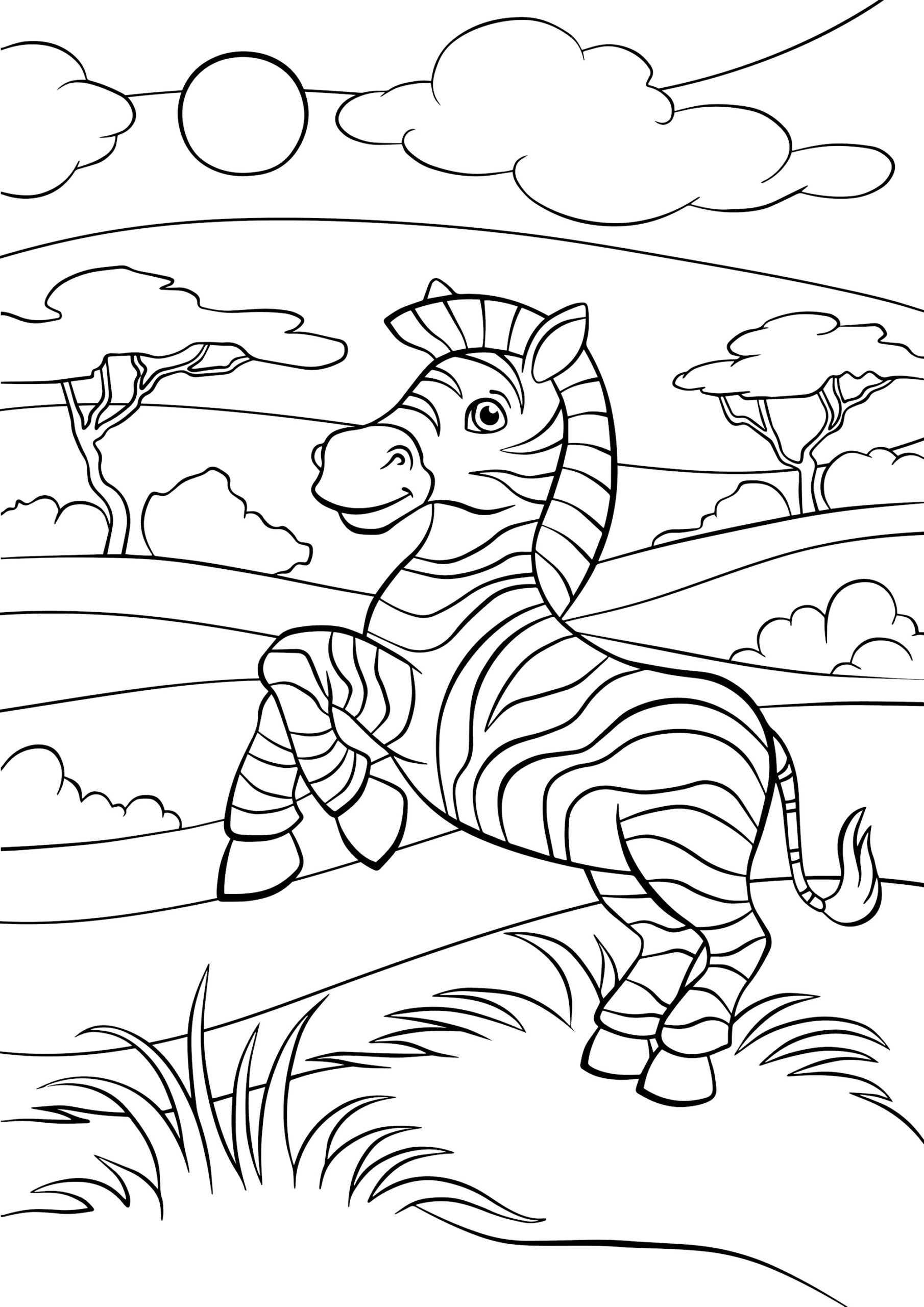
The smiling zebra illustration gives this usually dramatic-looking wild animal a cheerful personality.
You can keep the coat realistic and let the expression be the playful part, or give the entire zebra a creative makeover.
Try alternating black stripes with another color instead of white.
A zebra could have:
- Black and pink stripes
- Purple and white stripes
- Blue and turquoise stripes
- Orange and black stripes
- Pastel rainbow stripes
Give the character rosy cheeks or add hearts and stars around the background.
Then decide why the zebra is smiling.
Maybe it found the best patch of grass on the savanna. Perhaps it is meeting a friend. Or maybe this zebra simply knows it looks fabulous in stripes.
💗 Color the Cute Zebra
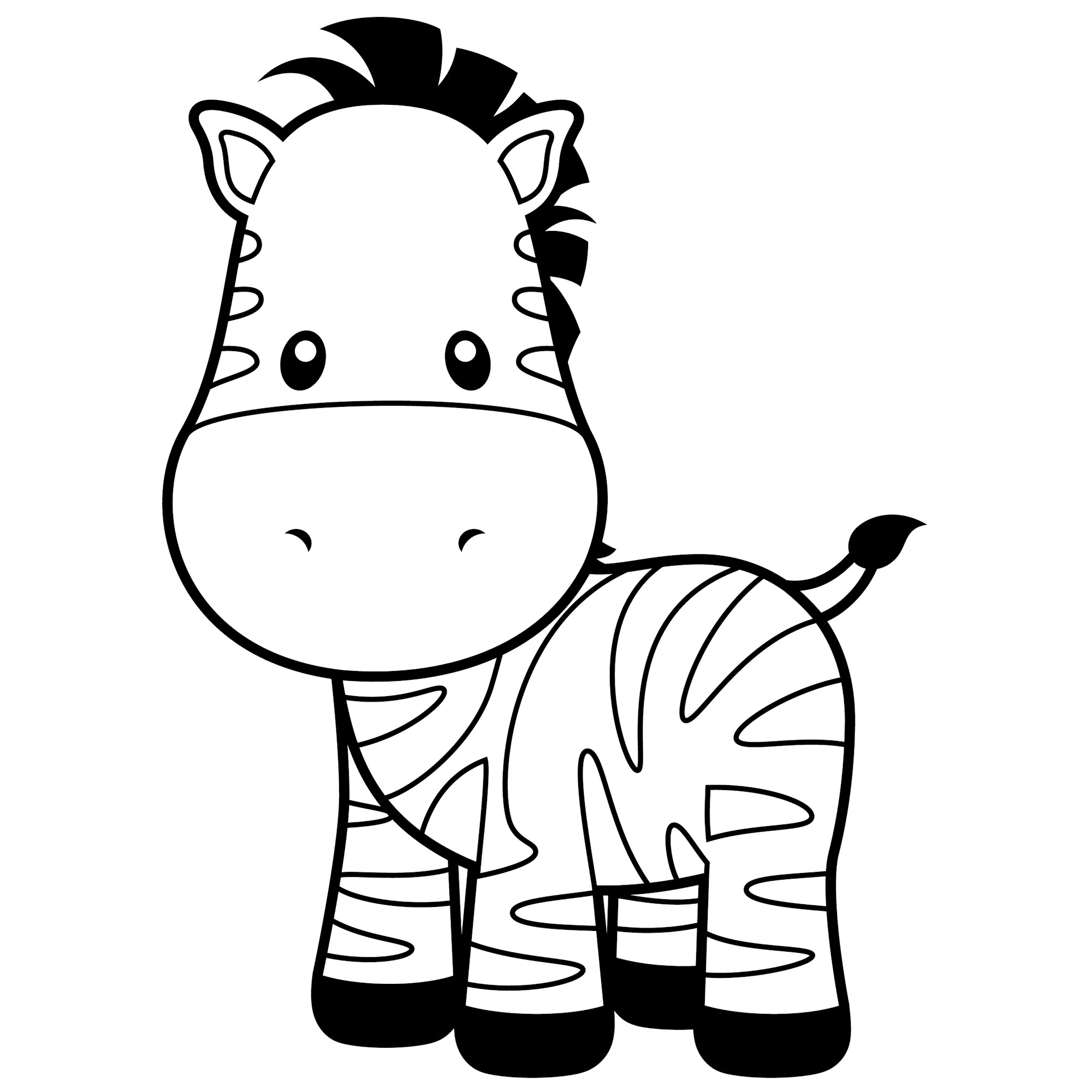
The cute zebra designs in this collection are particularly approachable for younger artists because the shapes and expressions are simple and cheerful.
There’s no need to worry about perfect striping.
Young children can use black crayons for some stripes, leave others white, and concentrate on enjoying the picture.
Or give them complete freedom over the colors.
A pale blue zebra with purple stripes is just as successful as a realistic black-and-white one when the goal is creative play.
Kids can also draw grass, flowers, clouds, butterflies, or other friendly animals around their zebra.
If cute animals are a favorite, continue with our Coloring Pages of Zoo Animals, which features even more adorable wildlife.
🦓 Give the Little Zebra a Big Personality
Another page features a little zebra standing and smiling, leaving plenty of room to imagine a personality for the character.
Give your zebra a name.
Maybe it’s:
Ziggy
Zippy
Zara
Zoe
Zigzag
Then imagine what kind of zebra it is.
Is it adventurous? Shy? Silly? Curious?
Kids could write the zebra’s name above the picture and add a sentence underneath explaining what the character likes to do.
A coloring activity can easily become a simple creative-writing prompt.
🎨 Do Zebras Have to Be Black and White?
Not in a coloring book.
Realistic coloring is one option, but fantasy zebras can be especially fun because their natural stripes already divide the body into sections.
Try a rainbow effect by changing the color between every dark stripe.
For example:
Red → Orange → Yellow → Green → Blue → Purple
Or make a pastel zebra with:
Pink → Peach → Pale yellow → Mint → Baby blue → Lavender
You could even create a galaxy zebra using navy, purple, magenta, turquoise, and silver-gray.
The mane and tail can coordinate with the stripes or use completely different colors.
🌈 Create a Rainbow Zebra
For an especially colorful challenge, leave the traditionally black stripes dark but transform every white stripe into a different color.
This keeps the familiar zebra pattern while adding a fantasy twist.
Another approach is to color every stripe differently.
Older children can create a gradual color transition from the zebra’s head to its tail.
Younger kids can simply choose the next crayon that looks fun.
Then add a rainbow in the background to complete the scene.
✏️ Try the Detailed Zentangle-Style Zebra
The zentangle-style zebra offers a completely different coloring experience from the simpler children’s designs.
Instead of concentrating mainly on the animal’s natural stripes, this page is filled with smaller decorative shapes and patterns.
Colored pencils or fine-tip markers can be especially useful here.
Rather than tackling the whole zebra at once, choose one small pattern and begin there. Work gradually from section to section.
Try using a limited palette such as:
African Sunset: orange, gold, burgundy, purple
Savanna: tan, brown, olive green, gold
Ocean: turquoise, blue, teal, navy
Pastel: pink, lavender, mint, baby blue
Monochrome: several shades of one favorite color
Repeating a few colors throughout the intricate design can help the whole picture feel connected.
⚫ Try a Black, White, and Gray Challenge
Zebras are also perfect for experimenting with art using almost no color at all.
Try completing an entire zebra picture with only:
- Black
- White
- Dark gray
- Medium gray
- Light gray
The challenge is to create contrast through different values rather than different colors.
Older kids and adults might enjoy adding shadows beneath the zebra and darker grasses in the background.
Then compare the finished grayscale picture with a colorful fantasy zebra.
The same drawing can look completely different depending on the palette.
🌍 Where Do Zebras Live?
All living zebra species are native to Africa, but they don’t all live in exactly the same habitat.
Depending on the species, zebras can be found in grasslands, savannas, scrublands, woodland areas, and mountainous environments.
Grévy’s zebras, for example, live primarily in dry grasslands and scrublands in parts of Kenya and Ethiopia.
That gives colorists plenty of options when creating backgrounds.
One zebra might stand in golden grass beneath an enormous blue sky, while another could appear among green shrubs or rocky hills.
🌾 Create an African Grassland
A zebra page can become much more interesting when you add a habitat.
For a grassland-inspired landscape, try:
- Golden yellow grass
- Pale green vegetation
- Brown earth
- Blue sky
- White clouds
- Rusty orange accents
Draw distant trees along the horizon and perhaps a low hill in the background.
Older children can experiment with making distant objects smaller to create a sense of depth.
You could even color the sky in pink, orange, gold, and purple to create an African sunset.
🌅 Make a Zebra Sunset Scene
Black-and-white stripes look especially dramatic against a colorful sunset.
Begin with pale yellow near the horizon and gradually move into orange, pink, purple, and deep blue farther up the sky.
Keep the zebra itself mostly black and white.
The contrast will allow the animal to stand out against the bright background.
Add grasses in dark brown or black near the bottom to create a silhouette effect.
This can transform a simple animal coloring page into a much more dramatic piece of artwork.
🐘 Add an Elephant Friend
Zebras share African habitats with many other remarkable animals, which makes them easy to combine with other wildlife coloring pages.
Our Coloring Pages of Elephants are a natural companion to this collection.
Color a zebra and an elephant separately, then draw a large shared grassland landscape on construction paper.
Cut out the finished animals with appropriate supervision and place them in the scene.
Add trees, grass, water, clouds, and any other wildlife you want.
One zebra coloring page can become the beginning of an entire African wildlife mural.
🦁 Build a Zoo Coloring Collection
Zebras are also familiar favorites at zoos, which makes these pages easy to pair with other animal designs.
Visit our Coloring Pages of the Zoo for more wildlife scenes, or explore Coloring Pages of Zoo Animals for cute versions of familiar animals.
Kids could create a homemade zoo coloring book with sections for:
- Zebras
- Elephants
- Lions
- Tigers
- Monkeys
- Giraffes
- Bears
- Hippos
Give the imaginary zoo a name and design a colorful cover.
🐅 Continue With Tigers and Their Stripes
Zebras aren’t the only animals famous for stripes.
Our Coloring Pages of Tigers make a particularly fun companion activity.
Compare the two animals.
A zebra generally has dark stripes across a much lighter coat, while a tiger’s dark stripes appear against orange, golden, or pale fur.
Both animals have unique patterns.
Kids can color one zebra and one tiger and then compare how the stripes move across their bodies.
Which animal has straighter stripes?
Where do the patterns curve?
How does the background change the way each animal looks?
🦓 Why Do Zebras Have Stripes?
Scientists have investigated zebra stripes for many years, and the question has inspired several hypotheses.
Research increasingly supports the idea that stripes can help reduce biting-fly landings on zebras. Scientists have also explored other possible functions over the years, including effects related to camouflage, temperature, and social recognition.
For a coloring activity, you can keep the idea simple: those famous stripes aren’t merely decorative.
They’re part of a real animal’s biology.
That makes them even more interesting to examine closely.
🐎 Zebras Are Related to Horses
A zebra may look like a striped horse, and there is a good reason for the resemblance.
Zebras belong to the Equidae, or horse family, along with horses and donkeys. All are members of the genus Equus.
Look closely at the zebra’s body.
You can see familiar horse-like features:
- Hooves
- Long legs
- Mane
- Long face
- Tail
- Strong neck
Yet zebras are wild animals with their own behaviors and adaptations and have not been domesticated in the same way as horses.
Kids can draw a horse beside a zebra and compare their similarities and differences.
🌿 What Do Zebras Eat?
Zebras are plant eaters, and grasses make up much of their diet.
Their grazing helps shape the environments where they live, and zebras may share grasslands with animals such as antelope, wildebeest, and other herbivores.
Add plenty of grasses around your coloring-page zebra.
Use several greens during a lush season or yellow and tan to create drier grasslands.
You could even draw the zebra lowering its head to eat.
👶 What Is a Baby Zebra Called?
A young zebra is called a foal, just as a young horse is.
Baby zebras can stand and move surprisingly soon after birth, an important ability for animals living in open environments where staying with the group matters.
Kids can draw a smaller zebra beside one of the adult pictures to create a mother-and-foal scene.
Give the baby slightly narrower or softer-looking stripes, or simply make it a smaller version of the adult.
Then create a story about the foal’s first adventure.
🦓 A Group of Zebras Makes an Amazing Pattern
Several zebras standing together create a maze of overlapping black-and-white stripes.
Zebras can form groups, although social organization differs among the three species.
On a coloring page, a herd gives you an opportunity to make every animal slightly different.
Change the width of the stripes.
Add a little brown to one zebra.
Give another darker legs.
Make a third zebra entirely imaginative.
Kids can draw two or three extra zebras behind the original picture to create their own herd.
🎨 Zebra Color Palette Ideas
Black and white may be the obvious zebra palette, but it is far from the only one worth trying.
Realistic Zebra
Black, white, gray, brown, and golden grass.
African Sunset
Black, white, gold, orange, coral, and purple.
Rainbow Zebra
Red, orange, yellow, green, blue, and purple.
Pastel Zebra
Pink, peach, lavender, mint, and baby blue.
Kawaii Zebra
Black, pink, turquoise, lavender, and yellow.
Galaxy Zebra
Navy, purple, magenta, turquoise, and silver-gray.
Safari Zebra
Black, cream, tan, olive green, and rust.
Ocean Zebra
Dark blue, turquoise, aqua, white, and teal.
Try a different palette on every page and see how much the mood changes.
🖍️ Crayons, Markers, or Colored Pencils?
Different designs in this collection work well with different supplies.
Crayons are ideal for younger children and the simpler smiling zebra pages.
Markers make bold stripes and bright fantasy colors stand out.
Colored pencils offer more control for realistic shading and the detailed zentangle-style zebra.
You can also mix them.
Use a black marker for strong stripes, colored pencils for shading, and crayons for a grassland background.
When using markers, place an extra sheet of paper under the coloring page to help protect the surface below.
✋ Coloring and Fine Motor Practice
Coloring gives young children opportunities to practice using crayons, pencils, and markers while concentrating on an enjoyable creative activity.
The different zebra designs make it easy to choose an appropriate level of detail.
A young child might prefer the large shapes of the cute zebra or Letter Z page, while an older child may enjoy carefully following the many stripes of a more realistic zebra.
The intricate zentangle design offers an additional challenge for older colorists.
There’s no need for young children to stay perfectly within every stripe. Experimenting, making marks, and gaining confidence with art supplies are all part of the process.
🔤 Create a Zebra Alphabet Activity
The Letter Z page can become part of a larger animal alphabet project.
Try pairing letters with animals:
E is for Elephant
K is for Koala
T is for Tiger
Z is for Zebra
Children can color one animal at a time and eventually create their own alphabet coloring book.
Write the uppercase and lowercase letters at the top of every page and add one or two simple words underneath.
Our broader Animal Coloring Pages collection can provide plenty of inspiration.
📖 Turn the Zebra Into a Story
A zebra picture can also become the beginning of a story.
Ask children questions such as:
- What is the zebra’s name?
- Where is it going?
- Why is it smiling?
- Does it have zebra friends nearby?
- Is it looking for water?
- What does it see across the grassland?
- Is this zebra afraid of anything?
- What happens next?
Kids can tell the story aloud, write a paragraph, or draw another picture showing the next scene.
Perhaps the zebra meets an elephant at a watering hole.
Maybe a little zebra gets separated from the herd and follows a trail of hoofprints home.
A rainbow zebra might discover that it’s the only colorful animal in the whole savanna.
Imagination can take the story anywhere.
🏫 Easy Zebra Activities for Classrooms
Zebra coloring pages fit naturally into several classroom themes.
Use them for:
- Letter Z activities
- Animal units
- African wildlife lessons
- Zoo themes
- Pattern activities
- Early-finisher pages
- Art centers
- Story-writing prompts
- Indoor recess
- Homeschool projects
- Wildlife studies
For a simple display, give each child the same zebra page and ask everyone to design different stripes.
Line up all the finished zebras under a sign reading Every Zebra Is Unique!
The result can be wonderfully colorful.
🔢 Turn the Stripes Into a Pattern Game
Zebras naturally lend themselves to pattern activities.
Instead of simply filling the stripes, assign alternating colors.
Try:
Pink → Purple → Pink → Purple
Or:
Red → Yellow → Blue → Red → Yellow → Blue
Older kids can create increasingly complicated sequences.
For example:
Black → Pink → Black → Blue → Black → Purple
The activity combines coloring with simple pattern recognition.
Of course, once the pattern becomes too complicated, turning the whole zebra rainbow-colored is always an acceptable solution.
✂️ Make a Zebra Stripe Collage
A finished zebra can also become part of a larger craft.
Cut strips of black-and-white paper and arrange them around the colored page to create a striped border.
Or cut out the zebra with appropriate adult supervision and glue it onto a larger savanna background.
Add:
- Paper grass
- A blue watering hole
- Cotton clouds
- Construction-paper trees
- Other colored animals
This works particularly well when combined with the elephant or zoo animal coloring pages.
🗺️ Find Africa on a Map
Because all three living zebra species are African animals, zebra coloring can provide an easy starting point for geography.
Find Africa on a globe or map.
Older children can then locate countries where different zebra populations live.
You don’t need to turn coloring time into a long geography lesson. Even a simple connection—zebras are wild animals native to Africa—helps put the animal into a real-world context.
Then return to the crayons and build the habitat.
💚 Learn About Zebra Conservation
The conservation situation isn’t the same for every zebra species.
The plains zebra remains widespread compared with the others, while the Grévy’s zebra faces much greater conservation concerns. Habitat changes, access to water, competition with livestock, disease, and other pressures affect populations in parts of their range.
A children’s coloring activity doesn’t need a complicated conservation discussion.
A simple message works well:
Wild zebras need healthy habitats, food, water, and room to live.
If coloring these animals makes a child curious enough to learn more about real zebras, that’s a wonderful next step.
🐘 Explore More Animal Coloring Pages
When the last zebra stripe is finished, there are plenty more animals waiting.
Continue an African wildlife theme with our Coloring Pages of Elephants or compare zebra stripes with the patterns in our Coloring Pages of Tigers.
For a whole collection of animals together, explore Coloring Pages of Zoo Animals and Coloring Pages of the Zoo.
You can also browse all of our Animal Coloring Pages and build your own wildlife coloring book one animal at a time.
🦓 Let Your Zebra Earn Its Stripes
These Coloring Pages of Zebras offer six different ways to enjoy one of nature’s most striking animals.
Practice the Letter Z with a zebra, color cheerful smiling characters, create a classic black-and-white animal, give a cute zebra rainbow stripes, or settle into the intricate details of the zentangle-style design.
Along the way, kids can discover that there are three living zebra species, learn that individual stripe patterns are unique, imagine life on an African grassland, and compare zebras with elephants, horses, tigers, and other animals.
Stay realistic or make every stripe a different color.
Draw the savanna, invent a zebra family, add a spectacular sunset, or create an animal that could exist only in your imagination.
With zebras, the pattern is already there.
All that’s missing is your color.
Happy coloring!
🔗 Related Coloring Pages
- Coloring Pages of Elephants
- Coloring Pages of Zoo Animals
- Coloring Pages of the Zoo
- Coloring Pages of Tigers
- Coloring Pages of Koalas
- Animal Coloring Pages
📚 Sources
- San Diego Zoo Wildlife Alliance — Zebra
- Smithsonian’s National Zoo — Grévy’s Zebra
- PBS Nature — Zebras
- PBS Nature — Zebra Fact Sheet
🖍️Shop Zebra Coloring Books –>