🖍️Shop Vegetable Coloring Books –>
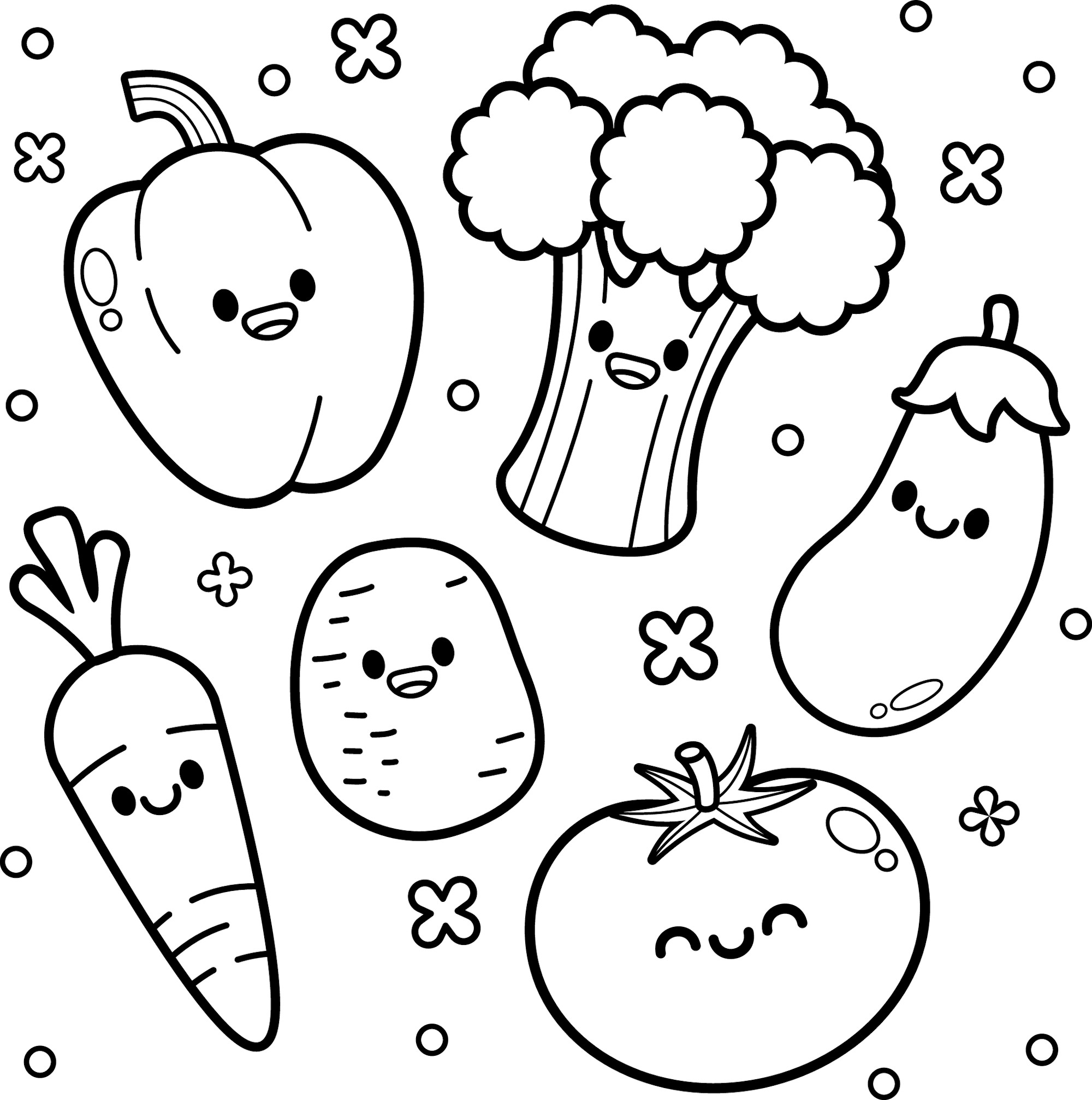


Vegetables come in almost every color, shape, and size imaginable, which makes them surprisingly fun subjects for coloring pages. Bright orange carrots, deep green broccoli, red tomatoes, purple onions, golden potatoes, colorful peppers, plump pumpkins, and whimsical mushrooms provide plenty of opportunities to explore the crayon box.
Our Coloring Pages of Vegetables collection combines familiar garden produce with playful characters and more detailed designs. You’ll find a basket overflowing with fresh foods, a dancing broccoli wearing sunglasses, tomatoes, mushrooms, carrots, onions, potatoes, pumpkins, leeks, peppers, peas, an intricate decorative pumpkin, and a doodle-style mushroom pattern.
You can use the colors you see in the grocery store or garden, or forget realism completely. Make the broccoli purple, the carrots turquoise, the potatoes pink, and the pumpkins rainbow-striped. Coloring pages are a place where vegetables can be as imaginative as you want them to be.
Grab your crayons, markers, or colored pencils and let’s make the vegetable garden a little more colorful.
🥦 Meet the Dancing Broccoli
Broccoli might not usually wear sunglasses or dance, but that’s exactly what makes the playful broccoli character in this collection so much fun.
For a traditional look, color the florets several shades of green. Try forest green in some areas, leaf green in others, and a little yellow-green where you want lighter highlights. The stalk can be a paler green than the top.
Then give your dancing broccoli some personality.
Maybe the sunglasses are bright red, purple, turquoise, or rainbow-colored. Add music notes around the character or draw a tiny dance floor underneath.
Kids can even give the broccoli a stage name.
How about Broccoli Boogie, DJ Broc, or The Green Machine?
A silly character is a great reminder that vegetable coloring pages don’t have to be serious.
🧺 Fill a Basket With Colorful Produce
The basket overflowing with fruits and vegetables offers one of the busiest pictures in the collection.
Instead of choosing one or two colors, this page invites you to use almost everything in the box.
Look carefully at each piece of produce and decide what it could be. Then choose traditional colors or invent your own.
Try combinations of:
- Red
- Orange
- Yellow
- Dark green
- Light green
- Purple
- Cream
- Brown
The basket itself can be warm tan or brown for a woven look, or it can be painted in a bright color.
Children can also imagine where the basket came from. Perhaps it was filled in a backyard garden, at a farmers market, or on a farm during harvest season.
For even more edible coloring fun, visit our Coloring Pages of Food.
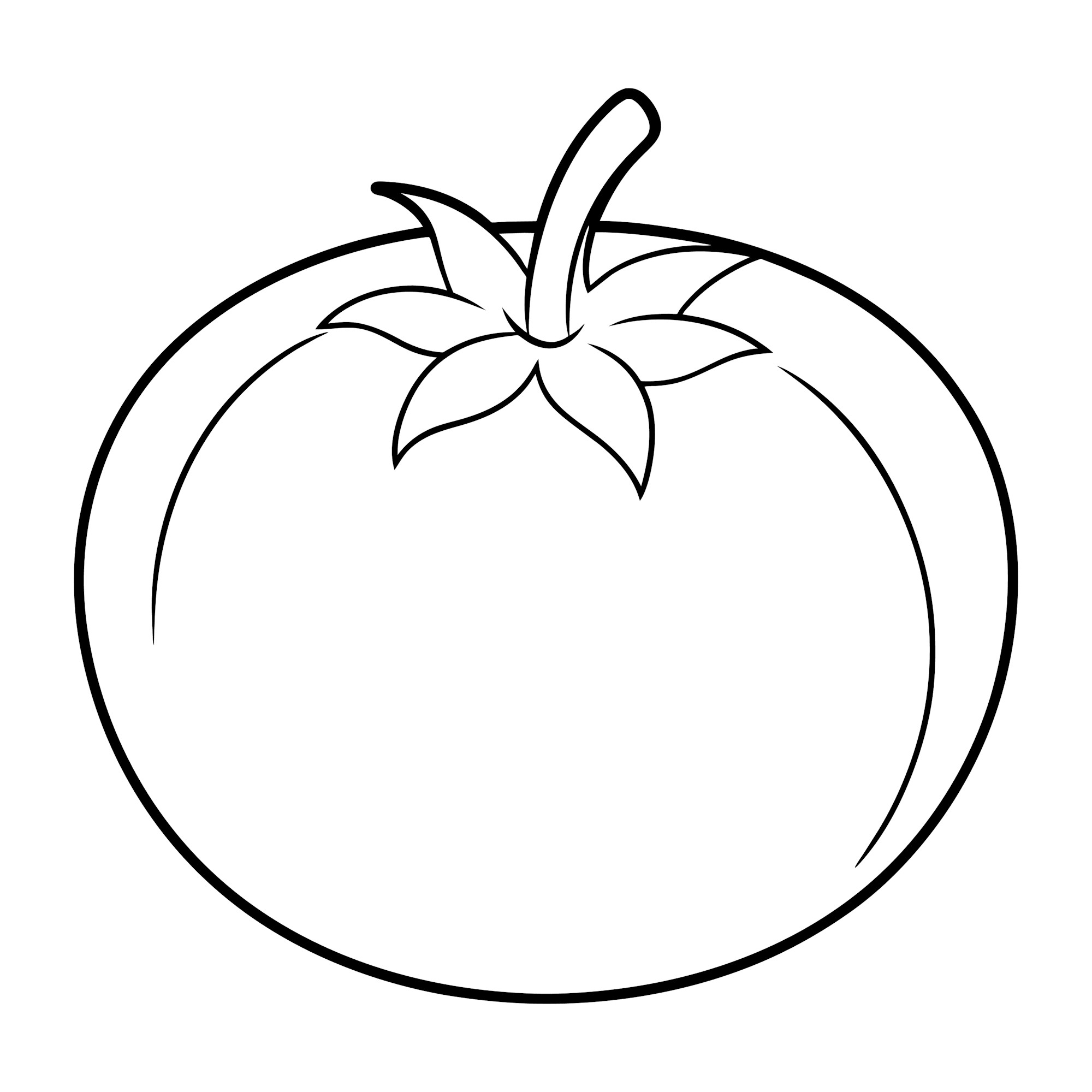
🍅 Color Some Bright Tomatoes
Tomatoes are perfect for bold colors.
A classic ripe tomato might be bright red with a green leafy top, but tomatoes actually come in many shades, including yellow, orange, green, and varieties with darker or striped coloring.
That gives you plenty of room to experiment.
Make one tomato red, another golden yellow, and another orange. Add darker red around the edges and lighter areas toward the middle if you want to make them look rounder.
And if you’re creating a fantasy garden, try purple tomatoes with blue leaves.
One fun fact for older kids: botanically, tomatoes are fruits because they develop from flowers and contain seeds, even though they’re commonly treated as vegetables in cooking.
Coloring pages can lead to some surprisingly interesting kitchen questions.
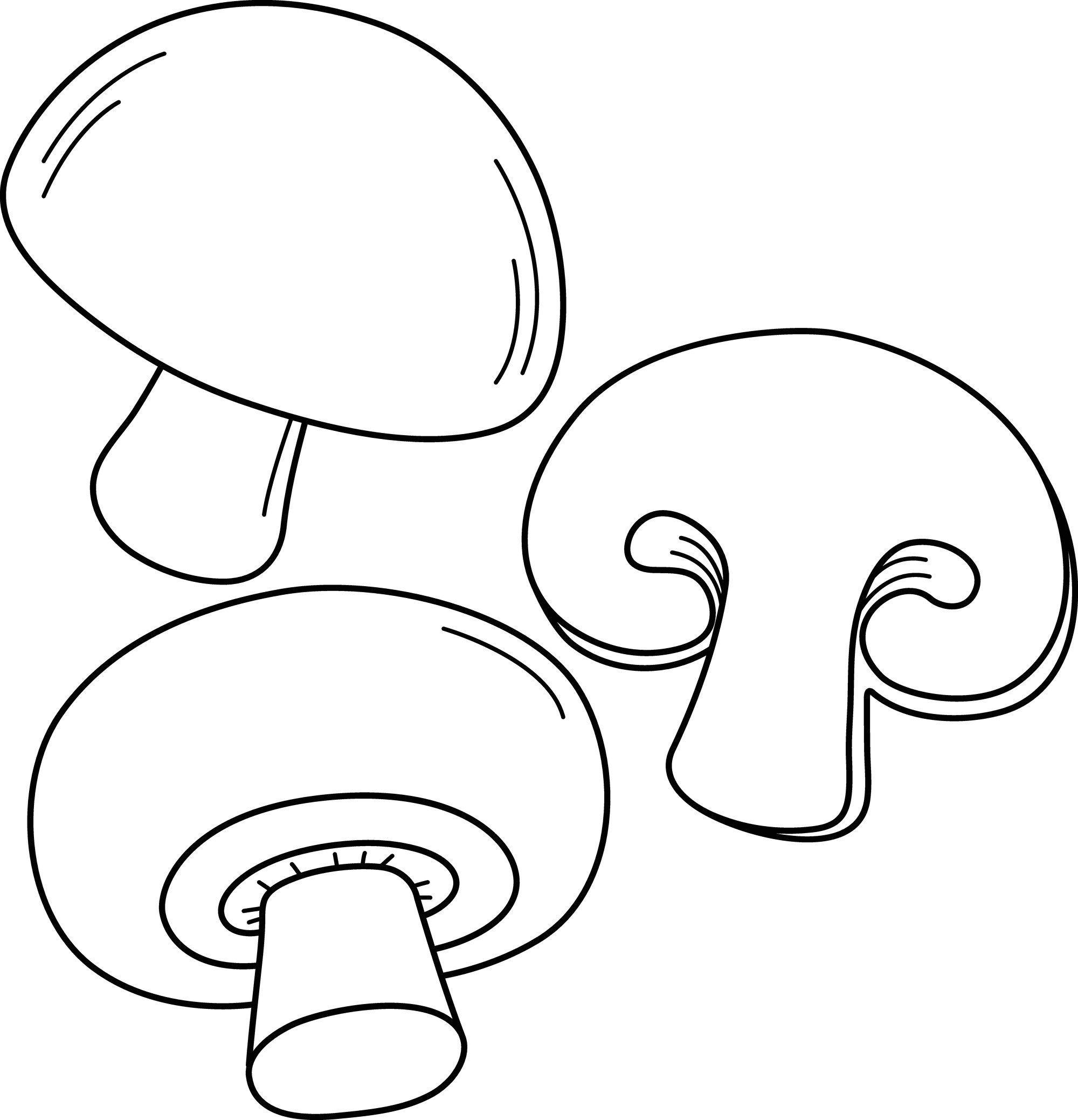
🍄 Create a Mushroom Collection
Mushrooms appear more than once in this vegetable coloring collection, including both individual mushroom illustrations and a detailed doodle-style mushroom pattern.
Technically, mushrooms aren’t vegetables—or even plants. They’re fungi. However, they are commonly grouped with vegetables in cooking and are included in the USDA’s Vegetable Group for nutritional guidance.
For coloring purposes, they’re simply wonderful.
Natural mushroom colors can include:
- White
- Cream
- Tan
- Brown
- Gray
- Rust
- Red
Fantasy mushrooms can be even more exciting.
Try purple caps with yellow dots, turquoise stems, pink mushrooms, or an entire rainbow woodland.
Add tiny doors or windows and they might even become fairy houses.
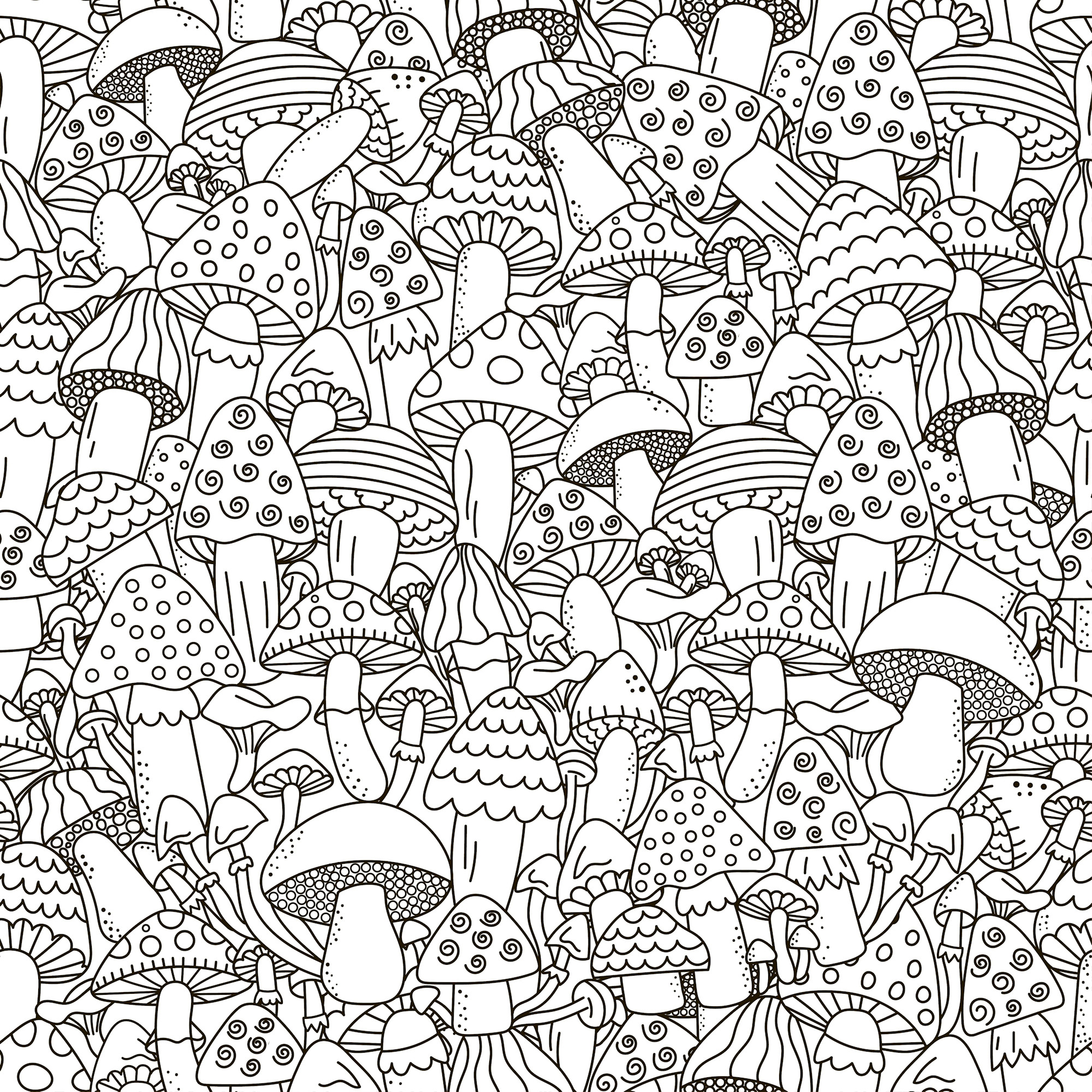
🍄 Settle Into the Doodle Mushroom Pattern
The doodle-style mushroom page is especially good for older children and adults who enjoy smaller details.
Instead of coloring every mushroom the same way, give each one its own palette.
One might be red and cream, another purple and turquoise, and another orange and yellow.
You could also limit yourself to just a few colors and repeat them throughout the design.
Try:
Woodland: rust, brown, cream, moss green
Fairy Garden: lavender, pink, turquoise, mint
Autumn: orange, burgundy, mustard, brown
Night Forest: navy, purple, silver-gray, dark green
Working slowly from one mushroom to the next can make a detailed page feel much easier to complete.
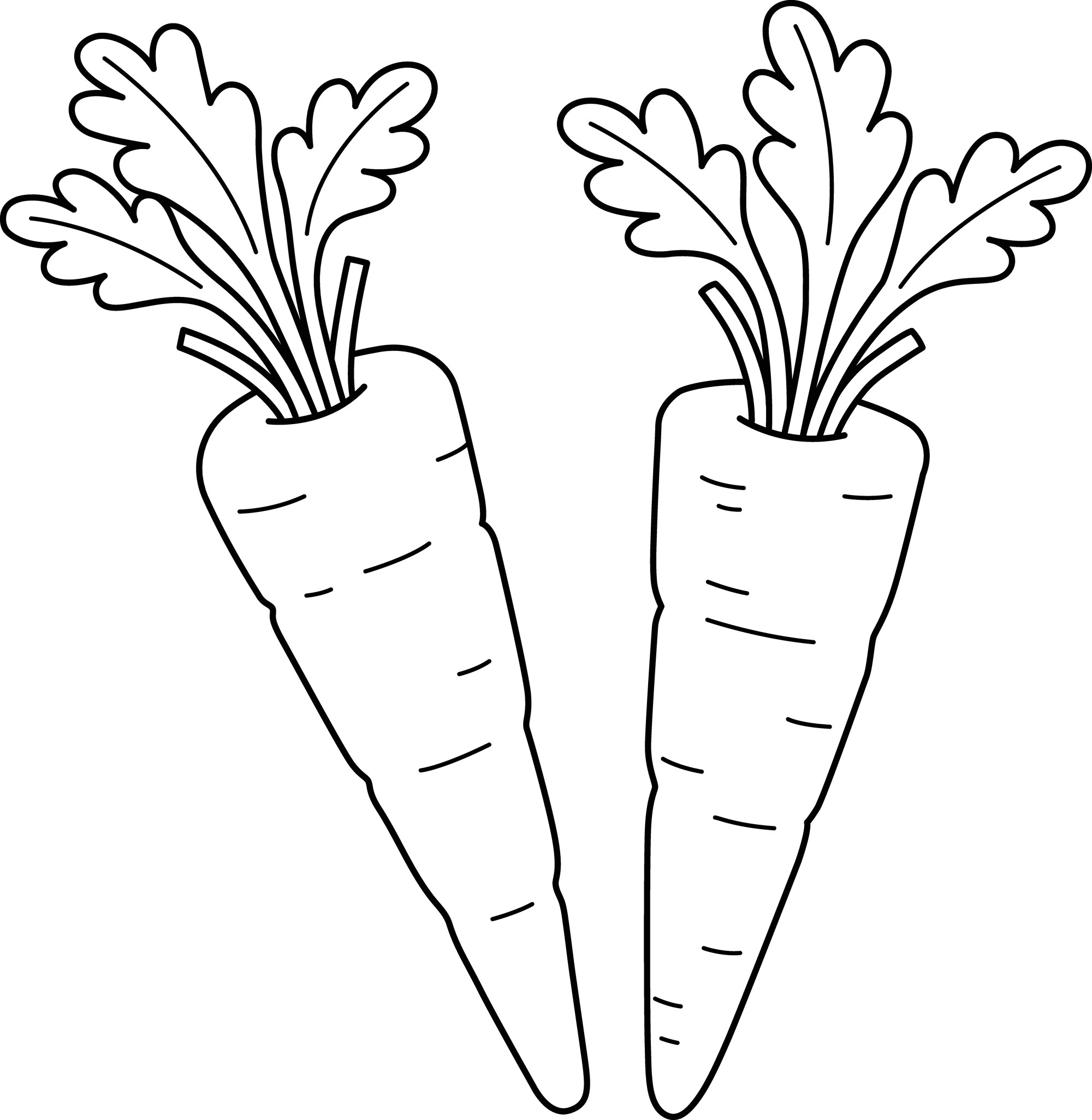
🥕 Color a Crunchy Carrot
Carrots provide one of the brightest natural colors in the vegetable world.
Orange is the classic choice, with green leaves at the top. Try darker orange along one side and bright yellow-orange along the other for a little shading.
But not every real carrot is orange. Carrot varieties can also be purple, yellow, white, and reddish.
That means a basket of rainbow carrots can actually be inspired by real vegetables.
Try making several different colors and then add a little brown around the roots to suggest freshly dug garden soil.
Kids could even draw a bunny nearby hoping to get a snack.
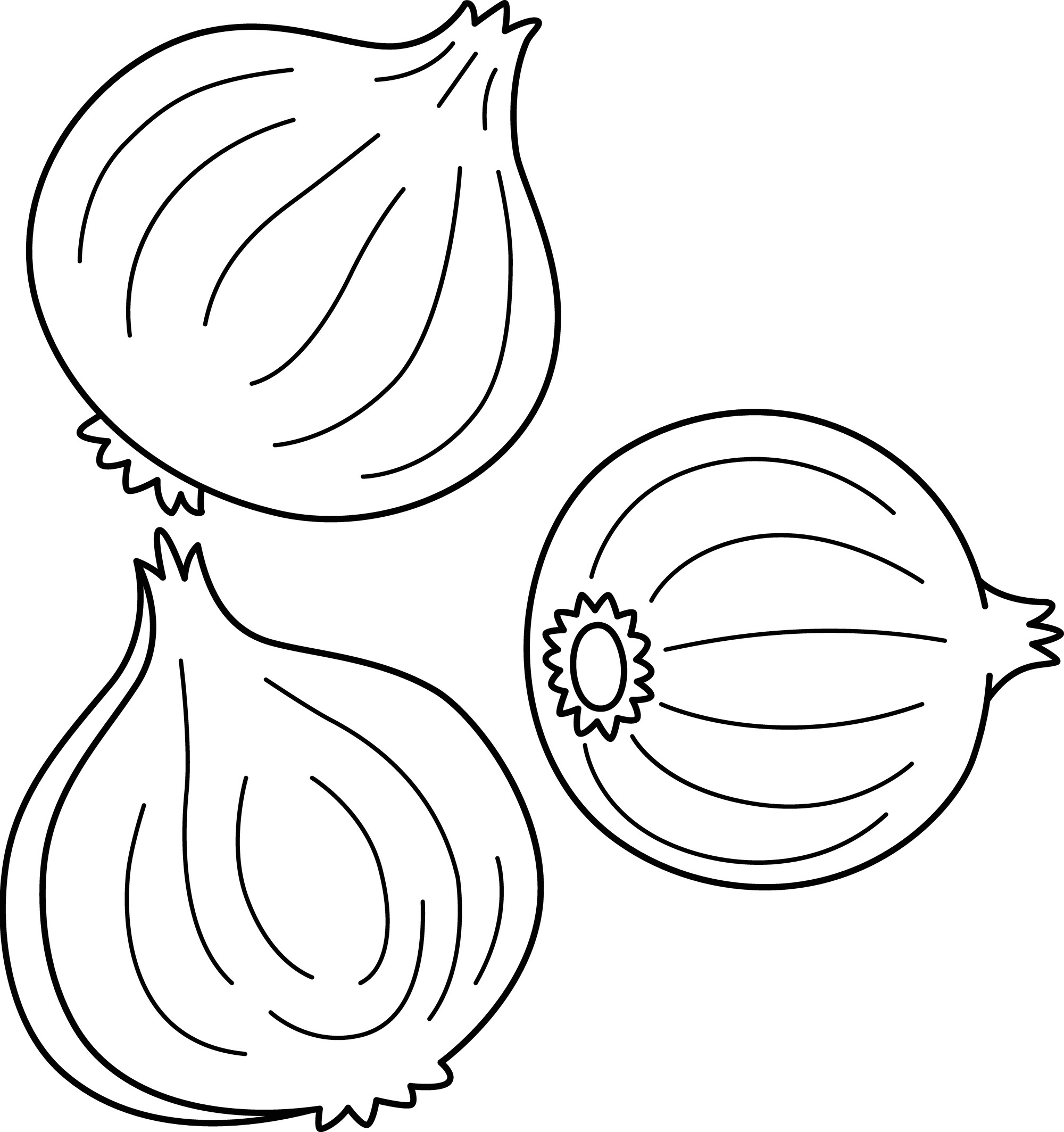
🧅 Layer Some Color Into the Onions
An onion may seem like a simple object, but there are plenty of ways to color it.
Common onion colors include:
- Golden brown
- White
- Purple
- Red
- Pale yellow
If the illustration shows layers or lines in the onion, use slightly different shades to emphasize them.
A purple onion can combine lavender, burgundy, magenta, and deep violet. A yellow onion can use cream, gold, tan, and light brown.
Older children can practice making the outer edges darker and keeping the center lighter.
Or turn the entire onion bright blue.
There are no cooking rules inside a coloring book.
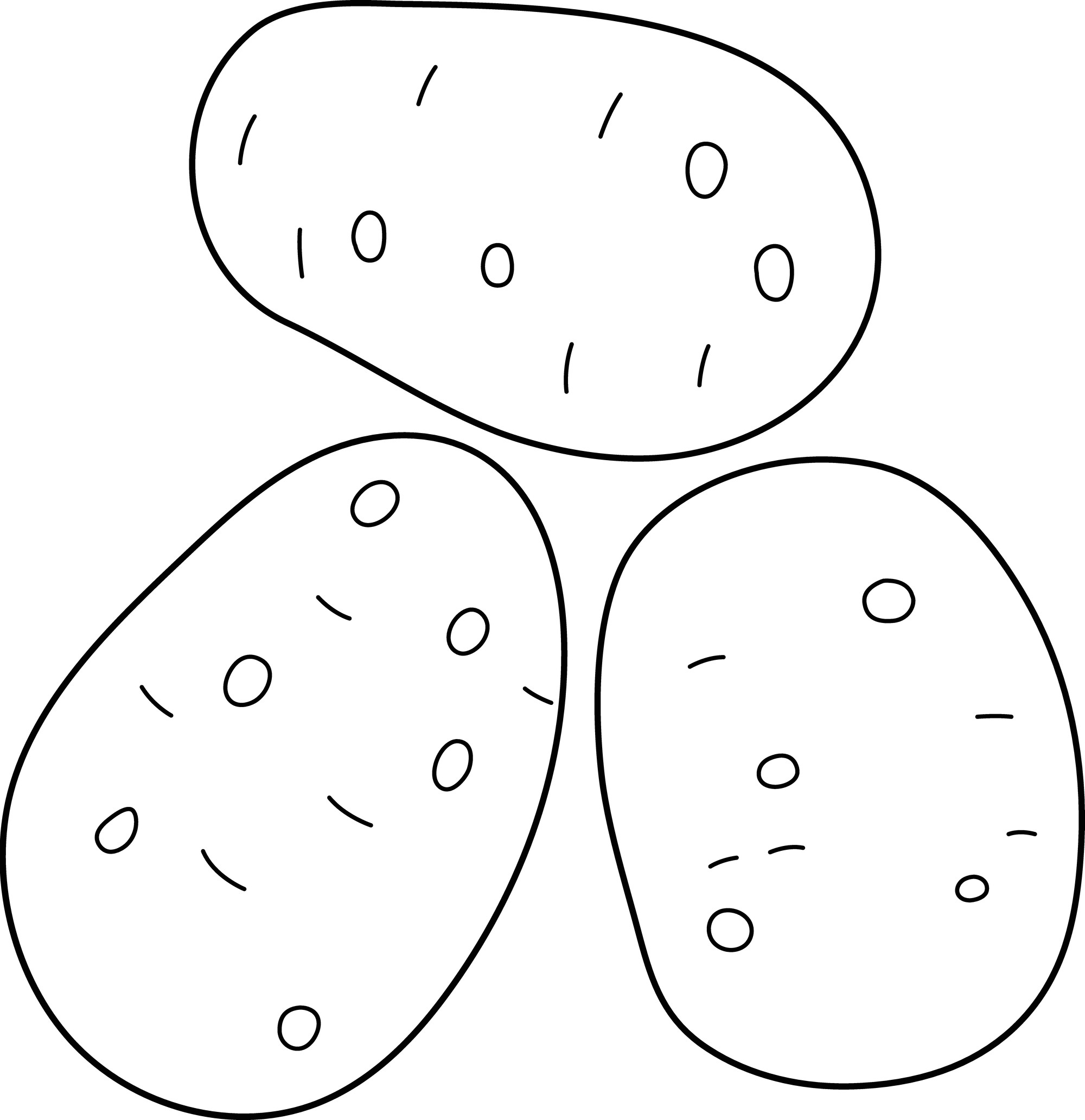
🥔 Give the Potatoes Some Texture
Potatoes are another vegetable that can be more colorful than they first appear.
Their skins can be tan, brown, reddish, golden, or purple depending on the variety.
Instead of filling the whole potato with one flat shade, add tiny darker dots and irregular patches to create texture.
Try tan with brown spots, red with burgundy shadows, or golden yellow with soft brown marks.
Kids can also imagine what the potatoes might become later.
Mashed potatoes?
French fries?
Baked potatoes?
Soup?
Perhaps they’re destined for a completely imaginary recipe.
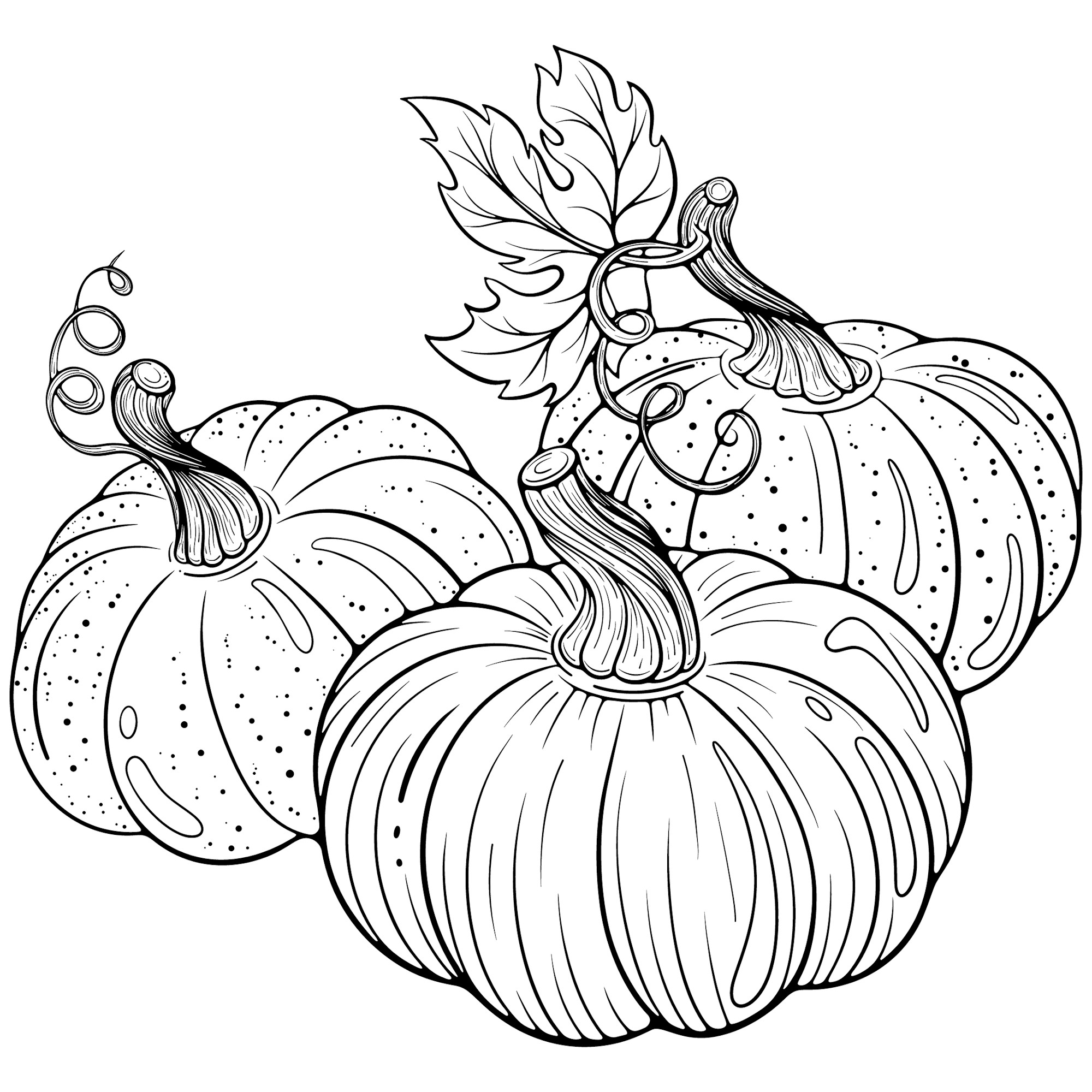
🎃 Color Three Pumpkins
The collection includes a composition featuring three pumpkins, giving you a perfect excuse to make each one different.
Traditional orange is only the beginning.
Try:
- Bright orange
- Deep burnt orange
- Cream
- White
- Pale green
- Dark green
- Golden yellow
- Blue-gray
Use darker shades in the grooves between the pumpkin sections and lighter shades toward the center.
Then give each stem a little brown or green.
If you’re in a more imaginative mood, create pink, purple, and turquoise pumpkins instead.
These pages also connect beautifully with our 54 Coloring Sheets for Autumn, which includes even more pumpkins, harvest foods, apples, autumn leaves, and cozy seasonal scenes.
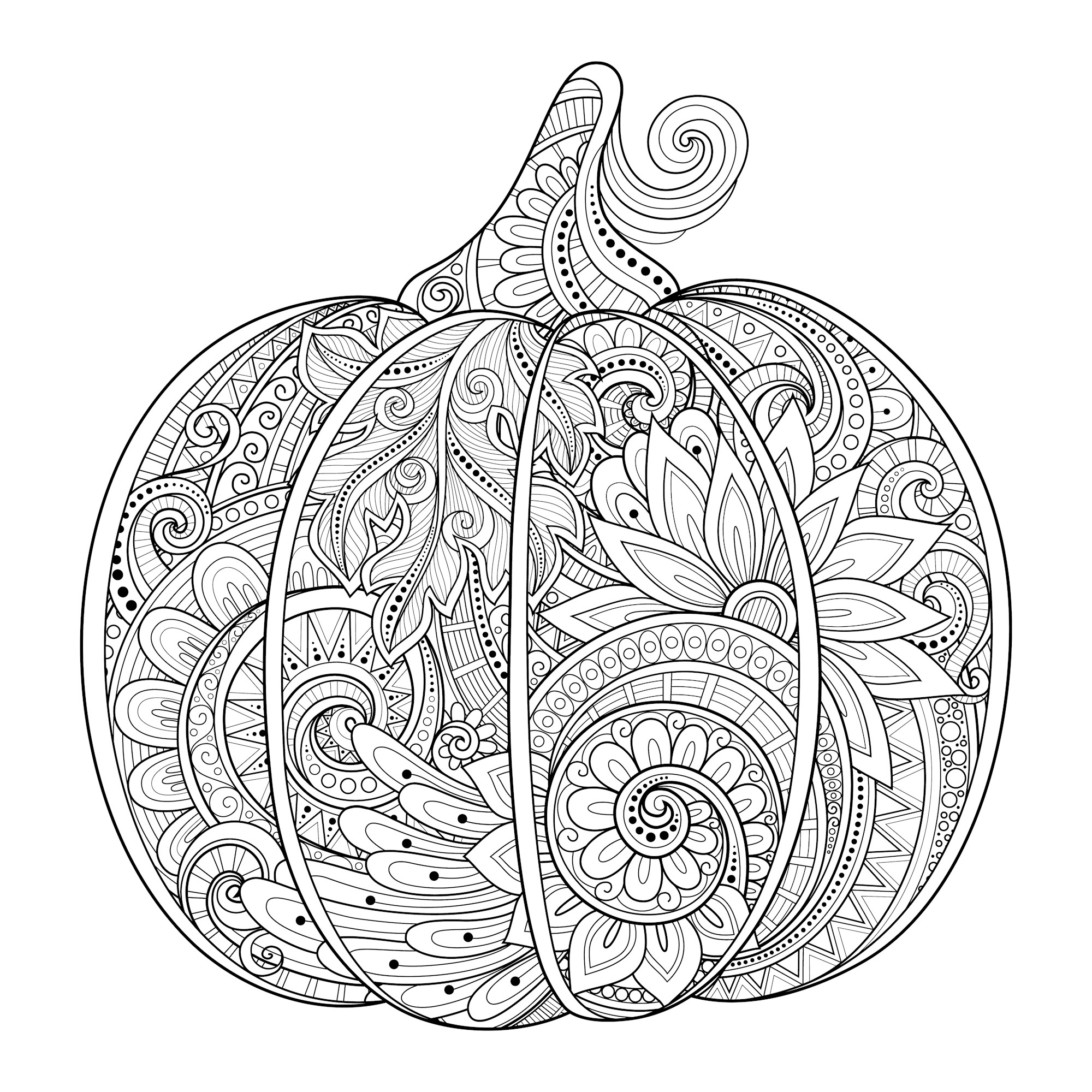
🖌️ Try the Decorative Pumpkin
The detailed decorative pumpkin is one of the collection’s best choices for older colorists.
Instead of one large open pumpkin, the design includes patterns that can be treated almost like a mini coloring puzzle.
Try repeating a limited palette throughout the pumpkin.
For example:
Traditional Fall
Orange, gold, burgundy, brown, and dark green.
Pastel Pumpkin
Peach, lavender, pale pink, mint, and cream.
Midnight Pumpkin
Navy, purple, turquoise, silver-gray, and gold.
Rainbow Pumpkin
Red, orange, yellow, green, blue, and purple.
You can color each repeating shape the same way or deliberately make every section different.
The finished pumpkin can look traditional, whimsical, or almost like a piece of patterned folk art.
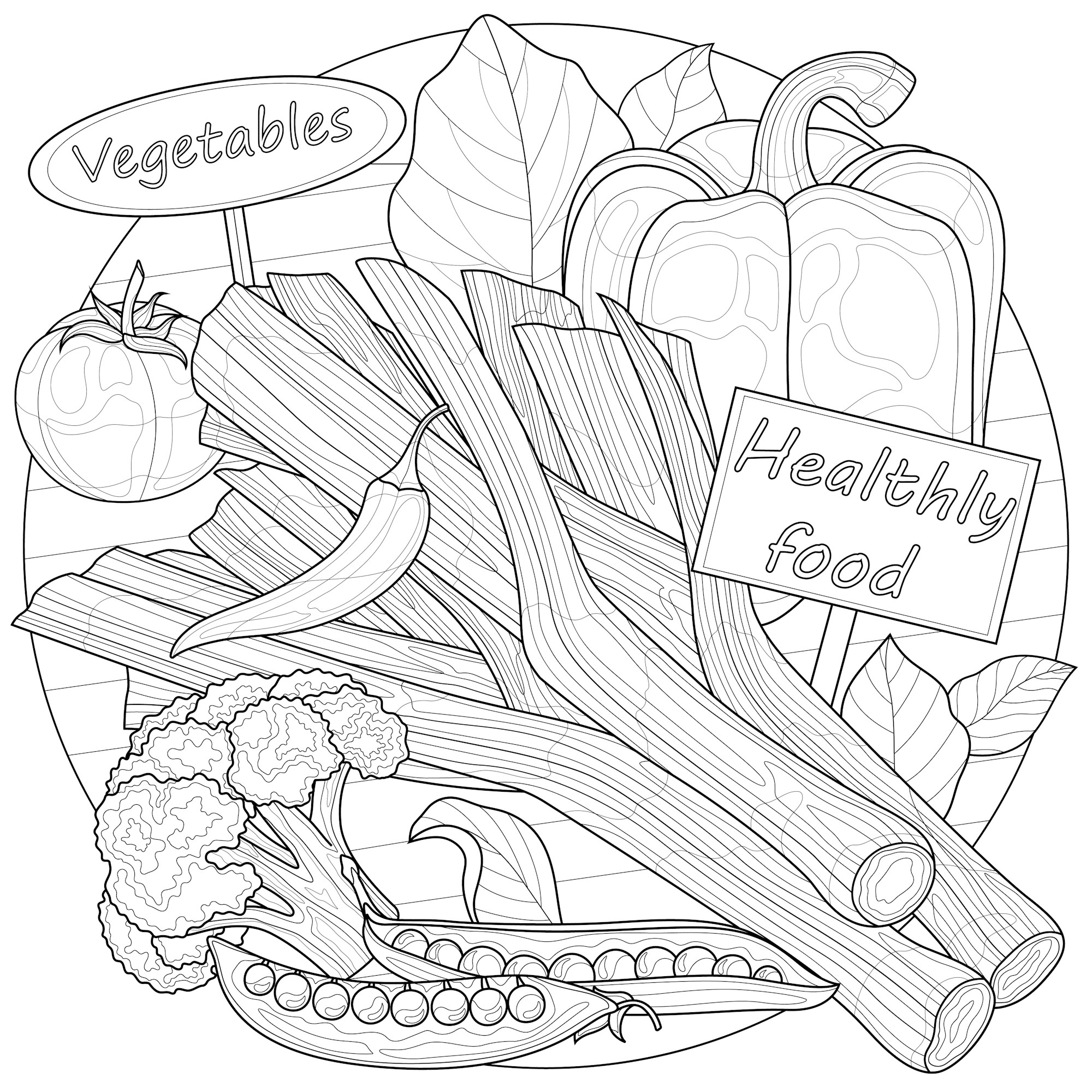
🌱 Color the Leeks
Leeks add a different shape to the vegetable collection.
Their long leaves are usually green, while the lower stalk transitions toward pale green and white.
Try several green pencils rather than just one.
Start with dark forest green near some outer leaves, add medium green through the middle, and use pale green near the lower stalk.
Because leeks have long, narrow shapes, they’re also great for practicing controlled pencil strokes in the same direction.
Or turn each leaf into a different rainbow stripe and create the world’s most colorful leek.
🫑 Make a Rainbow of Peppers
Peppers are naturally made for colorful pages.
Bell peppers can be:
- Green
- Red
- Yellow
- Orange
- Purple
- Brown
So even a realistic coloring page can be incredibly bright.
If several peppers appear together, make every one a different color.
Use dark green for the stems and add a lighter area to one side of each pepper to create the impression of a shiny surface.
Kids can also give peppers funny faces and transform them into vegetable characters.
One pepper could be surprised, another sleepy, and another laughing.
🟢 Color the Peas
Peas bring lots of small round shapes to the collection.
Traditional peas can range from pale yellow-green to deep green, while the pod itself may be another shade.
Try alternating several greens instead of coloring every pea exactly the same.
For a fantasy version, turn the pod into a rainbow.
Pink pea.
Purple pea.
Blue pea.
Yellow pea.
Green pea.
Suddenly, one tiny vegetable becomes a complete color exercise.
🌈 Vegetables Really Do Come in Many Colors
One of the easiest things to notice while coloring vegetables is just how varied produce can be.
The USDA’s MyPlate resources organize vegetables into groups that include dark-green vegetables, red and orange vegetables, beans, peas and lentils, starchy vegetables, and other vegetables.
That variety is easy to see on a coloring page.
Broccoli gives you deep greens.
Carrots and pumpkins bring orange.
Peppers offer green, yellow, orange, and red.
Onions can be white, gold, or purple.
Potatoes can range from cream and brown to red and violet.
Instead of thinking of vegetables as simply “green food,” kids can look for an entire rainbow.
🎨 Vegetable Color Palette Ideas
You don’t have to color every vegetable realistically. A coordinated palette can turn the whole page into a distinctive piece of artwork.
Garden Fresh
Leaf green, carrot orange, tomato red, yellow, and purple.
Farmers Market
Red, orange, golden yellow, deep green, cream, and brown.
Pastel Garden
Peach, lavender, mint, pale yellow, pink, and baby blue.
Autumn Harvest
Burnt orange, burgundy, mustard, brown, and forest green.
Kawaii Veggies
Hot pink, turquoise, lavender, lemon yellow, and mint.
Rainbow Garden
Red, orange, yellow, green, blue, and purple.
Earthy Garden
Olive green, tan, rust, cream, brown, and muted orange.
Try one palette on a single page or give every vegetable its own completely different color scheme.
🌱 Build a Vegetable Garden
Once you’ve colored individual vegetables, draw where they might grow.
Create rows of plants across a larger piece of paper and add:
- Garden soil
- Watering cans
- A garden fence
- Sunflowers
- Bees
- Butterflies
- Garden tools
- A scarecrow
- Clouds
- A bright sun
Kids can place their colored carrots underground with leafy tops above the soil, add pea vines climbing supports, and draw pumpkins spreading across the ground.
This can turn several separate coloring sheets into one large garden scene.
🚜 Imagine a Farm
Some children may prefer turning their vegetables into a farm scene.
Draw a red barn behind the produce, add a tractor, and create long rows of crops.
Maybe the pumpkins are growing in one field while carrots and onions grow in another.
A farm stand can sit near the road with baskets waiting for customers.
Then invent a name for the farm.
Rainbow Vegetable Farm
Happy Harvest Acres
Broccoli Hill Farm
Pumpkin Patch Gardens
The sillier the name, the better.
🛒 Create a Pretend Farmers Market
The produce basket is perfect for imaginative market play.
After coloring, children can draw additional vegetables on separate paper and set up their own pretend farmers market.
Create little signs:
Carrots – 2 coins
Pumpkins – 5 coins
Peppers – 3 coins
Broccoli – 4 coins
Children can take turns being farmers and shoppers.
They can make pretend money, shopping lists, and market signs.
One coloring activity can quickly become an afternoon of imaginative play.
🔎 Can You Identify the Vegetables?
Turn the collection into a simple identification game.
Look at each page before coloring and see how many foods you can name.
Can you find:
- Broccoli?
- Tomato?
- Carrot?
- Onion?
- Potato?
- Pumpkin?
- Leek?
- Pepper?
- Peas?
Then talk about what makes each one recognizable.
Is it the shape?
The leaves?
The color?
The way it grows?
For younger children, simply learning the names is plenty. Older kids may enjoy comparing the coloring illustrations with photographs of the real foods.
🍅 Fruit or Vegetable?
Some foods become especially interesting when you ask whether they’re technically fruits or vegetables.
In everyday cooking, foods such as tomatoes and pumpkins are usually treated like vegetables.
Botanically, however, fruits develop from flowers and contain seeds, which means tomatoes, pumpkins, and peppers are fruits in the botanical sense.
That doesn’t mean someone is wrong for calling them vegetables at dinner. Botanical classifications and culinary categories simply describe foods in different ways.
Kids who enjoy unusual facts may have fun trying to guess which familiar “vegetables” are actually fruits botanically.
🍄 And What About Mushrooms?
Mushrooms make the classification question even more interesting.
They aren’t fruits or vegetables in the botanical sense because mushrooms belong to the kingdom of fungi, not the plant kingdom.
Still, they’re usually used like vegetables in cooking, and USDA MyPlate includes mushrooms in its Vegetable Group.
That’s why mushrooms fit comfortably into a vegetable-themed coloring collection even though their biology is very different from carrots or broccoli.
A coloring page can be a surprisingly good starting point for discovering how diverse our food really is.
🥕 Talk About Where Food Comes From
Vegetable coloring pages can also spark simple conversations about how food reaches the table.
Ask:
- Which vegetables grow underground?
- Which grow above ground?
- Which grow on vines?
- Which have seeds?
- Which have leaves we can eat?
- Which vegetables have you seen growing?
- Which have you eaten?
There’s no need to turn the activity into a quiz.
The purpose is simply to encourage curiosity.
Children might discover that carrots and potatoes grow beneath the soil while peas grow in pods and pumpkins grow on sprawling vines.
Then they can return to coloring with a little more understanding of the picture.
🍽️ Build a Colorful Pretend Meal
After coloring several vegetables, ask children to design an imaginary meal.
They might draw a plate and include:
- Broccoli
- Carrots
- Peas
- Potatoes
- Peppers
Then add any other favorite foods.
Our larger Coloring Pages of Food collection includes pancakes, popcorn, tacos, corn, soup, apples, pizza, hot dogs, and burgers, so kids can combine pages to create an entire pretend menu.
And when dinner is finished, there’s always room for our Cute Desserts Coloring Page.
🖍️ Crayons, Markers, or Colored Pencils?
The variety in this collection makes it suitable for several different art supplies.
Crayons work beautifully for younger children and larger vegetables such as tomatoes, potatoes, carrots, and pumpkins.
Markers create bold colors that are especially fun for the dancing broccoli and brightly colored peppers.
Colored pencils are useful for shading vegetables and working through the detailed decorative pumpkin or doodle mushroom designs.
Try combining them.
Use crayons for large areas, pencils for shadows, and markers for a few strong accents.
If you’re using markers on printed pages, place another sheet of paper underneath to help protect your work surface.
✋ Coloring and Fine Motor Practice
Coloring gives young children opportunities to use and control crayons, pencils, and markers while enjoying a creative activity.
The National Association for the Education of Young Children includes drawing, scribbling, and writing with crayons, pencils, and markers among activities that provide practice for fine motor skills.
This vegetable collection includes a useful range of difficulty.
Younger children can work with the larger carrot, onion, tomato, and broccoli shapes, while older children may prefer the intricate decorative pumpkin and mushroom patterns.
There’s no need for young artists to stay perfectly within the lines. Making marks, exploring colors, and gaining confidence with art materials are valuable parts of the experience.
🔤 Add Vegetable Words
Vegetable coloring can also support early reading and writing activities.
Write the name of each vegetable underneath its picture.
BROCCOLI
CARROT
ONION
POTATO
PUMPKIN
PEPPER
Then let children trace or copy the words.
Younger kids can simply identify the first letter.
B is for Broccoli.
C is for Carrot.
P is for Pumpkin.
Older children could create descriptive phrases such as crunchy carrot, purple onion, or green broccoli.
🔢 Count the Vegetables
Pictures featuring several pieces of produce can become quick counting games.
How many pumpkins are there?
How many peas?
How many vegetables fit inside the basket?
Children can count before they begin coloring and then count again afterward.
Another idea is to assign colors with numbers.
1 = Red
2 = Orange
3 = Yellow
4 = Green
5 = Purple
Roll a die or choose a number and use the matching color on the next vegetable.
You may end up with some extremely unusual produce.
That’s part of the fun.
📖 Tell a Vegetable Story
Even vegetables can become characters.
The dancing broccoli has already started.
What if all the other vegetables came alive too?
Ask questions like:
- Where is the broccoli dancing?
- Is the carrot coming to the party?
- What does the onion say?
- Who lives in the pumpkin patch?
- Why are the mushrooms gathered together?
- Where is the basket of vegetables going?
- What happens when the farmers market closes?
Children can tell the story aloud, write it down, or draw another picture showing what happens next.
Maybe the vegetables form a band.
Broccoli plays guitar.
Carrot sings.
Potato plays drums.
The peas are backup dancers.
There are no limits once the vegetable garden gets imaginative.
🏫 Easy Classroom Vegetable Activities
These pages can fit naturally into food, garden, farm, and plant themes.
Use them for:
- Food-themed art centers
- Garden units
- Farm activities
- Early-finisher pages
- Indoor recess
- Farmers market pretend play
- Vegetable identification
- Color activities
- Story-writing prompts
- Homeschool projects
- Classroom displays
A whole class could each choose a different vegetable and combine the finished artwork into one giant Our Colorful Garden bulletin board.
Add green paper vines, brown soil, a bright sun, and children’s colored vegetables throughout the scene.
✂️ Turn Colored Vegetables Into Crafts
Finished vegetable pages don’t have to stay flat.
With appropriate adult supervision, cut out individual vegetables and glue them onto larger pieces of paper.
Create:
- A garden
- Farmers market
- Vegetable basket
- Pretend grocery store
- Harvest collage
- Soup pot
- Salad bowl
- Rainbow of vegetables
Children could also glue their vegetable onto folded construction paper to create homemade cards.
A smiling broccoli card would certainly be memorable.
🌈 Make a Vegetable Rainbow
Vegetables naturally provide many rainbow colors.
Create a large rainbow or rows labeled:
RED
ORANGE
YELLOW
GREEN
PURPLE
Then place vegetables beneath the color where they belong.
Tomatoes might go under red.
Carrots under orange.
Yellow peppers under yellow.
Broccoli and peas under green.
Purple onions under purple.
Some vegetables can belong in more than one place because different varieties come in different colors.
That’s what makes the activity interesting.
🍂 Turn the Vegetable Pages Into a Fall Harvest
Pumpkins, potatoes, onions, carrots, mushrooms, and other produce can also fit beautifully into autumn-themed coloring.
Use warm shades such as:
- Burnt orange
- Mustard yellow
- Burgundy
- Brown
- Deep green
- Cream
- Gold
Add fallen leaves, baskets, hay bales, and a farm stand around the vegetables.
Then continue the season with our Coloring Pictures for Fall or 54 Coloring Sheets for Autumn.
🎃 Give the Pumpkins a Halloween Makeover
The pumpkin pages can easily shift from harvest season to Halloween.
Add jack-o’-lantern faces, bats, spiders, or a crescent moon.
Turn the decorative pumpkin orange and black or create a purple-and-green Halloween palette.
Then explore our Coloring Pages of Halloween for witches, ghosts, cauldrons, black cats, and even more pumpkins.
One simple vegetable can become both a harvest picture and a Halloween character depending on how you color it.
🍎 Explore More Food Coloring Pages
Once the vegetable garden is complete, there are plenty more foods waiting for color.
Visit our Coloring Pages of Food for pancakes, pizza, tacos, popcorn, apples, soup, burgers, and other familiar foods.
Then save room for something sweet with our Cute Desserts Coloring Page or larger Dessert Coloring Pages.
Kids can combine all three collections to make their own giant food coloring book.
Divide it into sections:
Vegetables
Meals
Snacks
Desserts
Then design a colorful cover.
🥦 Grow a Garden With Color
From a sunglasses-wearing dancing broccoli to carrots, onions, potatoes, peppers, peas, pumpkins, mushrooms, tomatoes, and overflowing baskets of produce, these Coloring Pages of Vegetables offer plenty of ways to combine food, nature, learning, and creativity.
Color vegetables the way they look in a real garden or invent varieties that could exist only in your imagination.
Make rainbow carrots, purple broccoli, blue pumpkins, and polka-dot mushrooms.
Build a pretend farmers market, create a vegetable garden, practice food words, invent vegetable characters, or simply enjoy filling each page with color.
You might even discover that the produce section is far more colorful than it first appears.
Grab your crayons, markers, or colored pencils and start growing your own colorful paper garden.
Happy coloring!
🔗 Related Coloring Pages
- Coloring Pages of Food
- Cute Desserts Coloring Page
- Dessert Coloring Pages
- 54 Coloring Sheets for Autumn
- Coloring Pictures for Fall
- Coloring Pages of Halloween
- Food & Drink Coloring Pages
📚 Sources
🖍️Shop Vegetable Coloring Books –>