🖍️Shop Koala Coloring Books –>
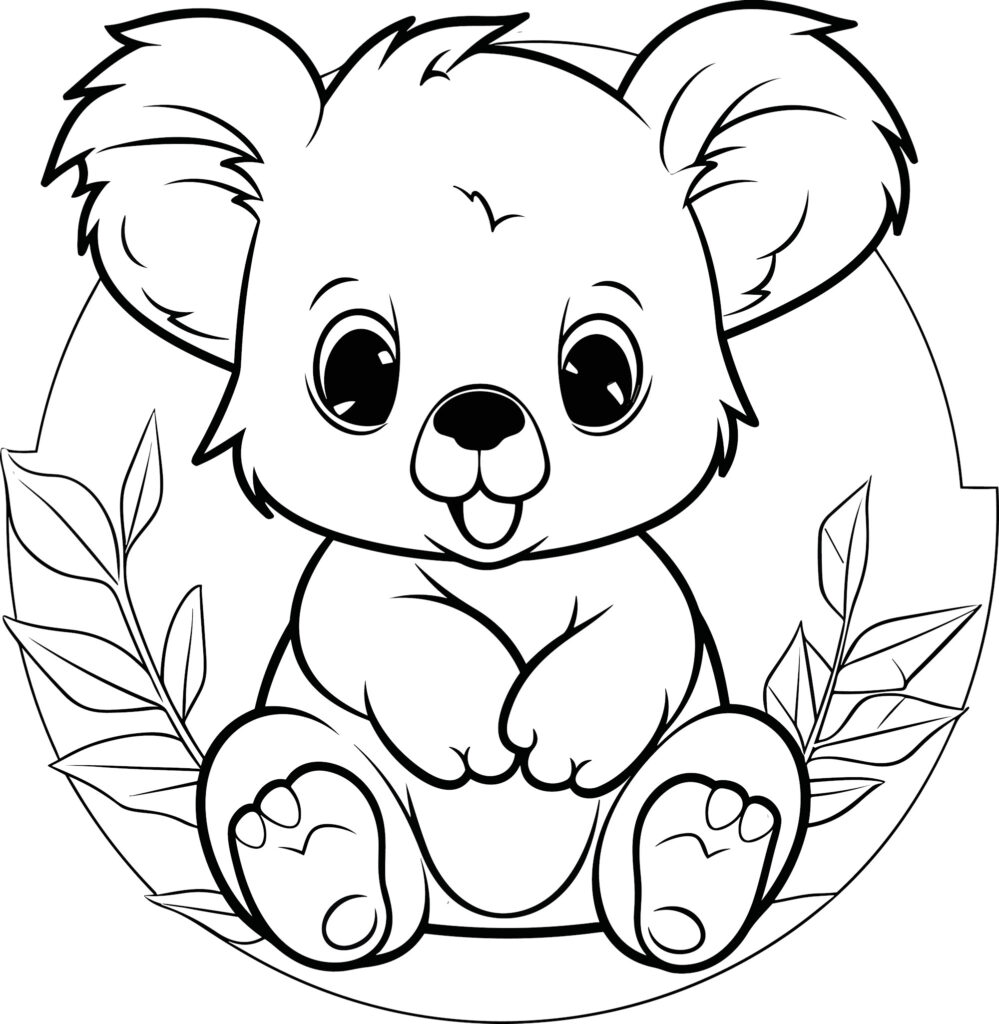
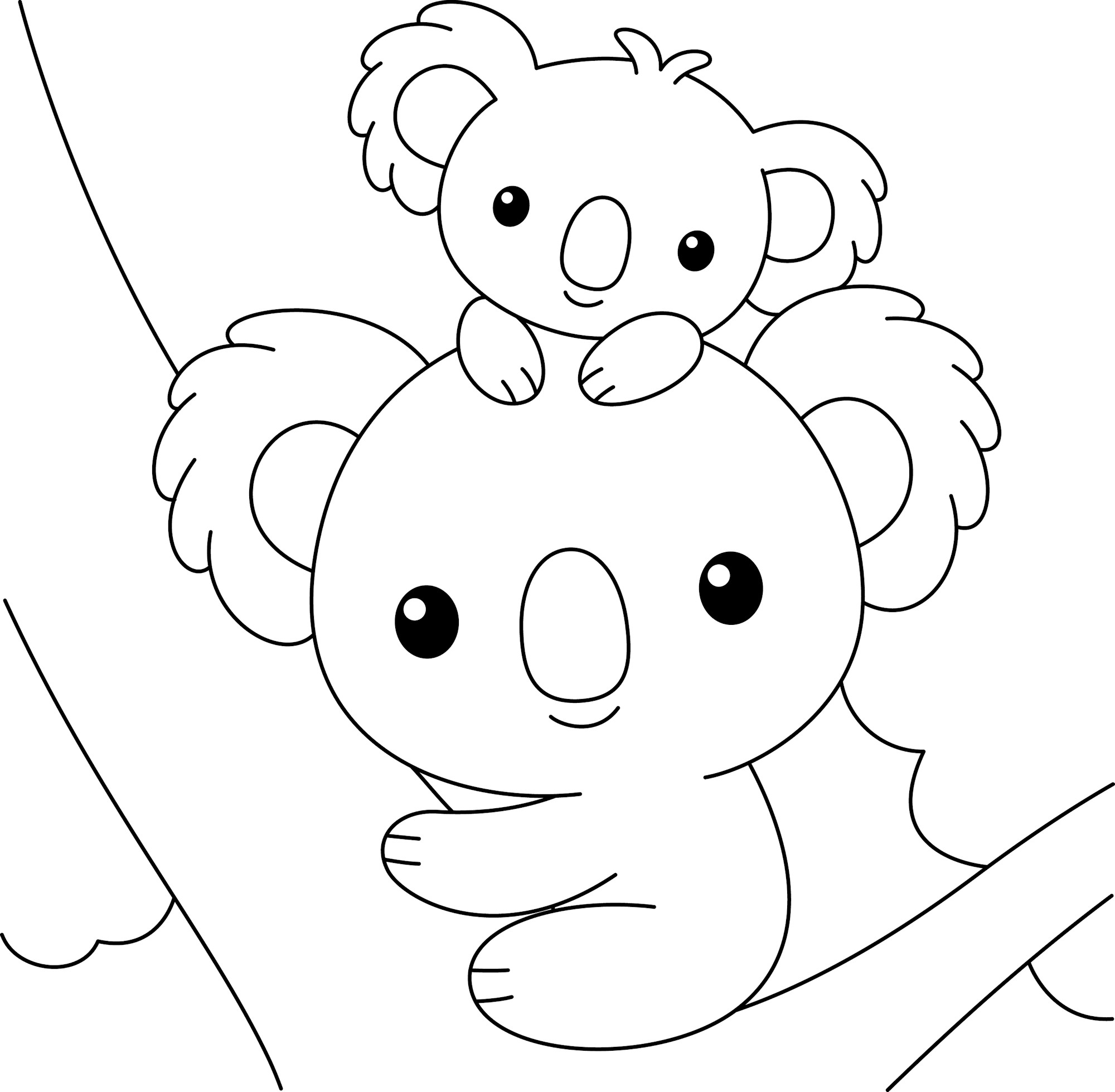
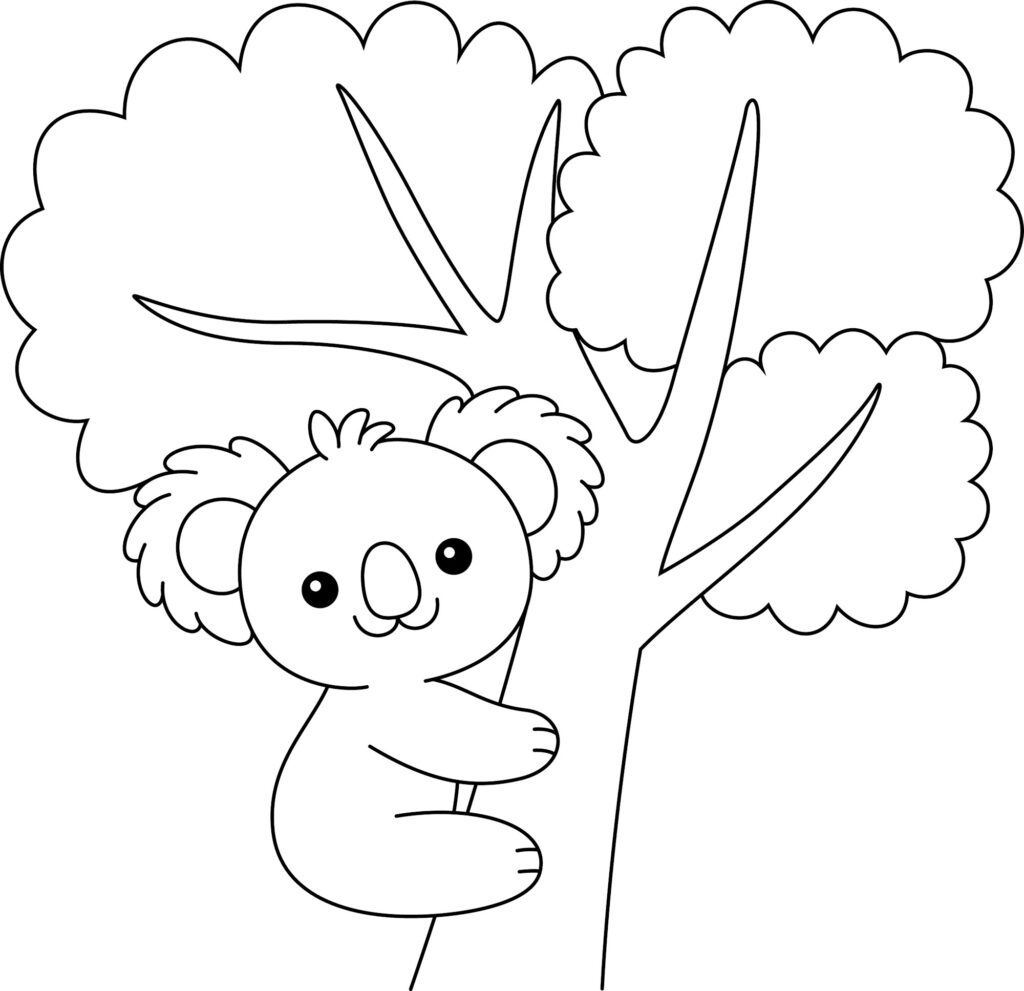
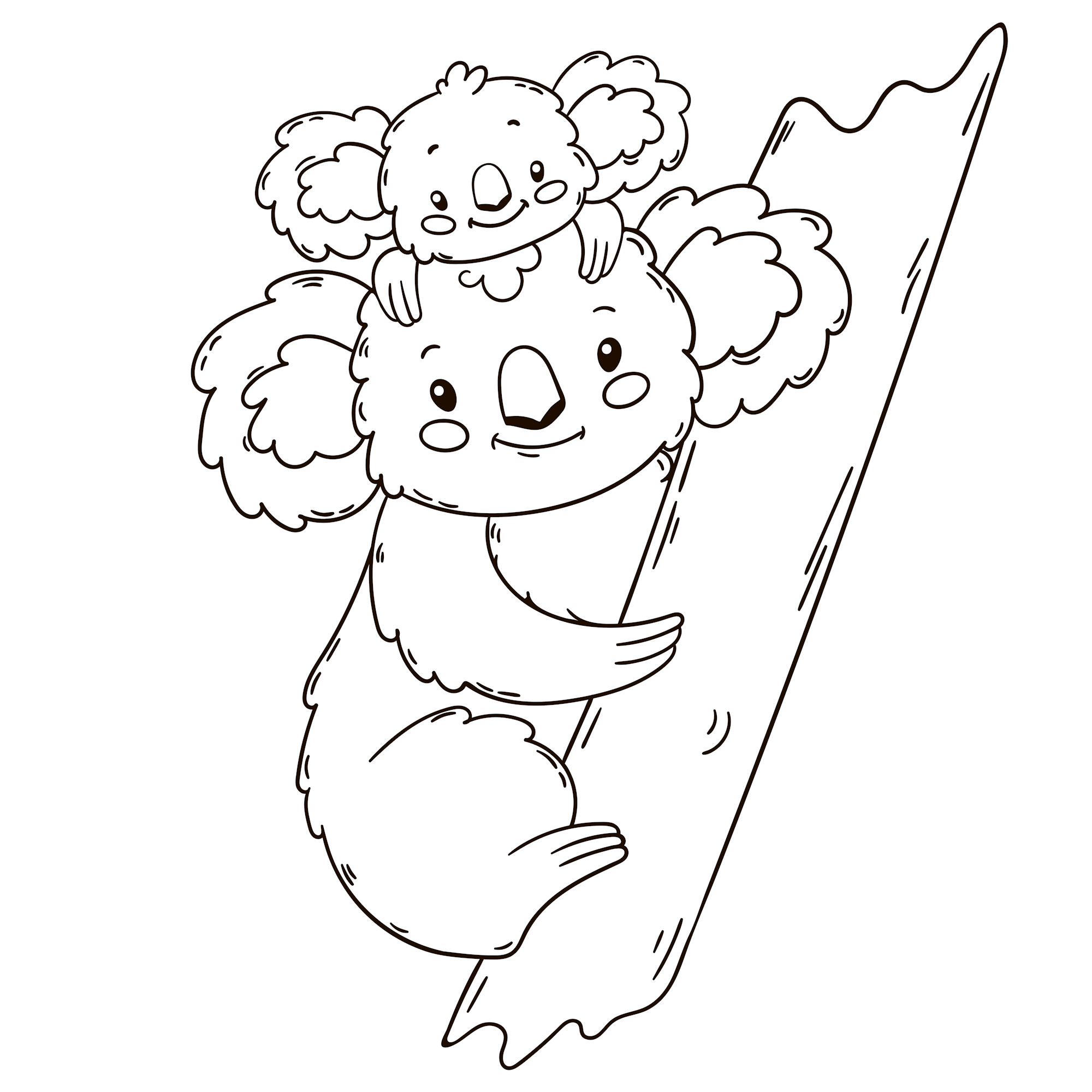
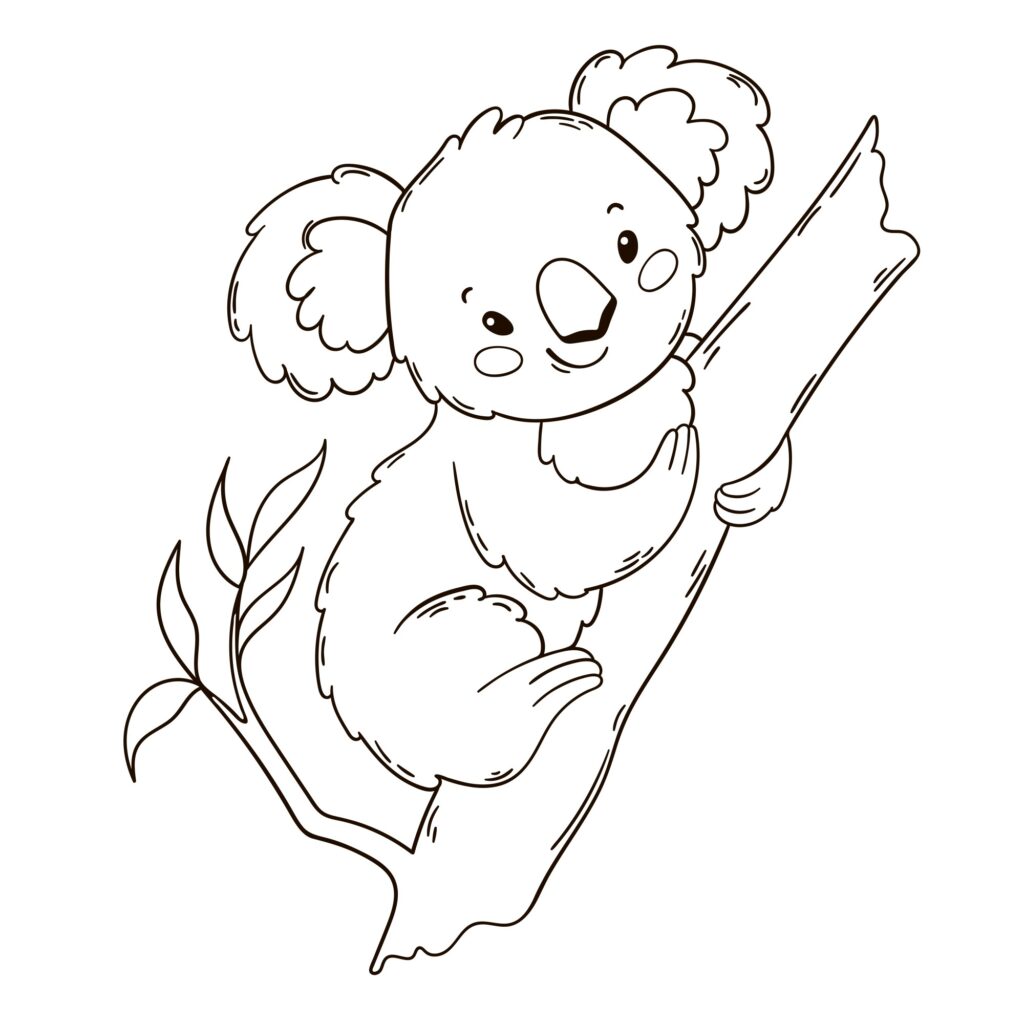
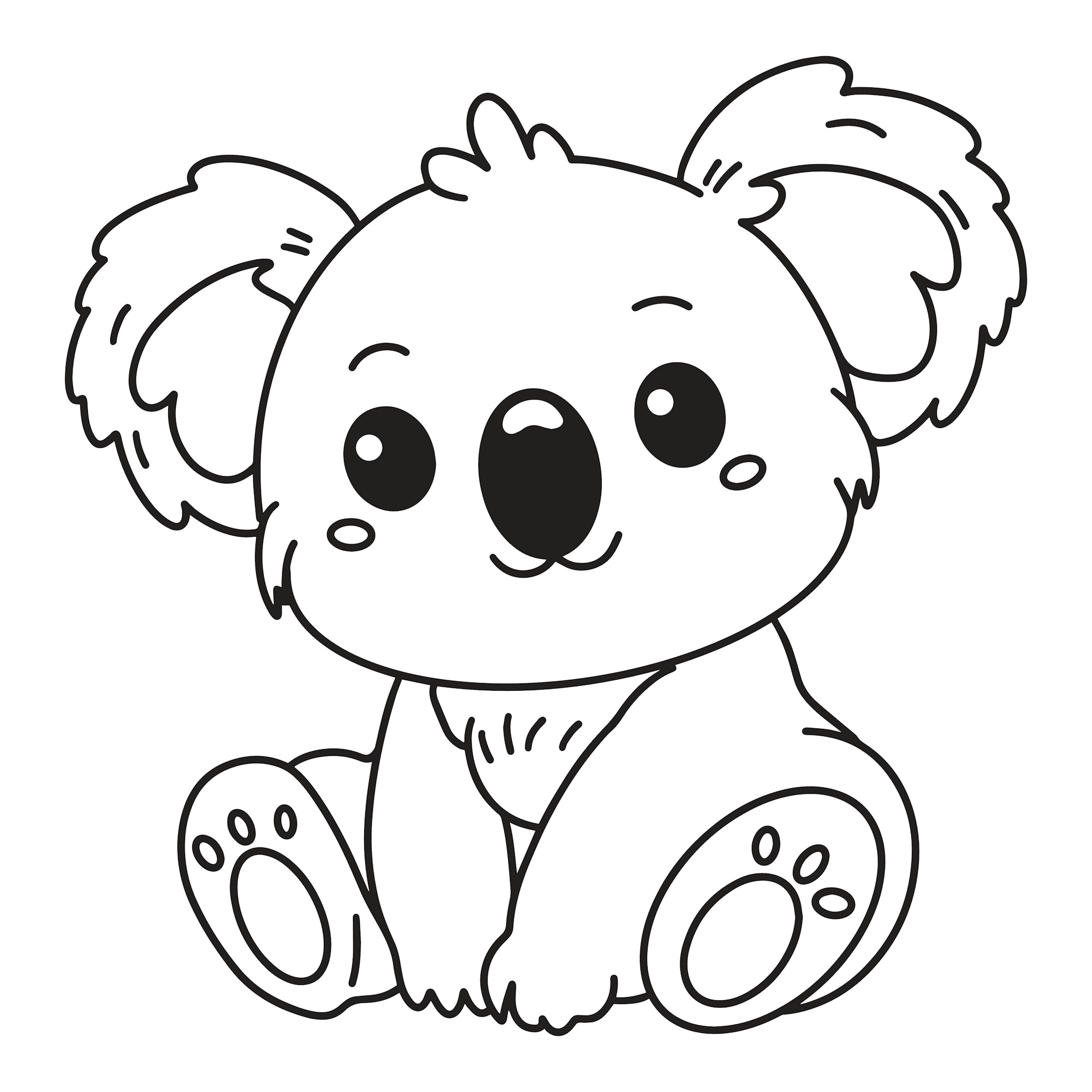
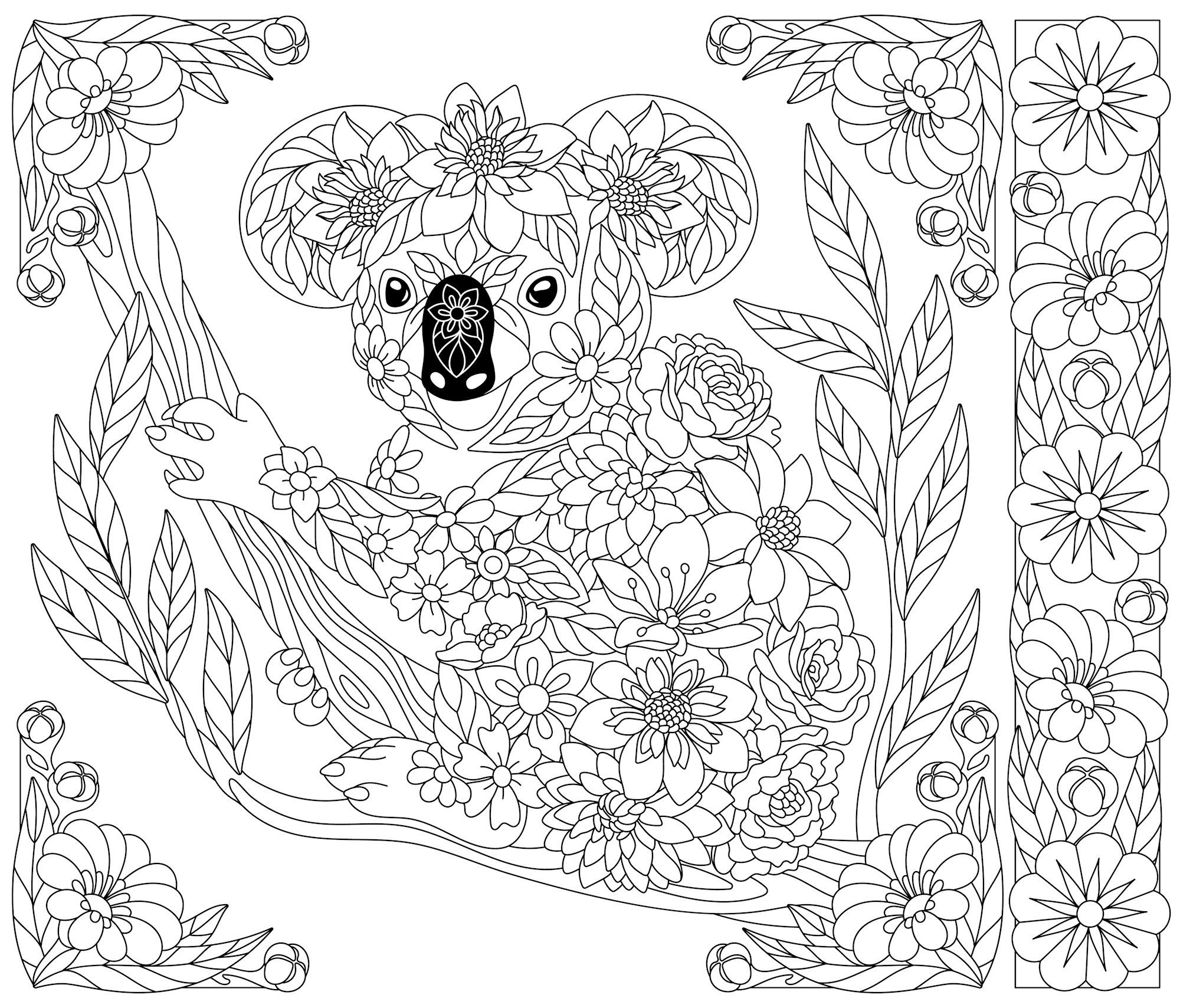
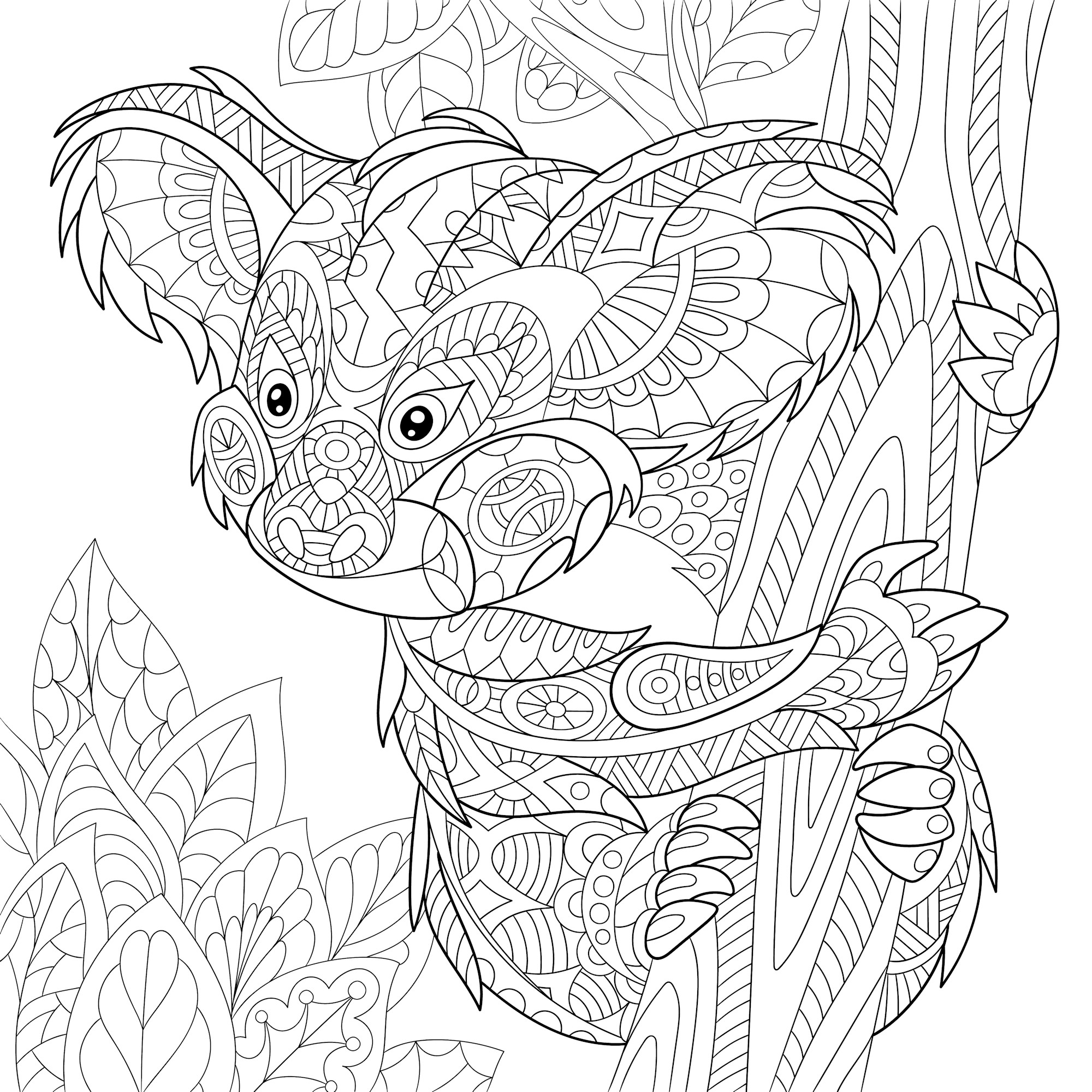
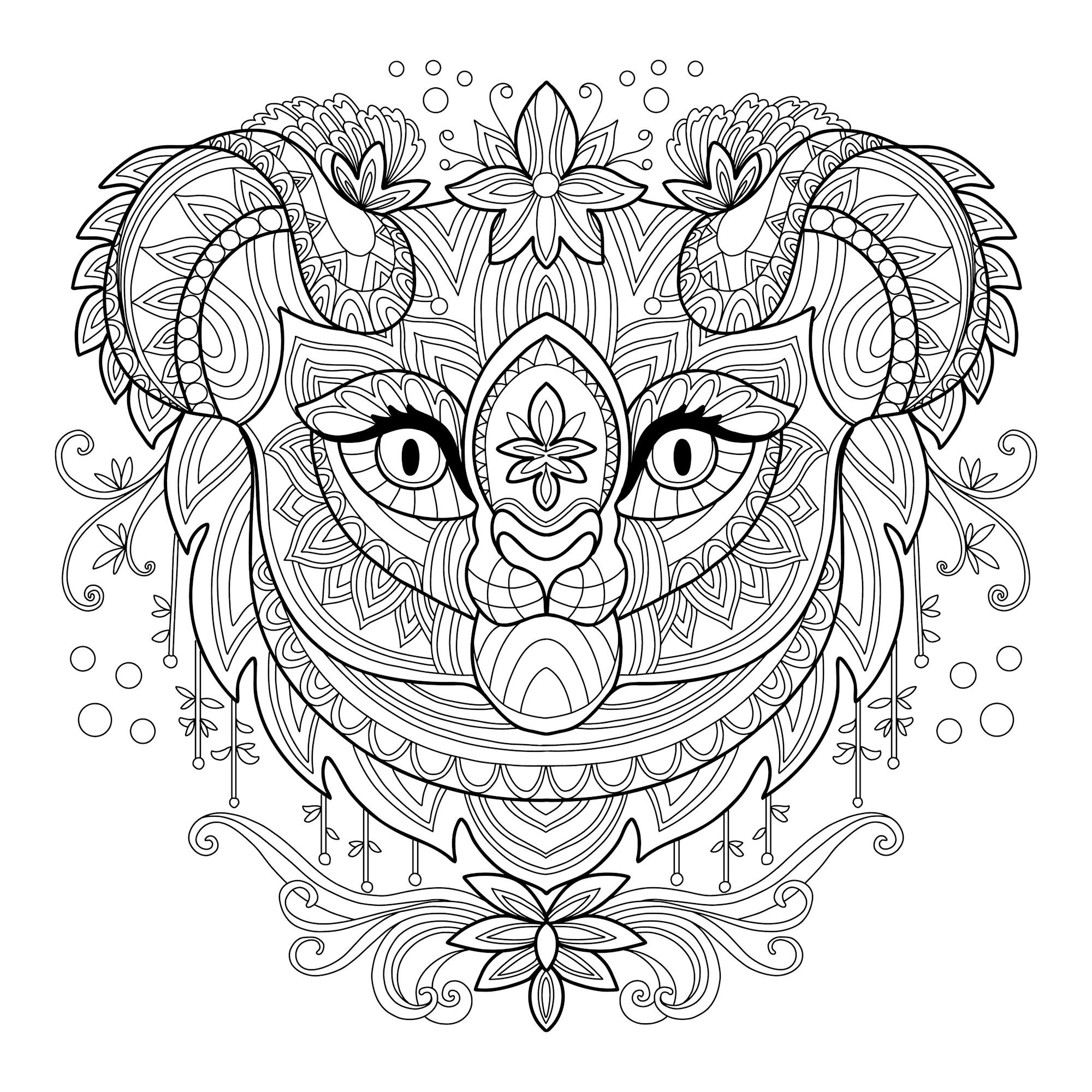
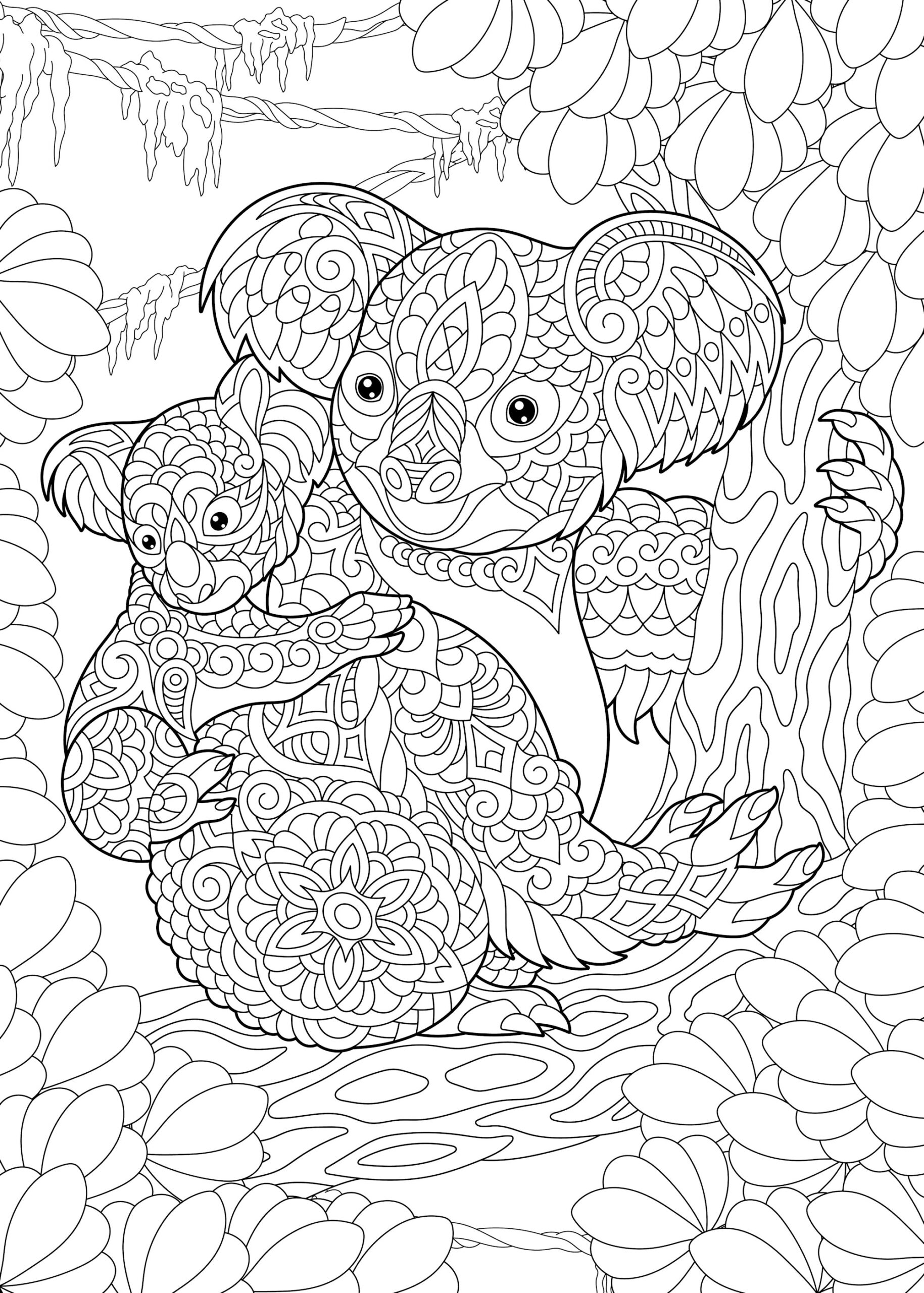
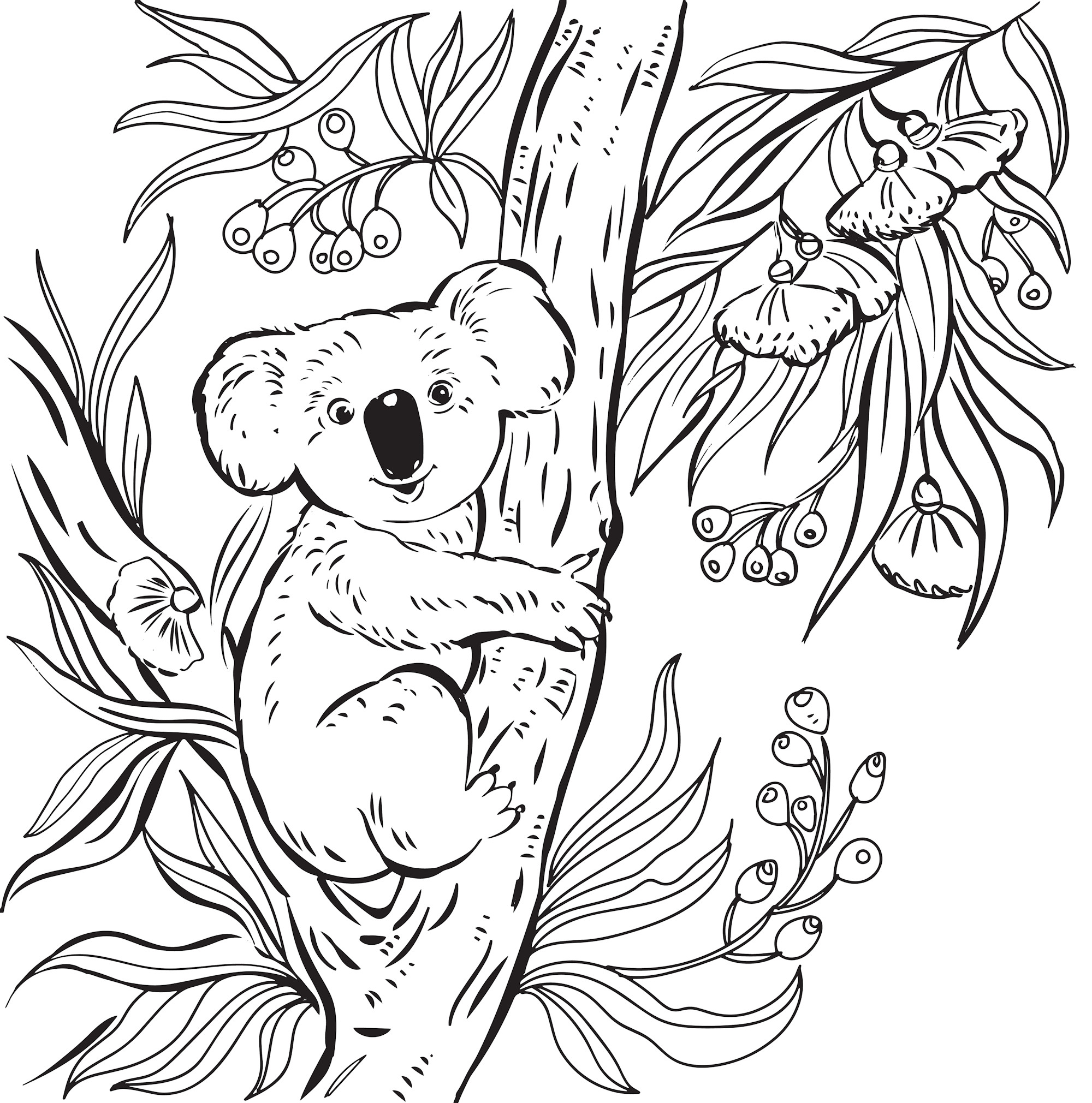
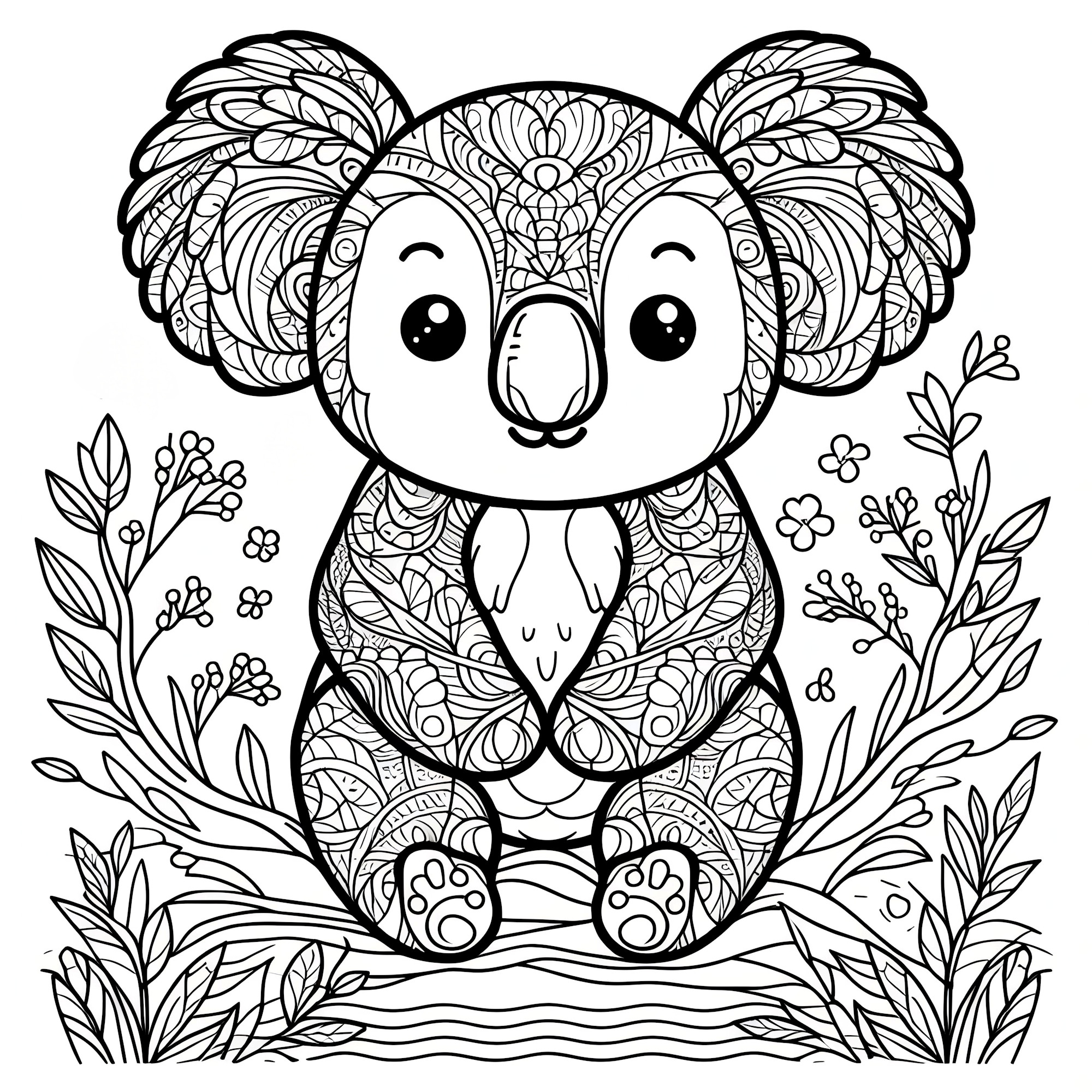
Travel to the eucalyptus forests of Australia with our collection of koala coloring pages, filled with cuddly-looking koalas, sweet mothers and joeys, leafy tree scenes, floral designs, and intricate zentangle and mandala patterns.
Koalas are instantly recognizable thanks to their fluffy round ears, large dark noses, soft-looking gray fur, and talent for relaxing high in the trees. Those same features also make them wonderful coloring subjects. Younger children can enjoy the simple kawaii and baby koala designs, while older kids and adults can spend more time on detailed flowers, leaves, geometric patterns, and doodle-style artwork.
You can color your koala in natural shades of gray and brown, surround it with green eucalyptus leaves, or create something completely imaginary. A lavender koala, rainbow eucalyptus tree, or flower-covered fantasy koala is perfectly welcome on a coloring page.
🐨 Explore Our Koala Coloring Pages
There is plenty of variety in this collection, so not every koala has to look or feel the same.
Some pages feature adorable cartoon koalas sitting or climbing in trees, while others show mothers caring for their babies. There is a sweet baby koala, a classic Australian koala on a tree, and several leafy eucalyptus scenes that provide extra background details to color.
For colorists who enjoy a little more challenge, the collection also includes a floral koala filled with flowers and leaves, a zentangle-style koala among foliage, an elaborate doodle design, a stylized koala head, and a geometric mandala-inspired koala sitting on a branch.
That means you can choose a quick and cheerful coloring project or settle in with a much more detailed design.
💕 Koala Mother and Baby Coloring Pages
Some of the most adorable pictures in the collection feature a mother koala and her baby, or joey.
A young koala spends its earliest months developing in its mother’s pouch. As it grows, the joey eventually begins riding on its mother’s back or clinging close to her body.
That makes the mother-and-baby pages especially sweet to color.
Try giving the adult koala a slightly darker gray or gray-brown coat and making the joey a softer, lighter shade. Use creamy white for fluffy chest and ear details, then add a dark charcoal or black nose.
Of course, realistic colors are optional. A pink mother koala carrying a purple joey through a turquoise eucalyptus tree can be just as much fun.
🌿 Cute Koala in a Tree
Several of the designs show koalas where we most often picture them—perched among the branches and leaves of a tree.
These pages give you more to color than the animal itself. Tree trunks can be warm brown, tan, gray, or reddish brown, while the leaves can include many different greens.
Instead of reaching for one green crayon, experiment with:
- Sage
- Olive
- Emerald
- Forest green
- Yellow-green
- Blue-green
- Pale mint
Use darker shades for leaves tucked into shadow and lighter colors around the edges.
Then add blue sky, clouds, sunshine, birds, or distant trees if there is room in the background.
For more animal printables from around the world, explore our Animal Coloring Pages.
🐨 Cute Kawaii Koala Coloring Pages
Koalas and kawaii artwork are an almost perfect combination.
Their naturally large ears, rounded faces, fuzzy bodies, and prominent noses already give them many of the features that work well in cute cartoon designs.
For a kawaii koala, try soft pastel colors such as:
- Pale gray
- Baby blue
- Lavender
- Blush pink
- Mint
- Peach
Add rosy cheeks, tiny hearts, stars, flowers, or little clouds around the character.
Children can also give their koala a name and imagine its personality. Perhaps it loves naps, tells jokes to the birds, or has a favorite branch where it watches the sunset every evening.
If adorable characters are your favorite, our Cute Coloring Pages have plenty more to explore.
🍼 Baby Koala Coloring Page
A baby koala makes a wonderfully simple coloring subject for younger artists.
Large areas of soft-looking fur can be filled with crayons, while the fluffy ears and big nose give kids a few extra details to work on.
Begin with light gray and add slightly darker gray around the arms, legs, or edges of the body. Leave parts of the chest and inner ears white or pale cream.
Then create a setting for the little koala.
Draw a eucalyptus branch, leaves, butterflies, flowers, or another koala nearby. A blank background can become an entire Australian woodland with a little imagination.
🌳 Koala on a Eucalyptus Tree
One of the most natural scenes in the collection shows a koala on a eucalyptus tree.
Koalas live in eucalypt forests and woodlands, and certain eucalyptus leaves make up most of their specialized diet. They do not simply eat every eucalyptus species they encounter; koalas can be quite selective about the trees they use for food.
For coloring purposes, that means the leaves deserve almost as much attention as the animal.
Try combining gray-green, sage, olive, and blue-green foliage with a textured brown or gray tree trunk.
Older children might also look at photos of eucalyptus leaves before coloring and compare their shape and colors with the leaves in the picture.
🌺 Floral Koala Coloring Page
The floral koala made from flowers and leaves gives this collection a completely different style.
Rather than trying to create a realistic animal, treat the picture almost like a decorative garden.
One flower can be pink, another purple, another yellow, and another bright blue. Leaves can shift between greens, teal, turquoise, and even gold.
A neutral gray koala surrounded by colorful flowers can look beautiful, but you can also reverse the idea and make the koala itself the most colorful part of the page.
Try a palette such as:
Soft Garden
Pink, lavender, cream, sage, and pale blue
Tropical Garden
Turquoise, orange, coral, yellow, and bright green
Fantasy Garden
Purple, blue, silver, magenta, and teal
Autumn Garden
Burgundy, rust, gold, orange, and olive
There really is no wrong approach.
🌀 Zentangle Koala Coloring Pages
Several pages feature zentangle and doodle-inspired koalas, including a koala sitting among leaves and a more elaborate antistress-style sketch.
These designs are ideal for colorists who enjoy smaller sections and repeated patterns.
Rather than coloring the whole animal gray, assign different shades to each pattern. One section might be turquoise, another violet, another blue, and another green.
You could also use a very limited palette.
For example, choose only:
- Navy
- Teal
- Aqua
- Lavender
- Silver
Repeating those colors across the entire design can create a surprisingly polished finished picture.
Fine-tip markers and sharpened colored pencils are especially useful when working with the smaller spaces.
🔷 Geometric Koala Mandala Coloring Page
The geometric koala sitting on a tree branch is one of the most intricate designs in the collection.
Mandala-inspired and geometric pages are perfect for experimenting with symmetry and repeating colors.
Choose three to six colors before you begin and reuse them throughout the pattern. Repeating the same palette can help all of the small sections feel connected.
Try:
- Purple, turquoise, blue, and silver
- Red, orange, yellow, and gold
- Green, teal, navy, and aqua
- Pink, lavender, mint, and pale blue
- Black, gray, white, and one bright accent color
You can also create a rainbow by gradually moving through the color spectrum from one part of the koala to another.
🎨 What Colors Are Koalas?
Real koalas generally have fur in shades of gray to gray-brown, often with lighter or white areas on the chest and around parts of the face and ears. Their large noses are dark.
But even a realistic koala does not have to be colored with one flat gray.
Try layering:
- Pale gray
- Warm gray
- Charcoal
- Taupe
- Gray-brown
- Cream
- White
Use the darker shades around the arms, legs, and overlapping areas of fur while keeping raised or fluffy sections lighter.
That simple bit of shading can make a koala appear much softer and more dimensional.
🌈 Fantasy Koala Coloring Ideas
Sometimes realistic colors are fun. Other times, it is much more exciting to forget reality entirely.
Create a koala that could only live in your imagination.
Maybe it has:
- Rainbow fur
- Purple ears
- A turquoise nose
- Pink paws
- Star patterns
- Heart-shaped markings
- Floral fur
- Golden leaves surrounding it
You could even imagine different types of magical koalas.
A Moon Koala might be navy and silver.
A Sunset Koala could be coral, orange, pink, and purple.
A Forest Koala might be made entirely from different shades of green.
A Candy Koala could use pastel pink, mint, lavender, and baby blue.
Give your creation a name once you are finished.
🐨 Koalas Aren’t Bears
You may sometimes hear people say “koala bear,” but koalas are not bears.
They are marsupials, a group of mammals that also includes animals such as kangaroos and wombats. The koala’s closest living relative is the wombat.
Female koalas have a pouch where a newborn joey develops during the earliest part of its life.
This makes koalas a fun animal to include in lessons about different types of mammals. After coloring, children can compare a koala with a bear and think about the ways the two animals are different.
👶 What Is a Baby Koala Called?
A baby koala is called a joey.
Newborn koalas are extremely small and continue developing inside their mother’s pouch. Eventually, as a joey grows larger, it begins spending time outside the pouch and may ride on its mother’s back.
That makes the mother-and-baby coloring pages a good starting point for talking about animal life cycles.
Children could even create a three-picture sequence:
- A tiny joey in its mother’s pouch
- A growing joey riding on its mother’s back
- A young koala climbing on its own
Add a sentence beneath each picture to turn the project into a miniature koala book.
😴 Why Do Koalas Rest So Much?
Koalas spend much of their time resting or sleeping in trees.
One reason is their unusual diet. Eucalyptus leaves are fibrous and do not provide a huge amount of readily available energy, so koalas conserve energy rather than racing around all day.
That gives kids a fun story idea for their coloring pages.
What is the koala dreaming about while it sleeps?
Maybe it is dreaming of:
- An endless eucalyptus forest
- A tree filled with rainbow leaves
- Flying through the clouds
- Meeting a kangaroo
- Becoming a superhero
- Finding the world’s comfiest branch
Draw a thought bubble beside a resting koala and illustrate its dream inside.
🍃 What Do Koalas Eat?
Koalas have a highly specialized diet based largely on the leaves of particular eucalyptus trees.
That is why eucalyptus branches appear so naturally in koala artwork.
After coloring a koala, children can add even more leaves around the animal. Older kids might research the shape of eucalyptus leaves and try drawing their own.
You could also make a simple food-and-habitat page with the koala in the center and drawings around it showing:
- Eucalyptus leaves
- Tree branches
- A forest
- Water
- Other animals that live in Australia
The coloring activity then becomes the beginning of a small wildlife project.
🖐️ Koalas Are Built for Climbing
Koalas spend a great deal of time in trees, and their bodies are well suited to climbing.
Their strong limbs, large claws, and gripping paws help them hold onto trunks and branches.
Look closely at one of the tree-climbing coloring pages and think about how the koala stays attached to the branch.
Children can turn this into an observation activity by comparing animals with different kinds of feet.
How are a koala’s paws different from:
- A bird’s feet?
- An elephant’s feet?
- A horse’s hooves?
- A monkey’s hands?
- A tiger’s paws?
For more animals to compare, visit our Coloring Pages of Elephants and Coloring Pages of Monkeys.
🇦🇺 Create an Australian Habitat
Koalas are native to Australia, so these pages can become part of a simple geography activity.
After coloring the koala, draw an Australian woodland around it. Add eucalyptus trees, rocks, grass, clouds, and other wildlife.
You might include other Australian animals such as:
- Kangaroos
- Wombats
- Cockatoos
- Kookaburras
- Echidnas
- Wallabies
Older children can find Australia on a world map and learn which continent and hemisphere it is in.
This is an easy way to combine animal coloring with geography without turning the activity into a worksheet.
🌿 Design a Koala Habitat
Choose one of the simpler koala pages and expand the background into a complete habitat.
Start with several trees rather than a single branch. Add plenty of leaves, patches of sunlight, shrubs, fallen branches, and other details.
Then decide who else lives nearby.
Perhaps a bird is perched in the next tree, a lizard is resting on a rock, or another koala is hidden among the leaves.
Children can think about what an animal needs from its habitat, including food, shelter, and space.
For more outdoor scenes, explore our Nature Coloring Pages.
✏️ Draw Your Own Koala
Once you have colored several koalas, try drawing one of your own.
Start with a large round head. Add two oversized fluffy ears and a big oval nose.
Then draw a rounded body, strong arms and legs, and a branch for the koala to hold.
Do not worry about making it perfect.
A cartoon koala can be created from very simple shapes, and every drawing will develop its own personality.
Add eucalyptus leaves at the end, then color your original koala alongside the printable designs.
📖 Turn Your Koala Into a Story
The mother-and-baby scenes and tree-climbing koalas make wonderful story starters.
Give your koala a name and decide where it is going.
Maybe the joey is climbing away from its mother for the first time. Perhaps the kawaii koala has discovered a mysterious object hidden among the eucalyptus leaves.
Or maybe the whole forest has fallen asleep—except for one little koala who needs to discover why.
Children can write a few sentences beneath their picture or tell their story aloud.
Older kids could choose several koala coloring pages and arrange them in order to create an illustrated adventure.
🏫 Koala Coloring Pages for Classrooms
Koala printables can work especially well with lessons about animals, habitats, Australia, mammals, and wildlife.
Teachers and homeschool families might use them for:
- Australian animal units
- Mammal lessons
- Habitat studies
- Geography activities
- Animal reports
- Early-finisher pages
- Classroom art
- Wildlife bulletin boards
- Creative writing
- Quiet-time activities
Children could color several Australian animals and create a classroom display centered on the wildlife of Australia.
Another option is to place the finished koala beside a few short facts the student has researched.
For more learning activities, visit our Educational Coloring Pages & Activities.
🌏 Learning About Koala Conservation
Koalas may look peaceful sitting among eucalyptus leaves, but their wild habitats face real challenges.
Habitat loss and fragmentation can make it harder for koalas to find the trees, shelter, and connected areas of forest they need.
For children, this can be introduced gently through the idea that wild animals need healthy places to live.
After coloring a koala, ask:
What would you put in a habitat that helps a koala?
Trees would probably be near the top of the list.
Children could draw a thriving eucalyptus forest around their finished animal and add a short message about caring for wildlife and habitats.
✂️ Koala Coloring Page Crafts
Finished koala pages can become much more than pictures for the refrigerator.
Try turning them into:
- Australian animal posters
- Homemade cards
- Wildlife notebooks
- Classroom decorations
- Animal fact sheets
- Puppets
- Bookmarks
- Scrapbook pages
- Storybook illustrations
- Habitat collages
For a fun classroom project, let each child choose a different animal and combine all the finished artwork into a large wildlife display.
A koala could represent Australia while elephants, tigers, monkeys, and other animals represent habitats in other parts of the world.
🖍️ Coloring Tips for Detailed Koalas
The simpler kawaii koalas work beautifully with crayons and markers, but the intricate zentangle and mandala pages may be easier with sharpened colored pencils or fine-tip markers.
When working on a complicated design, you do not need to color every tiny section differently.
Pick a small palette and repeat it.
For example:
Forest Palette: sage, emerald, brown, gold, and cream
Cool Palette: turquoise, navy, lavender, blue, and silver
Warm Palette: coral, orange, yellow, burgundy, and pink
Pastel Palette: mint, blush, pale blue, lavender, and peach
Repeating colors helps detailed pages feel coordinated without requiring dozens of decisions.
🖨️ How to Use Your Koala Coloring Pages
Choose your favorite koala design, print it, and gather crayons, colored pencils, markers, or other favorite art supplies.
Regular printer paper is perfect for everyday coloring. If you plan to use paint, glue, glitter, or heavier markers, thicker paper can be useful.
Then decide what kind of koala you want to create.
Will it be a realistic gray koala sitting quietly in a eucalyptus tree? A sweet pastel joey? A rainbow floral koala? An elaborate zentangle design filled with dozens of colors?
Every page can become something completely different.
🐨 Climb Into Your Next Coloring Adventure
From cute kawaii koalas and tiny joeys to mothers and babies, eucalyptus-tree scenes, floral artwork, zentangle patterns, stylized portraits, and geometric mandala designs, this koala coloring collection offers something for many different ages and coloring styles.
Keep your koala soft and gray, cover it in bright flowers, fill every geometric pattern with a new shade, or invent an Australian forest unlike anything found in nature.
Choose your favorite printable, gather your colors, and settle onto a cozy branch for a little creative time.
🔗 Related Articles
- Animal Coloring Pages
- Cute Coloring Pages
- Coloring Pages of Elephants
- Coloring Pages of Tigers
- Coloring Pages of Monkeys
- Nature Coloring Pages
- Educational Coloring Pages & Activities
📚 Sources
- Australian Museum — Koala
- NSW Government Environment and Heritage — Koala
- NSW Government Environment and Heritage — Koala Habitat and Feed Trees