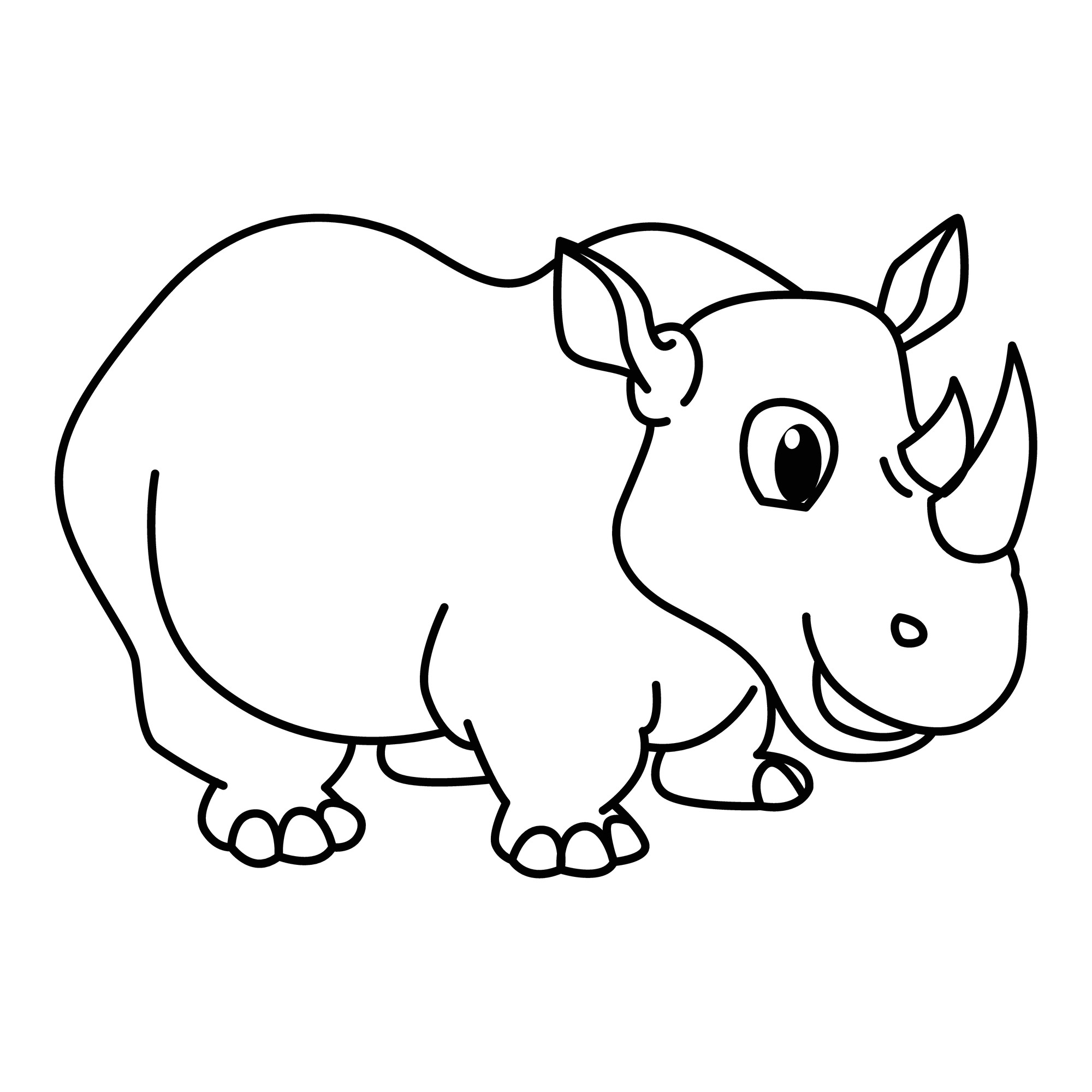
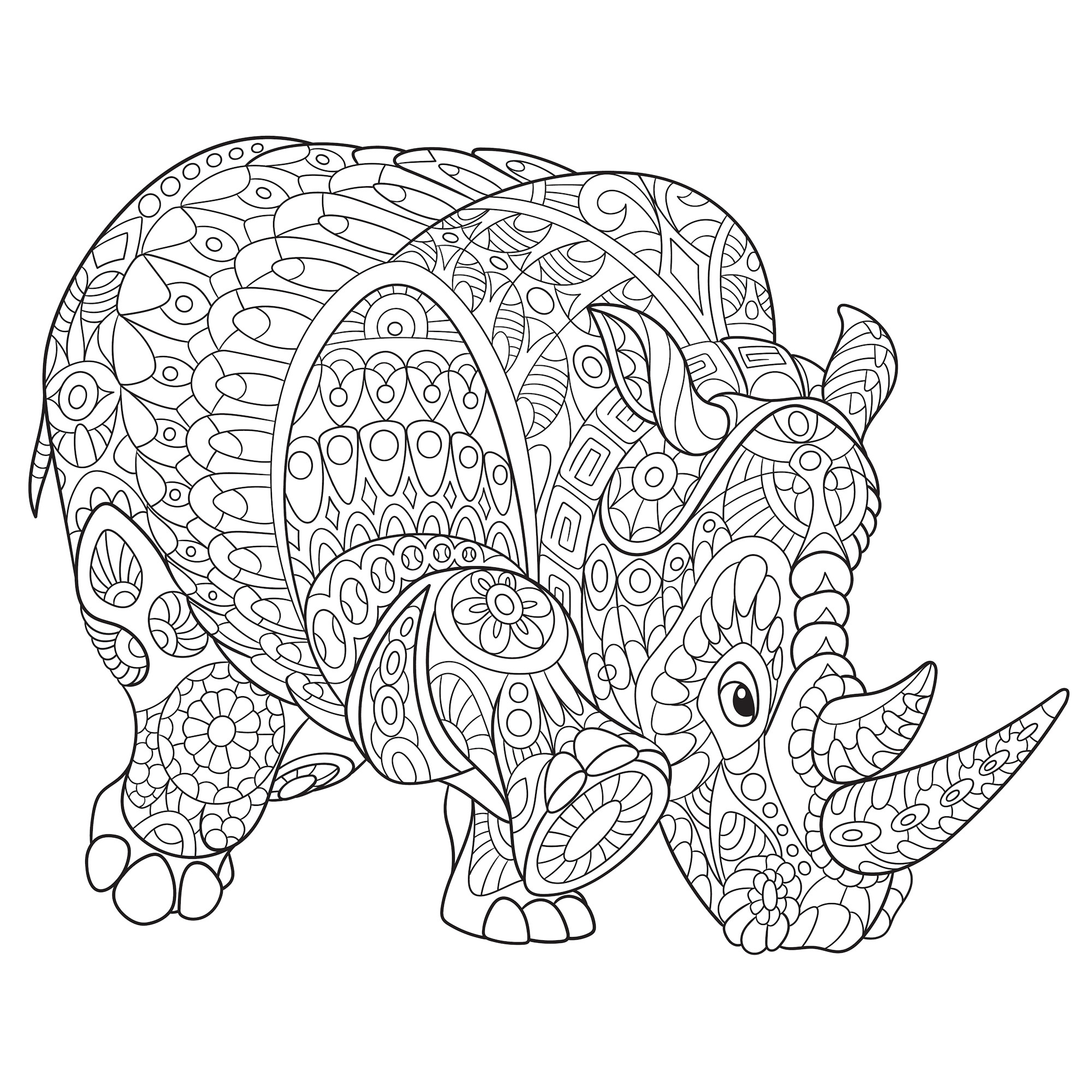
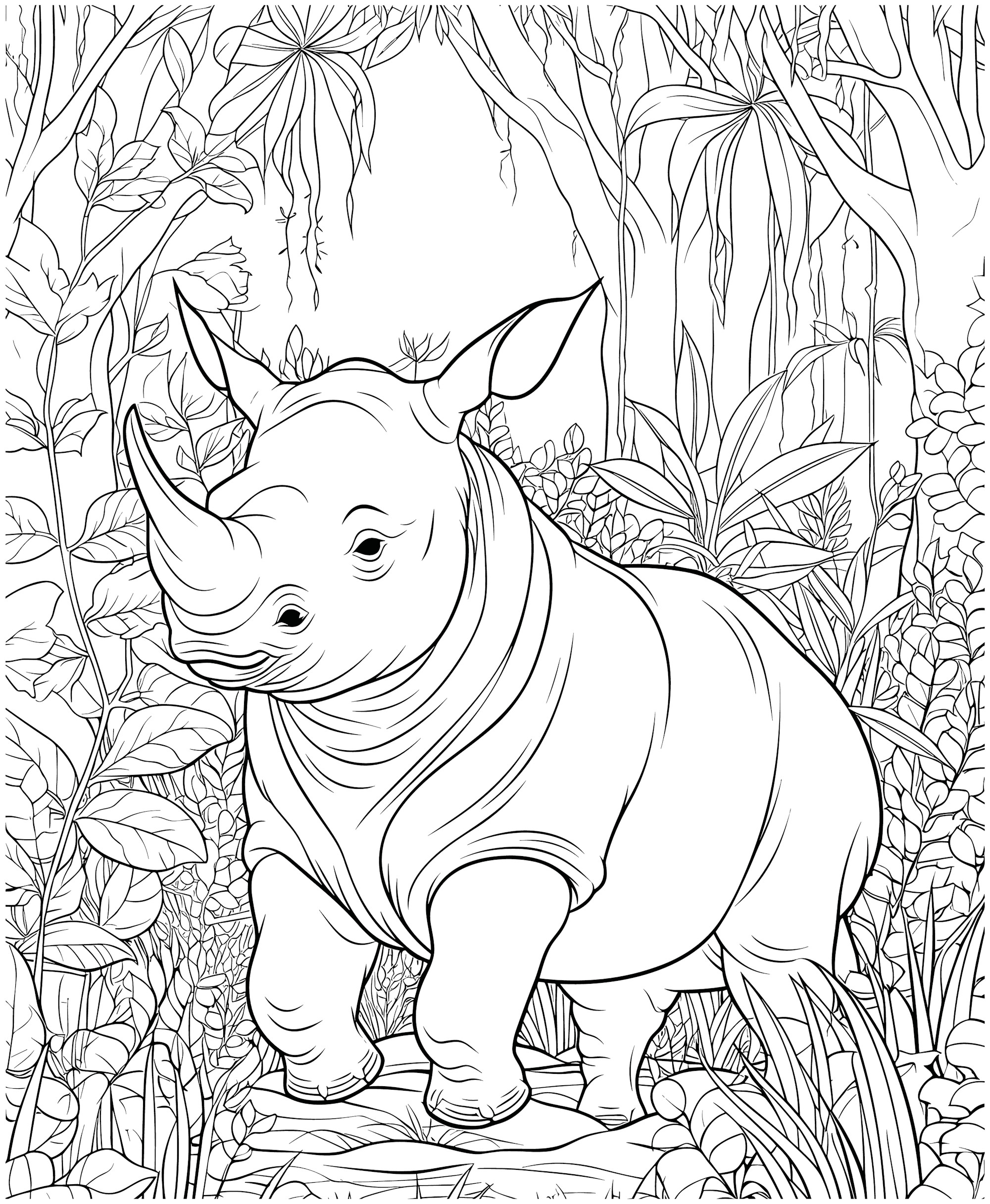
Meet one of the biggest and most fascinating animals on land with our collection of rhino coloring pages, featuring adorable cartoon rhinos, a happy rhino family, a big sturdy rhinoceros, and an intricate zentangle-style design for colorists who enjoy plenty of detail.
Rhinos may be famous for their horns and enormous bodies, but there is much more to these remarkable mammals. Five living species remain today, with rhinos found naturally in parts of Africa and Asia. They can live in grasslands, savannas, forests, wetlands, and other habitats depending on the species.
Our printable rhino pages offer something for younger children as well as older kids and adults. Color a sweet baby rhino beside its family, practice adding texture to a realistic-looking hide, or fill an elaborate patterned rhino with every color in the box.
These pages are especially fitting for World Rhino Day on September 22, but a rhino coloring adventure is fun any day of the year.
🦏 Explore Our Rhino Coloring Pages
Our rhino collection includes several different artistic styles, so you can choose a page based on both age and coloring mood.
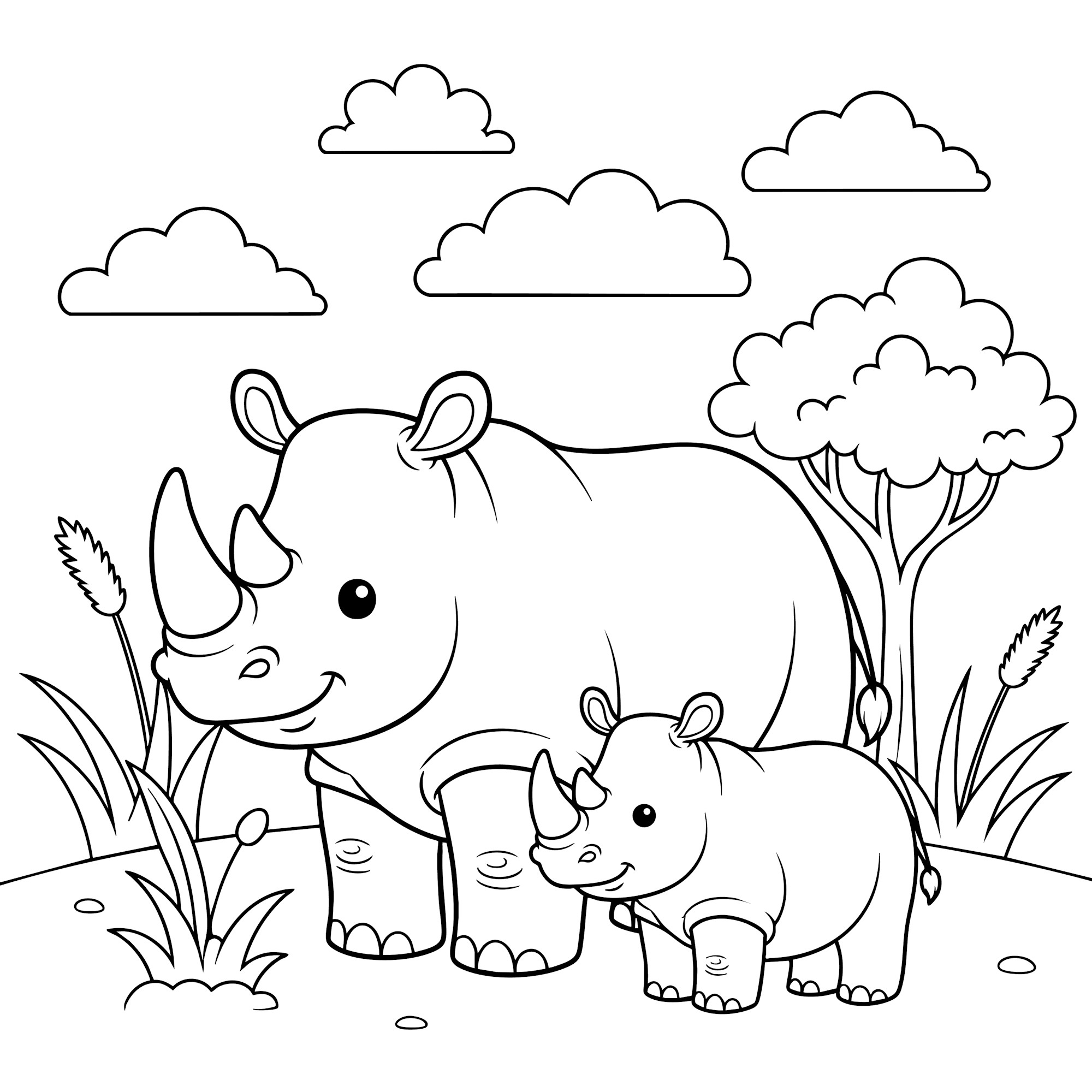
The happy rhino family coloring page is perfect for children who love animal families. A cute cartoon rhino provides a simple, approachable design, while the large rhinoceros gives kids plenty of room to experiment with gray, brown, and earthy colors.
For anyone who prefers more intricate artwork, the zentangle stylized rhino is filled with decorative details that can become a much longer coloring project.
You can keep the animals realistic or turn each rhino into a completely imaginary creature. Gray may be the traditional starting point, but there is nothing stopping a coloring-page rhino from being blue, purple, rainbow-striped, or covered with flowers.
For more creatures from around the world, explore our Animal Coloring Pages.
👨👩👧 Happy Rhino Family Coloring Page
The happy rhino family is one of the sweetest designs in the collection.
Try giving the adult rhinos slightly darker gray or brown-gray coloring while making the youngster a softer, lighter shade. Pale gray around the ears, face, and belly can add a little contrast.
Then create a habitat around the family.
You might add tall grasses, shrubs, trees, mud, a watering hole, distant hills, or birds flying overhead. A sunny African savanna could use golden yellow grass and warm greens, while an Asian rhino habitat might inspire dense green vegetation and wetland plants.
Children can also give the rhinos names and imagine what the family is doing together.
🍼 Baby Rhino Coloring Ideas
A baby rhinoceros is called a calf, and a young rhino makes an especially cute coloring subject.
Instead of filling the entire animal with one gray crayon, try using a mixture of:
- Pale gray
- Warm gray
- Taupe
- Gray-brown
- Cream
- Charcoal
Use darker shades where legs overlap the body or beneath the belly and lighter colors on areas that appear to catch the sun.
For a kawaii baby rhino, forget about realism altogether. Pink, lavender, mint, pale blue, and peach can turn a sturdy little calf into an adorable pastel character.
Add hearts, flowers, stars, or butterflies around it for extra personality.
💕 Cute Rhino Coloring Page
The cute cartoon rhino is perfect for younger children or anyone who wants a quicker coloring activity.
Large spaces are easy to fill with crayons, and the rhino’s distinctive horn, ears, sturdy legs, and rounded body make it easy to recognize.
Try a classic gray rhino surrounded by green grass and blue sky, or create an imaginary character.
Your cute rhino might be:
- Lavender with a pink horn
- Turquoise with blue ears
- Yellow with orange spots
- Rainbow-colored
- Pale pink and gray
- Covered in tiny hearts
Give it a name when you are finished.
Maybe Ruby Rhino loves flowers, or Rainbow Rhino lives beside a magical watering hole.
For more adorable animals, visit our Cute Coloring Pages.
🌀 Zentangle Rhino Coloring Page
The zentangle-style rhinoceros offers a completely different coloring experience.
Instead of concentrating on realistic fur or skin tones, treat each decorative section as a tiny piece of artwork.
Choose a small palette and repeat the colors throughout the animal.
Try:
Jewel Rhino: turquoise, emerald, purple, sapphire, and gold
Sunset Rhino: yellow, orange, coral, pink, and violet
Earth Rhino: brown, rust, cream, olive, and gold
Cool Rhino: navy, teal, aqua, lavender, and silver
Rainbow Rhino: red, orange, yellow, green, blue, and purple
Fine-tip markers and sharpened colored pencils can be useful for working inside the smaller patterns.
You do not need to finish an intricate page in one sitting. Coloring a little at a time can turn the rhino into a relaxing longer-term project.
💪 Big Rhinoceros Coloring Page
The big rhinoceros design emphasizes the powerful shape that makes these animals so recognizable.
Rhinos have heavy bodies, thick legs, large heads, and one or two horns depending on the species. Their skin can look rough, wrinkled, and almost armor-like.
That texture is especially fun to reproduce with colored pencils.
Begin with pale gray, then layer darker gray into creases and shaded areas. Add touches of brown or tan to suggest dust or dried mud.
You can leave some areas lighter where sunlight might reflect from the animal’s skin.
The result does not need to be perfectly realistic. Even a few different shades can make the rhino look much more three-dimensional.
🎨 What Colors Are Rhinos?
Despite names such as black rhinoceros and white rhinoceros, rhinos are generally gray or gray-brown rather than literally black or white.
Their apparent color can also change because of mud and soil covering the skin.
That gives you plenty of natural shades to experiment with:
- Light gray
- Dark gray
- Charcoal
- Taupe
- Brown-gray
- Muddy brown
- Sandy beige
Try coloring the rhino with several of these shades instead of using only one.
Then use much brighter colors in the habitat. Green plants, blue water, golden grass, and colorful birds can make the gray rhino stand out beautifully.
🌈 Create a Fantasy Rhino
Once you have colored one realistic rhino, print another and make it completely imaginary.
Invent a rhino that lives somewhere magical.
Perhaps you create a:
Moon Rhino — navy blue with silver markings.
Rainbow Rhino — every section of its body has a different color.
Flower Rhino — covered with colorful blossoms.
Sunset Rhino — orange, coral, pink, and purple.
Forest Rhino — several shades of green with golden horns.
Candy Rhino — pastel pink, lavender, mint, peach, and baby blue.
Then decide where your imaginary species lives and what it eats.
You could even write a short wildlife guide describing the species as though it were real.
5️⃣ Meet the Five Rhino Species
There are five living rhinoceros species in the world today.
They are:
- Black rhinoceros
- White rhinoceros
- Greater one-horned rhinoceros
- Javan rhinoceros
- Sumatran rhinoceros
The black and white rhinos are native to Africa, while the greater one-horned, Javan, and Sumatran rhinos are native to Asia.
Although all five are rhinos, they do not look exactly alike.
Some have two horns, while others have one. Different species also vary in size, skin texture, habitat, diet, and other characteristics.
Older children can choose one species and create a separate fact page to accompany their coloring sheet.
🌍 African Rhinos and Asian Rhinos
Rhino coloring pages can easily become the beginning of a geography activity.
On a world map, locate Africa and Asia.
Then remember:
Africa
- Black rhino
- White rhino
Asia
- Greater one-horned rhino
- Javan rhino
- Sumatran rhino
Children do not need to memorize every country or range. Simply connecting an animal with the part of the world where it naturally occurs can help build basic geography knowledge.
Older students can choose one rhino species and look more closely at its present range.
🦏 What Is a Rhino Horn Made Of?
A rhino’s horn may look like bone, but it is primarily made from keratin, the same type of protein found in human hair and fingernails.
Depending on the species, a rhino may have one or two horns.
That makes the horn a fun area to experiment with shading.
Try cream, tan, beige, brown, or gray rather than making the horn the same color as the body.
Begin with a lighter color and gradually darken the base, or try the opposite effect.
For fantasy rhinos, the horn can become even more dramatic. Make it golden, rainbow-striped, silver, or sparkling purple.
🌿 What Do Rhinos Eat?
Rhinos are herbivores, meaning they eat plants.
Exactly what they eat depends on the species and habitat. Some rhinos are grazers that feed heavily on grasses, while others browse on leaves, shoots, twigs, and other vegetation.
That makes habitat drawing especially fun.
Add a rhino lunch to your picture using:
- Grass
- Leaves
- Shrubs
- Twigs
- Other vegetation
Then imagine what a fantasy rhino might eat.
Maybe the Rainbow Rhino eats only blue flowers, while the Moon Rhino munches silver grass that grows beneath the stars.
🌳 Where Do Rhinos Live?
Different rhino species live in different environments across parts of Africa and Asia.
Rhino habitats can include:
- Savannas
- Grasslands
- Forests
- Shrublands
- Wetlands
- River areas
After coloring the animal, choose one type of habitat and draw it around the rhino.
A savanna scene might have golden grasses and scattered trees. A forest scene can use rich greens and dense vegetation, while a wetland habitat can include reeds, water, mud, and leafy plants.
The same rhino outline can become a completely different picture depending on the background.
💦 Rhinos Love Mud
A muddy rhino may look messy, but wallowing can be useful.
Mud can help coat the skin, and rhinos may spend time in muddy areas or water depending on their habitat and species.
That makes brown a perfectly realistic addition to a gray rhino.
Try adding patches of tan or brown across the legs and belly to make your animal look as though it has just finished a wonderful mud bath.
Then draw a muddy watering hole nearby.
Add footprints leading into the mud and perhaps a few birds standing along the edge.
🐾 Rhino Footprint Activity
Rhinos are large animals with sturdy feet, so why not turn the coloring session into a footprint activity?
Draw several pretend rhino tracks across a piece of paper.
Make them lead toward:
- A watering hole
- A forest
- Another rhino
- A muddy patch
- A hidden surprise
Children can follow the tracks with a finger or crayon and imagine where the rhino is going.
You could even turn the tracks into a maze.
🦏 Rhino vs. Elephant
Rhinos and elephants are both enormous land mammals, but they are easy to tell apart.
An elephant has a long trunk and large ears, while a rhino is famous for the horn or horns on its snout.
Compare coloring pages of both animals.
Look at:
- Ears
- Legs
- Skin
- Tail
- Head
- Feet
- Horns or tusks
- Body shape
Then create a side-by-side animal comparison.
Continue the activity with our Coloring Pages of Elephants.
🦒 Build an African Wildlife Collection
African rhinos share their continent with an incredible range of wildlife.
Create a homemade African animal collection by coloring several different species.
You might include:
- Rhinos
- Elephants
- Giraffes
- Lions
- Zebras
Write each animal’s name beneath its picture and add one interesting fact.
Over time, the pages can become a homemade African wildlife book.
Start exploring with our Coloring Pages of Giraffes and Coloring Pages of Tigers for more wildlife from around the world.
🏞️ Design a Rhino Habitat
Choose the cute rhino or big rhinoceros page and turn the blank space into a complete habitat.
Think about what the animal needs.
Add vegetation for food, a source of water, shade, mud, and plenty of space.
Then add other details such as:
- Birds
- Clouds
- Rocks
- Trees
- Tall grass
- Flowers
- Hills
Older children can choose one of the five actual rhino species first and try to make the habitat fit that animal.
Younger children can simply create whichever environment they imagine.
For more outdoor inspiration, explore our Nature Coloring Pages.
📅 What Is World Rhino Day?
World Rhino Day is celebrated on September 22 and draws attention to all five living rhino species.
It is a chance to appreciate these extraordinary animals while also learning about the challenges they face in the wild.
That makes rhino coloring pages particularly useful for a World Rhino Day activity.
Children could color one of the rhinos and add a message such as:
Happy World Rhino Day!
Protect Rhinos!
or
Five Rhino Species — One Amazing World!
Finished pages can become part of a classroom wildlife display.
🌏 Why Do Rhinos Need Protection?
Rhino populations have faced serious pressures from poaching, illegal wildlife trade, habitat loss, and other threats.
Conservation work can include protecting rhinos from poaching, conserving and restoring habitat, monitoring populations, supporting protected areas, involving local communities, conducting research, and working against illegal trade.
For younger children, the big idea can remain simple:
Wild animals need safe places to live.
After coloring a rhino, ask children what they would include in a healthy habitat.
Trees? Grass? Water? Space?
Draw all of those things around the animal.
🌱 Create a “Protect the Rhinos” Poster
Turn one completed coloring page into a simple conservation poster.
Color the rhino first, then add a short message.
Ideas include:
Protect Rhinos
Wildlife Belongs in the Wild
Save Rhino Habitat
Celebrate World Rhino Day
Learn About Rhinos
Add leaves, grass, trees, or a map of Africa and Asia around the edges.
This makes a particularly nice classroom activity for World Rhino Day.
🎲 Endangered Species Learning Activity
Rhinos can also fit into a broader lesson about endangered and threatened wildlife.
Children can compare a rhino with other animals facing conservation challenges and think about why different species may need protection.
Questions might include:
- Where does the animal live?
- What does it eat?
- What threatens its habitat?
- How are people helping?
- What makes the animal unique?
Pair the rhino printables with our Endangered Species Day Dice Game and Coloring Page for a larger wildlife-learning activity.
🔤 R Is for Rhino
For preschool and kindergarten children, rhino coloring can become an alphabet activity.
Write a large:
R r
Then practice saying:
R is for rhino.
Think of more words beginning with R:
- Rainbow
- Rabbit
- Rose
- River
- Rock
- Red
Children can draw some of those objects around their rhino.
Perhaps the result becomes a red rhino standing beside a river beneath a rainbow.
🔢 Count the Horns
Rhino coloring pages can also become simple counting activities.
Ask younger children to count:
- Horns
- Legs
- Ears
- Rhinos
- Trees
- Flowers
Then add more objects to the scene.
“Draw three birds.”
“Add five flowers.”
“Put two clouds in the sky.”
Simple instructions turn one coloring page into a counting-and-drawing activity.
✏️ Draw Your Own Rhino
After coloring several rhino printables, try drawing one from basic shapes.
Begin with a large oval for the body.
Add a smaller shape for the head, four thick legs, two ears, a tail, and one or two horns depending on the species you want to draw.
Do not worry about making it perfectly realistic.
A cartoon rhino can be created from very simple shapes.
Once the outline is finished, add wrinkles, habitat details, and your favorite colors.
📖 Turn Your Rhino Into a Story
The rhino family page is especially good for storytelling.
Imagine that the young calf has wandered away from its favorite muddy watering hole and discovers something unexpected.
Perhaps it meets a giraffe, follows a colorful bird, or sees its first rainbow.
The zentangle rhino could belong in a magical story. Maybe its patterns glow after sunset and reveal a hidden map.
Give the rhino a name and write several sentences describing what happens next.
Multiple coloring pages can become illustrations for an entire wildlife adventure.
🦏 Make a Rhino Fact Card
Color one rhino and turn it into a homemade wildlife card.
On the back, write:
Animal: Rhinoceros
Animal group: Mammal
Diet: Herbivore
Native regions: Africa and Asia
Living species: Five
Baby: Calf
Older children can choose a particular species and create more detailed cards.
Collect several different animals and eventually build an entire homemade wildlife fact-card set.
🦁 Make a Pretend Zoo
Rhino coloring pages also fit perfectly into a pretend zoo project.
Color the rhino and give it its own habitat display.
Then add more animals such as:
- Monkeys
- Tigers
- Elephants
- Giraffes
- Lions
- Zebras
Children can create an information sign for each species and arrange all the finished pages around the classroom or playroom.
Find more animals in our Zoo Animal Coloring Pages.
🏫 Rhino Coloring Pages for the Classroom
Rhino printables can connect naturally with lessons about animals, habitats, mammals, geography, conservation, and World Rhino Day.
Teachers and homeschool families can use them for:
- World Rhino Day
- Animal units
- Mammal lessons
- African wildlife studies
- Asian wildlife studies
- Habitat projects
- Conservation lessons
- Alphabet activities
- Early-finisher pages
- Creative writing
- Wildlife bulletin boards
Children can color a rhino and add three facts beneath it, or different students can research different rhino species and combine their pages into one classroom display.
For more learning-focused printables, explore our Educational Coloring Pages & Activities.
🎨 Rhino Skin Coloring Tips
A realistic rhino does not have to be one flat shade of gray.
Start lightly with gray or taupe.
Then add darker shading around:
- Skin folds
- Beneath the belly
- Behind the legs
- Around the ears
- Beneath the head
Use brown or sandy colors to suggest dirt and mud.
You can also make tiny irregular pencil marks to create the appearance of rough, textured skin.
For the zentangle rhino, do the opposite: ignore realistic texture and let every pattern become a different color.
Both approaches can create beautiful results.
✂️ Rhino Coloring Page Crafts
Finished rhino pages can be turned into plenty of creative projects.
Try making:
- World Rhino Day posters
- Wildlife fact cards
- Classroom decorations
- Animal books
- Zoo displays
- Habitat collages
- Bookmarks
- Story illustrations
- Conservation posters
- Nature notebooks
Children can also cut out a completed rhino and glue it onto a larger sheet of paper.
Then draw a complete savanna, forest, or wetland habitat around it.
For a group activity, give every child a different animal and combine the finished artwork into one giant wildlife display.
🖨️ How to Use Your Rhino Coloring Pages
Choose your favorite rhino design, print it, and gather crayons, markers, colored pencils, or other art supplies.
Regular printer paper works well for everyday coloring. If you plan to use markers, paint, glue, glitter, or additional craft materials, heavier paper may be helpful.
Then decide what kind of rhino you want to create.
Will it be a realistic gray animal coated with a little mud? A sweet pastel calf? An intricate rainbow zentangle rhino? Or an entirely new fantasy species?
Every page can become a different adventure.
🦏 Celebrate Rhinos With Color
From a happy rhino family and cute cartoon rhinoceros to a powerful big rhino and intricate zentangle design, these printable rhino coloring pages offer plenty of ways to explore one of the world’s most extraordinary mammals.
Use natural gray and earthy colors, invent a rainbow species, build a habitat, learn about the five living rhino species, or create a World Rhino Day conservation poster.
Choose your favorite printable, grab your coloring supplies, and celebrate these remarkable animals one colorful page at a time.
🔗 Related Articles
- Animal Coloring Pages
- Coloring Pages of Elephants
- Coloring Pages of Giraffes
- Coloring Pages of Monkeys
- Coloring Pages of Tigers
- Zoo Animal Coloring Pages
- Nature Coloring Pages
- Endangered Species Day Dice Game and Coloring Page
📚 Sources
- WWF — World Rhino Day
- San Diego Zoo Wildlife Alliance — Rhinoceros
- World Wildlife Fund — Where Do Rhinos Live? And Eight Other Rhino Facts
- U.S. Fish & Wildlife Service — Rhinoceros and Tiger Conservation Fund