🖍️Shop Monkey Coloring Books –>
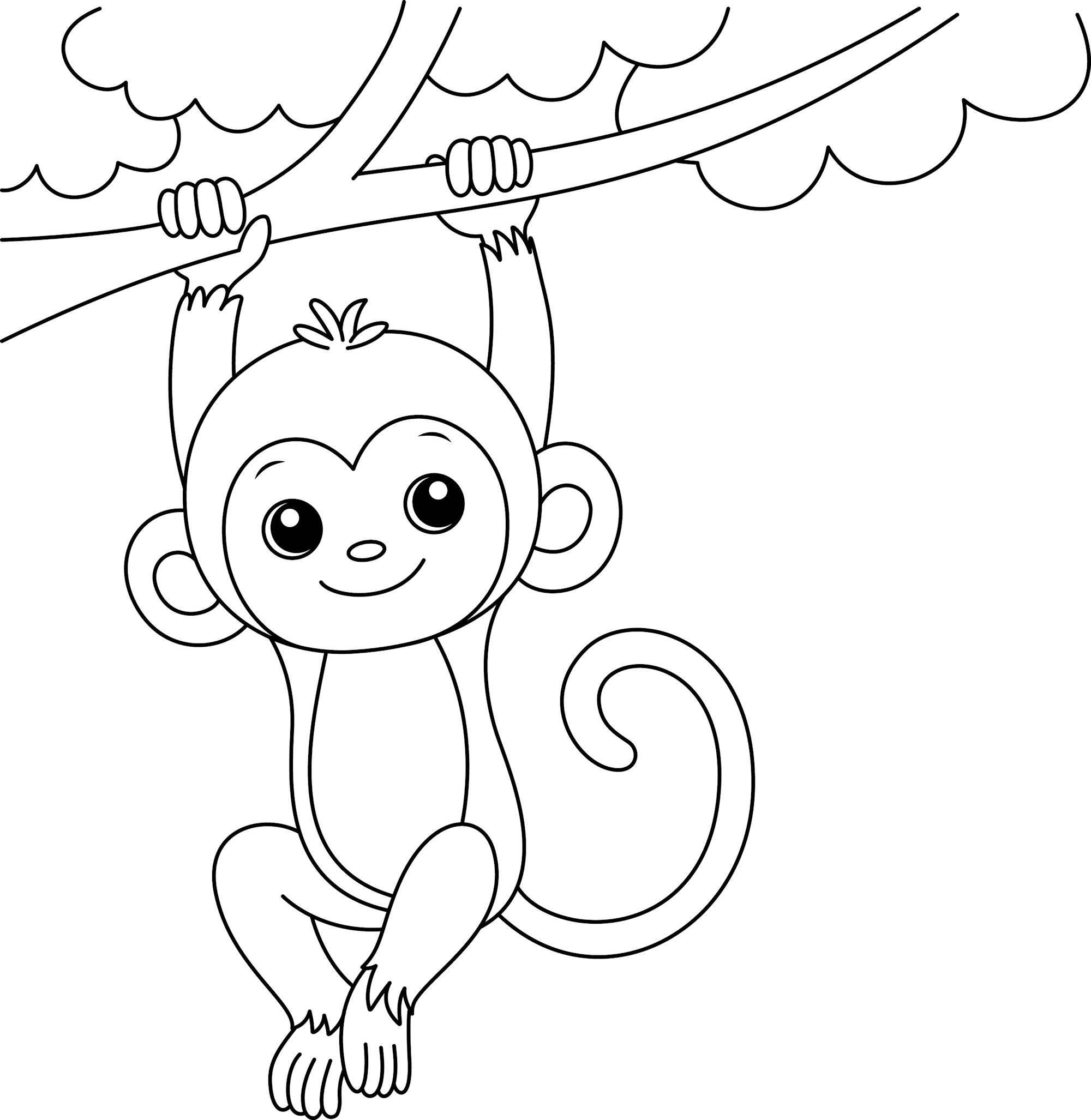
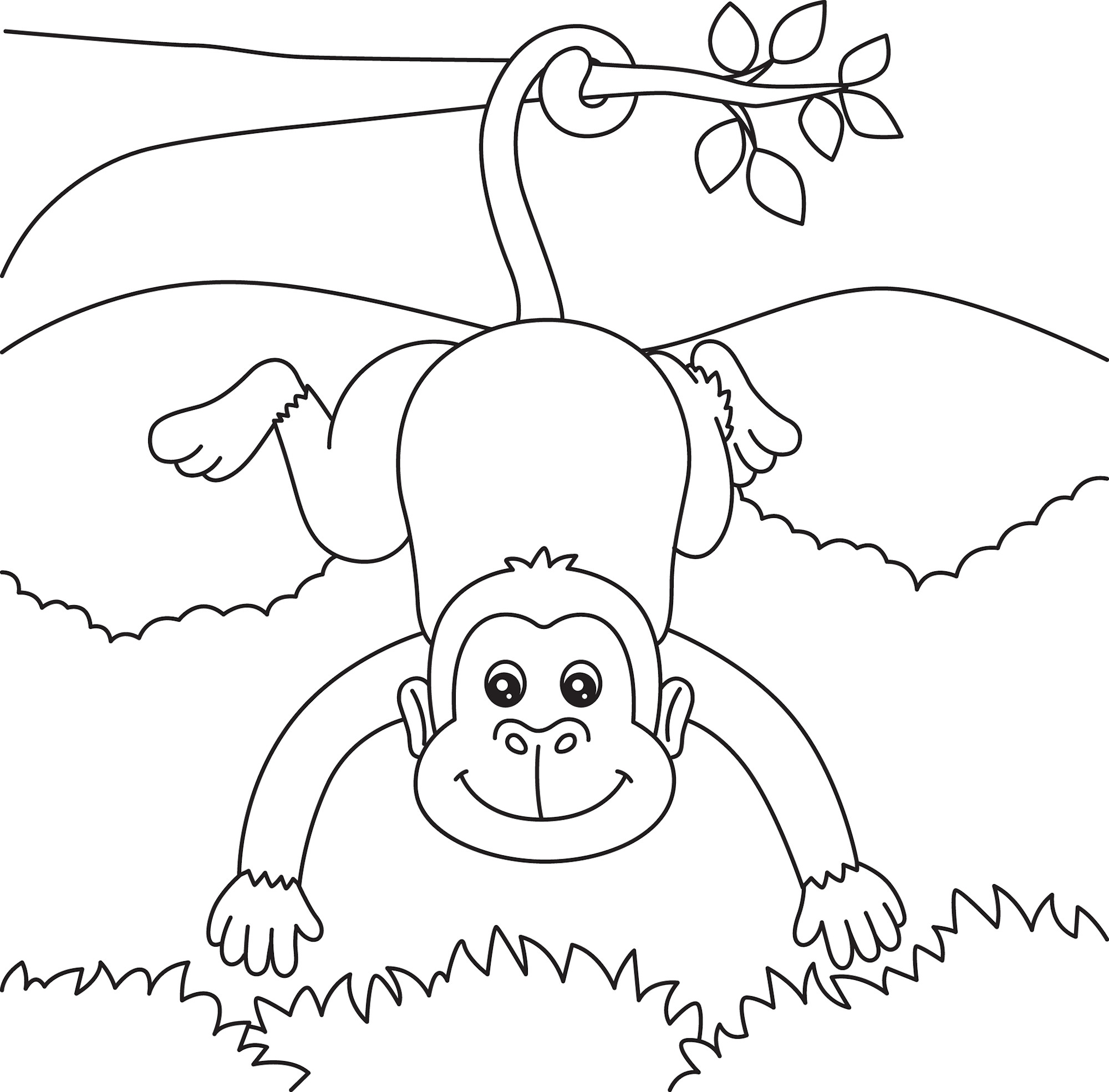
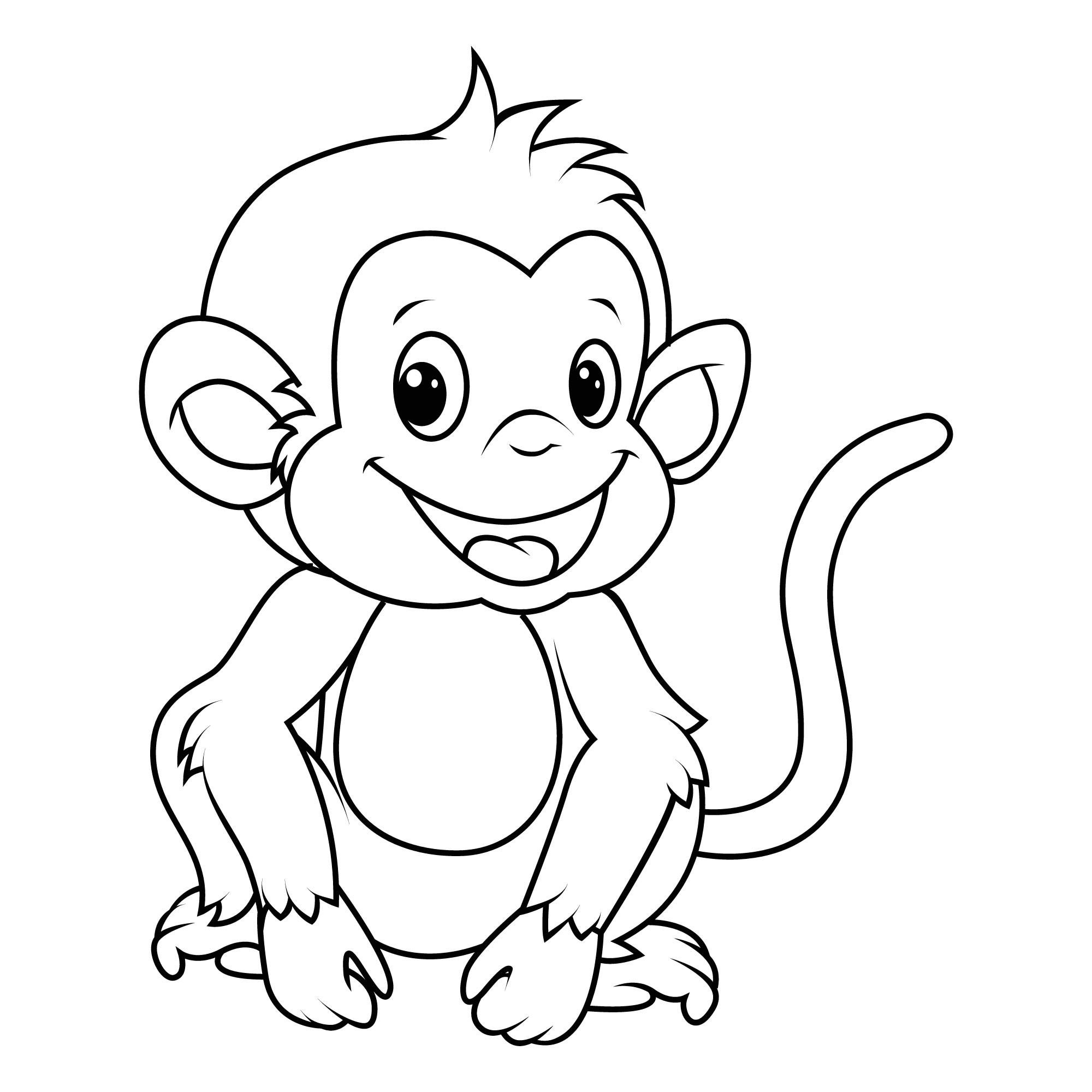
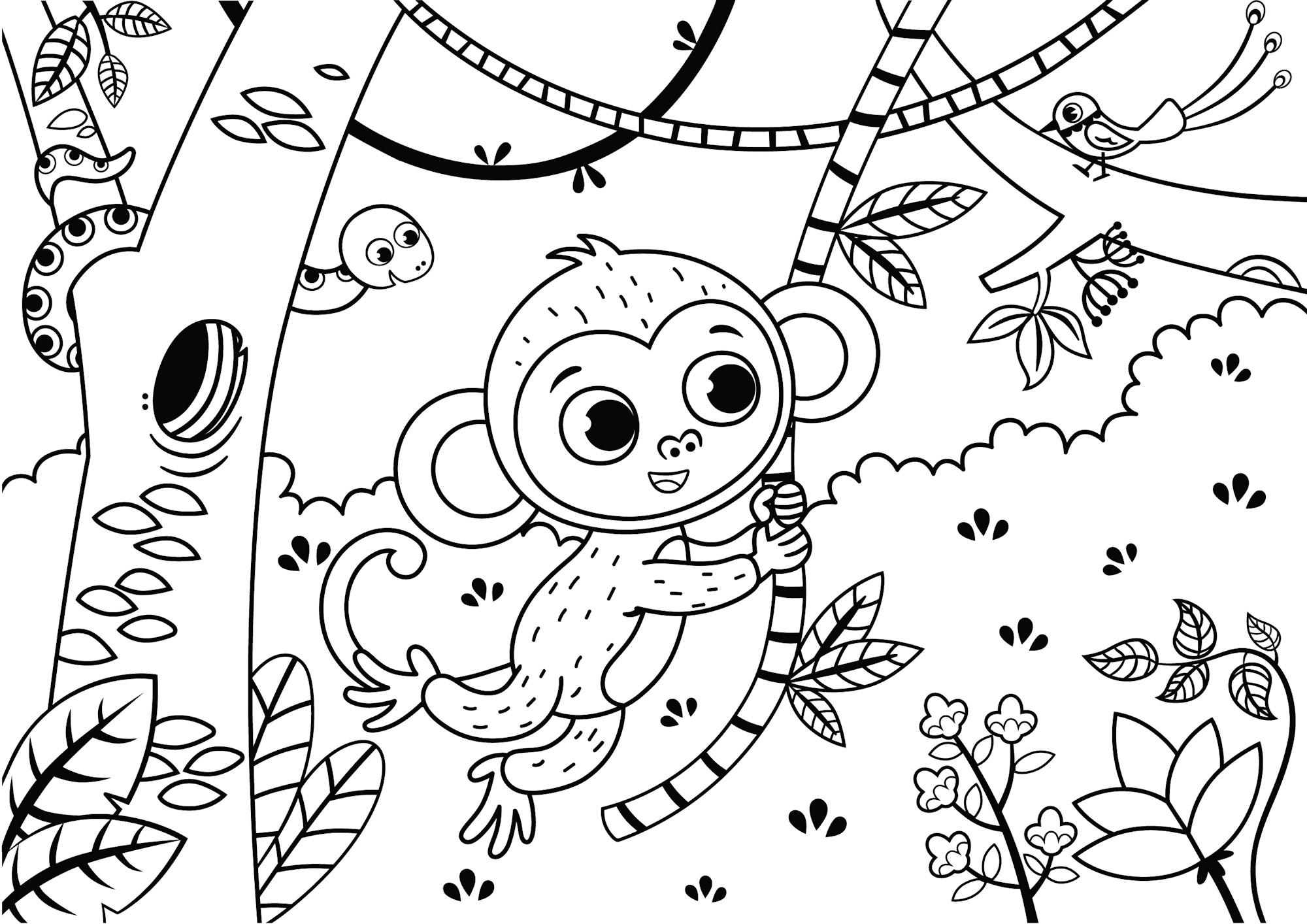
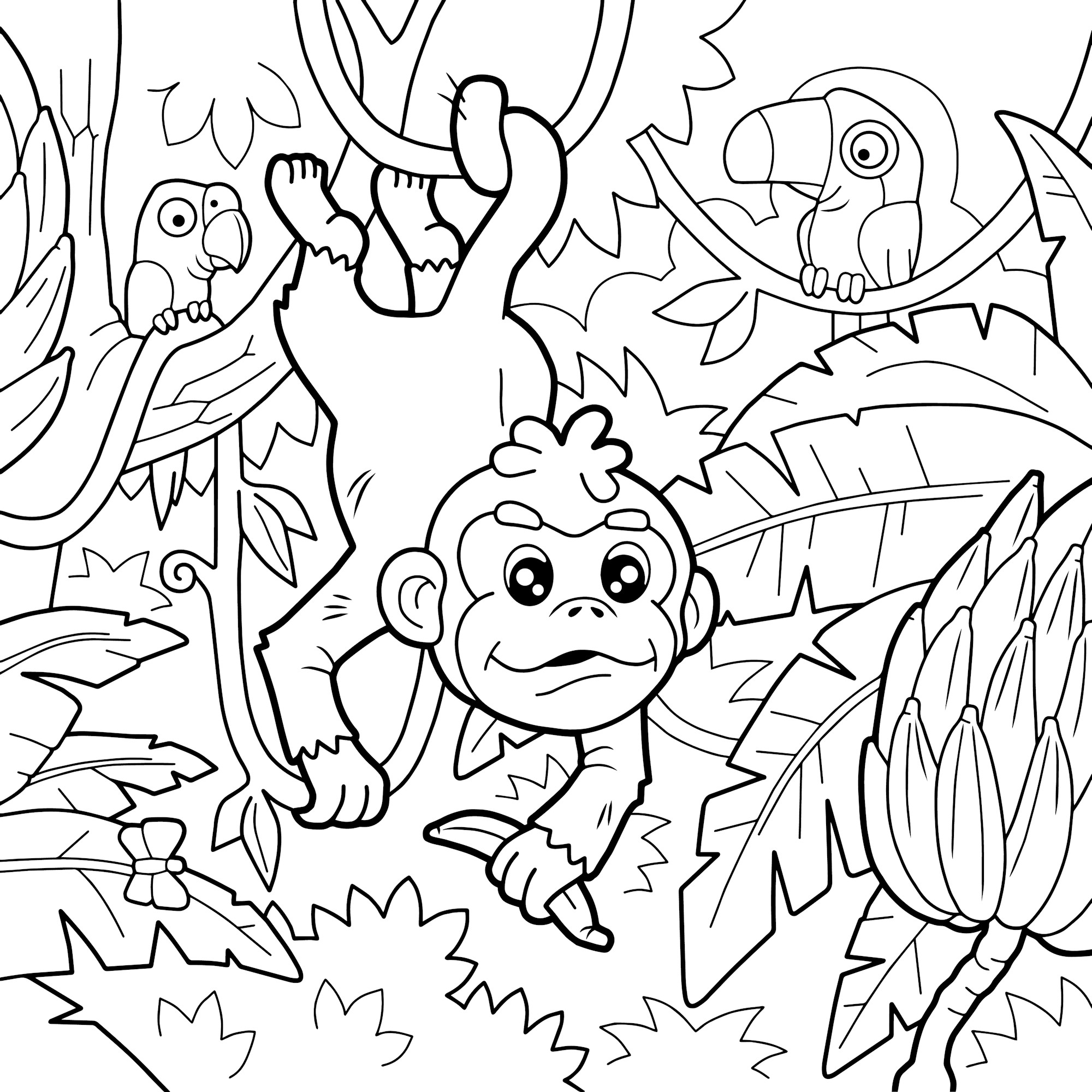
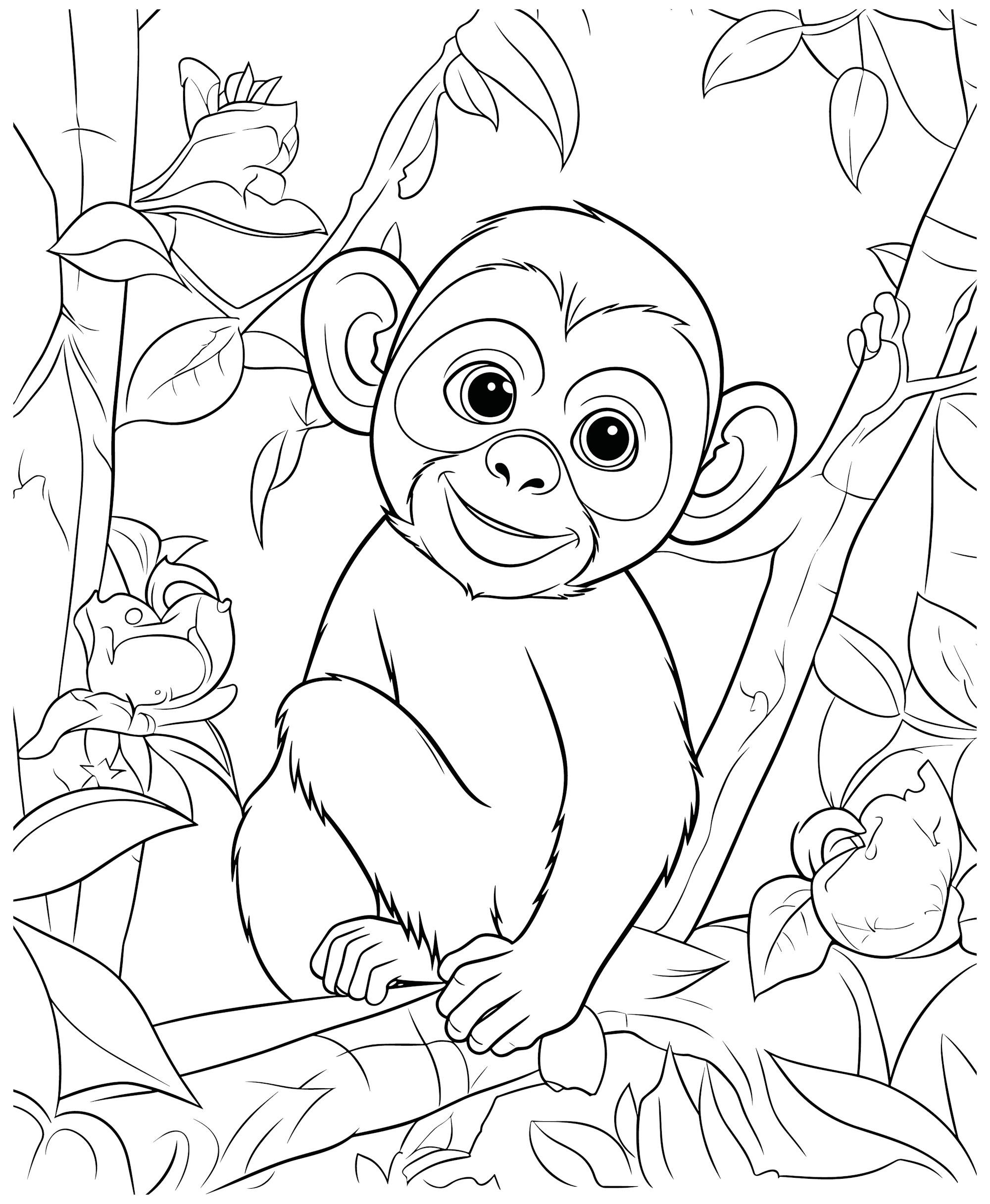
Swing into coloring time with our collection of monkey coloring pages, featuring playful monkeys hanging from tree branches, adorable little monkeys, jungle scenes, simple designs for kids, and more detailed pages for older colorists.
Monkeys are especially fun to color because they come in many different shapes, sizes, and natural colors. Some have golden fur, some are deep brown or black, some have brightly colored faces, and others have long tails that help them balance or even grasp branches. On a coloring page, of course, your monkey can be any color you want.
Create a realistic brown monkey surrounded by green jungle leaves, a pastel kawaii monkey with a pink face, or a completely imaginary rainbow monkey swinging through purple trees. Grab your crayons, markers, or colored pencils and get ready for an adventure among the branches.
🐒 Explore Our Monkey Coloring Pages
This collection includes several different monkey designs, giving children and adults plenty of choices depending on how much detail they want to color.
You’ll find a cute monkey hanging from a tree, a simple monkey coloring page designed especially for kids, a little adorable monkey, a monkey exploring a jungle setting, a cute monkey portrait, and a more detailed design that can work for both children and adults.
Younger artists can concentrate on the larger shapes of a simple monkey, while older children can add shading to fur, branches, leaves, and jungle backgrounds. The more detailed designs also provide room for experimenting with layered colors and patterns.
For even more creatures to color, explore our Animal Coloring Pages.
🌳 Monkey Hanging From a Tree Coloring Page
A monkey hanging from a tree is one of the most recognizable scenes in the collection.
This page gives you more than just the animal to color. The branches, leaves, and surrounding tree can become part of a complete forest or jungle landscape.
Try using several shades of brown for the monkey’s fur rather than one solid color. Light tan, warm brown, chestnut, gray-brown, and cream can help create different areas of fur.
Then fill the tree with several greens.
Try:
- Lime green
- Sage
- Olive
- Emerald
- Forest green
- Yellow-green
You can also add fruit, flowers, birds, butterflies, or other monkeys among the branches to expand the scene.
💕 Cute Monkey Coloring Pages
The little cute monkey and other sweet cartoon designs are perfect for anyone who enjoys adorable animal coloring pages.
Instead of sticking to natural browns, try a softer kawaii palette.
A cute monkey could be:
- Pale brown and cream
- Pink and tan
- Lavender and gray
- Peach and brown
- Mint and cream
- Baby blue and gray
Add rosy cheeks, little hearts, stars, bananas, flowers, or clouds around the character.
Children can also give their monkey a name and personality. Maybe it is curious and adventurous, loves fruit, or spends most of the afternoon trying to find the perfect branch for a nap.
For more sweet animal designs, visit our Cute Coloring Pages.
🌿 Monkey in the Jungle Coloring Page
The cute monkey in the jungle offers a wonderful opportunity to create a lush tropical background.
Begin with the monkey, then move outward into the surrounding vegetation.
A jungle can contain many more colors than green. Add red, yellow, orange, pink, and purple flowers among the leaves. Tree trunks can range from pale tan to rich brown or gray, while distant foliage can use softer blue-green shades.
You might also draw extra jungle details such as:
- Vines
- Flowers
- Fruit
- Butterflies
- Birds
- Frogs
- Streams
- Rocks
The finished page can become an entire tropical habitat.
🖍️ Easy Monkey Coloring Page for Kids
The simpler monkey design is a good choice for younger children who are still practicing with crayons and markers.
Large areas of fur can be filled with broad strokes, while the face, ears, hands, feet, and tail provide a few smaller details to work on.
There is no need to worry about making the monkey realistic.
A preschooler might create a purple monkey with a yellow face or a rainbow tail, and that is part of the fun.
Children can also practice naming colors while they work.
“Can you find the brown crayon?”
“Which color should we use for the leaves?”
“Can you add something blue to the picture?”
Simple conversations like these can add learning without interrupting the creative activity.
🎨 What Colors Are Monkeys?
There is no single “monkey color.”
Different species can have fur in shades of:
- Brown
- Black
- Gray
- White
- Cream
- Golden yellow
- Reddish brown
Some monkeys also have surprisingly colorful faces or other markings.
For a realistic-looking coloring page, choose several related browns, grays, or creams and layer them across the fur.
For something more imaginative, try:
Jungle Monkey: brown, cream, forest green, and gold
Kawaii Monkey: peach, pink, lavender, and cream
Sunset Monkey: orange, coral, burgundy, and gold
Rainbow Monkey: red, orange, yellow, green, blue, and purple
Moonlight Monkey: navy, gray, lavender, and silver
Coloring pages do not need to follow nature exactly.
🌈 Create a Fantasy Monkey
Once you have colored one monkey with realistic shades, print another and do the complete opposite.
Imagine a monkey species that has never existed.
Maybe it has turquoise fur and a purple face. Perhaps its tail changes color depending on its mood.
You could invent:
Rainbow-Tailed Monkey — every section of its tail is a different color.
Golden Jungle Monkey — bright yellow-gold fur with dark green markings.
Moon Monkey — deep blue fur with silver hands and feet.
Flower Monkey — covered in tiny floral patterns.
Candy Monkey — pastel pink, lavender, mint, and peach.
Give your new species a name and decide where it lives.
🐵 Monkeys Are Primates
Monkeys belong to the animal group known as primates.
Primates also include lemurs, lorises, apes, and humans, but monkeys and apes are not the same thing.
There are hundreds of monkey species, and they vary enormously in size, behavior, diet, and appearance.
Some spend most of their lives in trees, while others spend considerable time on the ground. Some live in tropical forests, while others inhabit grasslands, mountains, or other environments.
That variety makes “monkey” a much bigger category than a single coloring-page character might suggest.
🌎 Old World and New World Monkeys
Scientists commonly divide monkeys into two major groups: Old World monkeys and New World monkeys.
Old World monkeys live naturally in Africa and Asia. This group includes animals such as baboons, macaques, colobus monkeys, and guenons.
New World monkeys live naturally in Mexico, Central America, and South America. They include spider monkeys, capuchins, howler monkeys, squirrel monkeys, and others.
The two groups differ in several features, including aspects of their noses, teeth, and tails.
After coloring a monkey, older children can choose whether their imaginary animal belongs in Africa, Asia, Central America, or South America and design the habitat accordingly.
🦧 Monkeys Aren’t Apes
Monkeys and apes are both primates, but they belong to different branches of the primate family tree.
Gorillas, chimpanzees, bonobos, orangutans, gibbons, and humans are apes rather than monkeys.
One obvious clue is that living apes do not have tails, while many monkeys do.
However, even that rule needs a little care because not every monkey species has a noticeable tail. The Barbary macaque, for example, has only a very short tail.
This can become a fun animal-classification activity for older kids.
Create two columns labeled:
Monkeys
and
Apes
Then look up several primates and sort them into the correct groups.
🐒 What Are Monkey Tails For?
Monkey tails can have several different functions.
Many monkeys use their tails to help with balance while moving across branches. Some New World monkey species have prehensile tails, which are capable of gripping branches.
A prehensile tail can act almost like an extra support while an animal moves through the trees.
But not all monkeys have gripping tails.
That makes the hanging-monkey coloring page a good place to look closely at how the animal is positioned.
Is it using its hands?
Feet?
Tail?
How might those body parts help it move safely among the branches?
🌳 Built for Life in the Trees
Many monkey species are excellent climbers.
Their hands and feet can grip branches, and their flexible bodies allow them to climb, leap, scramble, and balance high above the ground.
Some species spend much of their lives in trees, while others spend more time traveling on the ground.
After coloring the monkey hanging from the tree, create an obstacle course on another piece of paper.
Draw:
- Branches
- Vines
- Logs
- Rocks
- A stream
- Tall trees
Then draw a path showing how the monkey could travel from one side of the picture to the other without touching the ground.
🍌 Do Monkeys Really Eat Bananas?
Bananas and monkeys are a familiar cartoon combination, but wild monkey diets are much more varied.
Depending on the species, monkeys may eat combinations of:
- Fruit
- Leaves
- Seeds
- Flowers
- Insects
- Grass
- Nuts
- Other plant material
- Small animals
Some species specialize more heavily in particular foods.
So go ahead and draw a banana beside your coloring-page monkey—but perhaps add leaves, berries, seeds, or insects too.
You could even design a pretend monkey lunch and decide what your species likes to eat.
🍎 Design a Monkey Lunch
Turn the food question into a simple drawing activity.
Draw a large plate or picnic basket and fill it with foods that a monkey species might eat.
Add fruit, leaves, seeds, flowers, and other possibilities.
Then create a second plate filled with completely imaginary monkey treats.
Maybe your fantasy monkey loves:
- Rainbow berries
- Purple bananas
- Star-shaped fruit
- Golden nuts
- Giant flowers
Color both meals and decide which one your monkey chooses.
👥 Monkeys Can Be Very Social
Many monkeys live in social groups, often called troops.
Life in a group can involve traveling together, searching for food, caring for young, communicating, playing, and grooming one another.
Social behavior varies considerably among species, but group life is common among monkeys.
This makes the coloring pages a good starting point for drawing more characters.
Add another monkey to the branch.
Then another.
Soon your single monkey can become part of a complete troop.
Give each monkey slightly different colors, expressions, or markings so you can tell them apart.
🗣️ How Do Monkeys Communicate?
Monkeys can communicate in many ways.
Depending on the species, communication may involve:
- Calls
- Facial expressions
- Body postures
- Gestures
- Grooming
- Touch
- Scent
Some monkeys are especially famous for their loud voices.
Howler monkeys, for example, produce remarkably powerful calls that can travel long distances through their habitat.
Turn your coloring page into a comic by drawing speech bubbles beside several monkeys.
What do you imagine they are saying?
😄 Monkey Faces and Expressions
Monkeys can have wonderfully expressive faces, making the monkey portrait especially fun to color.
Look at the eyes, mouth, ears, eyebrows, and shape of the face.
Then imagine how changing the expression would alter the character.
Is the monkey:
- Curious?
- Excited?
- Sleepy?
- Surprised?
- Mischievous?
- Calm?
Kids can draw several simple monkey faces on a separate piece of paper and give each one a different emotion.
This turns coloring into a playful facial-expression activity.
🤝 Monkey Grooming
Social grooming is important for many monkey species.
Monkeys may carefully pick through one another’s fur, helping maintain social relationships as well as keeping fur clean.
A monkey grooming scene can become a fun extra drawing project.
Draw two monkeys sitting together on a branch. One can groom the other’s fur while birds or butterflies watch nearby.
Children could also imagine other ways members of a monkey troop cooperate and interact.
🐒 Big Monkeys and Tiny Monkeys
Monkey species come in dramatically different sizes.
The pygmy marmoset is among the smallest monkeys, while the mandrill is the largest living monkey species.
This makes a fun size-comparison activity.
Draw a tiny monkey at one side of a sheet of paper and a much larger monkey at the other.
Then place familiar objects between them to help show the difference in scale.
You could also make the smallest monkey the brightest and most colorful character in the picture.
Size does not have to determine how much personality an animal has.
🟥 The Colorful Mandrill
Most of the monkey pages in this collection invite browns and grays, but real primates can sometimes be surprisingly colorful.
Adult male mandrills are famous for vivid coloration around the face and rump, including strong blues and reds.
That makes them wonderful inspiration for anyone who wants to color a monkey with brighter natural shades.
Try adding:
- Blue
- Red
- Purple
- Gold
- Olive
- Brown
Your coloring-page monkey does not need to be a mandrill to borrow some colorful inspiration.
🌿 Create a Monkey Habitat
Choose one of the simpler monkey pages and turn the empty background into a complete habitat.
Start with trees and branches, then add more layers.
You might include:
- Vines
- Broad leaves
- Flowers
- Fruit
- Rocks
- Water
- Distant trees
- Birds
- Butterflies
Think about where your monkey lives before choosing the scenery.
A tropical rainforest might be filled with dense green vegetation, while another species could live in drier woodland or spend more time on the ground.
For more outdoor inspiration, explore our Nature Coloring Pages.
🌴 Build a Rainforest Scene
The jungle monkey page is perfect for a rainforest project.
Begin with large leaves in the foreground. Add smaller leaves and trees behind them to create layers.
Then include bright tropical colors.
Flowers might be:
- Red
- Orange
- Pink
- Purple
- Yellow
Add vines hanging from branches and use deep green for shaded areas beneath the canopy.
You could even draw a river in the distance.
The monkey can remain the center of the picture while the rainforest becomes an adventure of its own.
🗺️ Find Monkey Habitats on a Map
Monkey coloring pages can also become a simple geography activity.
Find these regions on a world map:
- Africa
- Asia
- Mexico
- Central America
- South America
These broad regions contain the natural ranges of different monkey groups and species.
Choose one region and color or circle it on the map.
Then imagine that your coloring-page monkey lives there.
What kind of plants might grow nearby?
Would the habitat be rainy, dry, mountainous, swampy, or tropical?
Older children can research a particular monkey species and find its range more precisely.
🐾 Compare Monkeys With Other Animals
Monkeys can be compared with many other animals on the site.
Look at a monkey, tiger, elephant, koala, and zebra.
Ask:
Which animals have tails?
Which have paws, hands, or hooves?
Which spend lots of time in trees?
Which are covered in fur?
Which live naturally in the same parts of the world?
Then color several animals and arrange them into groups based on habitat, continent, body covering, or another characteristic.
Continue exploring with our Tiger Coloring Pages, Elephant Coloring Pages, and Koala Coloring Pages.
🦁 Make a Pretend Zoo
Monkey coloring pages are perfect for a homemade zoo project.
Color several different animals and give each one its own section.
Start with your monkey, then add favorites such as:
- Elephants
- Tigers
- Lions
- Giraffes
- Zebras
- Bears
Create a sign for every animal containing its name and a few facts.
Then arrange all the pictures around the room or classroom to create a pretend zoo.
Visit our Zoo Animal Coloring Pages for even more animals to add.
🔢 Count the Monkeys
Monkey pages can also become simple math activities for younger kids.
Draw several extra monkeys into the trees and practice counting them.
Try:
1 monkey + 2 monkeys = 3 monkeys
You can also count:
- Bananas
- Leaves
- Branches
- Flowers
- Trees
- Monkey tails
Older children can make their own addition and subtraction problems using the scene.
🔤 M Is for Monkey
For preschool and kindergarten learners, pair the coloring page with the letter M.
Write:
M m
Then practice:
M is for monkey.
Think of more M words:
- Moon
- Mouse
- Milk
- Mushroom
- Map
- Mountain
Kids can draw a few of these things around the monkey.
Maybe the result becomes a very strange scene involving a monkey eating mushrooms beneath the moon—and that is perfectly fine.
✏️ Draw Your Own Monkey
After coloring several printable monkeys, try drawing one from simple shapes.
Begin with a circle for the head and add rounded ears.
Draw an oval body, then add long arms, legs, hands, feet, and a tail.
The monkey can hang from a branch, sit down, or swing from a vine.
Cartoon monkeys do not need to be anatomically perfect. Focus on expression and movement.
Add a big smile, curious eyes, and whatever colors you like.
🌈 Design a Monkey Tail
A long monkey tail gives kids another easy pattern activity.
Draw a giant curved tail across a blank page and divide it into sections.
Fill each area with:
- Stripes
- Spots
- Zigzags
- Hearts
- Stars
- Flowers
- Rainbow colors
The finished tail can belong to an imaginary monkey species.
Ask children what special ability their colorful monkey has.
Maybe its tail glows at night or changes colors when rain is coming.
📖 Turn Your Monkey Into a Story
Monkeys naturally lend themselves to playful stories.
Imagine that the monkey hanging from the branch has spotted something unusual below.
What is it?
Maybe the little monkey has become separated from its troop and needs to find the way home. Perhaps the jungle monkey discovers a hidden waterfall or an ancient treasure.
A kawaii monkey could be preparing for a birthday party among the trees.
Give the character a name and write several sentences underneath the finished picture.
Multiple monkey pages can become illustrations for different parts of the same story.
🏫 Monkey Coloring Pages for Classrooms
Monkey printables can connect naturally with animal, jungle, rainforest, geography, and primate lessons.
Teachers and homeschool families might use them for:
- Animal units
- Rainforest studies
- Primate lessons
- Habitat projects
- Zoo themes
- Geography activities
- Alphabet practice
- Counting activities
- Early-finisher pages
- Creative writing
- Classroom displays
Children could color one monkey and write three facts beside it.
Older students can choose a specific monkey species and research where it lives, what it eats, and how it moves.
For more learning-focused printables, explore our Educational Coloring Pages & Activities.
🌍 Learning About Monkey Conservation
Different monkey species face very different conservation situations.
Some have healthy populations, while others are threatened by problems such as habitat loss, hunting, and wildlife trade.
For younger children, this can be introduced through a simple idea: wild animals need healthy places to live.
After coloring a monkey, draw the habitat it needs around it.
Add trees, food, water, and plenty of connected space.
Older children can choose a particular monkey species and learn whether it is threatened and what conservation efforts are helping protect it.
✂️ Monkey Coloring Page Crafts
Finished monkey pages can become part of plenty of creative projects.
Try turning them into:
- Jungle collages
- Animal fact cards
- Homemade storybooks
- Zoo displays
- Rainforest posters
- Bookmarks
- Bedroom decorations
- Classroom art
- Puppets
- Animal notebooks
Kids can cut out a finished monkey and glue it onto a larger sheet of paper.
Then add an enormous tree filled with leaves, vines, flowers, and other animals.
Several children can combine their pictures to create one giant classroom rainforest.
🖍️ Coloring Tips for Monkey Fur
Monkey fur is a good place to practice layering colors.
Instead of filling the entire animal with one brown, begin with a lighter shade and gradually add darker colors in areas that might be shadowed.
Try combining:
- Tan
- Golden brown
- Chestnut
- Chocolate
- Gray
- Cream
Leave parts of the face or chest lighter if the design allows.
Small pencil strokes can also help suggest the texture of fur.
For a cartoon monkey, though, you can skip the shading and simply use big, bright areas of your favorite colors.
🖨️ How to Use Your Monkey Coloring Pages
Choose your favorite monkey design and print it at home or in the classroom.
Regular printer paper works well for crayons and colored pencils. Heavier paper can be helpful if you plan to use markers, paint, glue, glitter, or other craft materials.
Then decide where your monkey lives.
Perhaps it swings through a green rainforest, sits peacefully in a zoo-inspired scene, explores a magical jungle, or lives in a completely imaginary forest filled with rainbow trees.
Every monkey can begin a different adventure.
🐒 Swing Into Your Next Coloring Adventure
From cute monkeys hanging from branches and simple monkey pages for kids to little kawaii characters, jungle scenes, portraits, and more detailed designs, this collection offers plenty of ways to enjoy these fascinating primates through art.
Use natural browns and creams, create a colorful rainforest habitat, learn about Old World and New World monkeys, design a fantasy species, or turn your favorite monkey into the main character of a story.
Choose your favorite printable, gather your crayons, and swing into your next colorful adventure.
🔗 Related Articles
- Animal Coloring Pages
- Cute Coloring Pages
- Coloring Pages of Zoo Animals
- Coloring Pages of the Zoo
- Coloring Pages of Elephants
- Coloring Pages of Tigers
- Coloring Pages of Koalas
- Nature Coloring Pages
📚 Sources
- San Diego Zoo Wildlife Alliance — Monkey
- Smithsonian’s National Zoo — Goeldi’s Monkey
- Smithsonian’s National Zoo — Titi Monkey
- Smithsonian’s National Zoo — Allen’s Swamp Monkey
- Smithsonian’s National Zoo — Schmidt’s Red-Tailed Monkey