Hop into a world of fluffy tails, long ears, colorful gardens, butterflies, carrots, and springtime fun with our collection of rabbit coloring pages!
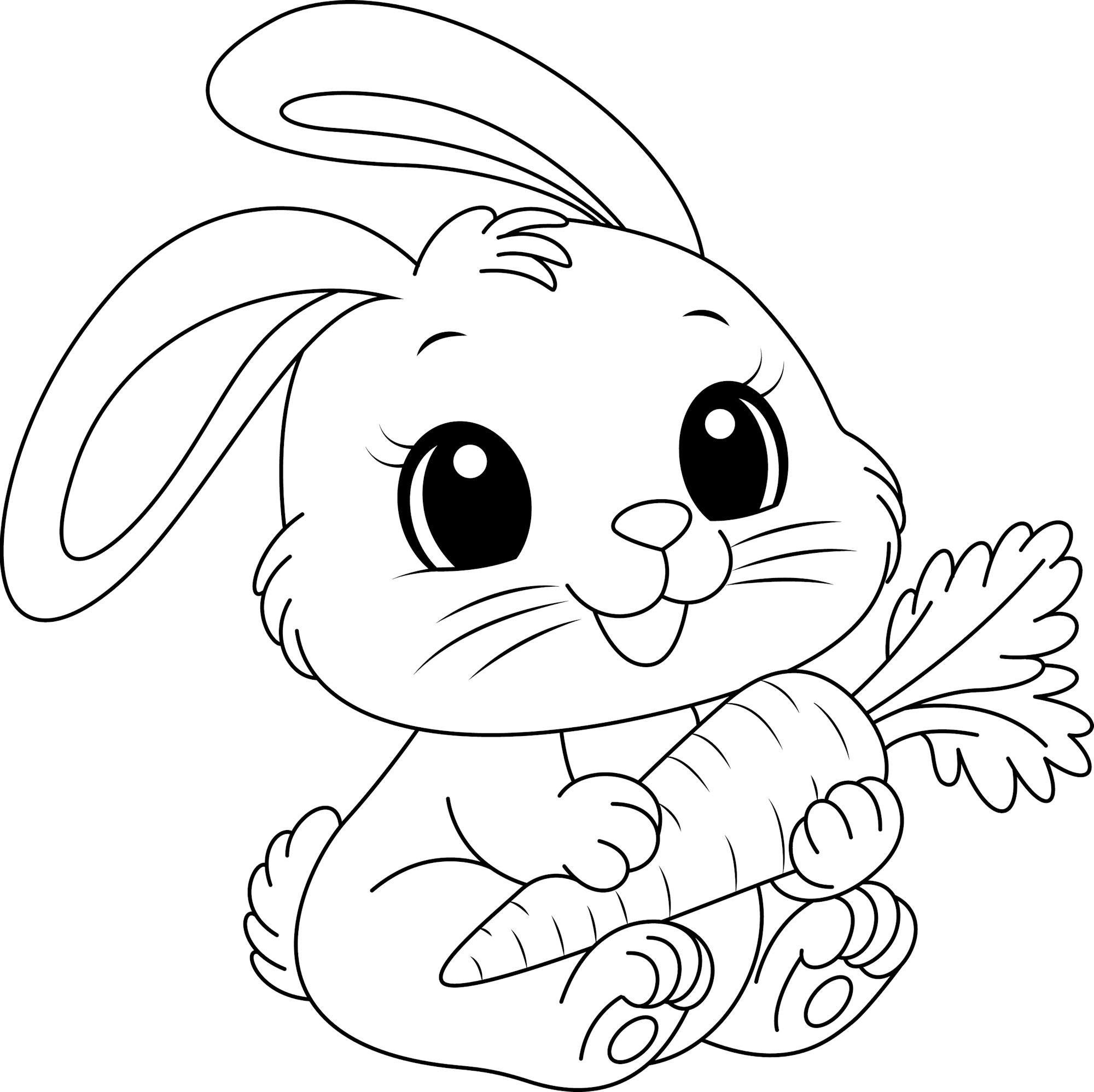
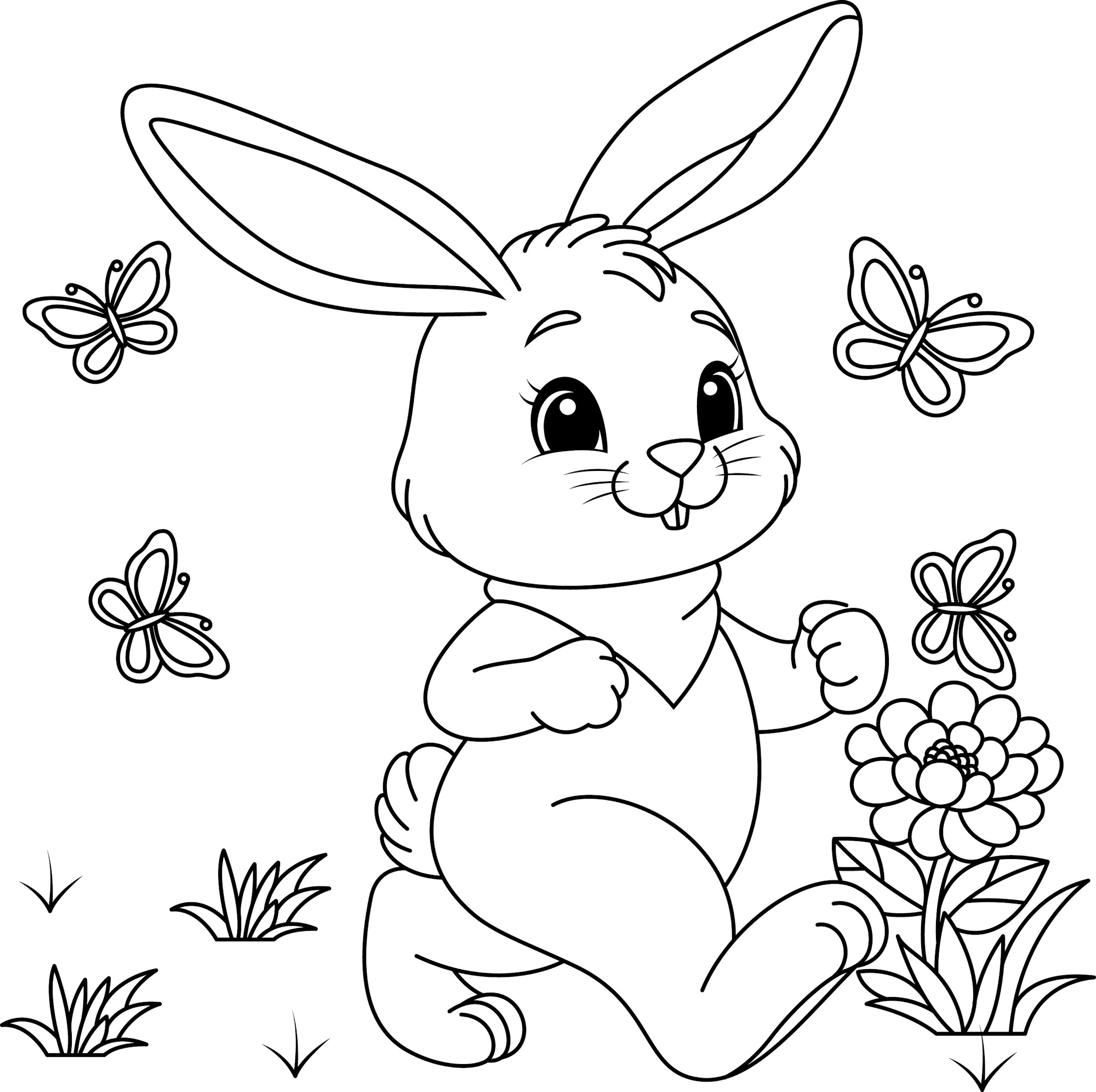
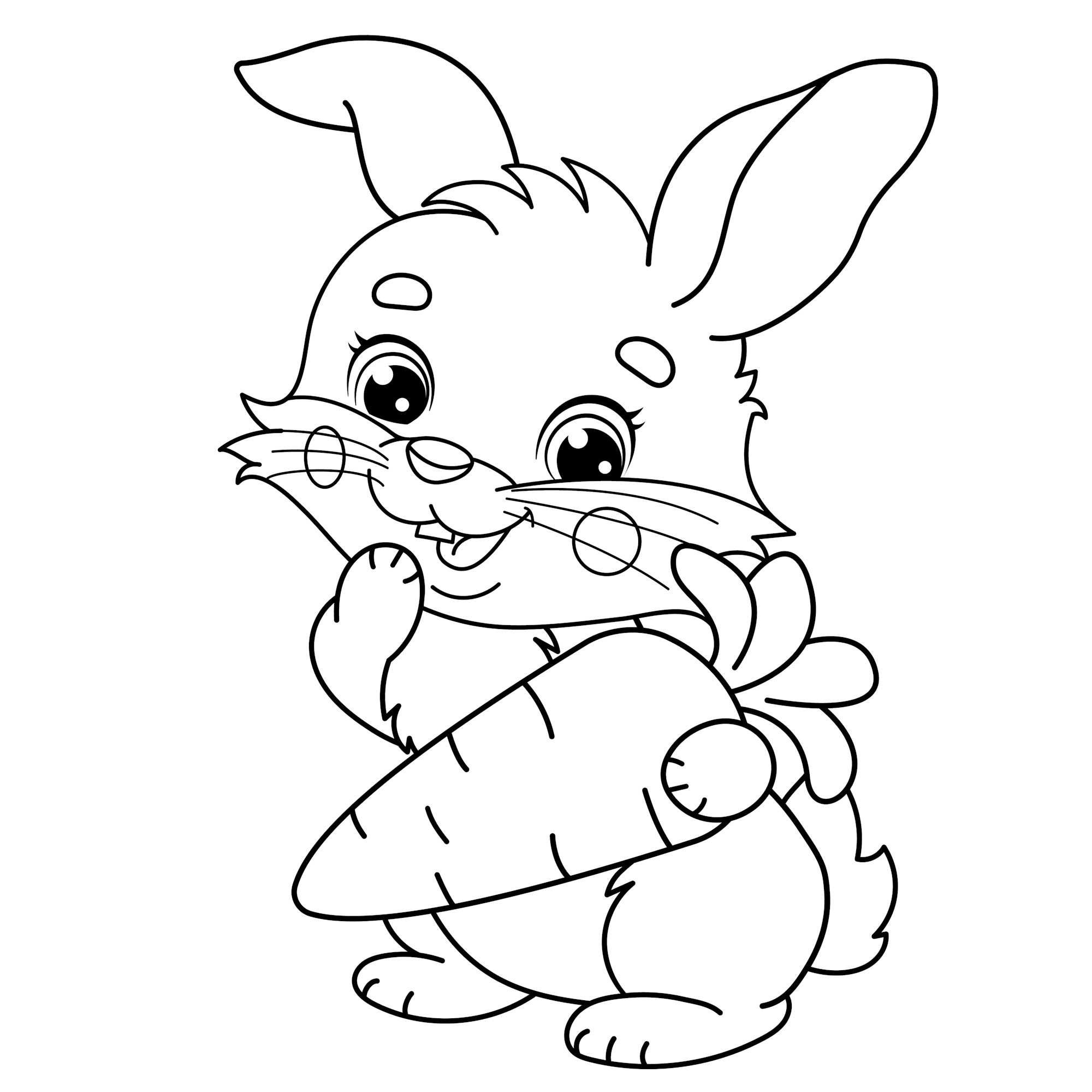
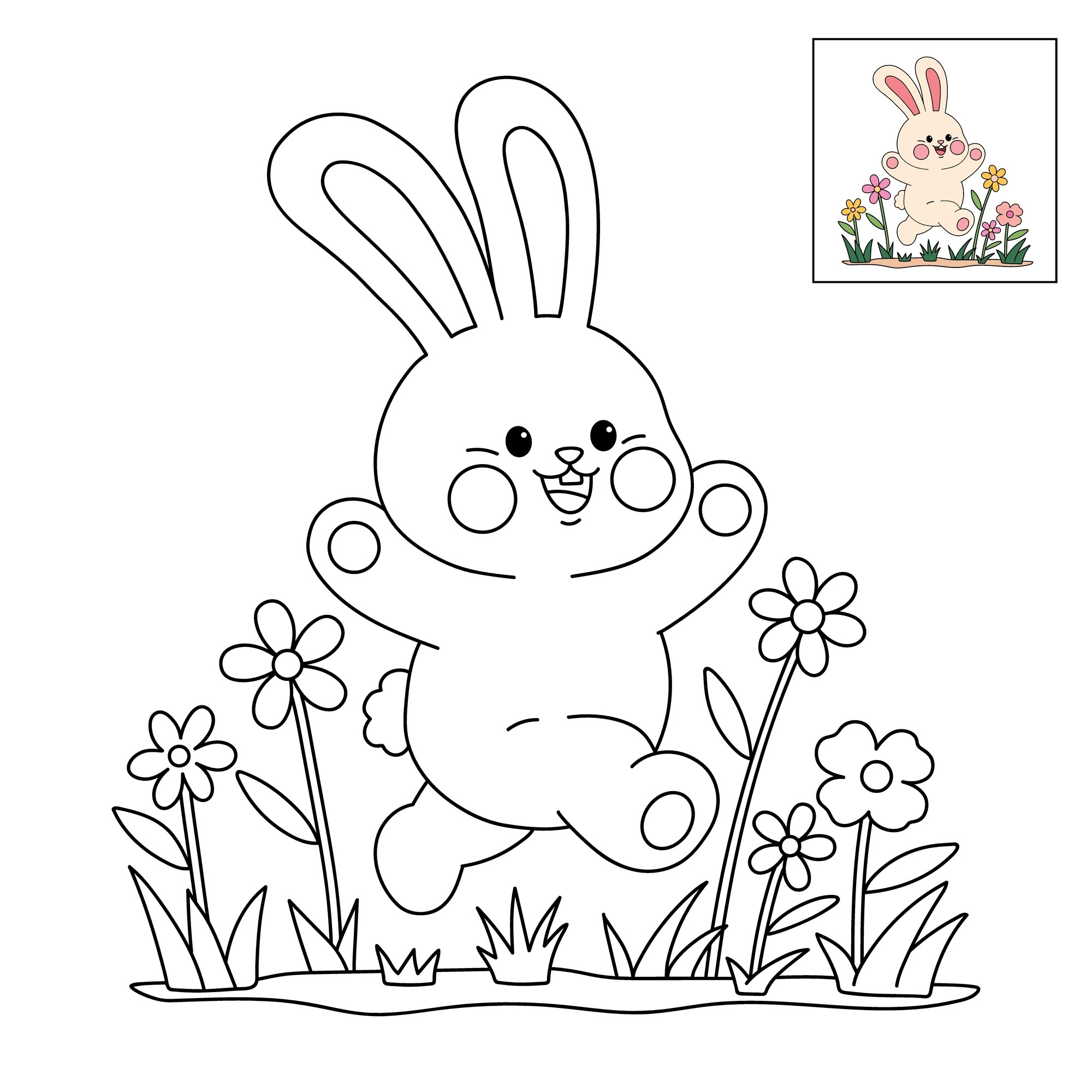
This printable collection includes all kinds of bunny personalities and styles. You can color a rabbit posing with a carrot, a happy bunny walking among butterflies, adorable rabbit-and-carrot scenes, playful doodle bunnies, a loving pair surrounded by flowers, detailed rabbits in beautiful gardens, an intricate zen-style rabbit, and a cheerful spring bunny.
Some designs are simple and cute enough for younger children, while others include detailed flowers, leaves, patterns, and botanical elements that older kids and adults may enjoy.
Color your rabbits in natural shades of brown, gray, cream, black, or white—or forget realism entirely and create a pink bunny, lavender rabbit, rainbow-striped hare, or magical garden creature covered in flowers.
Grab your crayons, colored pencils, or markers and let the bunny coloring begin!
🐰 Explore Our Rabbit Coloring Pages
Rabbits make especially versatile coloring subjects because the same animal can look cute, realistic, whimsical, seasonal, or highly decorative depending on the design.
Our collection includes:
- Bunnies with carrots
- Rabbits among butterflies
- Cute cartoon rabbits
- Doodle-style bunnies
- Pairs of rabbits
- Rabbits surrounded by flowers
- Detailed garden scenes
- Zen-doodle rabbit designs
- Spring rabbit coloring pages
That variety means you don’t have to approach every page the same way.
One rabbit might get natural gray-brown fur and a realistic garden background.
Another can become bright lavender with a rainbow carrot.
A detailed floral rabbit might use a carefully coordinated palette, while a doodle bunny can contain practically every color in the box.
For even more furry, feathered, and wild friends, explore our Animal Coloring Pages.
🎨 What Color Should You Make Your Rabbit?
Real rabbits come in many colors, particularly when domestic breeds are included.
For a natural-looking rabbit, try:
- Gray
- Gray-brown
- Warm brown
- Tan
- Cream
- White
- Black
- Reddish brown
You can use more than one shade in the fur.
Start with a light base and add darker color around the ears, back, legs, and face.
Leave the belly or underside lighter if you want extra contrast.
Or skip natural colors altogether.
A coloring-page bunny can be turquoise, purple, peach, blue, or completely rainbow-colored.
🤎 Color a Brown Bunny
A warm brown rabbit works beautifully with the carrot and garden pages.
Start with tan or golden brown.
Add darker brown around:
- Ear edges
- Back
- Legs
- Tail
- Face
Use cream around the belly and muzzle if you want a softer appearance.
Then surround the rabbit with bright green grass and colorful flowers.
Pink, yellow, purple, and blue blossoms will stand out nicely against earthy brown fur.
🩶 Create a Gray Rabbit
Gray rabbits can use much more than one gray crayon.
Try combining:
- Pale gray
- Silver
- Charcoal
- Gray-brown
- Cream
Use short colored-pencil strokes to create the appearance of fur.
Keep the face and chest lighter and build darker shading around the edges.
Then add pink inside the ears and choose bright green, gold, or brown for the eyes.
A gray bunny also looks especially striking against a colorful spring garden.
🤍 Color a Snowy White Bunny
A white rabbit does not mean leaving the entire animal completely blank.
Use tiny amounts of:
- Pale gray
- Cream
- Blue-gray
- Very light lavender
around the edges and beneath the body.
Keeping most of the paper white while adding gentle shadows can create the impression of fluffy white fur.
Add pink ears and a little pink nose.
Then make the background especially colorful so the rabbit stands out.
🖤 Make a Dramatic Black Rabbit
Black rabbits can create beautiful contrast against flowers and greenery.
Begin with charcoal rather than immediately filling everything with solid black.
Add darker black around the edges while leaving a few gray areas for highlights.
Bright eyes can become the focus of the face.
Try:
- Amber
- Brown
- Blue
- Green
A black rabbit surrounded by pastel spring flowers can make an especially striking coloring page.
🌈 Create a Rainbow Bunny
Realistic colors are completely optional.
Turn one rabbit into a rainbow.
Make the ears red and orange.
Move through yellow and green across the body.
Finish with blue and purple around the legs or tail.
Or create rainbow stripes from head to toe.
Add a matching rainbow carrot and multicolored flowers.
Perhaps this is a magical rabbit that leaves flowers wherever it hops.
Give your imaginary species a name.
🌸 Try a Pastel Spring Bunny
Rabbit pages work wonderfully with soft spring shades.
Choose:
- Blush pink
- Lavender
- Mint
- Baby blue
- Pale yellow
- Peach
Give the bunny a pale lavender coat with pink ears.
Color the flowers mint, yellow, and peach.
Add a baby-blue sky.
This is an especially good palette for the cute rabbit, spring rabbit, and butterfly scenes.
For even more adorable designs, visit our Cute Coloring Pages.
🥕 Color the Bunny and Carrot Page
Several designs in the gallery pair rabbits with carrots, giving you a bright orange-and-green accent beside the bunny.
For a classic carrot:
Root: Orange
Leaves: Green
But even a carrot can become imaginative.
Try:
- Purple
- Yellow
- White
- Red
- Rainbow stripes
Carrots actually occur in more colors than the familiar orange varieties, so experimenting with yellow, purple, red, and white is not entirely fantasy.
Give every carrot in the picture a different color.
🌈 Create a Rainbow Carrot Patch
Draw several extra carrots around your bunny.
Color one orange.
Make another purple.
Add a yellow carrot.
Try red, white, and rainbow versions too.
Then draw green leaves above each one.
Perhaps the rabbit has discovered the world’s most colorful vegetable garden.
Write a little garden sign that says:
BUNNY’S RAINBOW CARROTS
or
PLEASE DON’T EAT ALL OF THEM!
🌱 Do Rabbits Really Eat Carrots?
Cartoon rabbits and carrots are practically inseparable, but real wild rabbits eat a much broader variety of plant material.
Different rabbit species and populations may eat grasses, clover, leaves, shoots, buds, twigs, bark, fruits, and other available plant foods.
Eastern cottontails, for example, eat grasses and other green vegetation when available and rely more heavily on woody plant material during winter.
So a rabbit’s real menu is much larger than one orange vegetable.
That makes the coloring page even more fun to expand.
Draw grasses, clover, leaves, flowers, and other plants around the carrot.
🌿 Create a Bunny’s Garden Buffet
Imagine your rabbit has discovered a giant garden.
Add:
- Grasses
- Clover
- Leaves
- Herbs
- Carrots
- Flowers
- Berry plants
Maybe the rabbit is deciding what looks tastiest.
For an imaginary version, grow cupcake flowers and rainbow vegetables.
The real-world lesson and the fantasy garden can happily exist on the same page.
🦋 Color the Bunny Walking With Butterflies
One of the sweetest designs features a happy rabbit walking among butterflies.
This page practically invites a spring palette.
Color the bunny in a neutral shade such as tan, cream, gray, or white, then use brighter colors for the butterflies.
Try:
- Orange and black
- Blue and purple
- Pink and yellow
- Turquoise and green
- Rainbow wings
Add a few more butterflies to the background if you like.
For a whole page devoted to wing patterns, visit our Butterfly Coloring Page.
🪞 Make the Butterfly Wings Match
Butterflies offer a simple symmetry challenge.
Color one wing first.
Then repeat the same pattern on the other.
If you use a pink spot on one side, put another pink spot in the matching place.
Try:
- Dots
- Stripes
- Hearts
- Flowers
- Zigzags
The bunny can watch while you create matching butterfly wings.
🌺 Put the Rabbit in a Flower Meadow
Several rabbit designs already include flowers, but you can always add more.
Draw:
- Daisies
- Tulips
- Wildflowers
- Sunflowers
- Clover
- Flowering vines
Use fresh green for the grass and leaves.
Then choose as many flower colors as you like.
Perhaps the bunny lives in a meadow where every flower is a different color.
Our Coloring Pages of Flowers offer even more floral inspiration.
💕 Color the Pair of Loving Rabbits
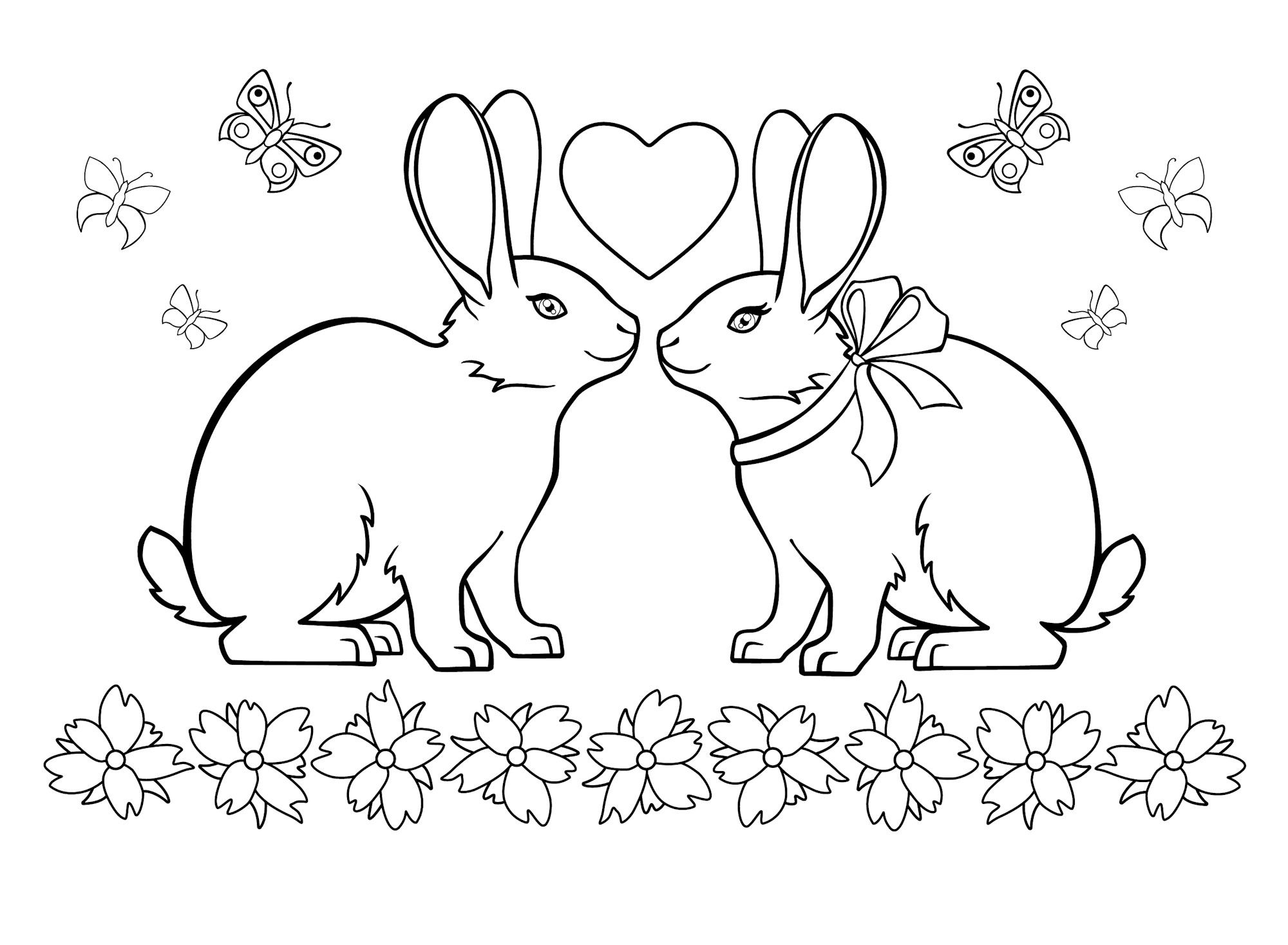
One detailed page features two rabbits surrounded by flowers and butterflies.
This design is perfect for giving each bunny a different coat.
Try:
Rabbit One: Warm brown
Rabbit Two: Cream
or
Rabbit One: Gray
Rabbit Two: White
Then repeat some of those neutral colors throughout the surrounding details.
Use brighter pink, blue, purple, and yellow for the flowers and butterflies.
The contrast will keep the rabbits at the center of the composition.
🌷 Create a Springtime Rabbit Pair
The two rabbits can easily become the main characters in a spring story.
Maybe they are exploring a meadow after winter.
Perhaps they are looking for the first flowers.
They could be best friends, siblings, or two completely unrelated bunnies that happen to meet beneath a butterfly-filled sky.
Give each one a name.
Try:
- Clover
- Daisy
- Hazel
- Poppy
- Willow
- Thumper
- Biscuit
- Button
Then write a sentence explaining where they are going.
🌼 Color the Detailed Rabbit Garden
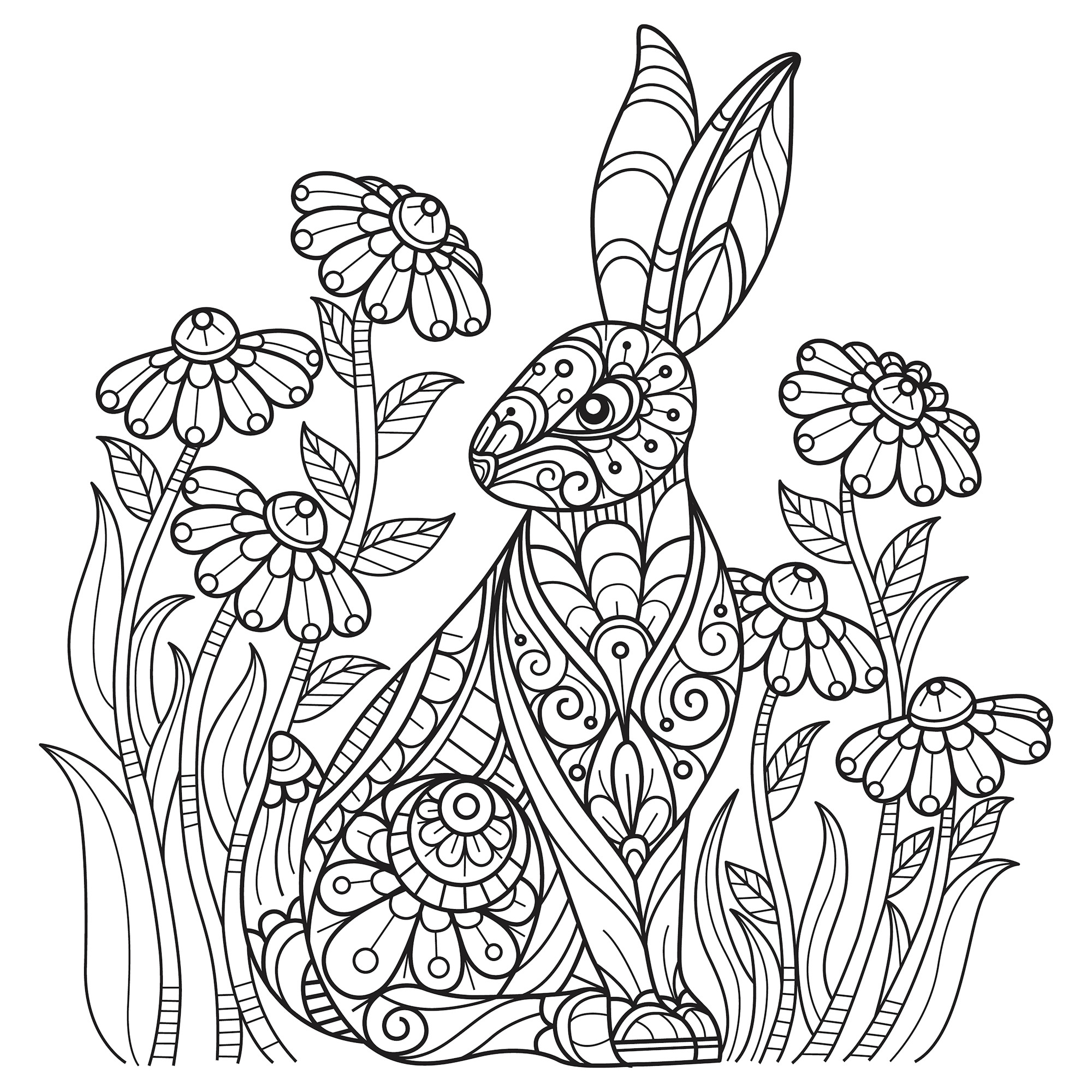
The hand-drawn rabbit-and-flower garden page is one of the more intricate designs in the collection.
Colored pencils work especially well here because there are many smaller:
- Leaves
- Petals
- Stems
- Garden details
- Fur areas
Choose a limited palette before beginning.
For example:
Garden Palette: Sage, forest green, lavender, pink, yellow, cream.
Repeat those colors throughout the page.
Using only five or six shades can help an intricate design feel coordinated.
🌿 Practice Different Greens
A rabbit garden is a wonderful place to discover that “green” is not one single color.
Try:
- Lime
- Yellow-green
- Sage
- Olive
- Emerald
- Forest green
- Blue-green
Use lighter greens on new leaves and darker shades beneath foliage.
Even without complicated shading, simply changing greens between plants can make the garden look richer.
Continue the botanical theme with our Garden Coloring Pages.
🌸 Give Every Flower Its Own Color
Detailed garden pages are a good excuse to use nearly every bright color in the box.
Try:
- Pink
- Purple
- Red
- Orange
- Yellow
- Blue
- White
You could make every flower unique or repeat a few colors for a more organized look.
Another option is to give different parts of the garden their own palettes.
Maybe one corner is mostly pink and lavender while another is yellow and orange.
🖍️ Color the Doodle Rabbit
The doodle-style rabbit brings a completely different feel to the collection.
Instead of worrying about realistic fur, treat each decorative section like its own miniature coloring challenge.
Fill the page with:
- Rainbow colors
- Repeating patterns
- Warm colors
- Cool colors
- Pastels
- Bold contrasts
One section might be purple.
Another can be yellow.
The next could contain tiny rainbow stripes.
There is no reason a doodle rabbit needs to resemble a real animal.
🧘 Explore the Zen-Doodle Rabbit
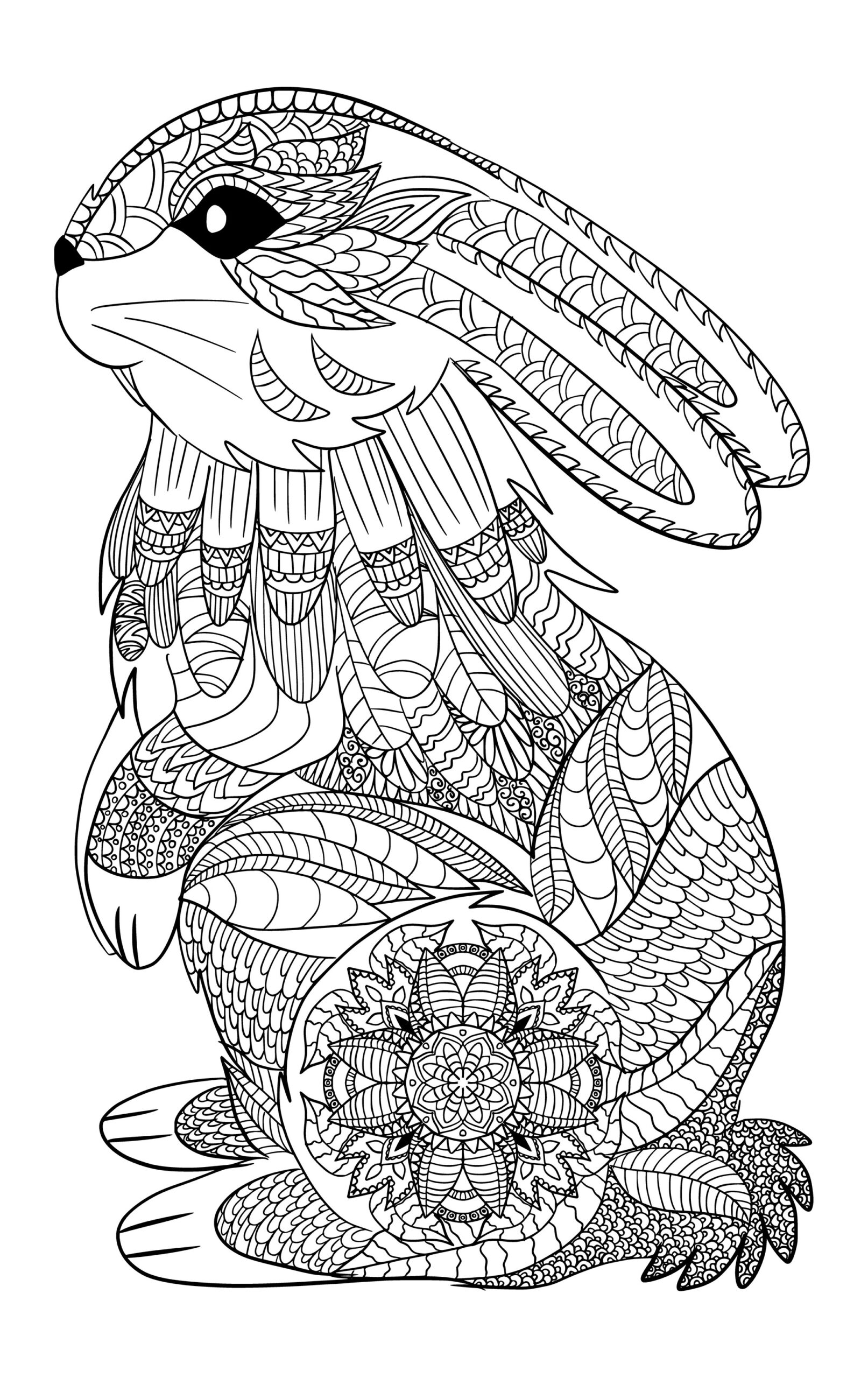
The intricate zen-doodle rabbit is especially suited to older kids and adults who enjoy lots of small patterns.
Choose a small set of colors first.
For example:
Earthy: Brown, tan, olive, rust, cream.
Spring: Pink, lavender, green, yellow, blue.
Jewel: Emerald, sapphire, ruby, turquoise, purple.
Then move slowly through the sections.
Some areas can stay white to provide contrast.
The goal doesn’t have to be completing everything quickly. The detailed pattern itself is part of the artistic challenge.
⚫ Try a Black-and-White Rabbit Design
Coloring doesn’t always require lots of color.
Leave some doodle sections white and fill others with black or gray.
Create contrast with:
- Solid black
- Fine lines
- Gray shading
- White spaces
Then add just one accent color.
Maybe every flower is red.
Perhaps only the eyes are blue.
Using very few colors can sometimes create an especially dramatic finished picture.
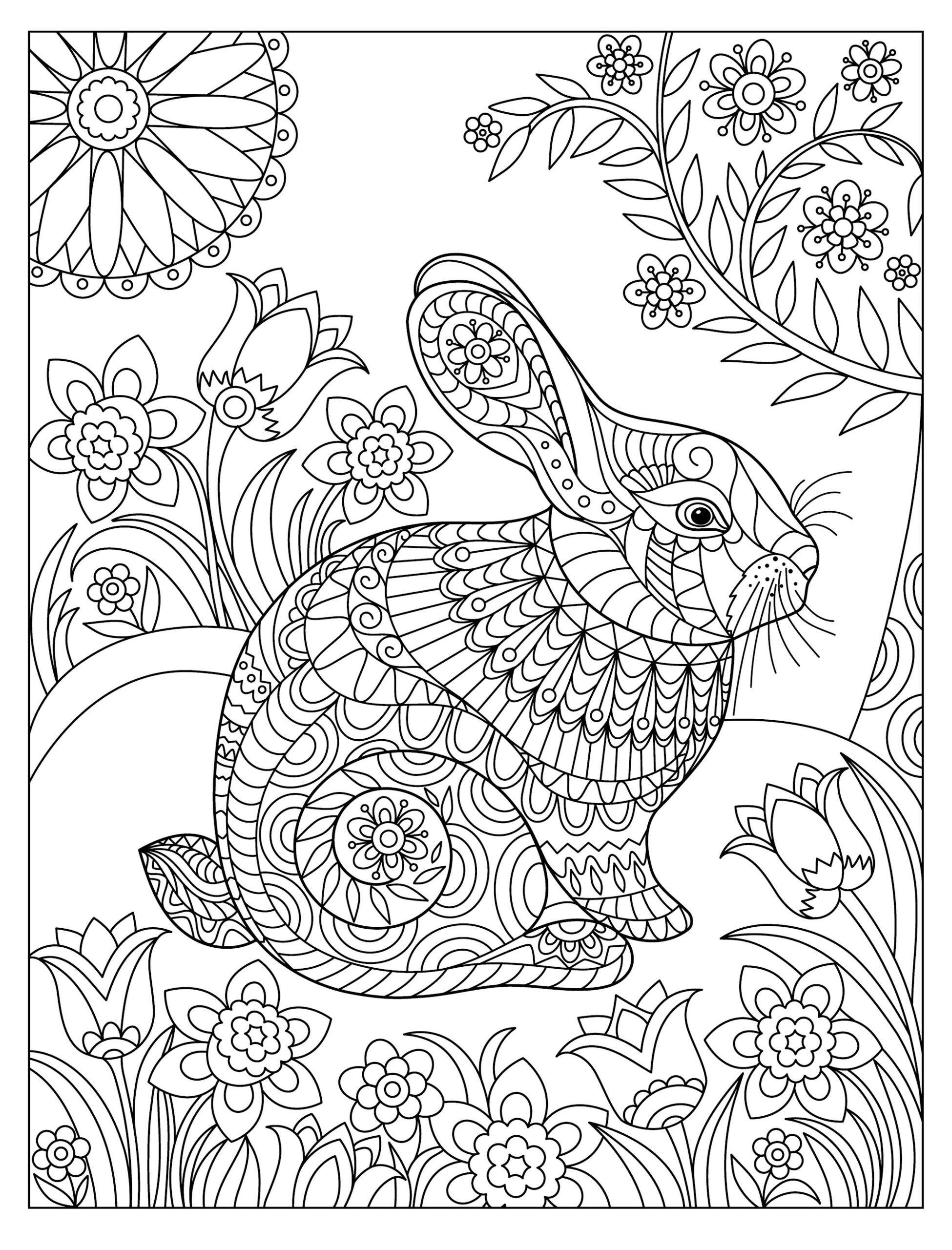
🌷 Color the Spring Rabbit
The dedicated spring rabbit page is a natural companion to your larger seasonal collection.
Use:
- Fresh greens
- Pink flowers
- Yellow blossoms
- Lavender accents
- Sky blue
Then add signs of spring around the bunny.
Draw butterflies, new leaves, flowers, or a bright morning sky.
Continue with our Spring Coloring Pages for a much larger collection of seasonal nature designs.
🌧️ Put the Rabbit in an April Shower
Spring doesn’t always mean sunshine.
Give your rabbit a rainy-day adventure.
Draw:
- Raindrops
- Puddles
- Clouds
- An umbrella
- Rain boots
Perhaps the bunny has tiny yellow boots.
Maybe it carries a leaf as an umbrella.
Add a rainbow after the rain.
This pairs naturally with our April Coloring Page.
☀️ Create a Sunny May Garden
The same rabbit can also move later into spring.
Turn the scene into a bright May garden with:
- Daisies
- Birds
- Butterflies
- Fresh green leaves
- Sunshine
Our May Coloring Page features daisies, a little bird, leaves, and a watering can, making it a natural companion to the garden rabbits.
🐇 Rabbit or Hare?
People sometimes use the words rabbit and hare interchangeably, but they are not exactly the same animals.
Both belong to the mammal order Lagomorpha, along with pikas.
Hares generally have longer legs and ears than many rabbits, and the young of rabbits and hares are born at very different stages of development.
Jackrabbits are actually hares, despite having “rabbit” in their common name.
For coloring purposes, though, long ears and powerful back legs make both rabbits and hares wonderful subjects.
🐭 Rabbits Aren’t Rodents
Another common misconception is that rabbits are rodents.
They aren’t.
Rabbits, hares, and pikas are lagomorphs, belonging to a different mammal order from mice, rats, squirrels, and other rodents.
That can become a simple animal-classification activity.
Write:
Rabbit = Lagomorph
Then draw a mouse beside it and write:
Mouse = Rodent
What features look similar?
What looks different?
👂 Look at Those Long Ears
Long ears are one of the easiest features to recognize in rabbit artwork.
Use lighter colors inside the ears and darker fur along the outside.
For a cute cartoon rabbit, try pink inside.
For a realistic wild-rabbit look, use tan, gray, or brown.
Then exaggerate them.
Draw your own rabbit with enormously long ears.
Maybe its ears are so large they work like umbrellas.
What would you call this imaginary species?
👃 Add Tiny Nose and Whisker Details
A rabbit’s face may use only a few simple lines, but small details can add lots of personality.
Color the nose:
- Pink
- Brown
- Gray
- Black
Then emphasize the whiskers with a fine pencil or marker.
Add tiny highlights to the eyes.
Younger children can keep everything bold and simple, while older colorists can experiment with gentle shading around the muzzle.
🐾 Why Are Rabbit Back Legs So Large?
Rabbits and hares are famous for hopping.
Their long, powerful hind legs help them move quickly.
Wild rabbits such as cottontails may use sudden bursts of speed and zigzagging movement to escape predators.
Look at the rabbit designs and compare the front and back legs.
Then draw a sequence showing a bunny:
Sitting.
Beginning to jump.
Flying through the air.
Landing.
You have just created the beginnings of a rabbit animation.
🏃 Imagine a Bunny Race
Draw three rabbits on another page.
Give each one a number.
Create a starting line and finish line.
Which rabbit wins?
Maybe:
Clover is very fast.
Biscuit stops for a snack.
Daisy gets distracted by butterflies.
The race can become a silly story rather than an actual competition.
🌾 Where Do Wild Rabbits Live?
Different rabbit species live in different habitats.
Cottontails in North America may use grassy, brushy, shrubby, woodland-edge, desert, or other vegetated habitats depending on the species.
Vegetation provides both food and places to hide.
That makes the garden and meadow scenes in this coloring collection useful starting points for thinking about habitat.
Draw:
- Grasses
- Shrubs
- Trees
- Brush
- Flowers
Then decide where your rabbit would hide if a predator appeared.
🏡 Design a Rabbit Habitat
Create a habitat around one rabbit.
Include places for:
Food — grasses and plants.
Cover — shrubs or dense vegetation.
Resting — a sheltered spot.
Then add other animals that might share the environment.
Perhaps there are:
- Birds
- Butterflies
- Insects
- Squirrels
An imaginary habitat can become increasingly detailed as you add new plants and animals.
🔍 Look for Wild Rabbits
If rabbits live near you, try watching for them with an adult around dawn or dusk, when some species such as cottontails can be particularly active.
Observe from a distance rather than chasing or approaching them.
Notice:
- Fur color
- Ear size
- Tail
- Movement
- Habitat
Does the rabbit freeze when it notices something?
Does it hop slowly or suddenly run?
Use those observations the next time you color a rabbit page.
🤍 Why Is It Called a Cottontail?
Several North American rabbits belong to the cottontail group.
Their name comes from the fluffy white underside of the tail that can resemble a little ball of cotton, especially when the animal runs away.
Color your rabbit’s tail white and add pale gray shading around the edge.
Or give your fantasy bunny a completely different tail.
Maybe it is pink, rainbow-striped, or shaped like a flower.
❄️ Meet the Snowshoe Hare
Not every long-eared animal stays the same color throughout the year.
Snowshoe hares living in northern environments can change from brownish summer coats toward much whiter winter coats, helping them blend with changing seasonal surroundings.
Print one rabbit page twice.
Color the first version brown for summer.
Make the second mostly white for winter.
Then draw a green forest behind one and snow behind the other.
It becomes a simple seasonal camouflage experiment.
🍂 Create an Autumn Rabbit
Rabbits aren’t only spring animals.
Turn one of the garden designs into fall.
Replace bright flowers with:
- Red leaves
- Orange leaves
- Acorns
- Pumpkins
- Golden grass
Give the rabbit warm brown or gray fur.
Add a crisp blue sky.
The same animal can fit every season depending on the background.
❄️ Create a Winter Bunny
Turn another copy into a snowy scene.
Add:
- Snowflakes
- Snowbanks
- Bare branches
- Evergreen trees
Make the rabbit white or gray.
Add soft blue shadows in the snow.
Perhaps the bunny is searching for food beneath the winter landscape.
🌈 Create Four Seasons of Rabbits
Print the same rabbit four times.
Make:
Spring Rabbit — flowers and butterflies.
Summer Rabbit — tall green grass and sunshine.
Fall Rabbit — colorful leaves.
Winter Rabbit — snow and evergreens.
Display all four together.
This turns a single animal outline into a seasonal art project.
Explore more year-round themes in our Seasonal Coloring Pages.
🐰 Create a Cute Bunny Character
Turn one of the simpler rabbit pages into your own character.
Give the bunny:
- A name
- Favorite color
- Favorite food
- Best friend
- Special talent
Maybe:
Name: Clover
Favorite Color: Purple
Favorite Food: Dandelions
Best Friend: Bluebell the Butterfly
Special Talent: Growing rainbow flowers
Write the character information beside the picture.
🎀 Dress Up Your Bunny
Add clothes and accessories.
Try:
- A bow tie
- A flower crown
- Glasses
- A scarf
- Overalls
- A tiny backpack
- A sun hat
Maybe the bunny is heading to school.
Perhaps it is gardening.
Or it could be getting ready for a tea party.
Small costume details can completely change the personality of a coloring page.
📦 Put the Bunny in a Storybook World
Imagine that your rabbit has wandered into a tiny fantasy village.
Draw:
- Mushroom houses
- A little bridge
- Flowers
- Fairy doors
- Lanterns
- A winding path
Perhaps the rabbit carries messages between tiny woodland creatures.
Maybe the doodle bunny is actually a magical guardian of the forest.
For more imaginative worlds, explore our Fantasy Coloring Pages.
📖 Write a Rabbit Adventure
Use one of the pictures as the first illustration of a story.
Try:
The bunny pulled the carrot from the ground and discovered…
While following the butterflies, the rabbit found…
Two rabbits were exploring the garden when suddenly…
The doodle rabbit came alive every night and…
The spring bunny knew a secret about the flowers…
Younger children can tell the story aloud.
Older children can write several paragraphs and draw another picture showing what happens next.
🥕 Write the Great Carrot Mystery
Maybe the bunny’s carrot has disappeared.
Who took it?
Create suspects:
- Another rabbit
- A squirrel
- A mischievous bird
- A garden gnome
- Nobody—the carrot is still underground!
Draw clues around the coloring page.
Add footprints, leaves, or a tiny map.
Then write the solution.
Rabbit coloring has officially become a detective story.
🌸 Give the Rabbits a Garden Party
The flower-filled pages can easily become a tiny garden celebration.
Add:
- A picnic blanket
- Teacups
- Fruit
- Flowers
- Balloons
Invite butterflies and birds.
Maybe each rabbit brings a different garden snack.
Draw tiny place cards with everyone’s names.
This idea pairs beautifully with our Spring Coloring Pictures, which includes even more cozy animals and miniature garden scenes.
🐇 Connect Rabbits With Easter Coloring
Rabbits and Easter are strongly connected in modern holiday imagery, and your site has a separate Easter collection devoted to that tradition.
For baskets, decorated eggs, chicks, Easter bunnies, egg hunts, and other holiday-specific designs, visit our Easter Coloring Pages.
Keeping this rabbit collection more evergreen means you can enjoy these animals throughout the year—not only around Easter.
🧺 Add an Easter Basket
If you do want to give one rabbit an Easter makeover, draw a basket beside it.
Fill the basket with patterned eggs.
Add:
- Flowers
- Ribbons
- Candy
- A bow
For a focused printable, use our Easter Basket Coloring Page for Kids.
The same rabbit can therefore move easily between a nature scene and a holiday picture.
✏️ Learn to Draw a Simple Bunny Face
You can draw a basic cartoon bunny using only a few shapes.
Start with a circle for the head.
Add two long oval ears.
Draw:
- Two eyes
- A tiny nose
- A curved mouth
- Whiskers
Then add a round body and small fluffy tail.
Once you’ve mastered the simple outline, experiment with expressions.
Create a:
Happy bunny.
Sleepy bunny.
Surprised bunny.
Silly bunny.
Grumpy bunny.
🪞 Draw a Bunny From Shapes
Look for shapes inside your rabbit drawing.
The head may resemble a circle.
The ears are long ovals.
The nose could be a small triangle.
Eyes may be circles or ovals.
This can help younger artists realize that complicated pictures are often built from simple shapes.
Try drawing the whole rabbit using nothing but circles, ovals, and triangles.
🔤 R Is for Rabbit
Pair the coloring pages with easy alphabet practice.
Write a large R beside the bunny.
Practice:
R is for Rabbit.
Then think of more R words:
- Rainbow
- Red
- Rain
- Robot
- Road
- Rose
Decorate the letter R with bunny ears or carrot patterns.
For more letter practice, explore our Coloring Pages of Letters.
🔢 Count the Rabbits and Carrots
Younger children can turn the pictures into counting activities.
Ask them to:
- Draw 2 carrots
- Add 3 flowers
- Make 4 butterflies
- Draw 5 leaves
Then count everything again.
Older kids can write simple addition problems.
Two rabbits find three carrots.
How many carrots do they have altogether?
The activity can remain light while adding a little early math practice.
🎲 Play Bunny Roll-and-Color
Grab one six-sided die.
Assign each number a color:
1 — Brown
2 — Gray
3 — Pink
4 — Blue
5 — Purple
6 — Your choice
Roll the die and use that color somewhere on the page.
Keep rolling until the rabbit and background are complete.
The final result may be much stranger than anything you would have planned—and that is the point.
🏫 Rabbit Coloring Pages for the Classroom
These pages can fit naturally into many classroom themes.
Teachers might use them for:
- Animal units
- Mammal lessons
- Spring activities
- Art centers
- Creative writing
- Early finishers
- Indoor recess
- Habitat lessons
- Easter-season activities
- Bulletin boards
Students can choose different rabbit designs and then add one sentence describing their animal or its imaginary habitat.
🌷 Create a Classroom Rabbit Garden
Combine finished pages into one giant bulletin board.
Add paper:
- Flowers
- Grass
- Carrots
- Butterflies
- Clouds
Place the detailed rabbits among the flowers and the simpler bunnies near the carrot patch.
Possible headings include:
Hopping Into Spring
Some Bunny Is Creative!
Our Garden Is Growing
Hoppy to Learn!
The variety of rabbit artwork can make the display much more interesting than using one repeated design.
🌿 Pair Rabbit Coloring With a Nature Lesson
Rabbit pages can be an easy starting point for talking about:
- Mammals
- Herbivores
- Habitats
- Predator-prey relationships
- Seasonal camouflage
- Animal movement
Keep the lesson appropriate to the child’s age.
A younger child may simply learn that rabbits are mammals and eat plants.
An older child might compare cottontails with hares or investigate a rabbit species that lives nearby.
📓 Make a Rabbit Fact Book
Choose a real rabbit or hare species and create a small booklet.
Include:
Name
Where It Lives
What It Eats
Fur Color
Interesting Feature
Add a drawing or completed coloring page to the cover.
Possible animals to explore include:
- Eastern cottontail
- Desert cottontail
- Mountain cottontail
- Snowshoe hare
- Black-tailed jackrabbit
Remember that jackrabbits are hares rather than true rabbits.
🔎 Rabbit Observation Activity
If you see a wild rabbit, enjoy it from a distance.
Try noticing:
- How long the ears are
- Fur colors
- The white tail, if visible
- How the rabbit moves
- What plants surround it
Do not chase or feed wild rabbits.
The best observation often happens when you remain quiet and let the animal continue its normal behavior.
Then use what you noticed in a fresh coloring page.
🖍️ Best Supplies for Rabbit Coloring Pages
Crayons are excellent for younger children and the larger, simpler bunny designs.
Colored pencils are especially useful for:
- Fur texture
- Detailed garden leaves
- Flower petals
- Doodle patterns
- Small butterfly details
Markers create bold cartoon rabbits and bright flowers. Slightly heavier paper can help if ink tends to bleed through ordinary printer paper.
Gel pens can add small finishing touches such as:
- Flower centers
- Butterfly markings
- Eye highlights
- Doodle patterns
Mix several supplies if you want even more variety.
🖨️ How to Use These Free Rabbit Coloring Pages
Choose your favorite rabbit design and print the page you’d like to color.
Then decide what type of bunny world you want to create.
Maybe the rabbit will have natural gray-brown fur and live in a grassy meadow.
Perhaps a happy bunny walks beneath rainbow butterflies.
You might turn the detailed garden into a riot of spring flowers.
The doodle rabbit can contain every color imaginable.
Two rabbits could become the main characters in a story.
Or a tiny bunny might simply be very pleased about finding an enormous purple carrot.
Color the original design first, then add as much of your own world as you like.
🐰 Hop Into a World of Creativity
From carrot-loving bunnies and butterfly-filled walks to flower gardens, doodle rabbits, loving pairs, intricate patterns, and spring scenes, these free printable rabbit coloring pages offer plenty of ways to celebrate one of the world’s most recognizable long-eared animals.
Experiment with realistic fur colors, create pastel spring bunnies, draw habitats, learn the difference between rabbits and hares, invent a rainbow carrot patch, write a bunny adventure, or connect your rabbit to Easter, spring, nature, and garden coloring.
There is no need to wait for Easter.
Rabbit coloring can be fun all year long.
Choose your favorite bunny, grab your colors, and start hopping through the collection!
🔗 Related Articles
- Animal Coloring Pages
- Easter Coloring Pages
- Easter Basket Coloring Page for Kids
- Spring Coloring Pages
- Spring Coloring Pictures
- Garden Coloring Pages
- Coloring Pages of Flowers
- Butterfly Coloring Page
- Cute Coloring Pages
- Seasonal Coloring Pages
📚 Sources
- Smithsonian Institution — Five Rabbit Facts
- National Park Service — Eastern Cottontail Rabbit Fun Facts
- National Park Service — Eastern Cottontail
- National Park Service — Desert Cottontail
- National Park Service — Rabbits at Devils Tower
- National Park Service — Snowshoe Hare
🖍️Shop Rabbit Coloring Books –>