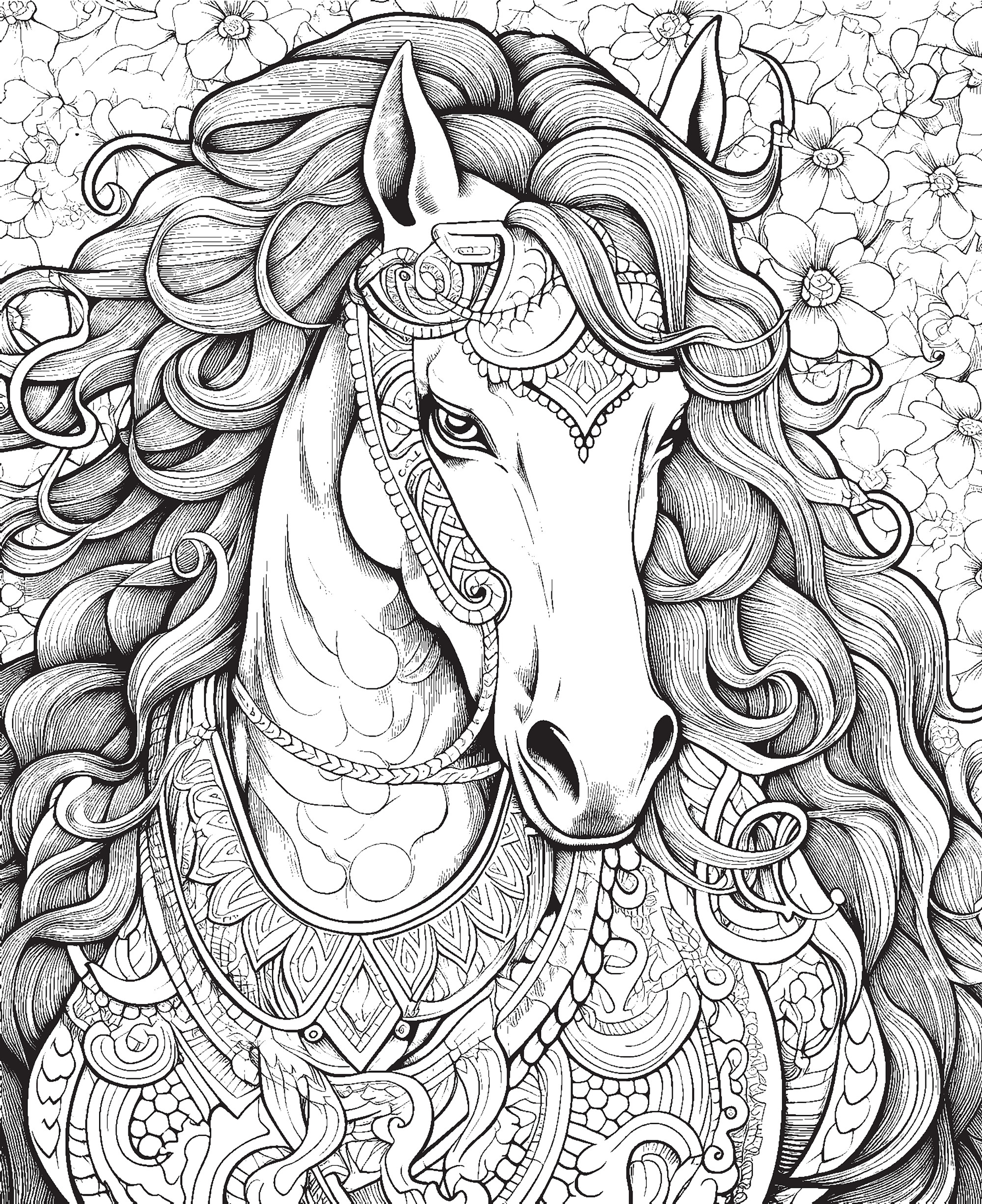
Saddle up for a creative adventure with our collection of horse coloring pages, featuring adorable kawaii horses, a sweet horse-and-foal pair, peaceful barn scenes, running horses, and intricate horse mandalas for colorists who enjoy something a little more detailed.
Horses are wonderful coloring subjects because there are so many possibilities. You can create a glossy black horse, a warm chestnut, a golden palomino, a brown bay with a dark mane and tail, a spotted fantasy horse, or a completely imaginary rainbow-colored pony. Flowing manes and tails also give you plenty of room to experiment with shading, highlights, braids, flowers, and colorful patterns.
Our printable collection includes eight horse designs, ranging from simple and cute pictures for children to more detailed horse and mandala artwork for older kids and adults. There are horses standing quietly, galloping near stables, relaxing beside barns, and spending time with their young.
Choose your favorite horse, gather your crayons, markers, or colored pencils, and get ready to gallop into some colorful fun.
🐎 Explore Our Horse Coloring Pages
This collection offers several different ways to enjoy one of the world’s most familiar domesticated animals.
You’ll find:
- A cute kawaii horse
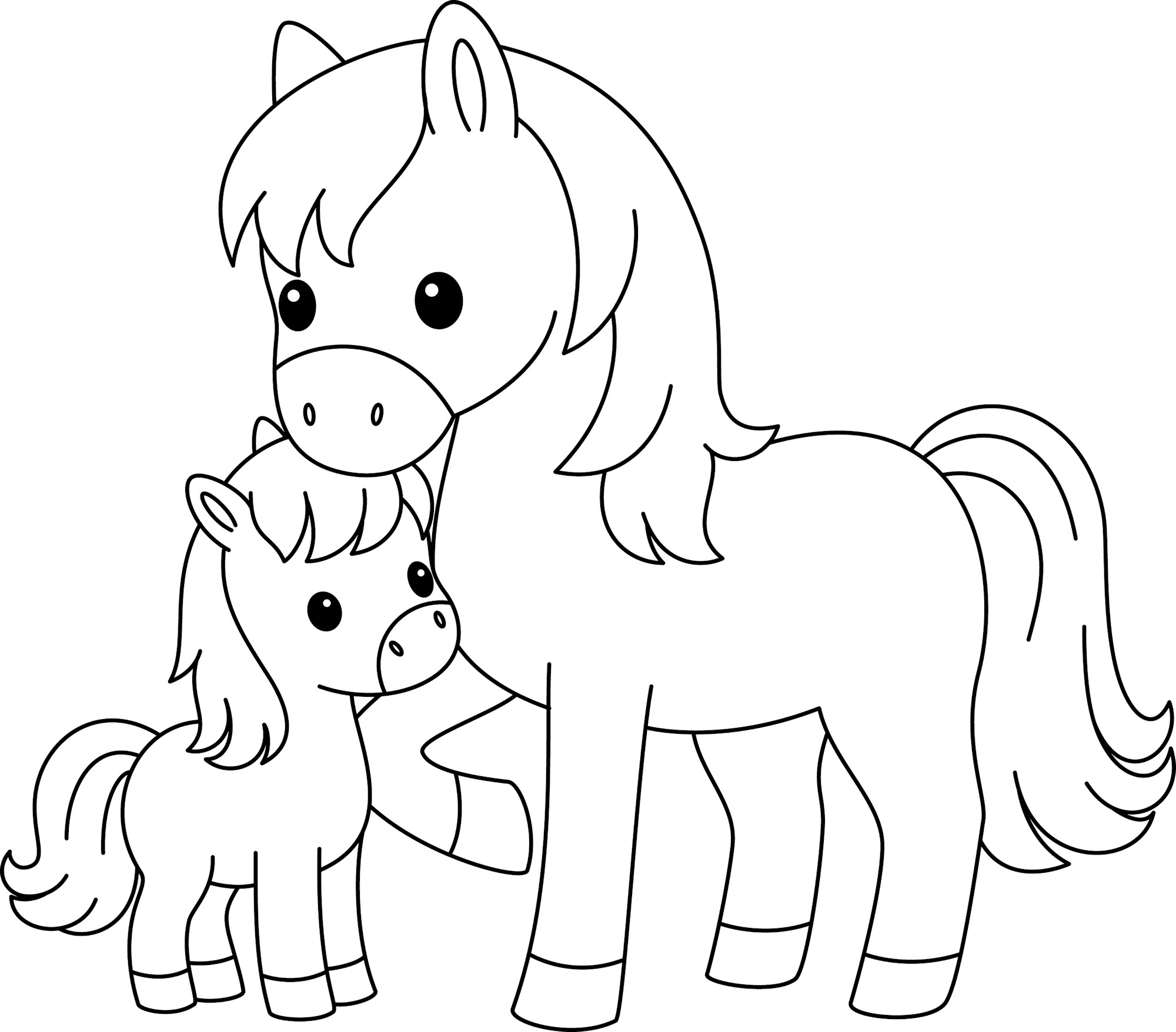
- A cute kawaii horse with a baby
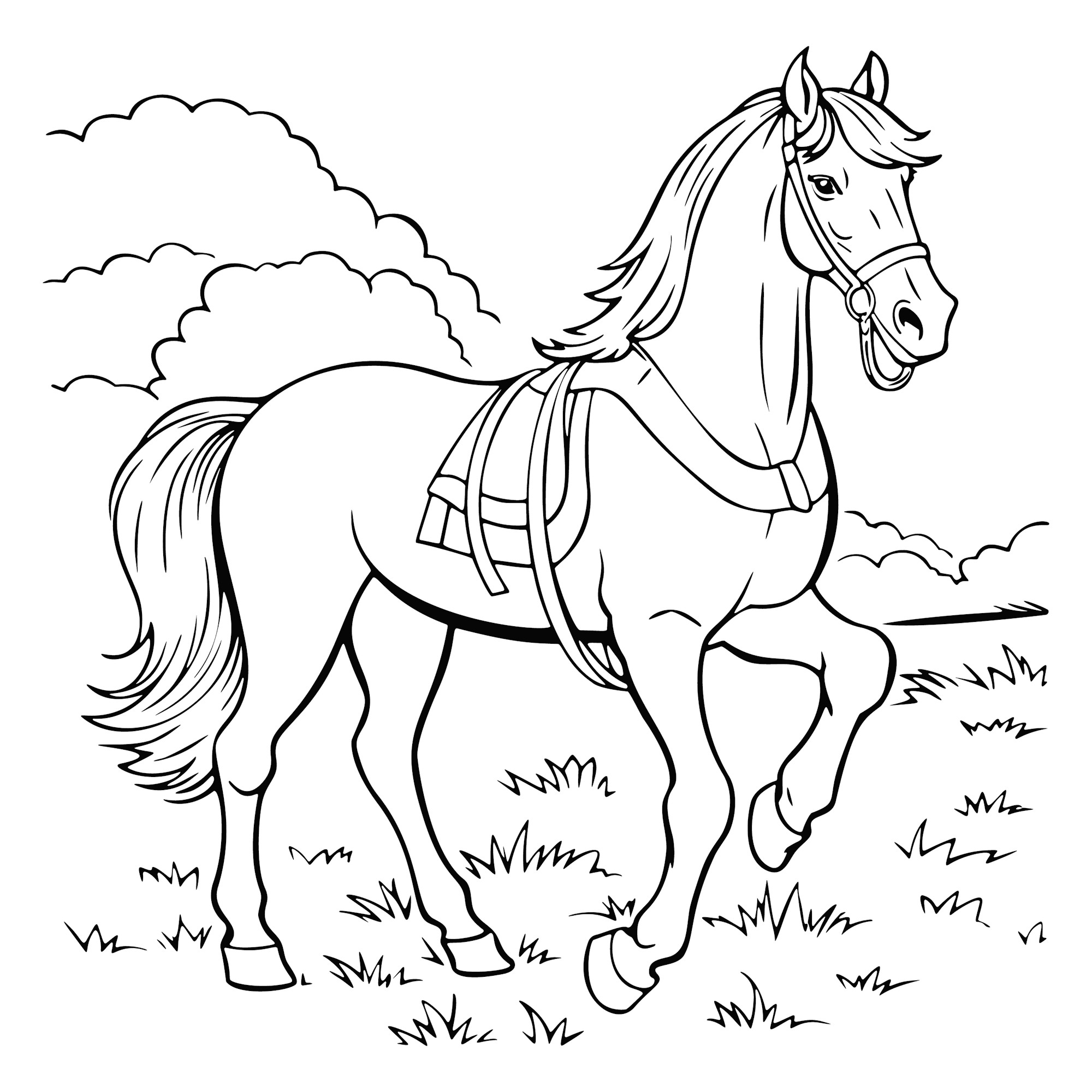
- Two classic horse illustrations
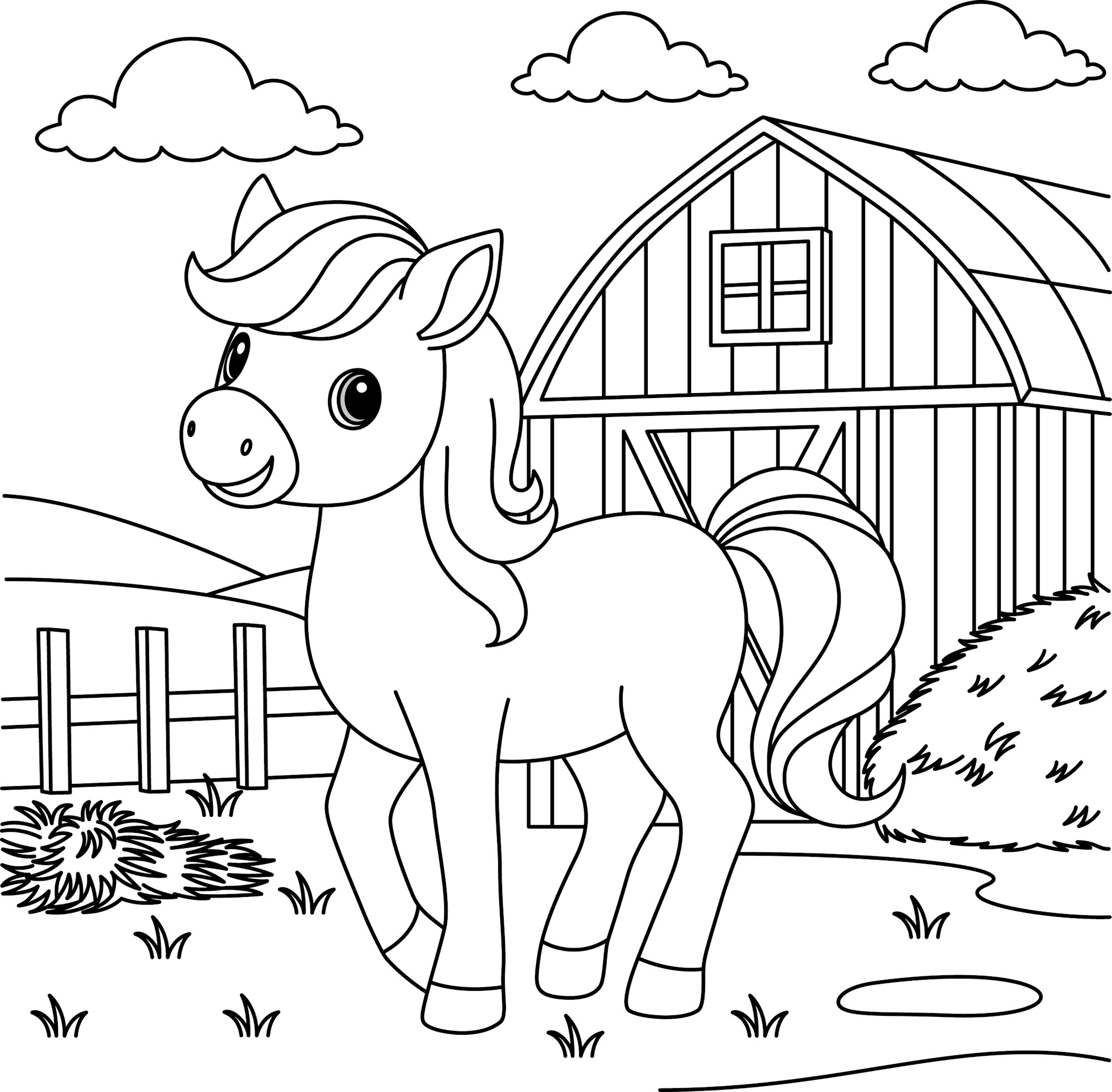
- A cartoon horse relaxing beside a barn
- A cartoon horse running in front of a stable
- Two intricate horse mandala designs
The kawaii pages are especially cheerful for younger children, while the barn and stable scenes invite kids to add fences, pastures, flowers, hay, and countryside backgrounds.
The two horse mandalas offer much finer details for anyone who likes slower, more intricate coloring.
For even more creatures from farms, homes, forests, oceans, and around the world, explore our Animal Coloring Pages.
🥰 Cute Kawaii Horse Coloring Page
The cute kawaii horse is a great place to start if you want a simple and cheerful design.
Natural horse colors can include:
- Black
- Brown
- Chestnut
- Gray
- Cream
- Golden
- White or nearly white-looking gray coats
But kawaii artwork is also perfect for fantasy colors.
Try a lavender horse with a pink mane, a turquoise pony with yellow stars, or a completely rainbow-colored horse.
Add little rosy cheeks for an extra-cute look.
For more adorable animals, visit our Cute Coloring Pages.
🌈 Give the Kawaii Horse a Rainbow Mane
Leave the body relatively simple and make the mane the star of the picture.
Use:
Red → Orange → Yellow → Green → Blue → Purple
Repeat the same sequence through the tail.
For a softer look, try:
- Blush pink
- Peach
- Pale yellow
- Mint
- Baby blue
- Lavender
A pale cream or white horse can make the rainbow mane stand out especially well.
⭐ Create a Magical Horse
An ordinary horse can become a fantasy creature with only a few additions.
Draw:
- Stars
- Flowers
- Wings
- Moon shapes
- Sparkles
- Decorative markings
Maybe the horse has a star on its forehead or tiny constellations across its coat.
Give your imaginary breed a name.
Perhaps it is a Moonlight Horse, Star Runner, or Rainbow Meadow Pony.
If one magical horn would improve the picture, continue the adventure with our Coloring Pages of Unicorns.
🐴 Cute Horse and Baby Coloring Page
The kawaii horse and baby page brings a sweet family scene to the collection.
A young horse is called a foal.
Try giving the adult and foal matching coats.
Maybe both are chestnut with pale facial markings.
Or make the foal slightly lighter than its parent.
You can also give them completely different colors for a fantasy version.
Add grass, flowers, fences, and a bright sky around the pair.
🍼 What Is a Baby Horse Called?
A young horse is called a foal.
The adult female parent is called a mare.
Children can practice:
Horse → Foal
Then compare the horse with other animal families:
Cow → Calf
Sheep → Lamb
Goat → Kid
Deer → Fawn
The parent-and-baby page can become a simple animal-vocabulary activity.
💕 Create a Mare and Foal Meadow
Draw a peaceful pasture around the pair.
Add:
- Grass
- Wildflowers
- Fence
- Trees
- Blue sky
- Clouds
Use several greens throughout the field.
Add pink, purple, yellow, and white flowers for little bursts of color.
Perhaps the foal is learning to run for the first time.
🌸 Give the Foal a Flower Crown
Turn the cute scene into something especially whimsical.
Draw small flowers around the foal’s mane.
Try:
- Daisies
- Roses
- Tiny blossoms
- Leaves
Repeat a few flowers in the mare’s mane so the pair matches.
A fantasy flower crown can use pink, turquoise, purple, and gold.
🐎 Classic Horse Coloring Page
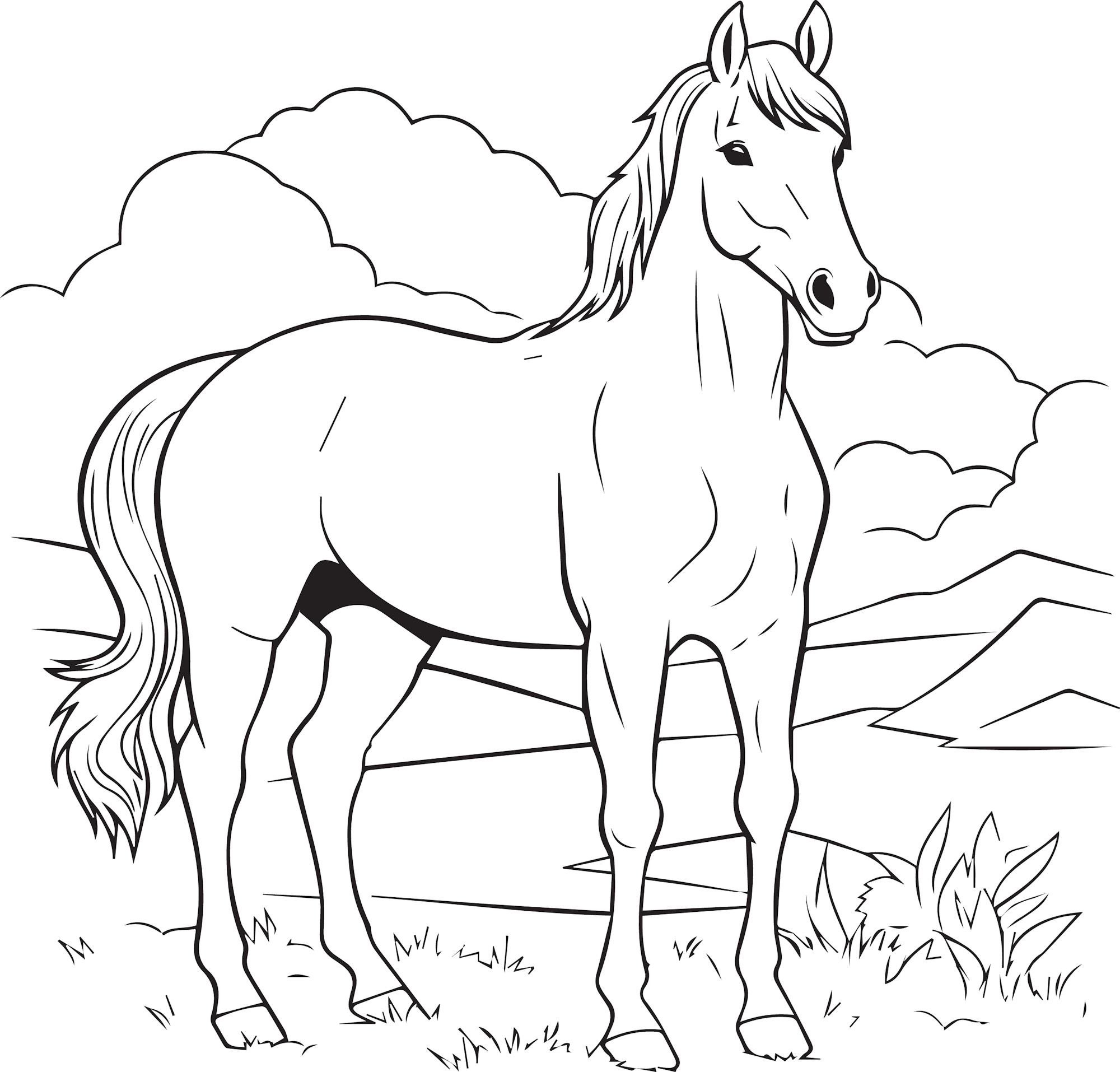
The more traditional horse illustrations are perfect for trying realistic coat colors.
Look carefully at the body shape, legs, mane, tail, ears, and muzzle before choosing your colors.
You might create a:
- Bay horse
- Chestnut horse
- Black horse
- Gray horse
- Palomino-inspired horse
Or ignore all of those choices and make the animal bright blue.
The line art provides the horse; you decide what kind of horse it becomes.
🤎 Color a Bay Horse
A bay horse typically has a reddish-brown or brown body with darker “points,” including a black mane, tail, and lower legs.
Try:
Body: Warm brown or reddish brown
Mane: Black or charcoal
Tail: Black
Lower legs: Dark brown or black
Add a slightly lighter shade around the muzzle and highlights.
Bay coloring is a good choice when you want a natural-looking horse with plenty of contrast.
❤️ Color a Chestnut Horse
Chestnut horses have reddish coats without the black points seen on bays.
Try:
- Copper
- Rust
- Auburn
- Reddish brown
- Golden brown
The mane and tail may be similar to the body or somewhat lighter.
Use cream or pale gold if you want a flaxen-looking mane and tail.
🖤 Color a Black Horse
Begin with charcoal rather than filling the entire horse in solid black.
Then add true black around the:
- Legs
- Belly
- Mane
- Tail
- Shaded side of the body
Keep some areas dark gray so the lines remain visible.
A tiny amount of blue-gray can suggest shine on a black coat.
🩶 Color a Gray Horse
Many horses described as gray have coats that become lighter with age.
For a coloring page, try:
- Silver-gray
- Medium gray
- Charcoal
- White
Use darker gray around the legs and shaded areas.
Leave other sections almost white.
You can also create tiny darker spots for a dappled effect.
💛 Create a Golden Horse
For a palomino-inspired look, use a golden or yellowish body with a pale mane and tail.
Try:
Body: Honey, gold, tan
Mane: Cream or pale yellow
Tail: Cream
Add brown or amber around the shadows.
Against a green pasture and blue sky, the golden colors can stand out beautifully.
🎨 Invent a Spotted Horse
Create your own pattern.
Start with a white, cream, brown, or black base.
Add:
- Large patches
- Small spots
- Speckles
- Stars
- Hearts
A fantasy spotted horse could use pink spots on a lavender body.
For something more natural-looking, combine white with black, brown, or chestnut.
⭐ Add a White Facial Marking
Many horses have distinctive white markings on their faces.
You can add a:
- Small star
- Narrow stripe
- Wider blaze
- White muzzle area
Keep the marking white or use a very pale cream.
Then add matching white socks on one or more legs if you like.
Each little marking can make your coloring-page horse look like an individual.
🐴 Design Your Dream Horse
Choose every feature yourself.
Decide on:
Body color
Mane
Tail
Facial markings
Leg markings
Name
Maybe your dream horse is a black mare with a white star and silver-gray mane.
Or perhaps it is a turquoise fantasy horse named Moonbeam.
Write the horse’s name underneath your finished picture.
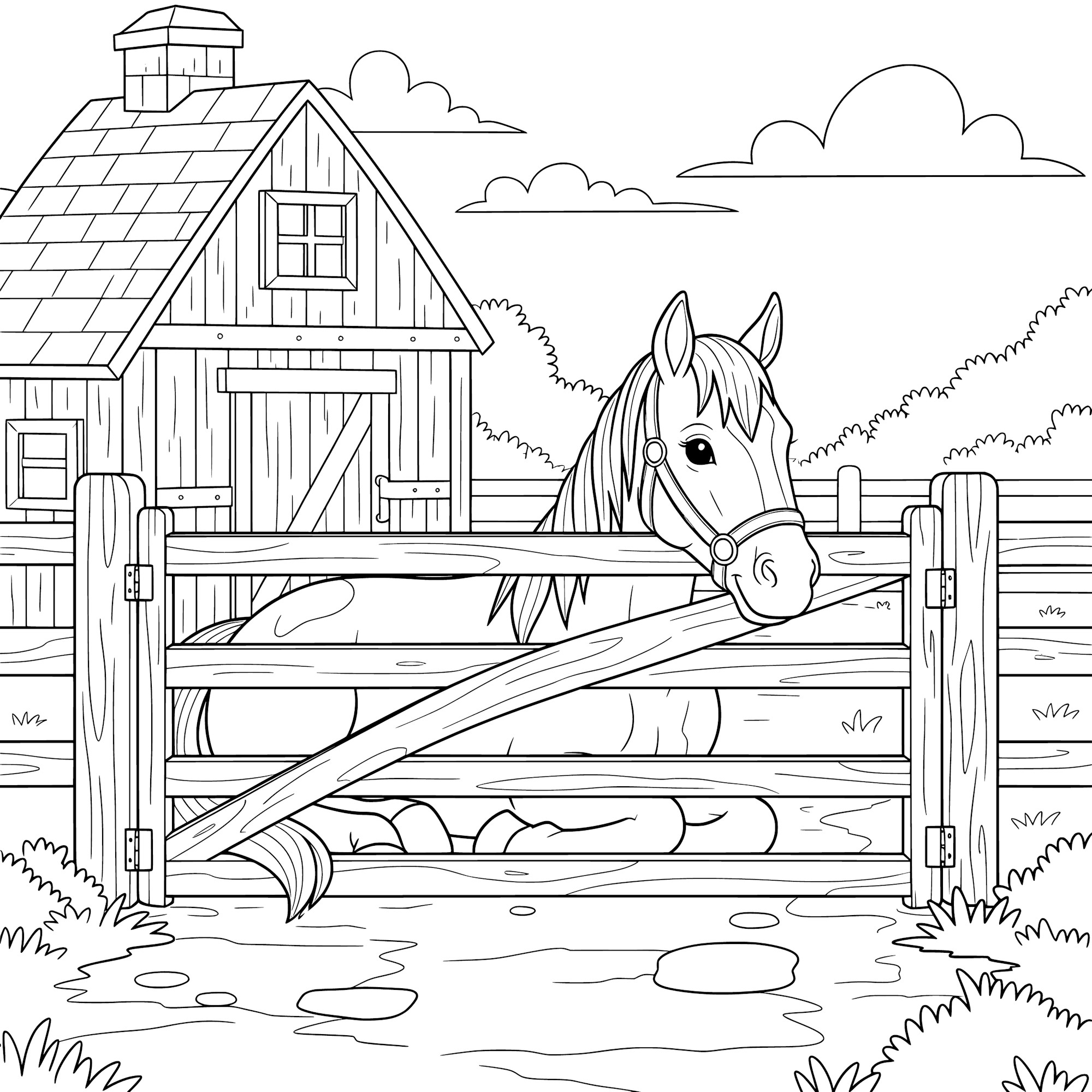
🌾 Horse Resting Near a Barn Coloring Page
The cartoon horse resting peacefully near a barn offers more than just an animal to color.
It gives you an entire farm setting.
Color the barn:
- Classic red
- Weathered brown
- White
- Blue
- Green
Then add hay, grass, fences, flowers, or farm tools.
The horse can remain relatively natural while the countryside adds brighter colors.
🏚️ Color a Classic Red Barn
Try:
Barn walls: Red
Roof: Gray or black
Doors: Dark red or white
Trim: White
Surround the barn with green fields and a blue sky.
Add a golden haystack nearby.
This classic farm palette works especially well with a brown, black, or golden horse.
🌻 Create a Summer Farm
Fill the scene with:
- Sunflowers
- Green pasture
- Blue sky
- Butterflies
- Hay
- White clouds
Use warm yellow and green throughout.
Perhaps the horse is enjoying a quiet afternoon beside the barn.
🍂 Create an Autumn Horse Farm
Transform the same barn scene into fall.
Color the trees with:
- Orange
- Rust
- Red
- Gold
- Burgundy
Add pumpkins near the barn and fallen leaves around the horse.
Give the animal a warm chestnut coat so it blends beautifully with the autumn palette.
❄️ Create a Winter Stable Scene
Turn the countryside snowy.
Use pale:
- Blue
- Gray
- Lavender
- White
Add snow to the barn roof and fence.
Keep the horse warmer in brown, black, chestnut, or gold so it contrasts with the icy surroundings.
Draw a few snowflakes in the sky.
🌷 Create a Spring Horse Farm
Add fresh grass and new flowers.
Use:
- Bright green
- Pink
- Lavender
- Yellow
- Sky blue
Maybe a foal is playing nearby.
Add flowering trees behind the barn.
For even more outdoor scenes, visit our Nature Coloring Pages.
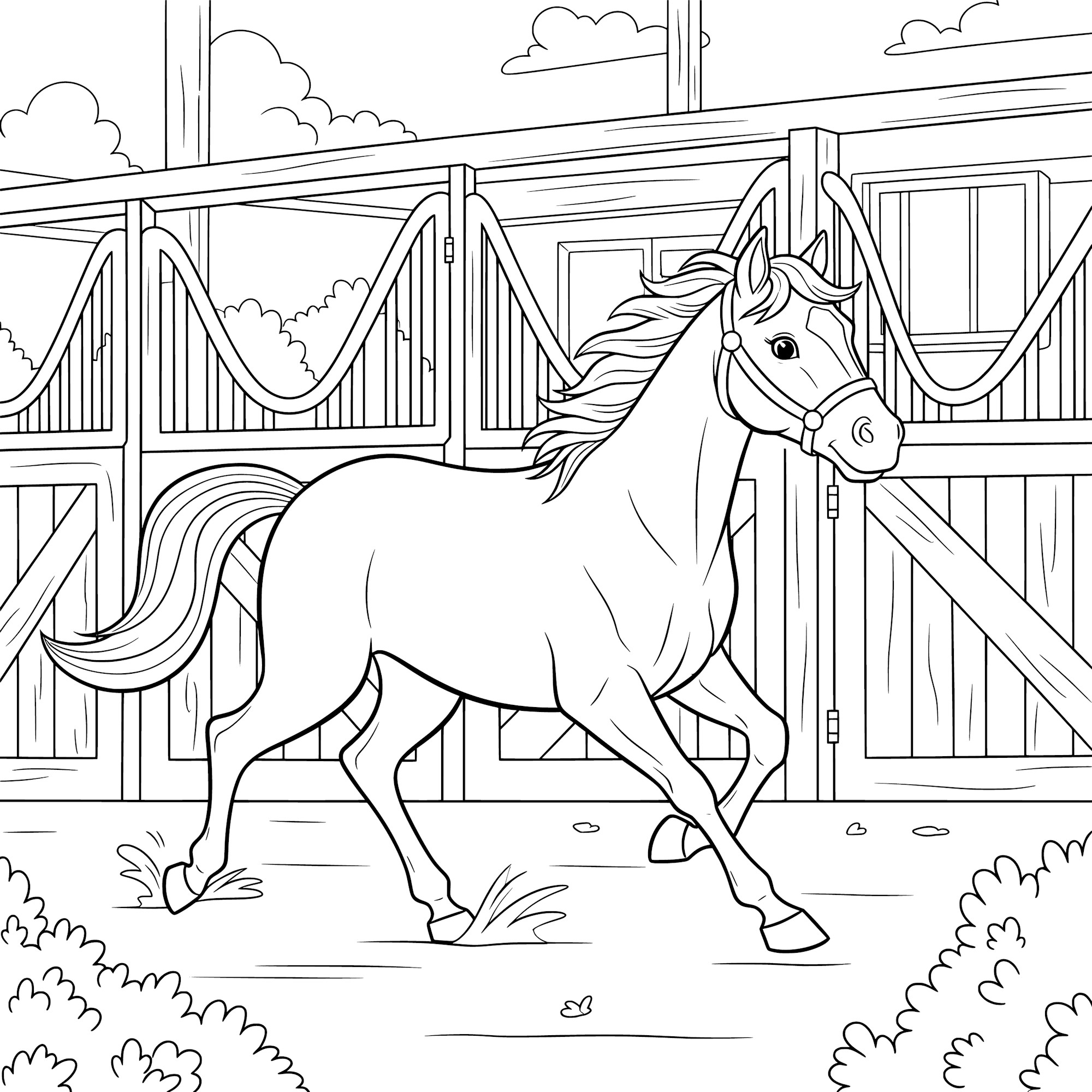
🏇 Horse Running in Front of a Stable
The cartoon horse running in front of a stable is the most energetic scene in the collection.
Show movement through the colors and background.
Draw:
- Dust
- Grass
- Flowing mane
- Clouds
- Fence posts
A dark mane and tail can emphasize the sweeping movement as the horse runs.
Add little lines behind the legs if you want a more cartoon-like sense of speed.
💨 Make the Mane Look Like It’s Moving
Color the mane in long sections following the direction of the hair.
Use:
Dark brown + caramel
or
Black + charcoal
or
Cream + pale gold
Keep some strands lighter than others.
For a fantasy horse, blend pink into purple and blue.
The moving mane can become one of the most dramatic parts of the picture.
🐎 Horse Gaits: Walk, Trot, Canter & Gallop
Horses can move at several different gaits.
Four familiar terms are:
Walk
Trot
Canter
Gallop
A walk is relatively slow, while a gallop is much faster.
The running-stable picture can become an activity:
Which gait do you imagine this horse using?
There does not need to be one definitive answer from a cartoon illustration. The fun is noticing how leg position and body movement can make an animal look fast or slow.
🚶 Draw a Walking Horse
Draw a horse taking a relaxed walk.
Keep the head calm and the body level.
Add a path through the pasture.
Maybe the horse is walking back toward the barn after grazing.
💨 Draw a Galloping Horse
Now exaggerate the movement.
Give the mane and tail long flowing lines.
Add dust behind the hooves.
Draw clouds or fence posts in the background.
A dynamic background can make the same animal appear much faster.
🐾 Add Hoofprints
Draw a trail of hoofprints behind the horse.
Keep each one small and slightly curved.
Make a path leading:
- To the barn
- Across the pasture
- Into the forest
Then imagine where the horse has been.
The hoofprints can become the beginning of a story.
🐴 What Are Hooves?
Instead of paws, horses have hooves.
The hoof is the hard structure at the end of each leg.
Color the hooves:
- Dark gray
- Black
- Brown
- Tan
depending on your horse design.
Draw four large hoofprint shapes beneath the page and number them:
1, 2, 3, 4
🔢 Count the Horse’s Legs
A horse has four legs.
Count:
1, 2, 3, 4
Then count other body parts:
- 2 ears
- 2 eyes
- 1 mane
- 1 tail
Turn the picture into a simple counting activity for younger children.
👀 Look at the Horse’s Eyes
Horses have eyes positioned toward the sides of their heads.
This gives them a wide field of view, which is useful for animals that evolved as prey.
Color the eyes dark brown or black and leave a tiny pale highlight.
Then compare the horse with a predator such as a lion.
Where are the lion’s eyes located?
The difference can become an interesting observation activity.
👂 Look at the Horse’s Ears
Horse ears are remarkably expressive.
They can rotate toward sounds and may give clues about what the horse is paying attention to.
Look at the coloring page.
Where do the ears point?
What might the horse be listening to?
Perhaps it hears:
- Another horse
- Barn door
- Bird
- Tractor
- Rustling leaves
Add whatever sound-maker you imagine to the background.
🐎 Horse Body Parts
Use a horse coloring page to learn a few simple body-part words.
Find the:
- Mane
- Tail
- Muzzle
- Ears
- Neck
- Back
- Legs
- Hooves
Older children can also learn words such as withers, the area at the top of the shoulders where horse height is commonly measured.
Label a few parts around the picture with arrows.
🌿 Horses Are Grazers
Horses are herbivores, and grazing is an important natural behavior.
When suitable forage is available, horses can spend many hours of the day eating grasses and other forage.
Turn the barn scene into a pasture.
Add:
- Tall grass
- Hay
- Wildflowers
- Fence
Draw the horse lowering its head to graze.
🌾 What Do Horses Eat?
For a simple children’s activity, draw foods associated with appropriate horse diets such as:
- Grass
- Hay
- Suitable horse feed
Real horse nutrition can be much more complicated than a coloring activity, and individual horses have different needs.
Horse owners should rely on veterinarians, equine nutrition professionals, and reputable extension resources rather than feeding treats or changing a horse’s diet casually.
For the coloring page, a sunny pasture full of grass is plenty.
💧 Horses Need Fresh Water
Draw a trough beside the pasture.
Color the water pale blue or turquoise.
Add a little reflection from the sky.
Write:
WATER
beside it.
Like other animals, horses need reliable access to water as part of proper care.
🏠 What Does a Horse Need?
A simple horse-care discussion might include:
- Appropriate food
- Fresh water
- Safe shelter
- Space and movement
- Hoof care
- Veterinary care
- Appropriate companionship and management
A real horse is a large animal with significant long-term care needs.
Turn the coloring page into a poster titled:
Caring for Horses
Draw one simple symbol representing each need.
🩺 Horses Need Professional Care
Horse owners work with professionals such as veterinarians and farriers.
A veterinarian helps care for the horse’s health.
A farrier specializes in hoof care, including trimming and, when appropriate, shoeing.
Draw a pretend barn-care schedule.
Maybe Monday is grooming day and Friday is a veterinarian checkup in your imaginary stable.
For actual horse care, adults should rely on qualified equine professionals.
🪮 Groom the Coloring-Page Horse
Draw grooming tools beside the horse.
You might include:
- Brush
- Comb
- Hoof pick
- Bucket
Then color each one.
Older children who work with real horses can learn proper grooming techniques from experienced adults or equine instructors.
On paper, meanwhile, the horse can have the most elaborate mane styling imaginable.
💇 Design a Horse Mane Style
Give the horse a new hairstyle.
Try:
- Long flowing mane
- Short neat mane
- Braids
- Flowers
- Ribbons
Color the ribbons to match the horse’s tack or stable decorations.
A dark horse with a bright turquoise braid can look especially striking.
🌸 Braid Flowers Into the Mane
Draw several tiny flowers through the mane.
Use:
- Pink
- Yellow
- Purple
- White
- Blue
Add green leaves between them.
The finished horse could be ready for a parade, fantasy festival, or spring celebration.
🎀 Add Colorful Ribbons
Create little ribbon shapes woven through the mane or tail.
Try a repeating pattern:
Red → Blue → Yellow → Red → Blue → Yellow
This adds a little pattern practice to the picture.
🧹 Design a Horse Stable
Draw an entire stable around one of the horses.
Include:
- Stall doors
- Hay
- Water bucket
- Grooming area
- Tack room
- Fence
- Barn aisle
Give every stall a nameplate.
Maybe your coloring-page stable houses:
Star
Copper
Midnight
and
Daisy.
🏷️ Give Every Horse a Name
A name immediately turns a horse illustration into a character.
Try:
- Spirit
- Star
- Willow
- Copper
- Midnight
- Daisy
- Storm
- Sunny
- Maple
- Moonbeam
Write the chosen name above the picture.
Then choose colors that match the name.
A horse named Midnight might be black or dark blue-gray.
Sunny could be golden.
📖 Turn the Barn Into a Story
Ask:
Why is the horse resting by the barn?
Where is the running horse going?
What is the foal learning today?
Who lives in the stable?
What happens when the gate is opened?
Use one question as a story starter.
Younger children can tell the story aloud, while older children can write several paragraphs.
🐴 Make a Horse Character Card
Create a small information card:
Name: Willow
Color: Chestnut
Favorite Food: Grass
Favorite Activity: Running in the meadow
Best Friend: Daisy
The details can be completely imaginary.
Repeat the activity for several horses and build a whole stable of characters.
🏇 Plan a Horse Adventure
Imagine your horse leaves the stable for an adventure.
Where does it go?
Maybe:
- Mountain trail
- Forest
- Beach
- Meadow
- Farm
- Horse show
Draw a background.
Then write one sentence about what happens.
🏖️ Draw a Horse on the Beach
Put your horse beside the ocean.
Draw:
- Sand
- Waves
- Seashells
- Sunset
A dark horse can look beautiful against a bright orange-and-pink sky.
Or create a white horse running through turquoise waves.
🌲 Draw a Horse in the Forest
Add:
- Tall trees
- Ferns
- Mushrooms
- Wildflowers
- Mountain path
Use deeper greens toward the front and lighter colors farther away.
Maybe your horse is on a peaceful trail ride through the woods.
⛰️ Draw a Mountain Horse Adventure
Create huge peaks behind the horse.
Add:
- Rocks
- Alpine meadow
- Clouds
- Pine trees
A golden or chestnut horse can contrast beautifully with blue-gray mountains.
The scene can become part of a larger nature-themed coloring collection.
🤠 Create a Ranch Scene
Draw:
- Wooden fence
- Barn
- Open pasture
- Hay bales
- Ranch gate
Add a cowboy hat hanging over a fence post.
Maybe the horse helps with ranch work or spends the day grazing with other horses.
🐄 Add More Farm Animals
Create a complete farm by pairing the horses with our Coloring Pages of Cows.
Add:
- Cows
- Sheep
- Goats
- Ducks
- Chickens
Draw a large red barn in the center.
Children can decide which animals belong in the pasture, pond, or barnyard.
🦓 Horse vs. Zebra
Horses and zebras both belong to the horse family, Equidae, but they are distinct animals.
Compare:
Horse
Domestic forms live alongside people around the world and appear in many coat colors and patterns.
Zebra
Wild equids native to Africa and famous for their striped coats.
Both have:
- Hooves
- Manes
- Long faces
- Similar overall body plans
Color one of each with our Coloring Pages of Zebras.
Then invent a fantasy striped horse.
🫏 Meet the Equid Family
Horses belong to the family Equidae.
Modern equids include:
- Horses
- Zebras
- Wild asses
They share features such as hoofed feet and grazing adaptations.
This is a good reminder that domestic horses have wild relatives around the world.
🌏 Meet Przewalski’s Horse
One fascinating equid is Przewalski’s horse, native to Central Asia and closely associated today with conservation efforts in Mongolia.
It looks different from many familiar domestic horses.
Przewalski’s horses tend to have:
- Stockier bodies
- Dun-colored coats
- Dark upright manes
- Dark lower legs
- No long flowing forelock like many domestic horses
Color a simple wild-horse picture using tan, golden brown, cream, and black.
Then compare it with your rainbow kawaii horse.
🌾 Wild Horse Habitat Activity
Draw a wide grassland.
Add:
- Dry grasses
- Low hills
- Blue sky
- Clouds
Place several horses together.
The scene can open a discussion about the difference between domestic horses managed by people and wild equids living in natural or semi-natural habitats.
👥 Horses Are Social Animals
Horses are social and often prefer the company of other horses.
The mare-and-foal page already shows a simple horse relationship.
Add several more horses to create a group.
Give each one a different coat.
Maybe one is black, one chestnut, one bay, and one gray.
Then count the herd.
🔢 Count the Horses
Draw additional horses.
Start with:
1 horse
Add:
2 more
How many are there?
1 + 2 = 3
You can also count:
- 4 hooves per horse
- 2 ears
- 1 tail
For more early-math fun, explore our Coloring Pages with Numbers.
➕ Horse Pasture Addition
Draw two horses in one pasture.
Add one horse in another.
Ask:
2 + 1 = ?
Count:
1, 2, 3
Older children can try:
3 horses + 2 horses = 5 horses
Simple drawings make early arithmetic more concrete.
🔤 H Is for Horse
Practice:
H h
Then say:
H is for horse.
Think of more H words:
- Hay
- Hoof
- House
- Heart
- Hat
Draw a giant H beside the horse.
Decorate it with tiny horseshoes or hoofprints.
For the complete alphabet, explore our Coloring Pages of Letters.
🔤 F Is for Foal
The baby-horse page gives children another useful word.
Write:
F f
Then say:
F is for foal.
Think of:
- Farm
- Fence
- Flower
- Forest
Draw a large F beside the foal and fill it with flowers.
🔺 Find Shapes Around the Stable
Farm scenes contain lots of familiar shapes.
Look for or add:
Rectangles: Barn doors
Squares: Windows
Triangles: Roof
Circles: Sun
Ovals: Horse eyes
Draw a stable using only basic shapes.
Then add a horse in front.
📏 Horses Are Measured at the Withers
Horse height is traditionally measured at the withers, the high point where the neck and back meet above the shoulders.
Horse height is often expressed in hands.
One hand equals four inches.
For younger children, simply find the horse’s shoulder area.
Older children can explore how measuring in hands differs from using feet, inches, or centimeters.
✋ Why Is It Called a Hand?
Long before standardized rulers were everywhere, body-based measurements were common.
The hand eventually became standardized for horse measurement as four inches rather than literally using each person’s differently sized hand.
Draw four inches on a ruler.
Label it:
1 hand
This gives older children an interesting connection between horses and measurement.
📏 Measure a Paper Horse
Print the page.
Measure the horse illustration with a ruler.
How tall is it on paper?
How wide is it?
Compare two different designs.
Which printed horse is taller?
This is not the horse’s real-world size, of course—it is simply a measurement activity using the artwork.
🧲 Horseshoes and Hooves
Some domestic horses wear horseshoes, while others are managed barefoot depending on the individual horse, work, hoof condition, and professional care plan.
Do not assume every horse needs the same hoof treatment.
For a coloring activity, draw a classic horseshoe shape.
Decorate it with:
- Stars
- Flowers
- Hearts
- Rainbow stripes
Write the horse’s name across the top.
🍀 Design a Lucky Horseshoe
Color the horseshoe:
- Silver-gray
- Gold
- Black
- Rainbow
Add clovers, stars, or flowers around it.
Turn the finished design into a pretend stable sign:
WELCOME TO STARLIGHT STABLES
⚠️ Real Horse Safety
Real horses are large, powerful animals, so children should interact with them only with appropriate adult supervision and instruction.
Horses are sensitive to movement, sound, touch, and events around them. Because they can startle and move quickly, safe handling matters.
A few broad rules include:
- Stay calm around horses.
- Follow the instructions of the horse’s owner, trainer, or instructor.
- Make sure the horse knows where you are.
- Avoid suddenly approaching directly from behind.
- Do not run or make sudden movements around an unfamiliar horse.
- Never feed or handle someone else’s horse without permission.
The coloring-page horses are perfectly safe. Real ones deserve respect and careful handling.
👋 How to Approach a Horse
When experienced people approach a horse, they generally make sure the animal is aware of their presence and approach calmly near the shoulder rather than surprising it from behind.
Children should not practice horse handling independently based on a coloring article.
If visiting a stable, follow the instructor’s directions.
Turn this into a safety poster:
CALM + CAREFUL + LISTEN TO THE INSTRUCTOR
👂 Why Horses Can Startle
Horses evolved as prey animals.
Being able to notice potential danger and move away quickly helped their ancestors survive.
A sudden movement, unfamiliar object, or unexpected sound can sometimes make a horse startle.
That does not mean the horse is “bad.”
It means people working around horses need to understand equine behavior and act safely.
🪧 Make a Stable Safety Sign
Design a colorful sign.
Write:
WALK — DON’T RUN
or
BE CALM AROUND HORSES
Decorate it with hoofprints, horseshoes, or a cartoon horse.
This can complement a classroom or homeschool discussion about safely respecting large animals.
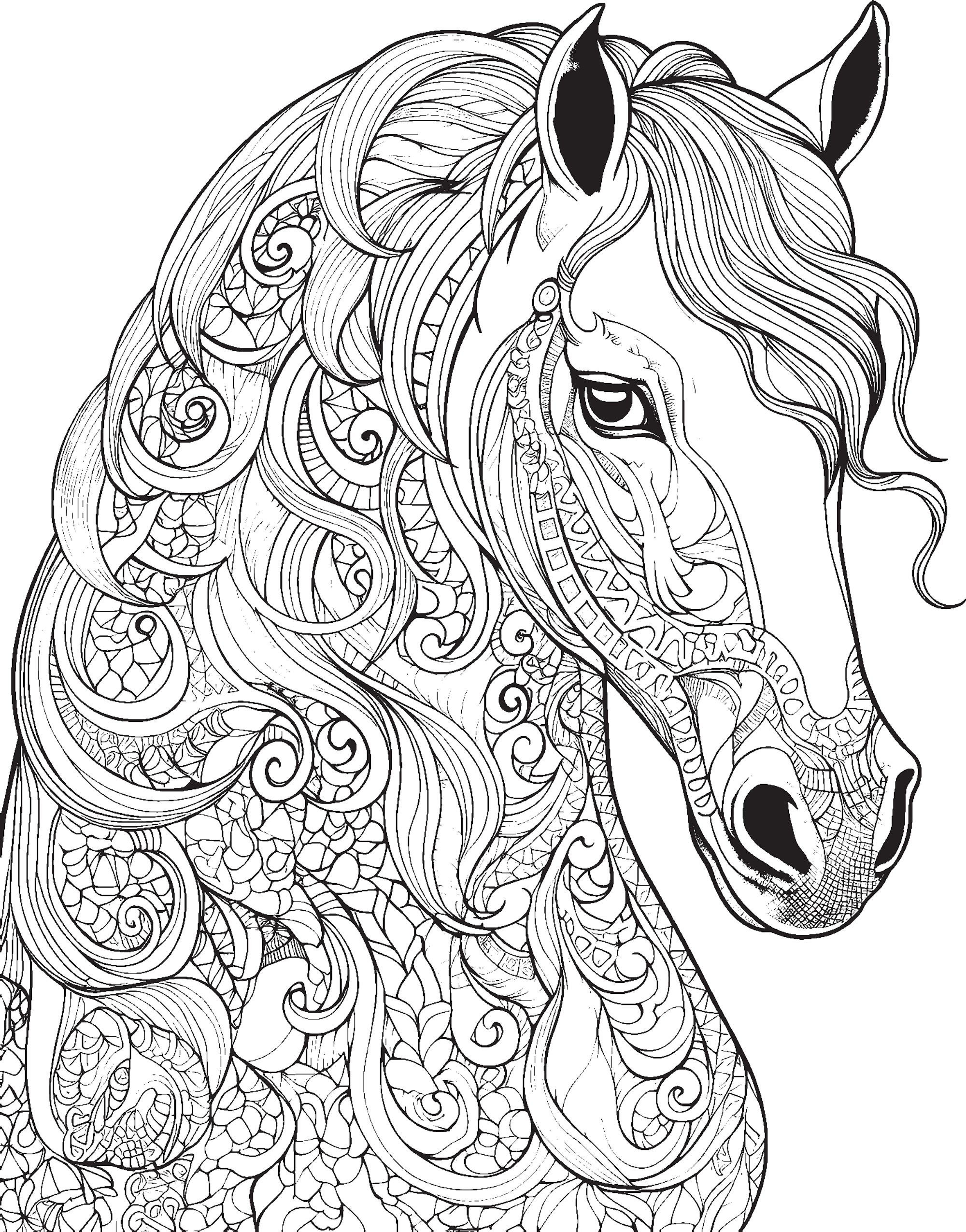
🌀 Horse Mandala Coloring Pages
The collection finishes with two detailed horse mandala designs.
These are especially good for older kids, teens, and adults who enjoy smaller patterns and more complicated coloring.
Instead of treating the horse as one solid color, divide the design into decorative sections.
Try:
- Jewel tones
- Pastels
- Rainbow colors
- Warm autumn colors
- Black, white, and gold
A limited palette often helps intricate artwork feel more cohesive.
💎 Jewel-Tone Horse Mandala
Try:
- Ruby red
- Sapphire blue
- Emerald green
- Amethyst purple
- Gold
Repeat these colors across the patterns.
Keep the horse itself relatively dark or neutral if you want the decorative details to stand out.
🌈 Rainbow Horse Mandala
Begin in the center or around the horse’s face.
Work outward using:
Red → Orange → Yellow → Green → Blue → Purple
Repeat the sequence across the surrounding patterns.
You can also make the horse’s mane rainbow-colored while keeping the rest of the design in softer shades.
🌸 Floral Horse Mandala
If the patterns remind you of petals or leaves, use a garden palette.
Try:
- Pink
- Lavender
- Yellow
- Green
- Turquoise
Add deeper versions of the same colors to tiny details.
The horse can be cream, gray, or pale brown so it remains easy to distinguish from the decorative background.
🌌 Galaxy Horse Mandala
Use:
- Navy
- Purple
- Magenta
- Turquoise
- Silver
Add tiny pale stars in open areas.
Give the horse a dark blue-black coat with violet highlights.
The finished design can look like an imaginary celestial horse.
🎯 Three-Color Mandala Challenge
Choose only three colors.
For example:
Turquoise + Purple + Pink
or
Brown + Gold + Cream
or
Black + Red + Silver
Repeat those shades throughout the entire pattern.
Using fewer colors can make a complicated page easier to plan.
For more detailed pattern work, explore our Mandala Coloring Pages.
🖍️ Horse Coloring Pages for Younger Kids
The kawaii horse and horse-and-baby designs are particularly inviting for younger children.
Keep the activity simple.
Ask:
“What color is your horse?”
“Can you find the tail?”
“How many legs does it have?”
“Where is the baby horse?”
Young children do not need perfect control of the crayon or realistic coat colors.
A pink horse with a blue mane is absolutely welcome.
🎒 Horse Coloring Pages for Older Kids
Older children can experiment with:
- Realistic coat colors
- Mane shading
- White markings
- Barn backgrounds
- Movement
- Horse anatomy
- Detailed mandalas
- Story writing
They can also choose one real horse coat color to research and try to reproduce it more accurately.
🏫 Horse Coloring Pages for the Classroom
Horse printables can complement lessons and activities involving:
- Farm animals
- Mammals
- Animal families
- Domestic animals
- Equine vocabulary
- Measurement
- Counting
- Alphabet practice
- Animal behavior
- Art
- Creative writing
A horse page can be the beginning of a small research project rather than just the end of an art activity.
For more learning-focused pages, explore our Educational Coloring Pages & Activities.
🌾 Create a Farm Animal Book
Combine horses with other farm-animal coloring pages.
Add:
- Cows
- Sheep
- Ducks
- Pigs
- Goats
Write the animal’s name above each finished picture.
Younger children can add the animal sound.
Older children can add one simple fact.
Create a cover:
My Farm Animal Coloring Book
🌎 Make an Animal Classification Book
Write:
Horse — Mammal
beneath the page.
Add other animal groups from the site.
For example:
Duck — Bird
Turtle — Reptile
Frog — Amphibian
Shark — Fish
Staple the pages together.
The result becomes a colorful introduction to animal classification.
🦄 Horse or Unicorn?
Compare a real horse with an imaginary unicorn.
Horse
Real animal
Member of the horse family
No horn
Unicorn
Legendary creature
Usually depicted as horse-like
Traditionally has one horn
Color one realistic horse and one completely fantastical unicorn.
Then decide what colors each should have.
Continue the magical side of the activity with our Unicorn Coloring Pages to Print.
🦓 Horse or Zebra?
A horse and zebra can look quite similar in body shape, but their coats immediately set them apart.
Color the horse in brown, black, gold, or gray.
Then color a zebra with its characteristic stripe pattern.
Afterward, invent an animal halfway between the two.
Maybe it has a chestnut body with black stripes only on its legs.
🐄 Horse or Cow?
Horses and cattle are both familiar large farm animals, but they have many visible differences.
Compare:
- Hooves
- Body shape
- Tail
- Head
- Neck
- Movement
Color one of each.
Then draw them sharing a pasture.
This can be a simple observation activity for younger students.
🎨 Horse Color Palette Ideas
Not sure where to start?
Classic Bay
Warm brown, black, cream
Chestnut
Rust, copper, reddish brown
Golden Horse
Honey, cream, caramel
Gray Horse
Silver, charcoal, white
Pastel Pony
Pink, lavender, mint, baby blue
Rainbow Horse
Red, orange, yellow, green, blue, purple
Galaxy Horse
Navy, violet, turquoise, silver
Autumn Horse
Chestnut, gold, burgundy, olive
Choose one and use it across the entire page.
🌅 Sunset Horse Palette
Try:
- Golden yellow
- Orange
- Coral
- Pink
- Purple
Keep the horse dark brown or black.
Place the warm sunset behind it.
A dark silhouette against a colorful sky can make a very simple horse illustration look dramatic.
🌲 Forest Horse Palette
Use:
- Sage
- Forest green
- Brown
- Cream
- Gold
Color the horse warm brown.
Add green trees and golden sunlight.
This palette works beautifully with barn, trail, and meadow scenes.
❄️ Winter Horse Palette
Try:
- White
- Pale blue
- Gray
- Navy
- Lavender
Use a dark horse for strong contrast or create a pale gray horse that almost blends into the snowy landscape.
Add a red or blue blanket only if it fits your imaginary scene.
🖍️ Coloring a Horse’s Mane
Follow the direction of the hair with longer pencil strokes.
Start lightly.
Then add deeper lines between sections.
For a brown mane, combine:
- Chestnut
- Dark brown
- Black
For a golden mane:
- Cream
- Pale yellow
- Gold
For fantasy hair, blend purple into pink or blue into turquoise.
🐎 Coloring a Horse’s Tail
Treat the tail as many strands rather than one solid shape.
Leave narrow lighter areas between darker strokes.
Use the same colors as the mane if you want a coordinated natural look.
Or give your fantasy horse a contrasting tail.
Perhaps it has a brown body, blue mane, and purple tail.
✨ Add Shine to the Coat
Choose where your imaginary light is coming from.
Keep one side of the horse lighter.
Darken the opposite side slightly.
Add small pale highlights along:
- Neck
- Shoulder
- Back
- Hindquarters
Even simple light-and-dark variation can make the body feel less flat.
🎨 Add Texture Without Drawing Every Hair
You do not have to cover the horse with hundreds of individual strokes.
Use a smooth base layer.
Then add a handful of short strokes near:
- Neck
- Chest
- Legs
- Mane
A little texture is enough to suggest fur.
🖍️ Choosing the Best Supplies
Crayons are great for the larger kawaii and cartoon designs.
Colored pencils work especially well for realistic coats, mane texture, and detailed horse mandalas.
Fine-tip markers can be useful on smaller decorative areas.
If using markers, place scrap paper underneath the printable in case ink bleeds through.
You can combine materials too.
Try pencil shading on the horse and brighter markers in the barn or floral background.
✂️ Horse Coloring Page Crafts
Finished horse pages can become:
- Stable signs
- Homemade cards
- Horse posters
- Farm-animal books
- Storybook illustrations
- Bookmarks
- Classroom displays
- Notebook covers
- Animal fact cards
Children can also cut out a finished horse with appropriate supervision and place it onto a completely new background.
One horse can visit the mountains today and the beach tomorrow.
🏷️ Make a Stable Nameplate
Write your horse’s name in large letters.
Add a border of:
- Horseshoes
- Stars
- Flowers
- Hoofprints
Glue or draw the horse underneath.
Maybe the sign says:
MIDNIGHT
or
DAISY’S STALL
A simple coloring page can become personalized bedroom or classroom artwork.
📚 Make a Horse Bookmark
Draw a small horse head on a strip of cardstock.
Add:
Gallop Into a Good Book
or
Hold Your Place
Decorate with horseshoes or little stars.
Use the bookmark in your favorite horse story.
💌 Make a Horse-Lover Greeting Card
Fold cardstock in half.
Attach or redraw part of the finished horse picture.
Add:
Have a Neigh-mazing Day!
You’re Unbridled Fun!
or simply:
Thinking of You
A kawaii horse works especially well on a cheerful homemade card.
🖨️ How to Use Your Horse Coloring Pages
Choose your favorite horse design and print it at home, school, or for a quiet creative afternoon.
Regular printer paper works well for crayons and colored pencils. Heavier paper can be useful when using markers, paint, glue, or other craft supplies.
Then decide what kind of horse you want to create.
Maybe it will be a realistic chestnut standing beside a red barn.
Perhaps a golden mare and foal graze in a flower-filled meadow.
A black horse might gallop beneath an orange sunset.
Or the kawaii horse could have a rainbow mane, purple hooves, and stars across its coat.
The mandala designs can become jewel-toned, floral, or galaxy-inspired works of art.
There is plenty of room here for both learning about real horses and inventing horses that could exist only on paper.
🐎 Gallop Into a World of Color
From cute kawaii horses and a sweet mare-and-foal scene to classic horse illustrations, peaceful barns, running horses, and intricate horse mandalas, this collection brings together eight different ways to celebrate these remarkable animals.
Experiment with bay, chestnut, black, gray, and golden coats. Create flowing rainbow manes, build a stable, learn the word foal, compare horses with zebras and unicorns, practice counting and measurement, talk about safe horse handling, write an equine adventure, or spend extra time coloring one of the detailed mandala designs.
Whether your ideal horse is a realistic chestnut grazing in a green pasture or a lavender pony named Moonbeam, the most important choice is simply where to begin.
Pick your favorite printable, gather your colors, and saddle up for some creative fun.
🔗 Related Articles
- Animal Coloring Pages
- Coloring Pages of Cute Animals
- Cute Coloring Pages
- Coloring Pages of Cows
- Coloring Pages of Zebras
- Coloring Pages of Unicorns
- Unicorn Coloring Pages to Print
- Mandala Coloring Pages
- Nature Coloring Pages
- Educational Coloring Pages & Activities
📚 Sources
- Smithsonian’s National Zoo — Przewalski’s Horse
- Smithsonian Tropical Research Institute — Domestic Horse
- Penn State Extension — Safe Horse Handling
- Penn State Extension — Recognizing a Healthy Horse
- Penn State Extension — Characterizing the Exercise Workloads and Energy Needs of Horses
- University of Minnesota Extension — Horse Health
- University of Minnesota Extension — Why Do Foals Need Colostrum?
🖍️Shop Horse Coloring Books –>