Grab the crayons and get ready for some tail-wagging creativity with our collection of dog coloring pages, featuring adorable puppies, cozy nighttime scenes, playful park adventures, a Shiba Inu, a sled-loving husky, and a detailed dog mandala.
Dogs make wonderful coloring subjects because they come in an incredible variety of sizes, shapes, coat lengths, colors, markings, and personalities. You can color a dog to resemble your own pet, experiment with recognizable breed colors, create a fluffy black-and-white husky, or abandon realism completely and invent a lavender puppy with a rainbow tail.
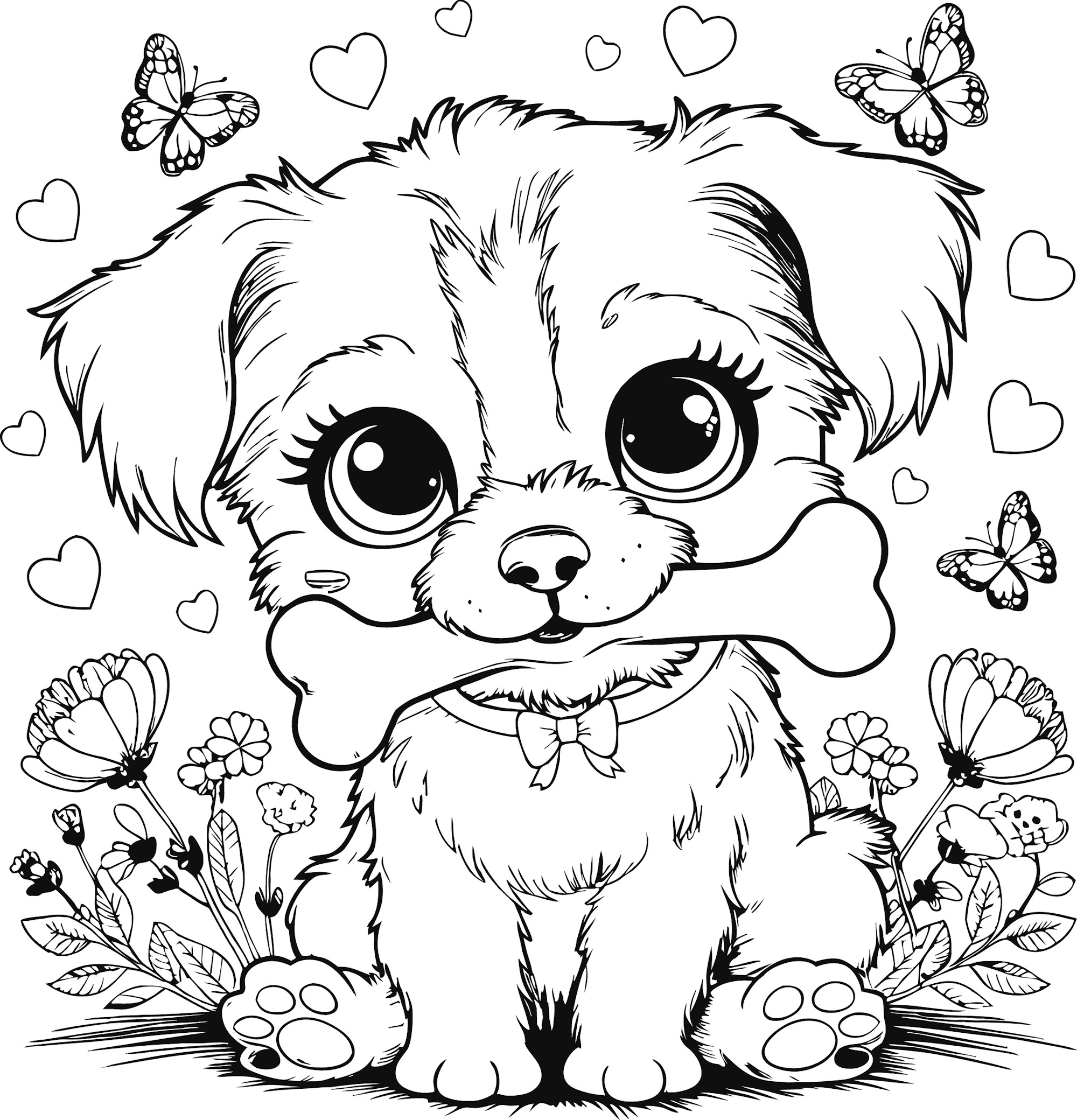
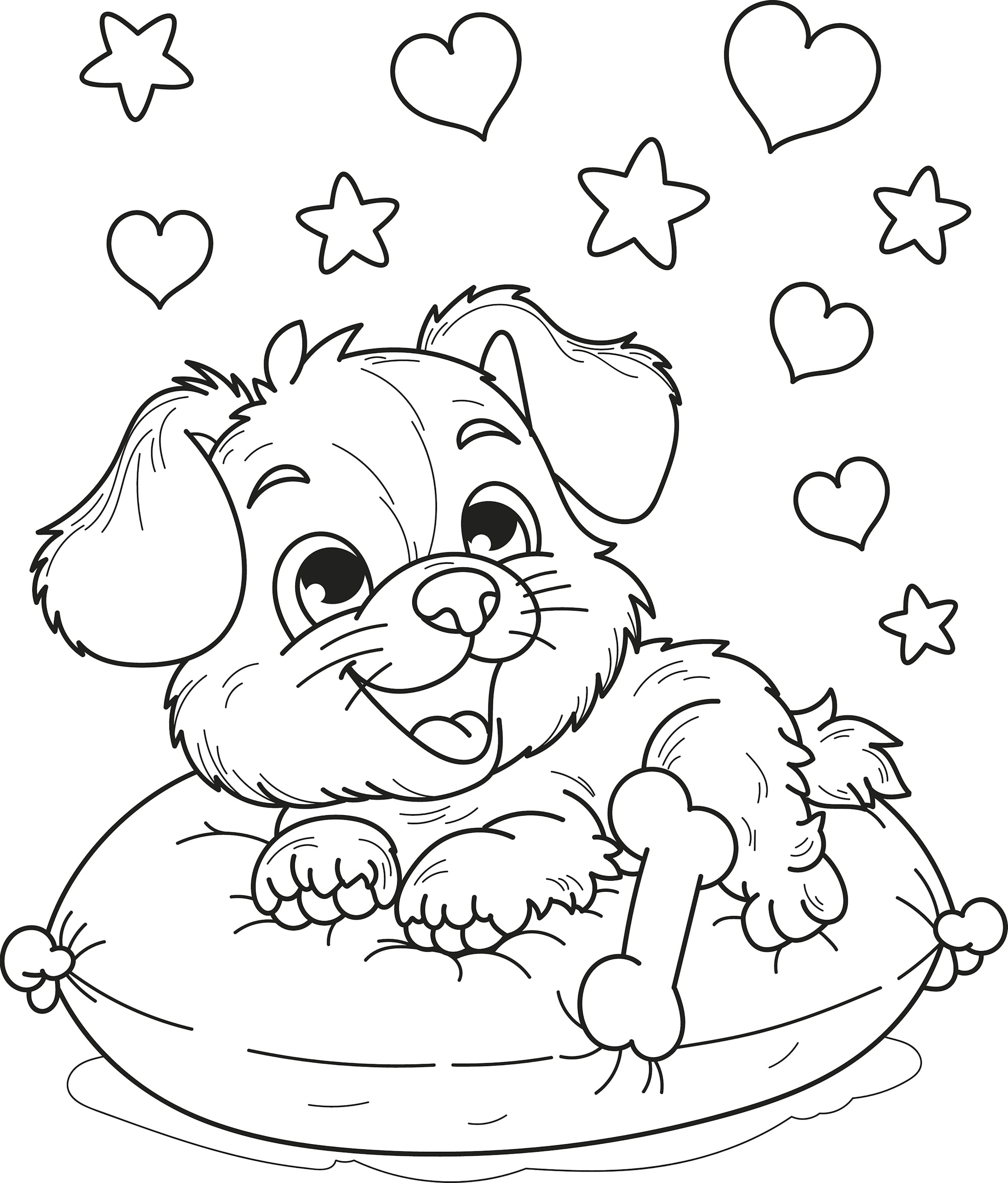
Our printable collection includes six different dog designs. There is a simple cute dog, a smiling pup curled up comfortably on a pillow beneath the night sky, a whimsical Shiba Inu enjoying strawberry milk, a husky beside a sleigh, a happy dog carrying a bone through a butterfly-filled park, and an intricate circular design filled with cute dogs for anyone who enjoys more detailed coloring.
Choose the dog that makes you smile the most, gather your crayons, colored pencils, or markers, and start creating.
🐶 Explore Our Dog Coloring Pages
The six designs in this collection offer a nice mix of simple, cute, seasonal, breed-inspired, outdoor, and detailed artwork.
You can color:
- A cute dog
- A smiling little dog resting on a pillow at night
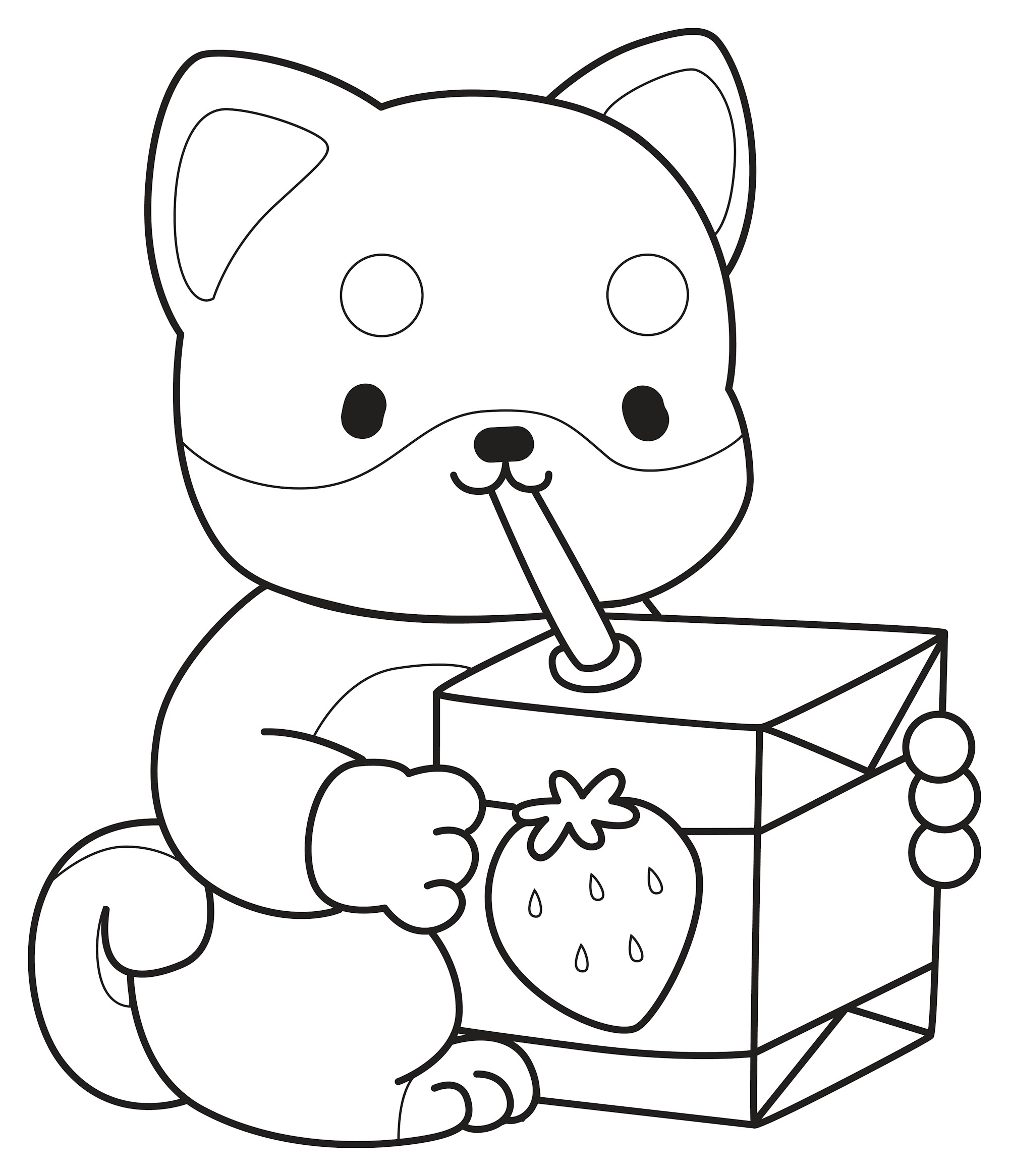
- A Shiba Inu with strawberry milk
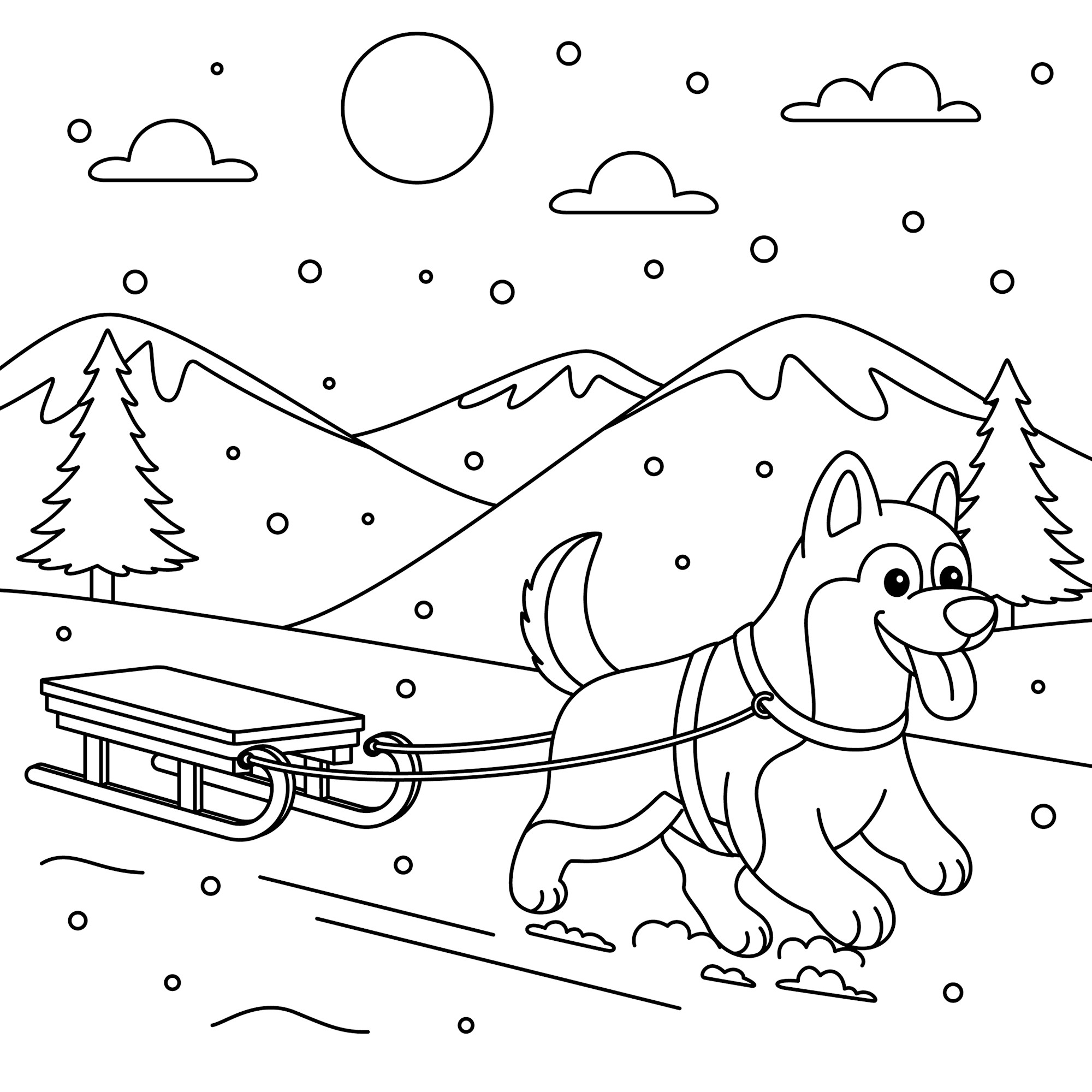
- A husky with a sleigh
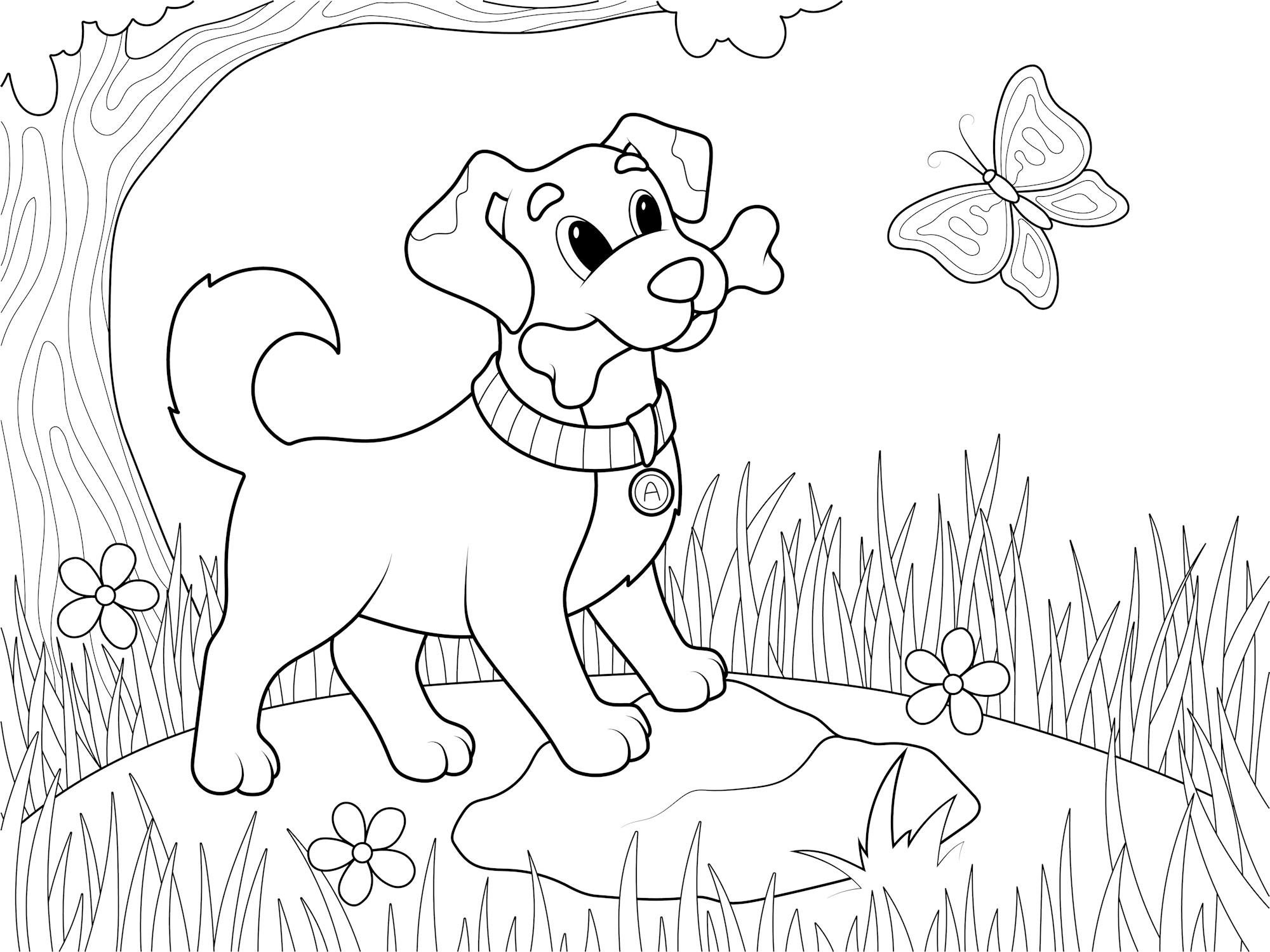
- A dog carrying a bone in a park with butterflies
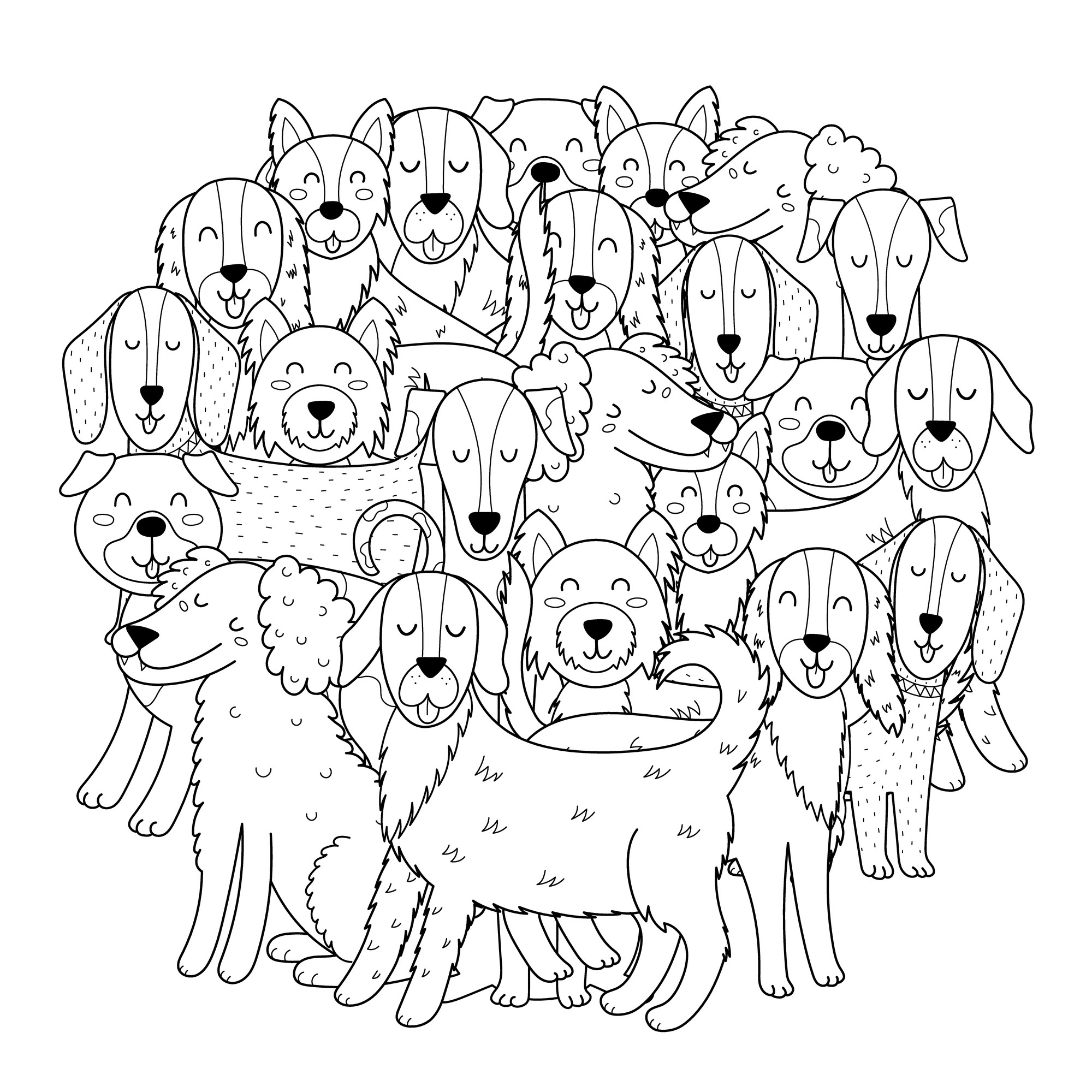
- A circular dog mandala
Some pages are especially approachable for younger children, while the mandala-style design has many smaller sections for older kids and adults who enjoy intricate patterns.
The Shiba Inu and husky pages are also fun opportunities to learn a little about two recognizable dog breeds while experimenting with their distinctive coats.
For an even larger tour through the animal kingdom, explore our Animal Coloring Pages.
🐕 Cute Dog Coloring Page
The simplest cute dog coloring page is a great place to begin.
Choose a coat color such as:
- Golden
- Brown
- Black
- White
- Cream
- Gray
- Red
- Black and tan
Then decide whether the dog has any markings.
Add white paws, a dark muzzle, a patch around one eye, spots, or a white chest.
There is no need to copy a particular breed. You can simply create the dog you would most like to see.
🌈 Create a Rainbow Puppy
A coloring-page dog does not have to look anything like a real pet.
Try:
Body: Lavender
Ears: Pink
Paws: Turquoise
Tail: Rainbow
Collar: Yellow
Add stars, hearts, flowers, or tiny dots across the coat.
Give your fantasy breed a name such as:
Rainbow Retriever
Sparkle Pup
or
Moonlight Terrier.
🐾 Give Your Dog Unique Markings
Coat markings can make even two dogs with the same base color look completely different.
Try adding:
- White blaze on the face
- White chest
- Dark ears
- Spotted legs
- Patch over one eye
- White-tipped tail
- Freckles on the muzzle
You can print the page twice and create two completely different dogs using the same line art.
🎀 Design a Dog Collar
Add a colorful collar around the dog’s neck.
Try:
- Red
- Turquoise
- Purple
- Green
- Rainbow stripes
Then add a small tag.
Write the dog’s imaginary name inside.
Maybe the dog is:
Buddy
Luna
Max
Daisy
Pepper
Scout
or anything else you like.
🏷️ Design a Dog Tag
Draw a larger dog tag on another sheet.
Choose a shape:
- Circle
- Heart
- Bone
- Star
Write the dog’s name in the middle.
Decorate the border with paw prints or tiny hearts.
Then color the tag to match the collar.
🏠 Build a Home for Your Coloring-Page Dog
Draw everything your imaginary dog needs.
Add:
- Cozy bed
- Water bowl
- Food bowl
- Toys
- Blanket
- Safe resting space
Choose a color scheme for the room.
Maybe the dog bed is turquoise and the blanket has yellow stars.
The simple dog coloring page can grow into a complete pet-themed scene.
🌙 Smiling Dog on a Pillow at Night
The smiling little dog resting on a pillow beneath the night sky is one of the coziest designs in the collection.
Start with the dog’s coat and then build the nighttime palette around it.
Try:
- Navy
- Indigo
- Lavender
- Pale blue
- Silver-gray
Keep the pillow soft and inviting with cream, pink, blue, or purple.
Then make the stars pale yellow or white.
The contrast between a warm sleeping dog and a dark star-filled sky can make this page especially charming.
😴 Create the Coziest Dog Bed
Add more details around the pillow.
Draw:
- Blanket
- Stuffed toy
- Moon pillow
- Small rug
- Favorite ball
Decorate the blanket with paw prints, stars, or bones.
Maybe the dog has an entire bedtime routine.
🌌 Create a Starry Night
Fill the background with:
- Stars
- Crescent moon
- Clouds
- Constellations
Use deep navy for the sky and add lighter blue around the moon.
Tiny pale-yellow stars can make the scene feel warmer.
For a fantasy version, create purple, pink, and turquoise stars.
🌙 Design a Moonlight Palette
Try:
Sky: Navy
Clouds: Blue-gray
Moon: Cream
Pillow: Lavender
Dog: Golden brown
This gives you both warm and cool colors.
The golden dog will stand out against the dark nighttime background.
⭐ Count the Stars
Turn the page into a simple counting activity.
Draw:
1 moon
2 clouds
3 large stars
4 small stars
Count everything together.
Older children can add more stars and write the total underneath.
💤 What Is the Dog Dreaming About?
Add a dream bubble above the sleeping pup.
Maybe the dog dreams about:
- Chasing butterflies
- Running on a beach
- Playing with a ball
- Finding a giant bone
- Visiting a park
- Riding in a spaceship
Draw the dream inside the bubble.
Now the peaceful nighttime picture has a second little story inside it.
📖 Write a Bedtime Dog Story
Start with:
Buddy curled up on his favorite pillow and closed his eyes. That was when the adventure began…
Where does the dream take him?
Maybe he travels to the moon.
Perhaps all the stars turn into tennis balls.
Young children can tell the story aloud while older kids can write it underneath the picture.
🦊 Shiba Inu Coloring Page
One of the collection’s most distinctive designs features a Shiba Inu.
The Shiba Inu originated in Japan and is recognizable for its compact build, pointed ears, curled tail, and expressive face.
Natural Shiba coat colors can inspire several palettes.
Try:
Red Shiba
Red-orange, cream, tan
Black and Tan Shiba
Black, tan, cream
Sesame-Inspired Shiba
Red-brown, cream, dark-tipped shading
Cream Shiba
Cream, pale beige, white
The lighter areas around the muzzle, chest, cheeks, and underside can provide beautiful contrast.
🧡 Color a Classic Red Shiba Inu
Begin with warm red-orange.
Add:
- Rust
- Golden brown
- Cream
- Pale tan
Keep parts of the muzzle, cheeks, chest, and underside lighter.
Use black or very dark brown for the nose and eyes.
The result should have plenty of contrast rather than becoming one flat orange shape.
🖤 Create a Black-and-Tan Shiba
Use black across most of the coat.
Add warm tan around areas such as:
- Cheeks
- Legs
- Face
Keep lighter cream markings where appropriate.
Use charcoal rather than pure black everywhere so the line details remain visible.
🍂 Create an Autumn Shiba Palette
The Shiba’s warm coloring works beautifully with fall scenery.
Add:
- Orange leaves
- Golden grass
- Red trees
- Brown branches
Color the dog rust, cream, and dark brown.
The animal and landscape can share the same cozy autumn palette.
🇯🇵 Shiba Inu and Japan
The Shiba Inu is a Japanese dog breed.
Turn the coloring page into a simple geography activity by finding Japan on a map.
Then add a small Japanese flag beside the dog.
Older children could label:
Japan
Asia
Pacific Ocean
The activity connects a recognizable dog breed with its geographic origins.
🥛 About the Strawberry Milk Picture
The Shiba Inu design shows the dog with strawberry milk, which is a cute fantasy illustration.
It is better to treat that as part of the artwork rather than a suggestion for feeding a real dog.
Human drinks and foods are not automatically appropriate for pets, and dairy products can cause digestive upset in some dogs.
For the coloring page, however, that strawberry drink can become as elaborate as you like.
Make it pink with:
- Strawberries
- Heart-shaped straw
- Whipped-cream doodles
- Paw-print cup
🍓 Design the Strawberry Drink
Color:
Drink: Pale pink
Strawberries: Red
Leaves: Green
Straw: Pink-and-white stripes
Then decorate the cup.
Add:
- Hearts
- Paw prints
- Shiba face
- Stars
Maybe the drink comes from an imaginary café that serves cartoon dogs.
☕ Create a Shiba Café
Draw a whole café around the dog.
Add:
- Table
- Chairs
- Menu
- Window
- Plants
Give it a name such as:
Shiba Sips
Paws Café
or
The Happy Inu.
The drinks can be completely imaginary and designed only for your coloring-page characters.
🐕❄️ Cute Husky and Sleigh Coloring Page
The husky and sleigh page brings winter adventure into the collection.
Siberian Huskies are famous for their thick coats and historical role as sled dogs.
Natural coat colors can include combinations such as:
- Black and white
- Gray and white
- Red and white
- Sable and white
- Brown and white
- White
For the coloring page, choose whichever combination works best with your snowy scene.
🖤🤍 Color a Black-and-White Husky
Begin with white or very pale gray.
Add black around the back, head, and body markings.
Use charcoal to soften some areas.
Keep several areas white so the classic contrasting coat pattern remains clear.
Add bright blue or brown eyes.
🩶 Color a Gray-and-White Husky
Try:
- Silver-gray
- Medium gray
- Charcoal
- White
Use deeper gray along the back and outer coat.
Leave the face, chest, legs, and underside lighter.
Then color the snow pale blue to keep the white fur visible.
🤎 Create a Red-and-White Husky
Not every husky needs to be black and white.
Try:
- Copper
- Reddish brown
- Rust
- Cream
- White
A warm-colored husky looks especially striking against icy blue snow.
👁️ Color the Husky’s Eyes
Huskies are famous for striking eyes.
For your coloring page, try:
- Blue
- Brown
- Amber
Or create a fantasy dog with one blue eye and one purple eye.
Keep the pupil dark and leave a tiny white highlight.
🛷 Color the Sleigh
Do not forget the sleigh itself.
Try:
Classic
Red and gold
Winter
Blue and silver
Christmas
Red, green, gold
Fantasy
Purple, turquoise, pink
Add stars, snowflakes, stripes, or paw prints along the sides.
❄️ Create a Snowy Landscape
Build a complete winter world.
Draw:
- Snow-covered trees
- Mountains
- Snowflakes
- Frozen lake
- Cabin
Use white, blue, gray, lavender, and navy.
The husky’s stronger coat colors will stand out against the pale snow.
🌌 Add Northern Lights
Color the sky deep navy.
Then add sweeping bands of:
- Green
- Turquoise
- Purple
- Pink
Keep the snow mostly white.
A colorful aurora-like sky can turn the husky page into a dramatic nighttime picture.
🛷 Design a Sled-Dog Team
Draw several more dogs in front of the sleigh.
Give every dog a different coat.
Maybe you have:
- Black and white
- Gray and white
- Red and white
- Brown and white
Add harness lines connecting the team.
The single-dog coloring page has now become a complete winter expedition.
🗺️ Where Is the Husky Going?
Imagine the sled is beginning a journey.
Maybe it is heading toward:
- Mountain cabin
- Snowy village
- Frozen lake
- Winter forest
- North Pole fantasy world
Draw the destination in the distance.
Then create a map showing the route.
🌨️ Create a Winter Adventure Story
Start with:
The snow had been falling all night when the husky heard the sleigh bells…
What happens next?
Perhaps the dog must deliver something.
Maybe a snowstorm changes the route.
Perhaps another animal joins the journey.
Use the coloring page as the story illustration.
🦴 Dog With a Bone in the Park
Another page shows a happy dog carrying a bone through a nature-filled park with butterflies.
This design is perfect for bright spring or summer colors.
Start with the dog.
Then add:
- Green grass
- Blue sky
- Flowers
- Butterflies
- Trees
The bone can remain cream or pale tan.
Because the background contains nature elements, this page also connects nicely with our Nature Coloring Pages.
🦋 Color the Butterflies
Make every butterfly different.
Try:
Butterfly 1: Yellow and orange
Butterfly 2: Blue and purple
Butterfly 3: Pink and turquoise
Add stripes, dots, or little eye-like spots.
Bright butterflies can contrast beautifully with a more naturally colored dog.
🌸 Create a Dog-Friendly Park Scene
Expand the park with:
- Grass
- Flowers
- Shade trees
- Walking path
- Bench
- Water fountain
Add a blue sky and fluffy clouds.
Maybe another dog is approaching in the distance.
🐾 Draw a Walking Trail
Add a winding trail across the page.
Place paw prints along it.
Maybe the dog’s walk begins at home and ends at the park.
Draw signs such as:
PARK
POND
HOME
Children can trace the route with a finger.
🦴 A Note About Real Bones
A cartoon dog carrying a bone is a familiar image, but real pet feeding is more complicated.
Not every bone or human food is safe for dogs, and some types can pose choking, injury, or digestive risks.
For real pets, adults should follow veterinary guidance and choose appropriate dog foods and chews.
On the coloring page, the oversized cartoon bone can simply remain part of the story.
🎾 Add Dog Toys Instead
Draw some safe-looking cartoon toys around the park.
Add:
- Ball
- Frisbee
- Rope toy
- Plush toy
Color them brightly.
You could even experiment with blue and yellow, colors dogs are particularly able to distinguish.
Dogs do not see the world only in black and white, although their color vision differs from ours.
👀 Can Dogs See Color?
Yes. Dogs do not see only black and white.
Their color vision differs from human color vision, and blues and yellows are among the colors they can distinguish particularly well.
That gives you a fun coloring challenge.
Create one park scene using colors humans might choose.
Then create another using lots of:
- Blue
- Yellow
- Gray-brown
Imagine how differently the same scene might appear to a dog.
🎾 Design a Blue-and-Yellow Toy Box
Draw:
- Blue ball
- Yellow frisbee
- Blue-and-yellow rope toy
Place them beside the dog.
Then create another group of toys using your own favorite colors.
Which box is brighter to you?
🐶 Cute Dog Mandala Coloring Page
The final design features cute dogs arranged in a circular mandala-style pattern.
This page has much more detail than the simpler dog scenes, making it especially well suited to older kids, teens, and adults.
Instead of coloring every dog identically, give each one its own coat.
Try:
- Golden
- Gray
- Black
- White
- Brown
- Red
- Spotted
Then use a repeating color palette throughout the decorative elements.
For more intricate designs, explore our Mandala Coloring Pages.
🌈 Create a Rainbow Dog Mandala
Give each dog a different rainbow theme.
Maybe:
Dog 1: Red
Dog 2: Orange
Dog 3: Yellow
Dog 4: Green
Dog 5: Blue
Dog 6: Purple
Repeat the rainbow throughout the circular design.
🎯 Try a Three-Color Dog Mandala
Choose only three colors.
Try:
Brown + Turquoise + Cream
or
Pink + Purple + Blue
or
Black + Gold + Red
Repeat those colors throughout the entire design.
A limited palette can make an intricate page feel more organized.
🐾 Make Every Dog Different
Treat the mandala as a mini dog-show collection.
Create:
- Black dog
- Golden dog
- Spotted dog
- Brown dog
- Gray dog
- Fantasy rainbow dog
Then give every one a name.
The circular design becomes a whole neighborhood of tiny dog characters.
🌸 Floral Dog Mandala
If the surrounding patterns remind you of flowers, try a botanical palette.
Use:
- Pink
- Lavender
- Yellow
- Green
- Turquoise
Keep the dogs in more natural browns, golds, grays, and creams.
This helps the animals stand out against the colorful ornamental background.
🌌 Galaxy Dog Mandala
Use:
- Navy
- Indigo
- Purple
- Turquoise
- Silver
Add tiny stars in open spaces.
Give some dogs deep blue-gray coats.
The result can become an imaginary cosmic pack.
🐕 What Colors Can Dogs Be?
Domestic dogs come in a huge variety of coat colors and patterns.
Depending on breed and genetics, dogs may be:
- Black
- White
- Brown
- Red
- Cream
- Golden
- Gray or “blue”
- Tan
They can also have combinations and patterns such as:
- Black and tan
- Bicolor
- Tricolor
- Brindle
- Spots
- Sable
- Merle
- Masks
- White markings
Coloring pages are a great place to notice that “brown dog” hardly begins to describe the variety of real canine coats.
🖤 Color a Black Dog
Begin with charcoal rather than pure black.
Use black in the deepest shadows.
Leave lighter gray around:
- Face
- Chest
- Shoulders
- Legs
This helps preserve the line art.
Add brown, blue, or golden eyes for contrast.
🤍 Color a White Dog
Leave most of the page white.
Add extremely pale:
- Gray
- Blue
- Lavender
- Cream
in shaded areas.
A white dog does not need to become a blank dog.
Subtle shadows give the coat shape.
🤎 Color a Brown Dog
Use several browns.
Try:
- Tan
- Caramel
- Chestnut
- Chocolate
Keep some areas lighter around the muzzle or chest.
Add darker shading around the legs and underside.
💛 Color a Golden Dog
Try:
- Cream
- Pale gold
- Honey
- Caramel
Use longer pencil strokes on fluffy sections of coat.
For a more detailed golden dog, continue with our Golden Retriever Coloring Page.
⚫🤎 Create a Black-and-Tan Dog
Use black over most of the coat.
Add tan or caramel markings around:
- Eyebrows
- Muzzle
- Chest
- Legs
Keep the contrast sharp.
This type of palette can look especially striking against a pale blue or green background.
🎨 Create a Spotted Dog
Begin with a pale body.
Add spots in:
- Black
- Brown
- Gray
- Red
Make them irregular rather than perfectly round.
Or invent a fantasy version with:
- Pink hearts
- Purple stars
- Blue dots
🌈 Create a Fantasy Dog Breed
Choose an impossible palette.
Try:
Galaxy Dog
Navy, violet, turquoise, silver
Cotton Candy Pup
Pink, baby blue, lavender
Forest Dog
Emerald, teal, gold
Sunset Pup
Orange, coral, pink, purple
Rainbow Dog
Every color
Then invent a breed name and write it beneath the picture.
🐕 Dog or Puppy?
A puppy is a young dog.
Puppies grow and change considerably during their first year, although the timing of maturity varies greatly with size and breed.
For a simple children’s activity, draw:
Small puppy → Growing dog → Adult dog
Give all three matching markings.
Maybe every stage has the same white patch over one eye.
🐾 Dog Body Parts
Use one of the printables to find:
- Ears
- Eyes
- Nose
- Muzzle
- Paws
- Legs
- Tail
- Coat
Older children can also learn words such as:
- Withers
- Hock
- Forequarters
- Hindquarters
Keep the vocabulary appropriate to the child’s age.
For preschoolers, ears, nose, paws, and tail are plenty.
👃 Dogs Have Powerful Noses
Dogs are famous for their sense of smell.
Their noses help them gather enormous amounts of information about the environment.
Turn the park page into a scent story.
What has the dog smelled?
Maybe:
- Flower
- Other dog
- Picnic
- Squirrel
- Treat
Draw a dotted path leading from the dog’s nose toward the mystery scent.
👂 Look at the Dog’s Ears
Dog ears come in many shapes.
Some stand upright.
Others fold or hang downward.
Compare the pointed ears of the Shiba Inu and husky with the ears on the other dogs.
Then invent a dog with enormous floppy ears.
🐕 Look at Different Dog Tails
Dog tails also vary considerably.
Some are:
- Long
- Curved
- Feathered
- Bushy
- Tightly curled
The Shiba Inu’s curled tail is especially recognizable.
Compare it with the husky or generic dog designs.
Draw several tail shapes on another sheet.
🐾 How Dogs Communicate
Dogs communicate through combinations of:
- Body posture
- Facial expression
- Ear position
- Tail position and movement
- Sounds
- Movement
A wagging tail alone does not always mean the same thing in every situation.
When interacting with a real dog, it is important to consider the whole animal and respect signs that the dog wants space.
👧 Be Respectful Around Dogs
Even friendly dogs deserve personal space.
Children should learn to interact with dogs under appropriate adult supervision and follow the owner’s directions.
Broad safety habits include:
- Ask before petting an unfamiliar dog.
- Stay calm rather than rushing toward a dog.
- Avoid pulling ears, fur, or tails.
- Do not disturb a dog that is eating or sleeping.
- Give the dog room to move away.
- Listen to the supervising adult.
Coloring a friendly cartoon dog can be an easy opportunity to introduce respectful behavior around real animals.
✋ Ask Before Petting
Create a little speech bubble:
“May I pet your dog?”
Draw a child standing calmly near a dog and its owner.
The owner can answer before the child approaches.
This provides a simple social-safety activity to accompany the coloring page.
🏠 What Does a Pet Dog Need?
A real dog depends on people for care.
Basic needs include things such as:
- Appropriate food
- Fresh water
- Safe shelter
- Rest
- Exercise appropriate to the dog
- Veterinary care
- Identification
- Social interaction and enrichment
Turn the coloring page into a poster called:
What Dogs Need
Draw a small picture representing each item.
💧 Add Food and Water Bowls
Draw two bowls.
Write:
FOOD
and
WATER
Decorate them with paw prints.
Color the water pale blue.
The food can remain a simple cartoon representation rather than trying to show a particular diet.
Actual feeding needs vary by dog and should be discussed with a veterinarian when necessary.
🧸 Create a Dog Toy Box
Draw a large box.
Fill it with:
- Ball
- Rope toy
- Plush toy
- Puzzle toy
Write:
DOG TOYS
across the side.
Add paw-print decorations.
Then count how many toys are inside.
💤 Dogs Need a Place to Rest
The nighttime puppy page already shows one comfortable resting place.
Create another.
Draw:
- Dog bed
- Blanket
- Pillow
Choose cozy colors.
Maybe the bed matches the dog’s collar.
Give the resting area a little sign:
NAP ZONE
🎾 Dogs Need Appropriate Activity
Dogs vary enormously in how much physical activity and mental stimulation they need.
Age, breed, health, and individual temperament all matter.
For a coloring activity, simply draw several ways a dog might enjoy an active day:
- Walk
- Appropriate game of fetch
- Sniffing outside
- Training game
- Puzzle toy
Real exercise plans should suit the individual dog.
🩺 Visiting the Veterinarian
Dogs benefit from veterinary care throughout their lives.
Turn your coloring-page dog into a pretend veterinary patient.
Draw:
- Stethoscope
- Examination table
- Carrier or leash
- Veterinary clinic sign
Write:
CHECKUP DAY
Younger children can use the activity to talk about veterinarians as people who help care for animals.
🏷️ Collar, ID Tag & Microchip
Identification can help lost pets find their way home.
Draw a collar and tag on your coloring-page dog.
Write:
HOME
or the dog’s name.
Real pet identification decisions should be handled by adults, but the coloring page can introduce the basic idea that pets should be identifiable if they become lost.
🐕🦺 Dogs Can Have Different Jobs
Dogs can live alongside people in many roles.
Some are primarily family companions.
Others may be trained for specialized work such as:
- Service work
- Search and rescue
- Herding
- Sledding
- Detection
- Livestock work
Different breeds were historically developed for different tasks, which helps explain some of the enormous variation among dogs today.
🛷 Husky: A Sled Dog
The Siberian Husky is closely associated with sledding.
The breed developed as an endurance sled dog capable of working in teams over cold terrain.
That makes the husky-and-sleigh printable more than a random winter picture—the scene connects with the breed’s history.
Add several huskies to make your own sled team.
🦊 Shiba Inu: A Japanese Breed
The Shiba Inu has a very different history.
It is a comparatively small Japanese breed originally associated with hunting.
Its upright ears, curled tail, compact build, and warm red coat make it visually quite different from a Siberian Husky.
Color both breed pages and compare them side by side.
🔎 Shiba Inu vs. Siberian Husky
Shiba Inu
Smaller
Japanese origin
Curled tail
Pointed ears
Red, sesame, black-and-tan, and cream color possibilities
Siberian Husky
Larger
Northern sled-dog heritage
Thick double coat
Pointed ears
Many black, gray, red, brown, sable, and white combinations
Both are dogs, but selective breeding has produced dramatically different forms.
🗺️ Dogs Around the World
Use the two breed pages for a simple map activity.
Find:
Japan — Shiba Inu
Then look toward northeastern Asia and the broader northern regions connected to the development of sled dogs such as the Siberian Husky.
Children do not need a complicated breed-history lesson.
The basic idea is enough: dog breeds have developed in different places around the world.
🧬 Why Do Dogs Look So Different?
A Chihuahua and a Siberian Husky look remarkably different, yet both belong to the same domestic dog species.
Over many generations, people selected dogs for characteristics useful for particular environments, jobs, appearances, and companionship.
That helped produce tremendous variation in:
- Size
- Coat
- Ears
- Tails
- Body proportions
- Behavior tendencies
The six dogs in this coloring collection show only a tiny sample of that diversity.
✏️ Design Your Own Dog Breed
Invent a breed.
Choose:
Size: Tiny, medium, giant
Ears: Upright or floppy
Tail: Straight, curled, fluffy
Coat: Short, long, curly
Color: Anything
Job: Companion, sled dog, farm dog, fantasy explorer
Give it a name.
Maybe you create a:
Rainbow Mountain Dog
Tiny Cloud Terrier
or
Moonlight Sled Hound.
🐾 Match the Dog to the Setting
Which picture fits each setting?
Snow → Husky
Park → Dog with bone
Nighttime bedroom → Pillow dog
Japan-inspired activity → Shiba Inu
Then invent another setting for the generic cute dog.
Maybe:
- Beach
- Farm
- City
- Forest
Draw it around the character.
🌳 Create a Nature Walk
The park dog already provides an outdoor starting point.
Add:
- Trees
- Flowers
- Birds
- Butterflies
- Pond
Then imagine the dog exploring the trail.
For more outdoor scenes, visit our Nature Coloring Pages.
🏖️ Create a Dog at the Beach
Turn one of the generic dog designs into a seaside adventure.
Add:
- Sand
- Waves
- Beach ball
- Umbrella
- Seashells
Give the dog a bright blue or yellow toy.
Maybe it has spent all morning digging a gigantic hole in the sand.
🍂 Create an Autumn Dog Walk
Use:
- Orange
- Rust
- Gold
- Burgundy
- Brown
throughout the background.
Color the dog golden, black, cream, or brown.
Add a pile of leaves.
Perhaps the dog is about to jump straight into it.
❄️ Create a Winter Dog Collection
The husky page is an obvious winter choice, but any dog can have a snowy adventure.
Add:
- Snowflakes
- Scarf
- Snowman
- Evergreen trees
Use pale blue, white, navy, and red.
For a fantasy scene, make the dog’s coat lavender to match the winter sky.
🌸 Create a Spring Puppy
Draw:
- Tulips
- Butterflies
- Fresh grass
- Blossoming trees
Use pink, yellow, green, lavender, and pale blue.
Maybe the puppy is seeing butterflies for the very first time.
☀️ Create a Summer Dog
Add:
- Sunshine
- Green grass
- Flowers
- Water bowl
- Shady tree
Use bright yellow, blue, green, and orange.
The dog can relax safely in the shade in your imaginary scene.
🐶 Dogs and Puppies in the Cute Animal Collection
Dogs also appear in our Coloring Pages of Cute Animals, including a kawaii dog-and-baby pair and a dog holding a heart-shaped balloon.
Those pages are excellent companions to this collection.
Use matching colors across several dogs to create one enormous kawaii puppy family.
🎁 Add a Birthday Puppy
For a celebration-themed dog, continue with our Cute Puppy Birthday Present Coloring Page.
That printable features an adorable puppy popping from a gift box.
Pair it with one of these dogs and create a story:
Maybe the birthday puppy has just arrived at its new imaginary cartoon home.
💛 Color a Golden Retriever
For a more detailed breed-specific page, visit our Golden Retriever Coloring Page.
Use:
- Cream
- Pale gold
- Honey
- Rich gold
Then compare its long, feathery coat with the compact Shiba Inu and thick-coated husky.
Three breed pages can become a simple dog-diversity activity.
🐱 Dog vs. Kitten
Compare one dog page with our Kitten Coloring Pages.
Look at:
- Ears
- Muzzle
- Paws
- Tail
- Body shape
Then create a picture where a puppy and kitten are friends.
Give them matching collars.
🐴 Dog vs. Horse
Dogs and horses are both domesticated mammals but have very different body structures and histories alongside people.
Compare:
- Paws vs. hooves
- Dog coat vs. horse mane
- Size
- Tail
- Face
Continue the comparison with our Horse Coloring Pages.
🔤 D Is for Dog
Practice:
D d
Then say:
D is for dog.
Think of more D words:
- Daisy
- Duck
- Dinosaur
- Door
- Drum
Draw a giant D beside your dog.
Decorate it with paw prints.
For the whole alphabet, explore our Coloring Pages of Letters.
🐶 P Is for Puppy
Write:
P p
Then say:
P is for puppy.
Other P words include:
- Paw
- Park
- Pink
- Purple
- Pillow
This collection already contains a dog in a park and another on a pillow, giving you several P words to find.
🦴 B Is for Bone
Try:
B b
B is for bone.
Other B words include:
- Blue
- Butterfly
- Bed
- Ball
- Brown
Can children find or add all five things to one picture?
🔢 Count the Dogs
Turn the collection into a counting activity.
Count the dogs shown on a page.
Then add:
- 2 balls
- 3 butterflies
- 4 paw prints
- 5 stars
Point to each item while counting.
For more number practice, explore our Coloring Pages with Numbers.
🐾 Count the Paws
A dog normally has four paws.
Count:
1, 2, 3, 4
Then draw four paw prints.
Number them.
Older children can imagine three dogs:
3 dogs × 4 paws = 12 paws
Draw twelve little prints and check the total.
➕ Puppy Addition
Draw:
2 puppies
Then add:
1 more puppy
How many?
2 + 1 = 3
Try the same activity with balls, bones, butterflies, or stars.
Pictures make simple addition easier to visualize.
🔷 Find Shapes in the Dog Pages
Look for or add:
Circle: Ball
Oval: Dog tag
Rectangle: Pillow or bed
Triangle: Upright ears
Heart: Collar decoration
Draw each shape beneath the coloring page.
Then turn the shapes into a new dog picture.
🐾 Dog Scavenger Hunt
Across the collection, find:
- Dog
- Pillow
- Star
- Shiba Inu
- Drink
- Husky
- Sleigh
- Bone
- Butterfly
- Mandala
Children can point to each one or write the words down.
Then sort them into categories.
📋 Sort the Pictures
Dogs/Breeds
Shiba Inu
Husky
Other cute dogs
Objects
Pillow
Drink
Sleigh
Bone
Nature
Stars
Butterflies
Park
The same coloring collection can provide practice with grouping and vocabulary.
😀 Give Every Dog a Personality
Choose a personality for each character.
Maybe the:
Pillow dog: Sleepy
Shiba Inu: Curious
Husky: Adventurous
Park dog: Playful
Cute dog: Friendly
Then write one sentence explaining why.
📖 Turn the Dog Pages Into Stories
Each design suggests its own adventure.
Why is the dog sleeping under the stars?
Where did the Shiba Inu find the pink drink?
Where is the husky taking the sleigh?
Why is the park dog carrying the bone?
Who are all the dogs in the mandala?
Choose one question and create the answer.
📕 Make a Dog Storybook
Color all six pages.
Arrange them into an order.
Maybe:
- The cute dog wakes up.
- It visits the park.
- It meets a Shiba Inu.
- A husky arrives with a sleigh.
- Everyone has an adventure.
- The dog goes home and sleeps on its pillow.
Write a sentence beneath each picture.
Create a cover:
The Great Dog Adventure
🏫 Dog Coloring Pages for the Classroom
Dog printables can fit naturally into activities involving:
- Pets
- Mammals
- Animal care
- Dog breeds
- Geography
- Winter
- Nature
- Colors
- Counting
- Alphabet practice
- Creative writing
- Art centers
- Early finishers
Teachers can let students choose different designs while still working on the same larger animal theme.
For more learning-focused printables, explore our Educational Coloring Pages & Activities.
🧒 Dog Coloring Pages for Preschoolers
The cute dog and pillow scene are especially inviting for younger children.
Keep the conversation simple.
Ask:
“What color is the dog?”
“Can you find the tail?”
“How many ears?”
“Where are the paws?”
“Is the dog awake or asleep?”
There is no need for the finished picture to look realistic.
A pink puppy is a perfectly successful preschool coloring page.
For more easy designs, visit our Preschool Coloring Pages.
🎒 Dog Coloring Pages for Older Kids
Older children may enjoy:
- Realistic breed colors
- Fur shading
- Detailed backgrounds
- Coat patterns
- Dog anatomy
- Breed comparisons
- Story writing
- Mandala coloring
The Shiba Inu and husky pages are particularly useful for trying recognizable breed-inspired palettes.
The mandala gives colorists an entirely different, more decorative challenge.
🖍️ Coloring Dog Fur
Begin with a light base color.
Then add short strokes following the direction the coat would grow.
Darken:
- Beneath the ears
- Under the belly
- Around the legs
- Beneath the tail
Keep some areas lighter.
You do not need to draw individual hairs over the entire animal.
A few layers are usually enough to suggest fur.
🐕 Coloring Short Fur
For short-coated dogs, use smoother pencil strokes.
Build several light layers rather than creating long hair lines.
Try combining:
Tan + Brown
or
Gray + Charcoal
or
Cream + Gold.
🐕🦺 Coloring Thick Husky Fur
A husky has a dense double coat, so slightly fluffier pencil strokes can work well.
Use black, gray, brown, red, or cream depending on your chosen coat.
Keep the lighter undercoat visible.
Add small strokes around the neck, chest, and tail to suggest fluffiness.
✨ Add Shine to Dark Fur
For black or dark brown dogs, do not color every area equally dark.
Leave narrow gray or brown highlights across:
- Head
- Back
- Shoulder
The contrast can make the coat appear shiny rather than flat.
👁️ Color Dog Eyes
Try:
- Dark brown
- Amber
- Blue
- Hazel
Keep the pupil dark.
Add a tiny white highlight.
Fantasy dogs can have violet, turquoise, or even rainbow eyes.
👃 Color the Nose
Most coloring-page dogs can use:
- Black
- Dark brown
- Gray
for the nose.
Leave a tiny highlight at the top for a shiny effect.
For kawaii or fantasy artwork, a pink or purple nose can be adorable too.
🐾 Color Paw Pads
Depending on pigmentation, dog paw pads can appear dark, pinkish, or mixed.
For cartoon dogs, use:
- Pink
- Gray
- Brown
- Black
A fantasy puppy can have rainbow toe beans if you like.
🌸 Coloring the Park Background
Choose:
- Several greens for grass and leaves
- Blue for sky
- Brown for tree trunks
- Bright colors for flowers and butterflies
Using multiple greens helps the outdoor scene look more interesting than filling every plant with one shade.
❄️ Coloring the Husky’s Snow
Snow does not need to remain completely white.
Add pale:
- Blue
- Gray
- Lavender
around the shadows.
Keep the brightest sections white.
This makes the snowy landscape more dimensional.
🌀 Coloring the Dog Mandala
Start with a small palette.
Choose three to five colors.
Repeat them through the design.
Colored pencils and fine-tip markers work particularly well for the smaller details.
There is no need to finish the entire page in one sitting.
One section at a time is plenty.
✂️ Dog Coloring Page Crafts
Finished dog pages can become:
- Homemade cards
- Pet posters
- Bookmarks
- Storybook illustrations
- Classroom displays
- Dog-care posters
- Notebook covers
- Breed fact cards
- Puppy party decorations
Children can also cut out a finished dog with age-appropriate supervision and place it in an entirely new setting.
💌 Make a Dog-Lover Greeting Card
Fold cardstock in half.
Add a colored dog to the front.
Write:
Have a Pawsome Day!
You’re Doggone Amazing!
or
Thinking of You
Add paw prints around the border.
📚 Make a Dog Bookmark
Draw or attach a little dog on a strip of cardstock.
Add:
Paws and Read
or
Fetching My Next Chapter
Decorate the bottom with a paw print.
🐾 Make a Paw-Print Border
Draw one larger pad with four smaller toe pads.
Repeat the paw print around your finished picture.
Try:
Blue → Yellow → Blue → Yellow
or create a rainbow border.
🖼️ Create a Dog Gallery
Color all six designs differently.
Give every piece a title.
For example:
Sweet Dreams
Shiba Snack Break
Snowy Husky Adventure
Butterfly Walk
Puppy Circle
Display them together.
The same collection now feels like a mini art exhibition.
📚 Make a Dog Breed Book
Use the Shiba Inu, husky, and Golden Retriever pages.
Write:
Breed
Origin
Coat Colors
One Interesting Fact
under each one.
Younger children can simply write the breed name.
Older students can research more.
Staple the pages together and create:
My Dog Breed Coloring Book
🏠 Make a Pretend Pet Adoption Card
Give your coloring-page dog:
Name
Age
Favorite toy
Favorite activity
Personality
For example:
Name: Scout
Favorite Toy: Blue ball
Personality: Curious
Keep the activity imaginary rather than using it to make assumptions about real shelter animals.
🖨️ How to Use Your Dog Coloring Pages
Choose your favorite design and print it at home, school, or whenever you want a dog-themed creative activity.
Regular printer paper works well for crayons and colored pencils. Heavier paper can be useful if you plan to use markers, paint, glue, or other craft supplies.
Then choose your dog.
Maybe you will create a realistic red Shiba Inu, a fluffy black-and-white husky, a golden puppy curled up beneath the stars, or a brown park dog chasing butterflies.
Perhaps the mandala becomes a complete rainbow of miniature pups.
Or maybe every dog in the collection ends up purple.
There is plenty of room for both learning about real dogs and creating dogs that could only exist in your imagination.
🐶 Bring These Adorable Dogs to Life
From a simple cute dog and a cozy puppy sleeping beneath the night sky to a distinctive Shiba Inu, a snowy husky with a sleigh, a park-loving dog carrying a bone, and an intricate circular dog mandala, these six printable dog coloring pages offer plenty of variety for canine fans.
Experiment with natural coat colors, invent fantasy breeds, add colorful collars, compare Shiba Inus and huskies, learn how dogs see color, count paws, build pet-care scenes, create winter landscapes, write dog adventures, or turn the finished pages into cards and homemade books.
Dogs come in an extraordinary variety of shapes, sizes, coats, and personalities—and coloring pages give you even more possibilities.
Choose your favorite pup, grab your colors, and let the tail-wagging creativity begin.
🔗 Related Articles
- Animal Coloring Pages
- Coloring Pages of Cute Animals
- Cute Coloring Pages
- Golden Retriever Coloring Page
- Cute Puppy Birthday Present Coloring Page
- Kitten Coloring Pages
- Horse Coloring Pages
- Mandala Coloring Pages
- Nature Coloring Pages
- Preschool Coloring Pages
- Educational Coloring Pages & Activities
📚 Sources
- ASPCA — General Dog Care
- ASPCA — Dog Care
- ASPCA — People Foods to Avoid Feeding Your Pets
- American Kennel Club — Shiba Inu
- American Kennel Club — Siberian Husky
- American Kennel Club — Can Dogs See Color?
- American Veterinary Medical Association — Doggie Do’s and Don’ts: Dog Safety and You