🖍️Shop Under the Sea Coloring Books –>
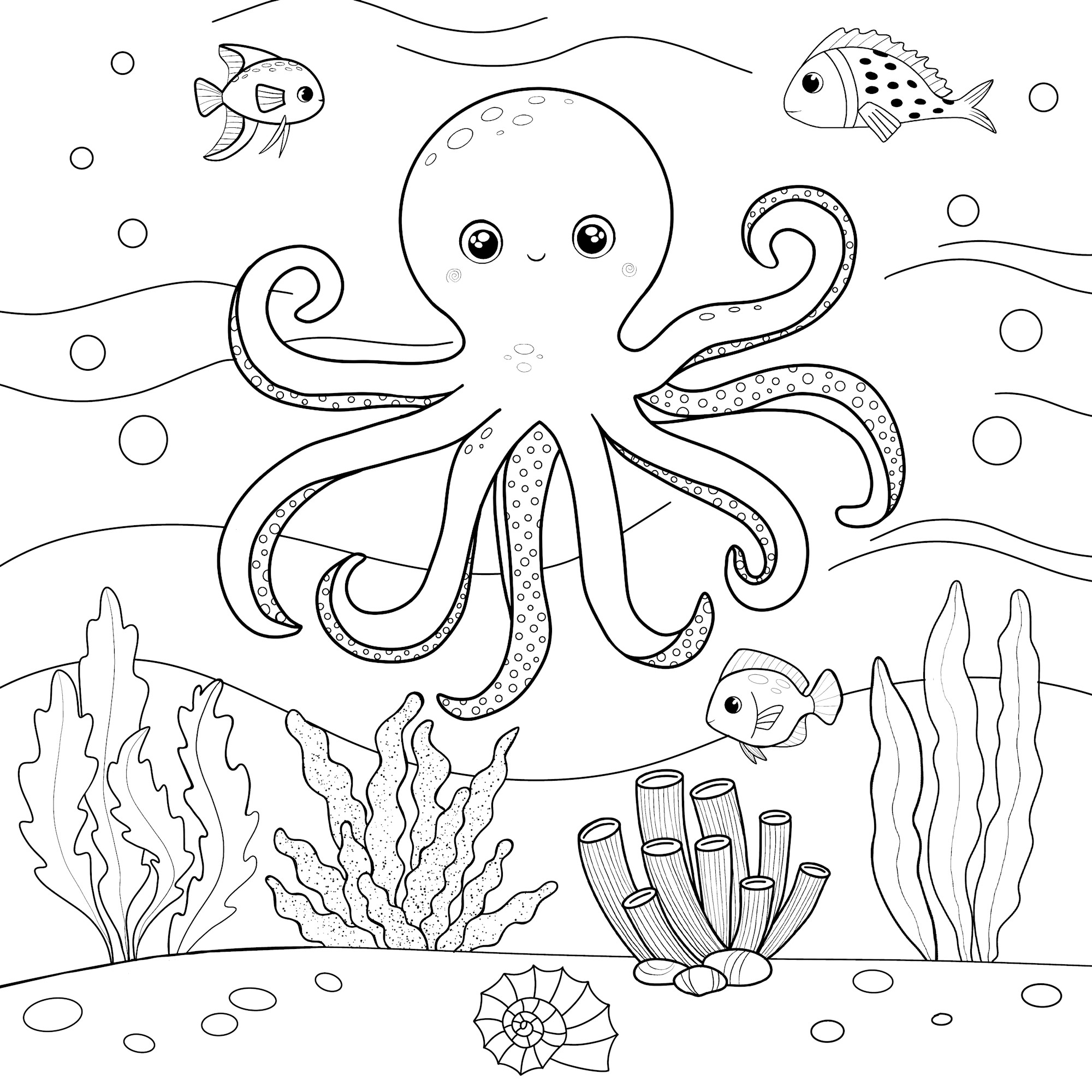
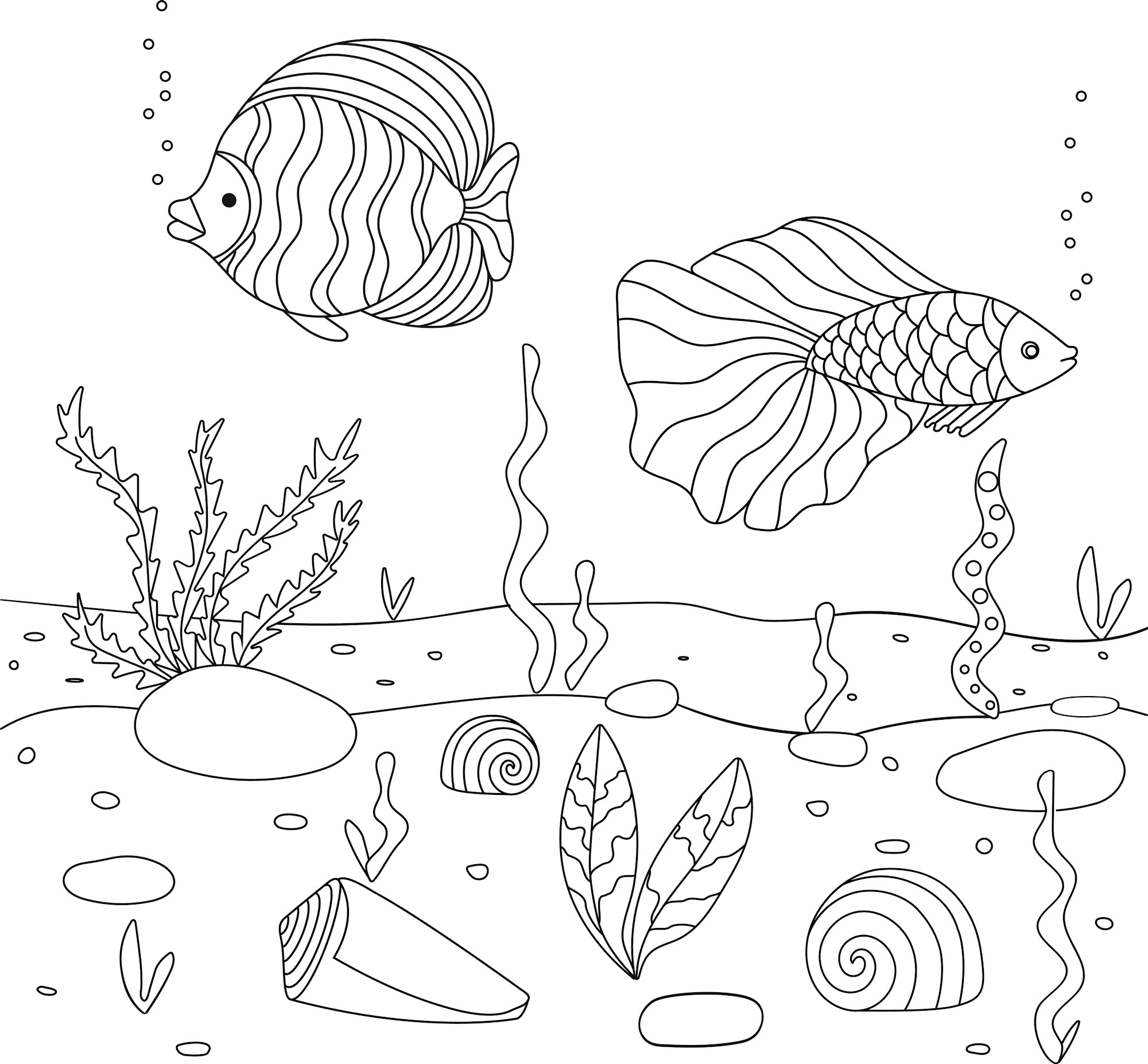
Beneath the waves is an entire world waiting to be explored. Colorful fish dart between swaying plants, dolphins glide through the water, enormous whales travel across the ocean, and sea turtles paddle past places most of us will never see firsthand. Add submarines, divers, and mysterious shipwrecks, and an underwater coloring adventure can go almost anywhere.
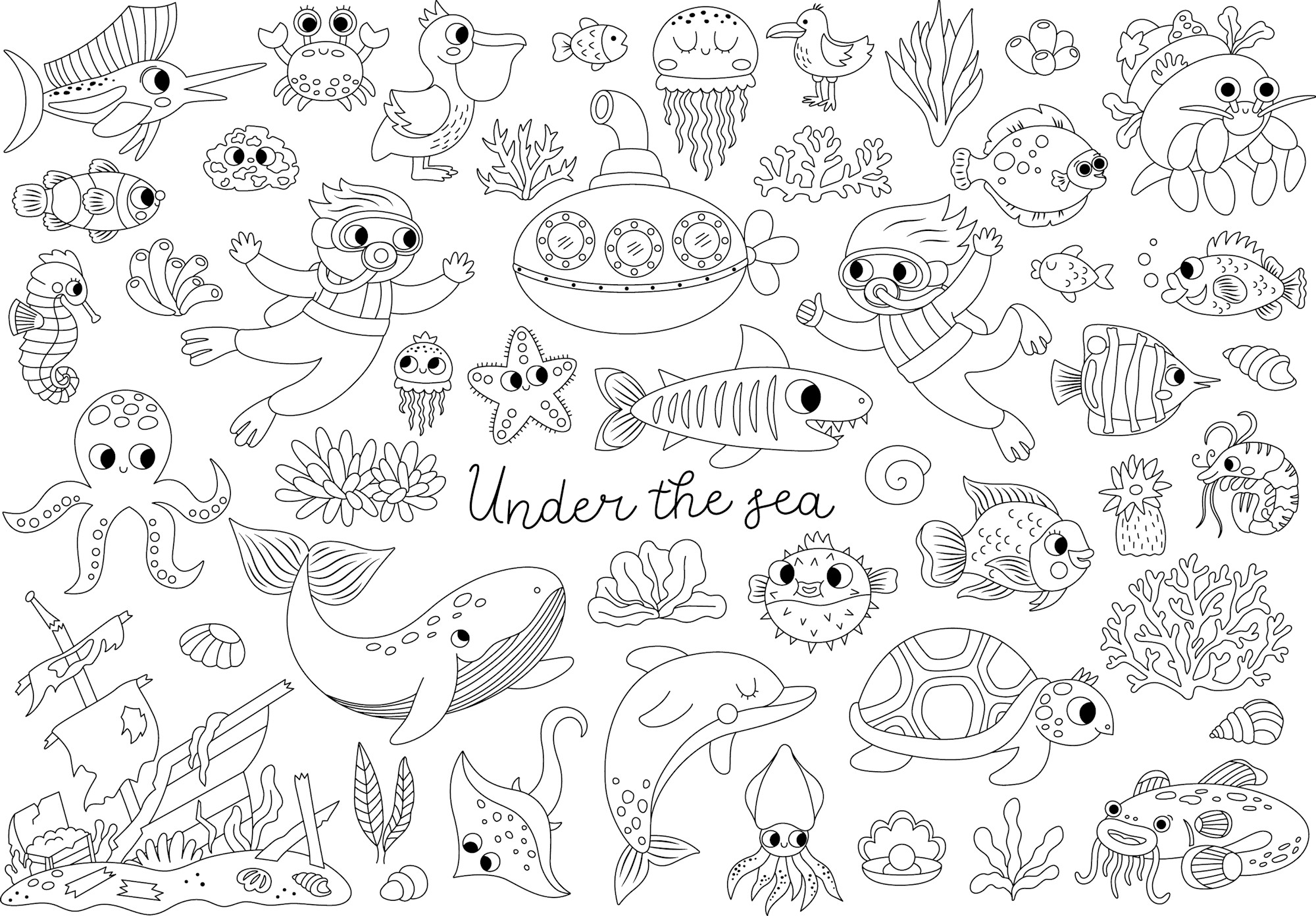
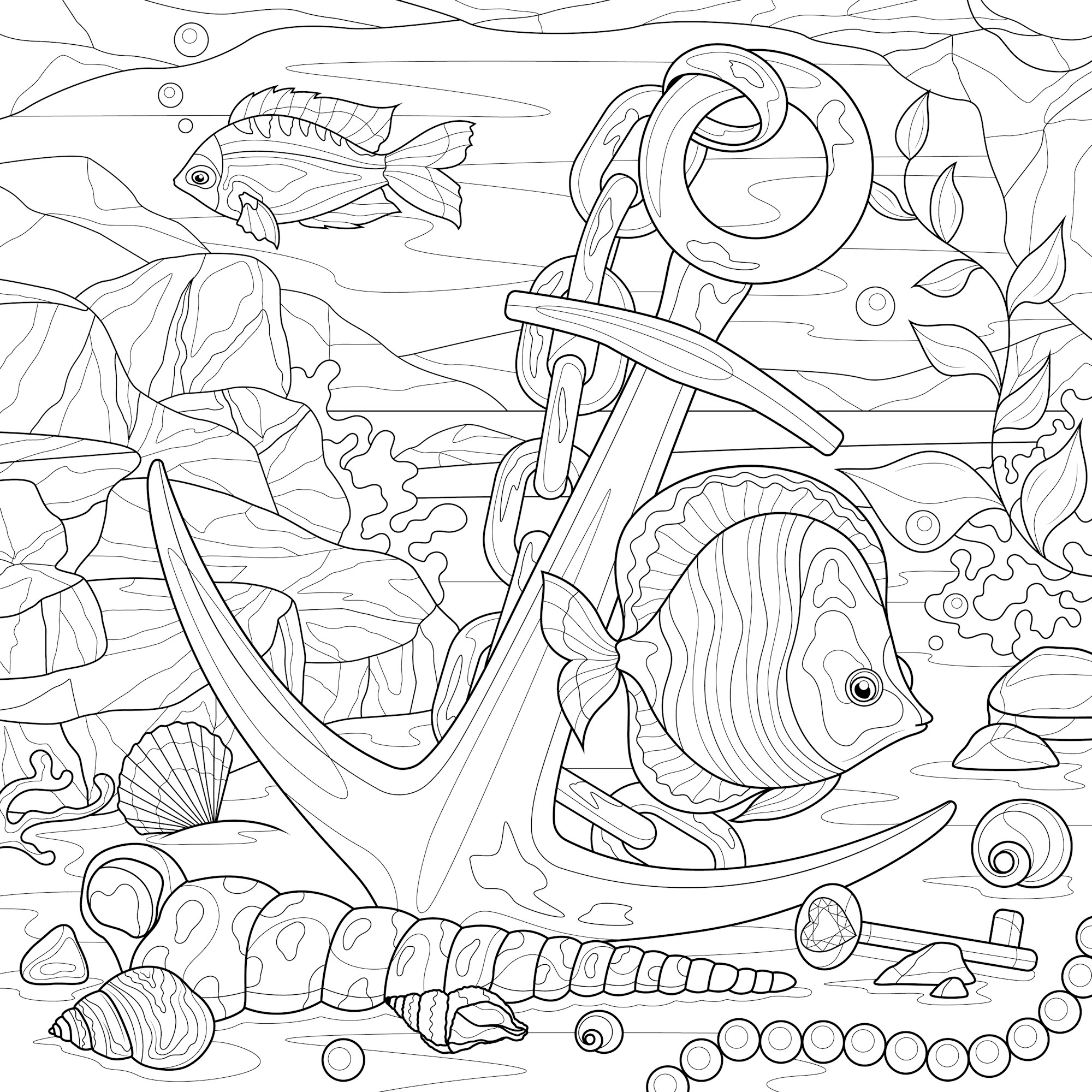
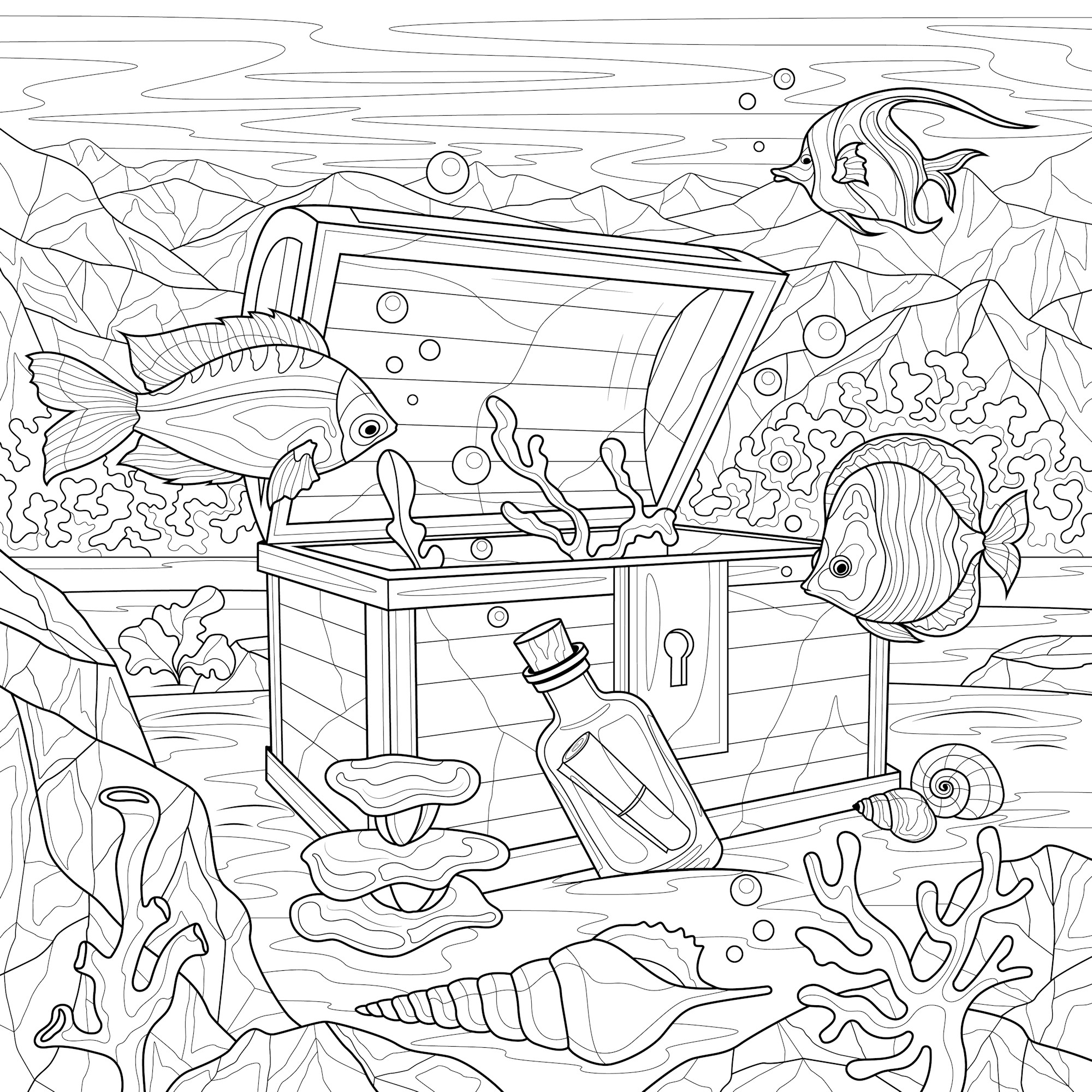
Our Under the Sea Coloring Pages collection brings together marine animals and underwater exploration in a series of imaginative printable scenes. You’ll find seaweed, fish, divers, a submarine, a sunken ship, dolphins, whales, and a sea turtle, with plenty of bubbles, ocean plants, and seafloor details waiting for color.
Kids can look at photographs of real marine life for inspiration or invent an ocean filled with purple dolphins, rainbow fish, pink seaweed, and a bright yellow submarine. Older children and adults can experiment with shading the water, creating distant backgrounds, and adding their own coral reefs, treasure chests, or mysterious creatures.
Grab the crayons, markers, or colored pencils and dive in.
🌊 Dive Into an Underwater Coloring Adventure
Under-the-sea coloring pages are especially fun because almost every part of the picture can have a different color. Unlike a snowy landscape or a simple character page, an underwater scene might contain dozens of fish, plants, bubbles, shells, rocks, and animals.
Start with the biggest shapes first. Color the whale, dolphin, turtle, submarine, or diver, then work your way into the smaller details.
After that, decide what kind of ocean you’re creating.
It could be a bright tropical sea with turquoise water and brilliantly colored fish. It could be a deep-ocean scene filled with navy blue, violet, and unusual glowing creatures. Or perhaps your ocean belongs in a fantasy world where every fish has rainbow scales and treasure lies beneath every rock.
The underwater world is already wonderfully strange, so imagination fits right in.
🐠 Fill the Ocean With Colorful Fish
Fish are some of the easiest sea creatures to personalize because they come in an extraordinary variety of colors and patterns.
Try combinations such as:
- Yellow and blue
- Orange and white
- Black and yellow
- Turquoise and purple
- Red and silver
- Pink and lavender
- Green and gold
Give one fish stripes, another spots, and another a gradient that changes from blue near the head to purple near the tail.
Young children can simply make every fish a different color. Older colorists might look at photographs of reef fish and try recreating some of their bold natural patterns.
You can also add more fish around the existing artwork. Draw tiny schools in the distance or one enormous imaginary fish swimming into the scene.
For an even bigger mix of sea creatures and ocean scenery, visit our Coloring Pages of the Ocean.
🌿 Color the Swaying Seaweed
Seaweed and other underwater plants help fill the seafloor with shape and movement.
Green is an obvious starting point, but don’t stop with one shade. Try dark forest green, bright leaf green, olive, turquoise, and yellow-green.
Some areas can be much darker than others, especially if you’re creating the feeling of deeper water.
Fantasy seaweed can be even more colorful.
Try pink fronds beside purple ones, golden plants near turquoise rocks, or an entire underwater garden made from rainbow colors.
Curving pencil strokes following the direction of the leaves can help create the impression that the plants are swaying gently with the water.
🪸 Build Your Own Coral Reef
If your coloring page has open space near the seafloor, add a coral reef of your own.
Corals can create some of the brightest areas in an underwater picture. Try:
- Coral pink
- Orange
- Yellow
- Lavender
- Purple
- Red
- Turquoise
- Cream
Draw branching shapes, rounded corals, sea fans, or simple clusters of wavy lines.
Then add little fish weaving through the reef.
A coral scene can become especially detailed, so there is no need to finish everything at once. Work on one little section at a time and gradually fill the underwater landscape.
🤿 Go Exploring With the Diver
A diver turns an ordinary ocean scene into an adventure.
Start with the wetsuit. Black and dark blue create a traditional look, but a coloring-page diver can have bright red, yellow, turquoise, or purple gear.
Then color the mask, fins, air tank, and other equipment.
Imagine what the diver has discovered.
Perhaps they’re swimming toward a shipwreck, following a sea turtle, photographing dolphins, or searching for an unusual fish hiding among the rocks.
Add streams of bubbles rising toward the surface to show where the diver has been.
Kids can also invent a name for the underwater expedition and draw a little flag or logo on the diver’s equipment.
💭 Make the Bubbles Shine
Bubbles are small details that can make an underwater page feel alive.
Leaving them mostly white is one option, but you can add pale blue, lavender, or turquoise around the edges.
Try leaving a tiny white section inside each bubble as a highlight.
For a fantasy ocean, bubbles might even be:
- Pink
- Purple
- Silver
- Rainbow-colored
- Filled with tiny stars
Draw larger bubbles near the foreground and smaller ones farther away to add a little depth.
🚢 Explore a Wrecked Ship
A wrecked ship on the seafloor immediately suggests mystery.
How long has it been underwater?
Where was it going?
What happened?
What might be hidden inside?
Color wooden sections brown, tan, gray, or dark green. Add greenish patches where sea plants have begun growing over the wreck.
The surrounding water can be darker than in some of the brighter animal scenes, giving the picture a mysterious atmosphere.
Then add marine life.
Tiny fish could swim through broken windows. An octopus might hide inside the hull. Seaweed can grow around the edges, while a curious turtle passes nearby.
The longer a wreck has been underwater in your imaginary story, the more thoroughly nature can take it over.
🪙 Add a Treasure Chest
A sunken ship practically begs for hidden treasure.
Draw a chest beside the wreck and fill it with whatever you imagine was lost at sea.
Try adding:
- Gold coins
- Jewels
- Pearls
- Crowns
- Old maps
- Mysterious keys
- Magical stones
- Bottles containing secret messages
Gold can be created using yellow, ochre, orange, and brown. Jewels provide an excuse to use vivid red, emerald green, sapphire blue, and purple.
Of course, the greatest treasure could also be something silly.
Maybe the chest contains crayons.
🚤 Take a Ride in the Submarine
A submarine opens up another side of underwater exploration.
Classic submarines may inspire gray, black, navy, or military green, but there’s no reason your coloring-page submarine can’t be bright yellow.
Or pink.
Or covered with polka dots.
Try:
Classic Submarine: Gray, black, navy, and silver.
Sunny Submarine: Yellow, orange, blue, and white.
Ocean Explorer: Turquoise, navy, lime, and silver-gray.
Fantasy Submarine: Purple, pink, gold, and aqua.
Color the windows pale blue and imagine who is looking out through them.
What do they see?
A whale?
A hidden underwater cave?
A gigantic octopus?
A mermaid?
Maybe the submarine has traveled somewhere no human has ever been before.
🔦 Explore the Deep Ocean
Turn the submarine page into a deep-sea adventure by darkening the water around it.
Use navy, indigo, violet, and blue-black.
Then create beams of light coming from the submarine.
Leave those areas much lighter than the surrounding water.
Add strange imaginary creatures just beyond the light.
Some can have glowing spots, enormous eyes, or unusual shapes.
You don’t have to identify a real deep-sea animal. Inventing one can be even more fun.
Give your creature a name and decide what it eats, where it lives, and why it glows.
🐬 Color the Dolphins
Dolphins are among the most familiar ocean animals, and their smooth bodies are perfect for experimenting with shading.
Realistic dolphins are often represented with combinations of gray, blue-gray, charcoal, and lighter undersides.
Try making the upper part slightly darker and gradually getting lighter toward the belly.
Then add a bright blue or turquoise ocean around them.
Of course, cute coloring-page dolphins can be much more imaginative.
Create:
- Pink dolphins
- Lavender dolphins
- Turquoise dolphins
- Rainbow dolphins
- Dark blue dolphins covered in stars
Add splashes, bubbles, waves, or other dolphins nearby to create a playful group.
For more dolphin designs, explore our Coloring Pages of Dolphins.
🐋 Make Room for an Enormous Whale
Whales bring a completely different sense of scale to an underwater picture.
A whale can dwarf the surrounding fish, which makes it an especially dramatic page to color.
Blue-gray, slate, charcoal, dark blue, and pale gray can create a nature-inspired whale.
For something softer, try dusty blue or lavender.
Then decide where the whale is swimming.
Is sunlight filtering down from the surface?
Is it passing beneath a boat?
Is a baby whale swimming alongside?
Are schools of tiny fish moving out of the way?
Drawing small fish around an enormous whale can help emphasize just how large your imaginary ocean traveler is.
💙 Create a Mother-and-Baby Whale Scene
If you want to extend the whale picture, draw a smaller calf nearby.
Give the two whales similar colors while making the baby slightly lighter.
Then add streams of bubbles and perhaps rays of sunlight entering the water above them.
Kids can imagine where the whales are traveling.
Maybe they are heading toward feeding grounds or exploring a part of the ocean the calf has never seen before.
Even without a detailed science lesson, the picture can inspire curiosity about how large marine animals live and travel through the sea.
🐢 Swim With a Sea Turtle
A sea turtle gliding through the ocean brings another recognizable marine animal to the collection.
For a nature-inspired turtle, try green, olive, tan, brown, golden yellow, and cream.
The shell gives you lots of smaller sections to color. Use slightly different greens and browns instead of filling the entire shell with one shade.
Or transform it into a fantasy turtle.
Try:
- Turquoise shell with purple markings
- Rainbow shell
- Pink-and-lavender turtle
- Golden turtle
- Dark blue turtle covered in stars
Then add fish, seaweed, coral, bubbles, or jellyfish around it.
For even more turtle designs, visit our Coloring Pages of Turtles.
🪼 Add Floating Jellyfish
Want even more creatures in the scene? Jellyfish are perfect for filling open water.
Their flowing tentacles contrast beautifully with the solid shapes of turtles, fish, dolphins, and submarines.
Try translucent-looking pastel shades:
- Pale pink
- Lavender
- Baby blue
- Peach
- Turquoise
Keep some areas very light and deepen the color around the edges of the bell.
For a glowing fantasy jellyfish, use bright purple, turquoise, or neon-looking pink against a dark navy background.
Our Coloring Pages of Jellyfish include even more cute, simple, doodle, and detailed jellyfish designs.
🐙 Hide an Octopus Among the Rocks
An octopus can make almost any under-the-sea picture more interesting.
Draw one peeking from behind the shipwreck or curling its arms around a rock.
Orange and reddish brown can look striking against blue water, but octopuses are especially fun fantasy subjects.
Make yours purple, turquoise, pink, or rainbow-colored.
Its eight arms also provide lots of room for dots, stripes, and patterns.
For another underwater activity, visit our Octopus Coloring Page for Kids.
🦈 Add a Shark to the Adventure
If your underwater world needs a little more excitement, add a shark swimming in the distance.
Gray, blue-gray, and white create a familiar shark palette.
Keep the shark smaller if you want it to appear far away or draw a larger one moving through the foreground.
Sharks don’t automatically have to turn the page into a scary scene. They are simply another part of the ocean world.
For an entire collection devoted to them, explore our Coloring Pages of Sharks.
🧜♀️ Make the Ocean Magical With a Mermaid
Real marine animals aren’t the only creatures allowed under the sea.
If your picture needs a little fantasy, add a mermaid sitting beside the shipwreck or swimming with the dolphins.
Give the tail shimmering scales in turquoise, purple, green, pink, or rainbow shades.
Draw long flowing hair and add shells, pearls, an underwater castle, or a treasure chest.
Our Coloring Pages of Mermaids offer an entire collection of fantasy underwater adventures.
🎨 Under-the-Sea Color Palette Ideas
An ocean page can feel tropical, mysterious, dreamy, or completely fantastical depending on the colors.
🌊 Tropical Ocean
Turquoise, aqua, coral pink, yellow, orange, and bright green.
🐠 Coral Reef
Blue, turquoise, orange, red, purple, yellow, and green.
🌌 Deep Sea
Navy, indigo, violet, turquoise, black, and silver-gray.
🧜♀️ Mermaid Lagoon
Lavender, pink, turquoise, mint, pale blue, and gold.
🐚 Sandy Seafloor
Tan, cream, brown, muted green, pale blue, and coral.
🌈 Rainbow Ocean
Red, orange, yellow, green, blue, purple, and pink.
🪼 Glowing Jellyfish
Dark blue, violet, magenta, turquoise, and pale pink.
🚢 Shipwreck Adventure
Navy, brown, gray, dark green, rust, and gold.
Choose one palette for the whole page or make every creature completely different.
🔵 How to Color Ocean Water
Large areas of ocean can seem intimidating because filling the whole background with one blue can take a long time.
There are several ways to approach it.
Use pale blue near the surface and gradually move toward deeper blue lower on the page.
Create horizontal bands of several blues.
Use loose wavy pencil strokes instead of filling every tiny white space.
Or leave much of the water white and concentrate on the animals.
A coloring page does not have to be completely filled to look finished.
For a nighttime or deep-ocean effect, combine navy with violet and turquoise instead of using only blue.
☀️ Add Sunlight Under the Water
In shallower scenes, draw rays of sunlight entering from the top of the page.
Leave several diagonal bands lighter than the surrounding water.
Use pale yellow, white, or very light turquoise inside the rays.
Fish and turtles passing through the light can also be colored slightly brighter.
This simple technique can help give the impression that the water continues far beyond the flat page.
🐚 Decorate the Seafloor
Don’t forget everything resting at the bottom.
Add:
- Shells
- Starfish
- Pebbles
- Sand
- Coral
- Seaweed
- Crabs
- Treasure
- Driftwood
Use pale yellow, cream, beige, and tan for sandy areas.
Shells can become miniature rainbow designs.
Starfish might be orange, yellow, pink, purple, or red.
Small details along the bottom help make the whole underwater world feel busier and more complete.
🌎 The Ocean Covers Most of Our Planet
One reason the underwater world offers so many coloring possibilities is simply that there is so much ocean.
The global ocean covers about 71 percent of Earth’s surface, and although we divide it into named regions such as the Pacific, Atlantic, Indian, Arctic, and Southern oceans, those waters are connected as one global ocean.
For kids, a simple globe or world map makes this easy to see.
Find the blue areas and compare them with the land.
There is far more ocean than many children initially expect.
Our World Map Coloring Pages make a fun companion activity for exploring where those oceans are located.
🗺️ Find the Five Oceans
After finishing an under-the-sea picture, pull out a map and locate the five commonly recognized named oceans:
- Pacific Ocean
- Atlantic Ocean
- Indian Ocean
- Arctic Ocean
- Southern Ocean
Choose one and imagine that your coloring page takes place there.
Older kids can investigate which marine animals might actually live in that region.
A whale page could become a geography activity, while a sea turtle picture might lead to questions about migration and habitat.
The coloring page provides the curiosity; the map helps place the adventure somewhere on Earth.
🧠 Real Ocean or Fantasy Ocean?
Try dividing a piece of paper into two sections.
Label one:
REAL OCEAN
Label the other:
FANTASY OCEAN
Under the real side, draw or write things that actually exist, such as:
- Whale
- Dolphin
- Sea turtle
- Fish
- Octopus
- Jellyfish
- Shark
On the fantasy side, add:
- Mermaid
- Sea monster
- Underwater castle
- Talking fish
- Rainbow whale
- Magical treasure
- Flying submarine
Some coloring pages can contain both.
That’s part of the fun.
📖 Turn the Underwater Pictures Into Stories
The submarine, diver, shipwreck, and marine animals are perfect ingredients for storytelling.
Ask:
- What is the diver searching for?
- Why did the ship sink?
- What is inside the treasure chest?
- Where is the submarine going?
- What does the dolphin see?
- Where is the whale traveling?
- Why is the turtle near the wreck?
- Who lives inside the underwater cave?
Children can tell the story aloud, write a paragraph, or draw another picture showing what happens next.
Perhaps the diver discovers a secret map.
The sea turtle might lead the submarine toward a hidden reef.
Maybe an octopus is guarding the shipwreck treasure.
One page can easily become an entire underwater adventure.
🚢 Design an Underwater Expedition
Kids can create their own pretend scientific expedition after coloring the diver or submarine.
Give the expedition a name, such as:
Deep Blue Explorer
Ocean Discovery Team
Sea Turtle Expedition
Mystery Wreck Mission
Then decide what the team hopes to find.
Maybe the goal is to photograph dolphins, count fish, explore a reef, study a shipwreck, or discover a new imaginary sea creature.
Design a flag or logo and add it to the submarine.
This works especially well for children who enjoy both coloring and imaginative play.
🏫 Easy Ocean Activities for Classrooms
Under-the-sea coloring pages fit naturally into ocean, animal, summer, geography, and environmental themes.
Use them for:
- Ocean art centers
- Early-finisher activities
- Indoor recess
- Marine animal lessons
- Summer activities
- Story-writing prompts
- Habitat units
- World map activities
- Library programs
- Homeschool science
- Ocean-themed classroom displays
Because the collection includes both animals and exploration scenes, children can choose pictures that match different interests.
One child might want the whale while another immediately reaches for the submarine.
🖼️ Create an Under-the-Sea Classroom Mural
Several finished coloring pages can become one giant ocean display.
Cover part of a wall or bulletin board with blue paper.
Add lighter blue near the top and darker blue toward the bottom.
Then place children’s colored:
- Fish
- Turtles
- Dolphins
- Whales
- Submarines
- Divers
- Seaweed
- Shipwrecks
around the scene.
Add paper bubbles and green seaweed between them.
A sign reading Dive Into Learning! or Our Underwater World can finish the display.
Every child’s individual page becomes part of one enormous ocean.
✂️ Turn Finished Pages Into Ocean Crafts
Coloring can also become the first step in a larger craft.
With appropriate supervision, cut out a finished sea creature and glue it onto construction paper.
Add:
- Tissue-paper seaweed
- Paper bubbles
- Sand
- Shell shapes
- Cotton clouds above the water
- Paper coral
- Other colored animals
You can also cut out the submarine and attach it to a paper strip so children can move it across the underwater scene.
A simple printable becomes part coloring page, part craft, and part imaginative play.
🥚 Make a Paper-Plate Ocean
Color and cut out several small sea creatures, then glue them onto a paper plate painted or colored blue.
Add green paper strips for seaweed and small pieces of tan paper for sand.
Draw bubbles around the animals.
Several paper plates can represent different ocean habitats.
One might contain reef fish while another has a whale or dolphin.
It’s an easy way to reuse finished coloring-page characters instead of putting them straight into a drawer.
♻️ Talk About Keeping the Ocean Clean
Ocean coloring also provides a natural opportunity for a simple conversation about marine debris.
Trash that reaches waterways and the sea can cause problems for marine animals. Items such as plastic and abandoned fishing gear can entangle wildlife or be mistaken for food.
For young children, the message can remain positive and practical:
Trash belongs in the right place, not in the ocean.
Kids can draw two versions of the same seafloor—one clean and one covered with litter—and talk about which would be better for fish, turtles, and other animals.
NOAA also offers marine-debris games, activities, and educational materials designed for children and classrooms.
🐢 Learn More About Sea Turtles
If the turtle page sparks curiosity, NOAA’s educational resources include materials about several sea turtle species found in U.S. waters, along with coloring activities and lessons for different ages.
Kids can look at photographs of real sea turtles and compare:
- Shell shapes
- Colors
- Flippers
- Head shapes
- Habitats
Then return to the coloring page and decide whether to follow those natural colors or create a completely imaginary turtle.
Both approaches encourage careful observation and creativity in different ways.
🏖️ Travel From Under the Sea to the Beach
Eventually every underwater journey reaches the shoreline.
Our Coloring Pages of the Beach bring the adventure above the waves with sand, shorelines, seaside scenes, and summer inspiration.
Pair a beach picture with an under-the-sea page and imagine that they show the same place from two perspectives.
What’s happening above the surface?
What’s happening below?
Kids can even draw a line across a large sheet of paper and create one picture showing both worlds at the same time.
🌊 Explore Even More Ocean Coloring Pages
If you’re not ready to come back to land, there are plenty more ocean collections to explore.
Our Coloring Pages of the Ocean include kawaii fish, dolphins, starfish, crabs, whales, seahorses, sailboats, waves, and seascapes.
You can also focus on favorite animals with Coloring Pages of Dolphins, Coloring Pages of Turtles, Coloring Pages of Jellyfish, and Coloring Pages of Sharks.
Together, they can create an entire homemade ocean coloring book.
📚 Make an Ocean Coloring Book
Collect several favorite sheets and organize them into sections.
Ocean Animals
Fish, dolphins, whales, turtles, jellyfish, sharks, and octopuses.
Ocean Habitats
Coral reefs, sandy seafloors, seaweed forests, and deep water.
Ocean Explorers
Divers and submarines.
Ocean Mysteries
Shipwrecks, treasure, caves, and fantasy creatures.
Above the Waves
Beaches, boats, lighthouses, and coastlines.
Add your own cover and give the book a title such as My Underwater Adventures, The Big Blue Coloring Book, or Secrets of the Sea.
🌊 Discover a Whole World Beneath the Waves
These Under the Sea Coloring Pages offer much more than blue water and a few fish.
You can follow dolphins through the ocean, swim beside a whale, color a sea turtle gliding through the water, explore with a diver, travel inside a submarine, wander through forests of seaweed, and investigate a mysterious wreck resting on the seafloor.
Keep the animals realistic or create an ocean that could exist only in your imagination.
Make every fish a different color. Hide an octopus in the shipwreck. Add glowing jellyfish to the deep sea. Draw treasure beneath the sand or send a mermaid swimming beside the dolphins.
Then use the pictures as inspiration to learn about real oceans, marine animals, maps, and ways people can help keep waterways clean.
There is an enormous world beneath the surface, and you don’t need diving gear to begin exploring it.
Sometimes all you need is a coloring page and a box of crayons.
Happy coloring and happy exploring!
🔗 Related Coloring Pages
- Coloring Pages of the Ocean
- Coloring Pages of Dolphins
- Coloring Pages of Turtles
- Coloring Pages of Jellyfish
- Coloring Pages of Sharks
- Octopus Coloring Page for Kids
- Coloring Pages of Mermaids
- Coloring Pages of the Beach
- World Map Coloring Pages
- Ocean Coloring Pages
📚 Sources
- NOAA Ocean Service — How Many Oceans Are There?
- NOAA Ocean Service — How Much Water Is in the Ocean?
- NOAA — Sea Turtle Education Resources
- NOAA Marine Debris Program — Education Materials
- NOAA National Marine Sanctuaries — Sea Turtle Lesson Plans
🖍️Shop Under the Sea Coloring Books –>