🖍️Shop Turtle Coloring Books –>
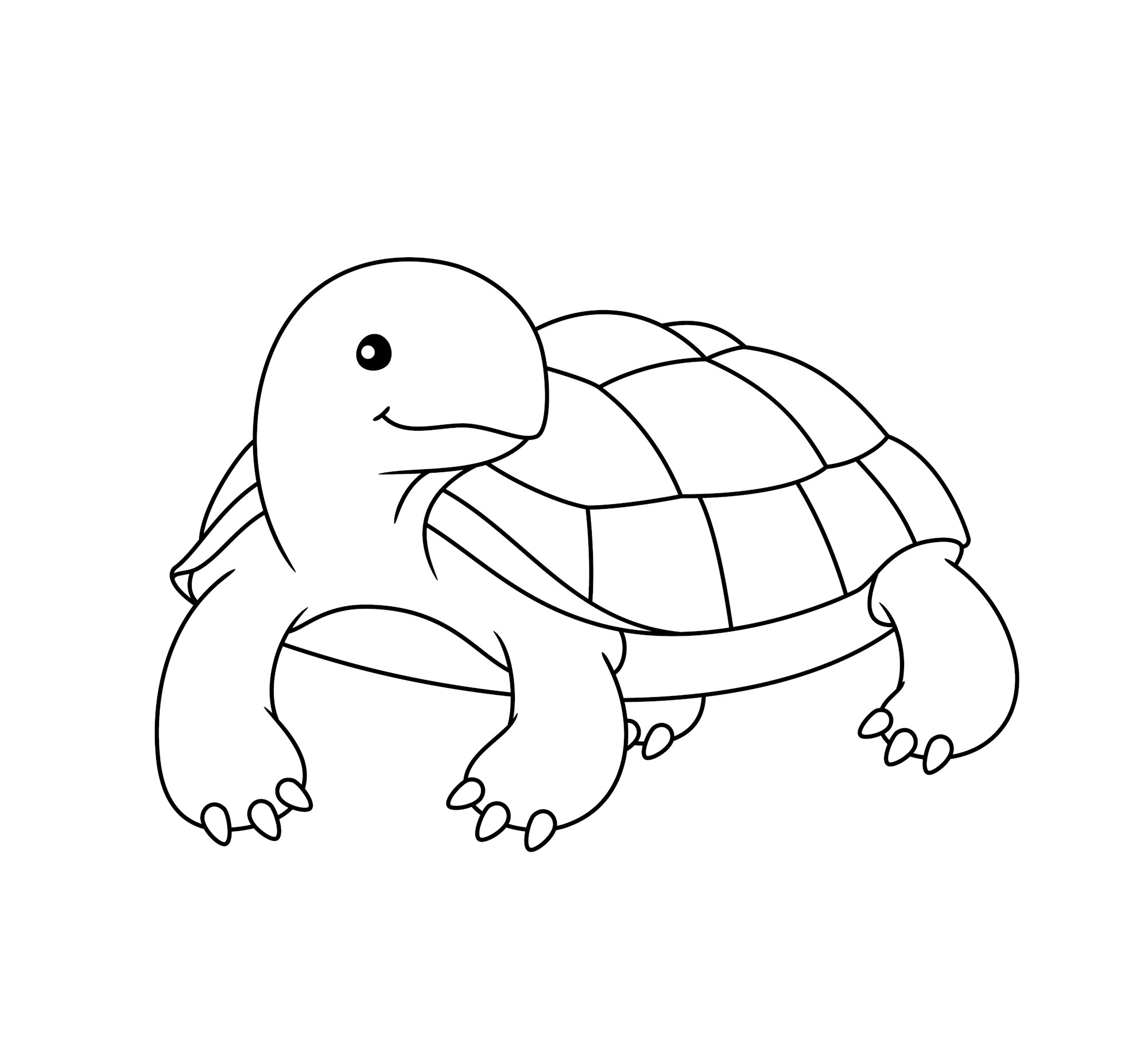
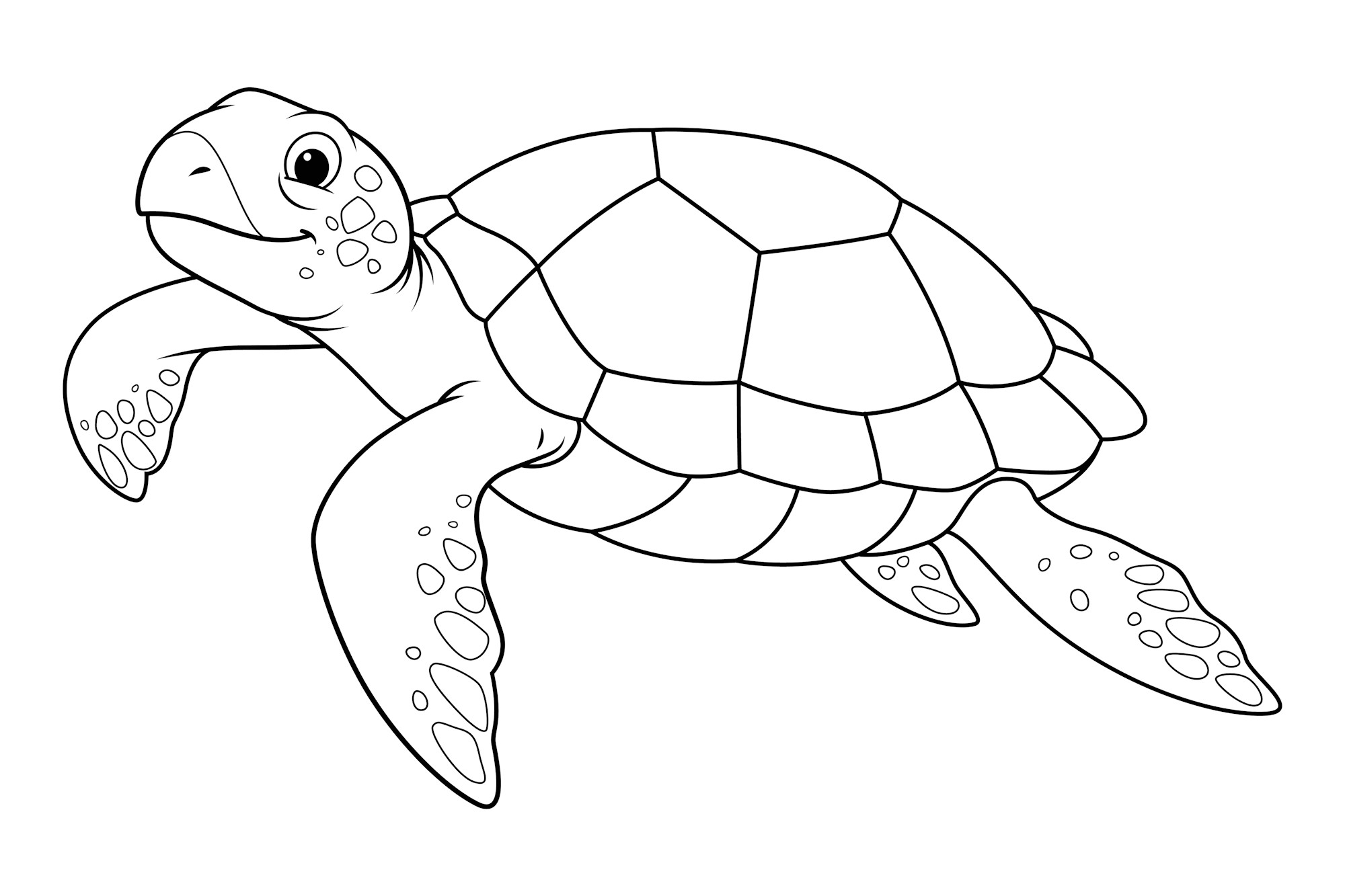
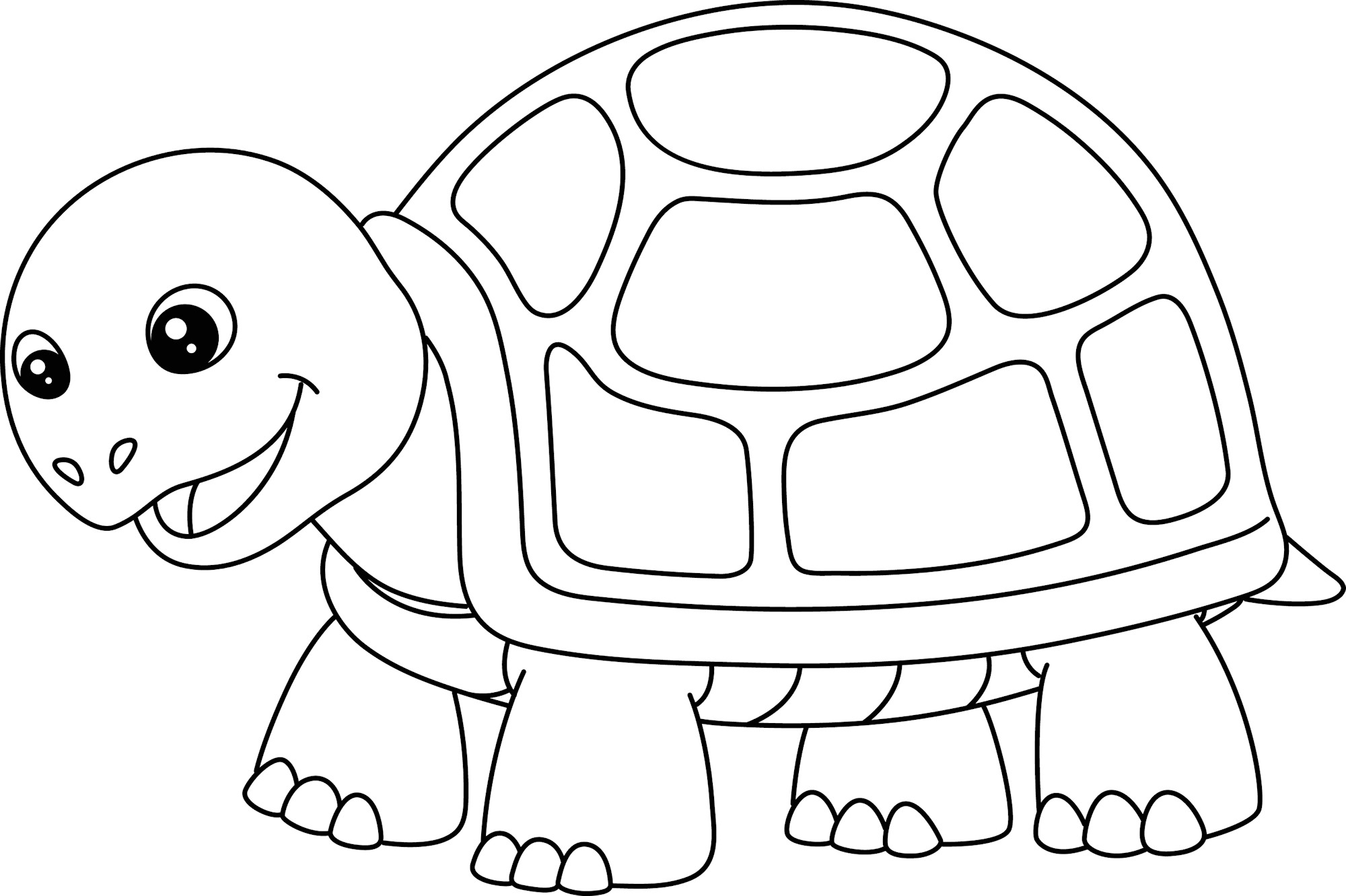
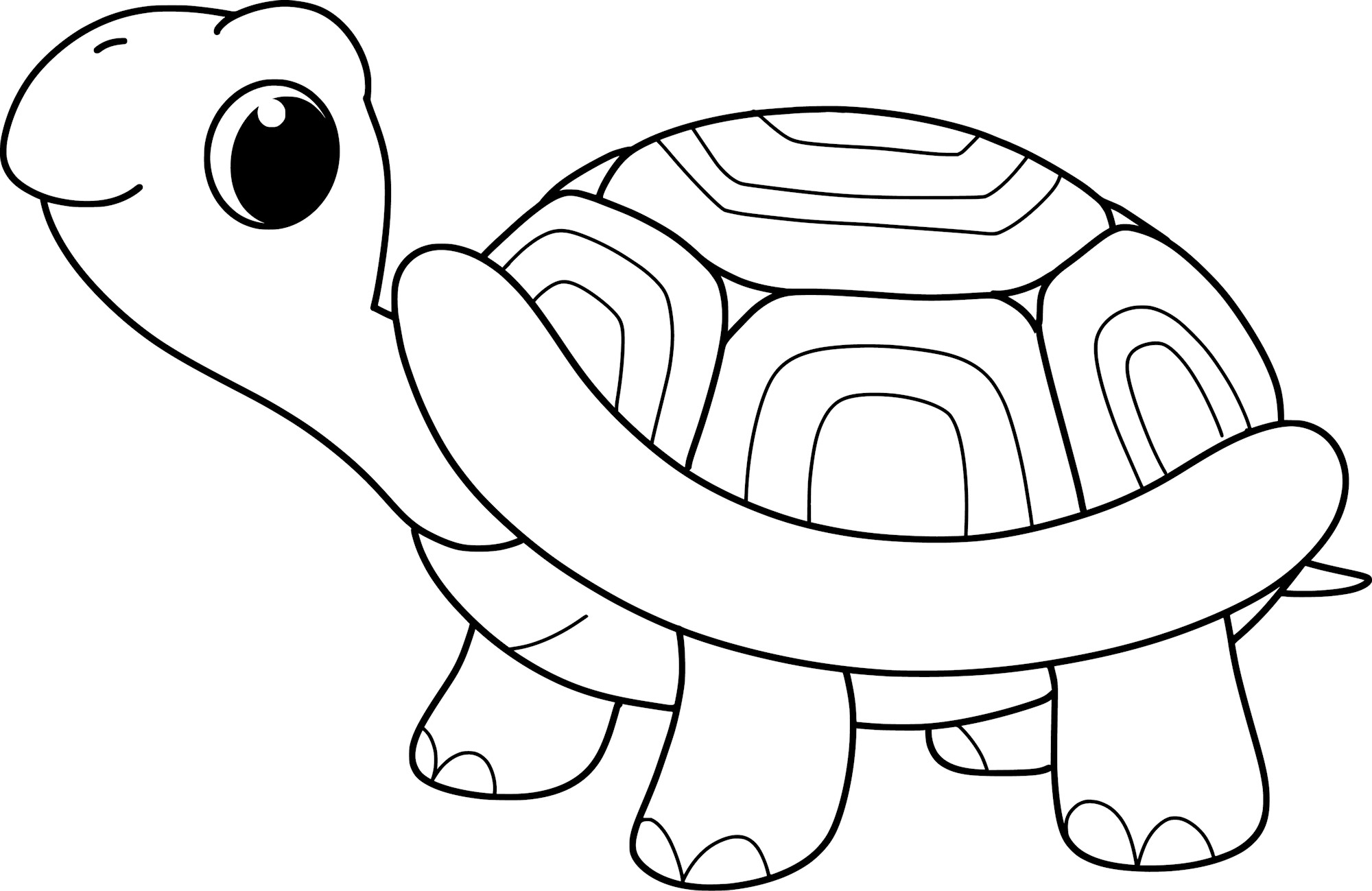
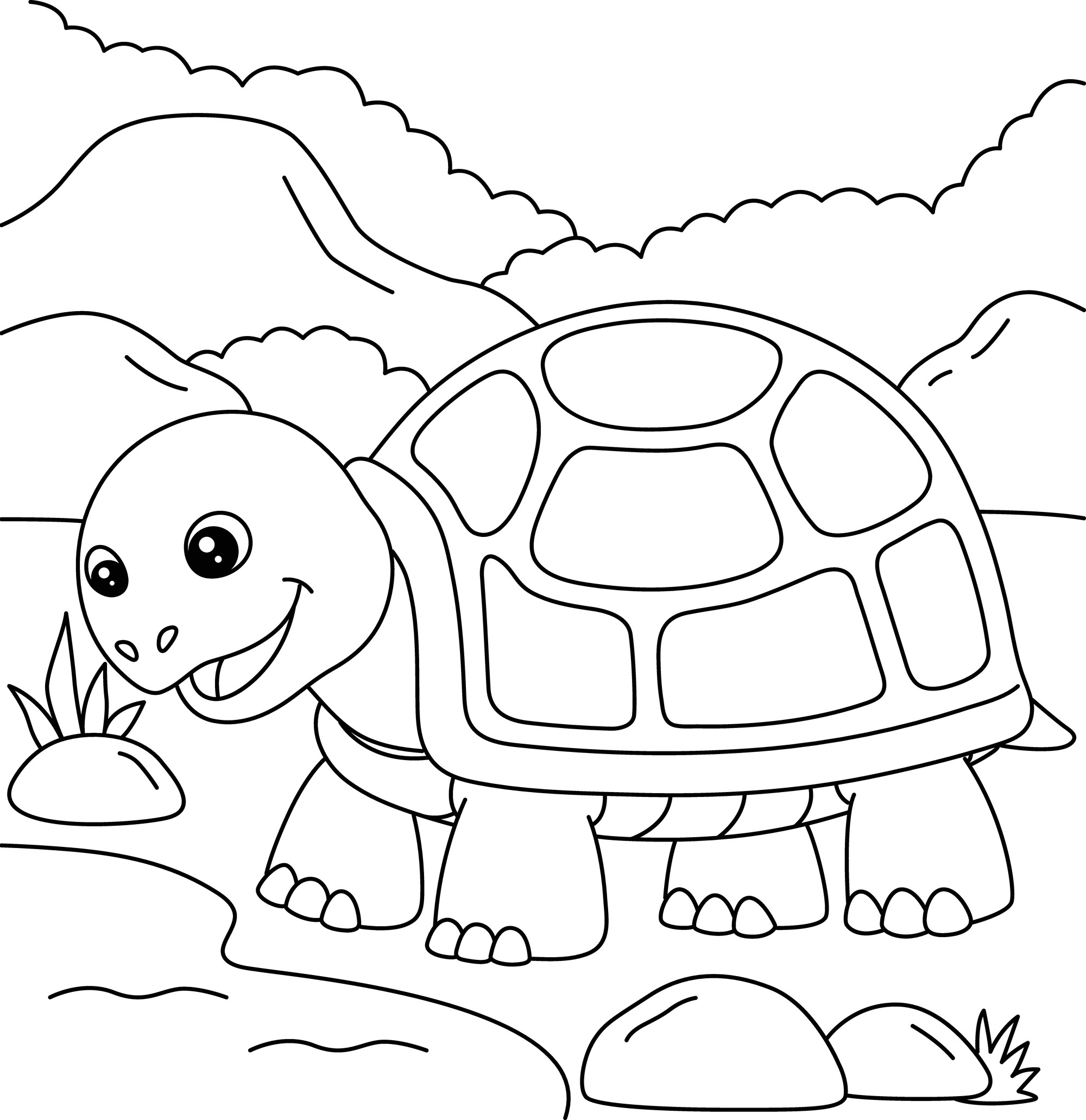
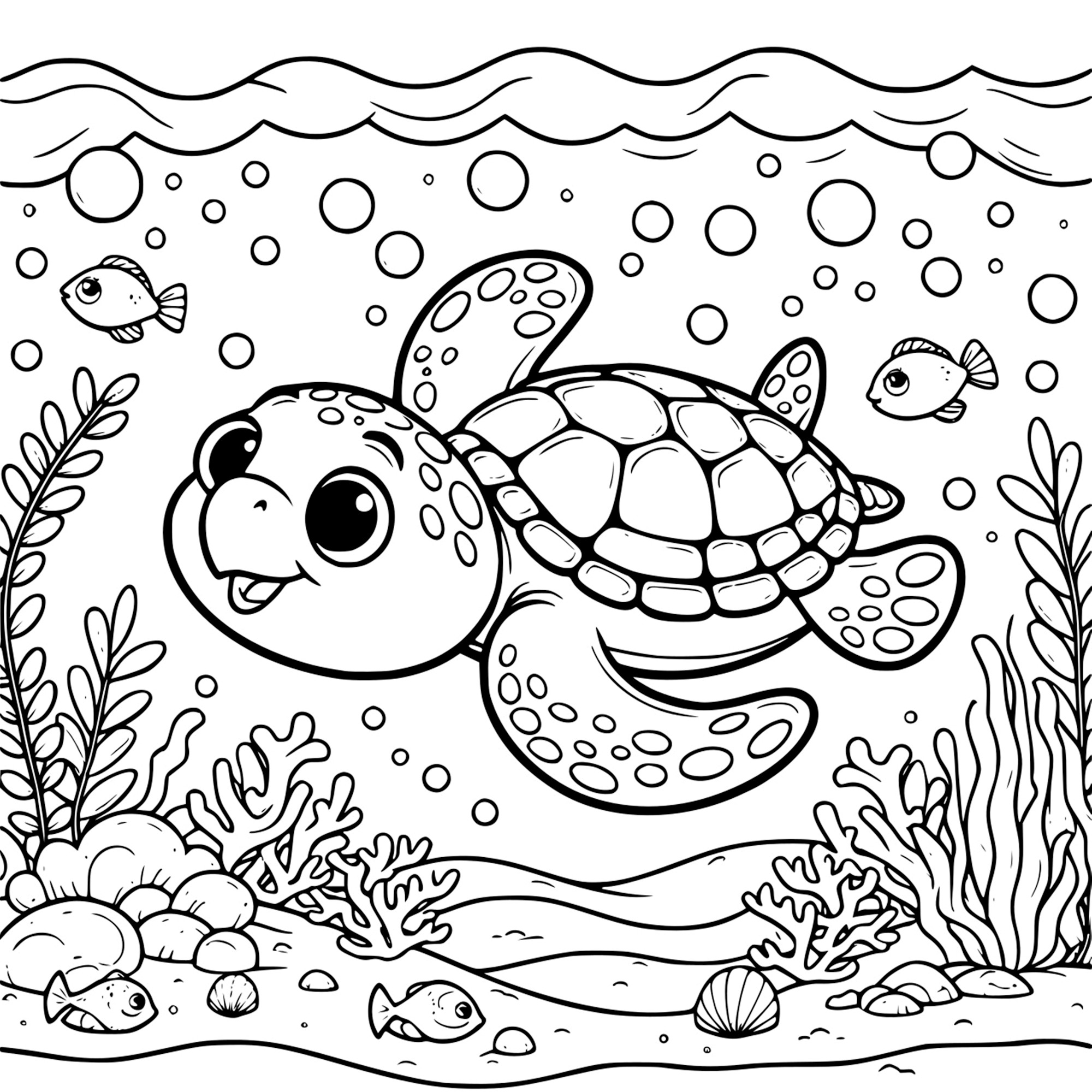
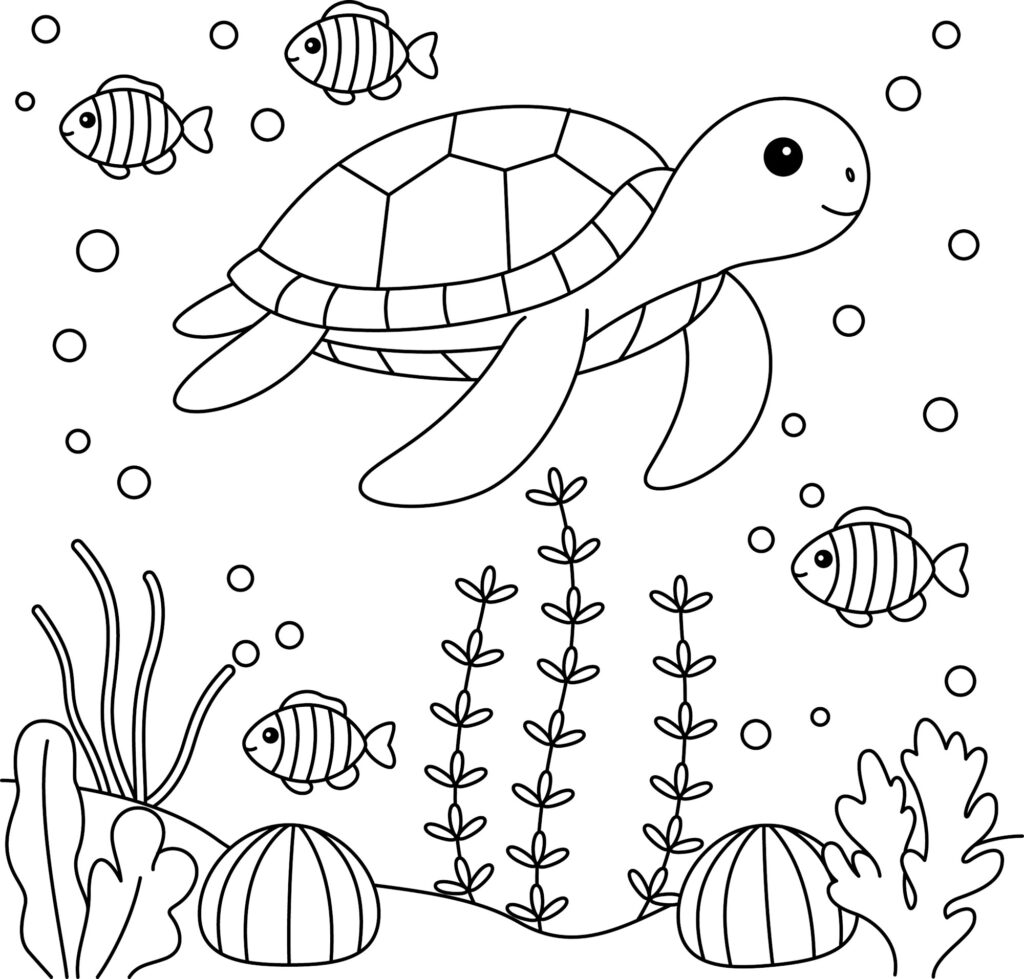
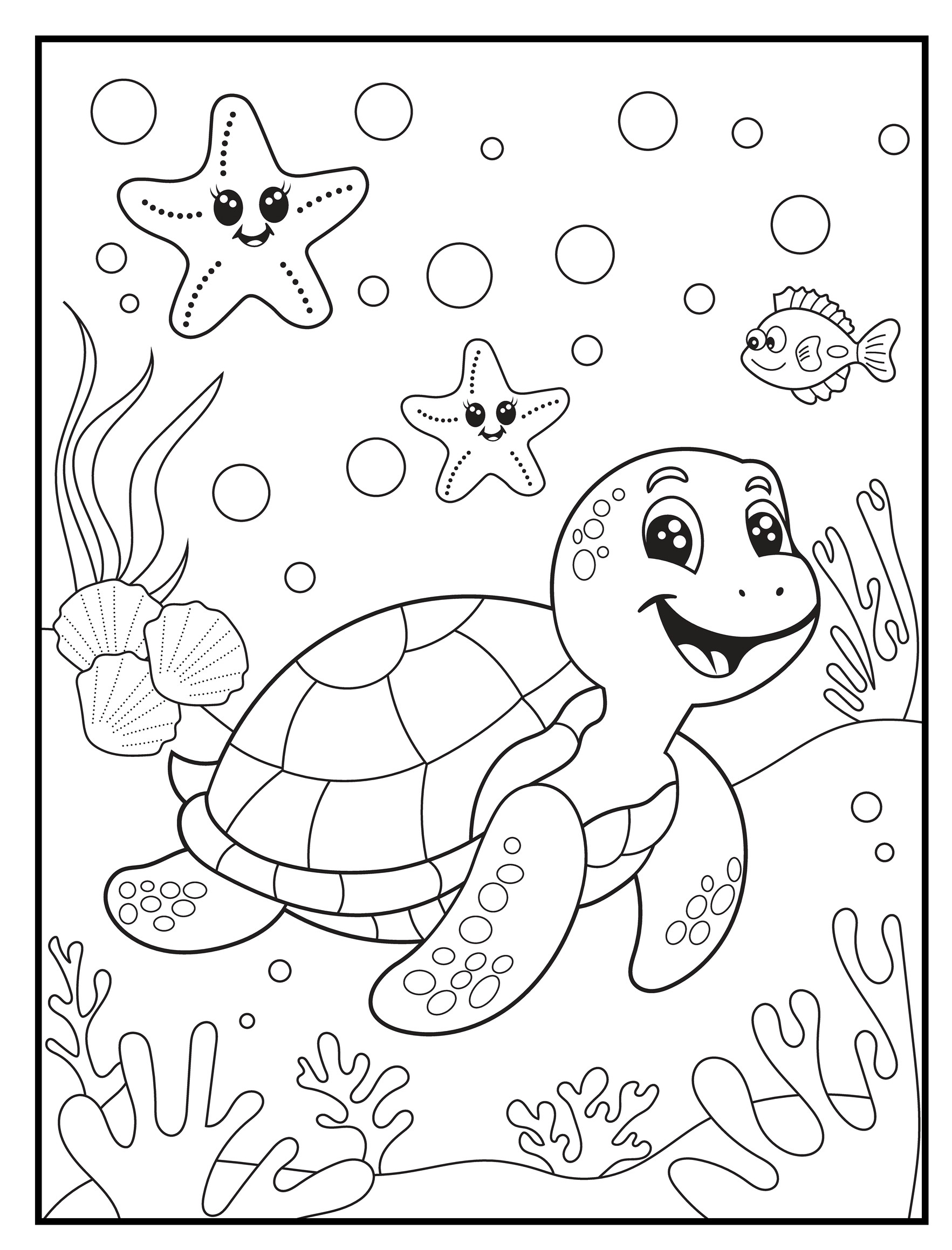
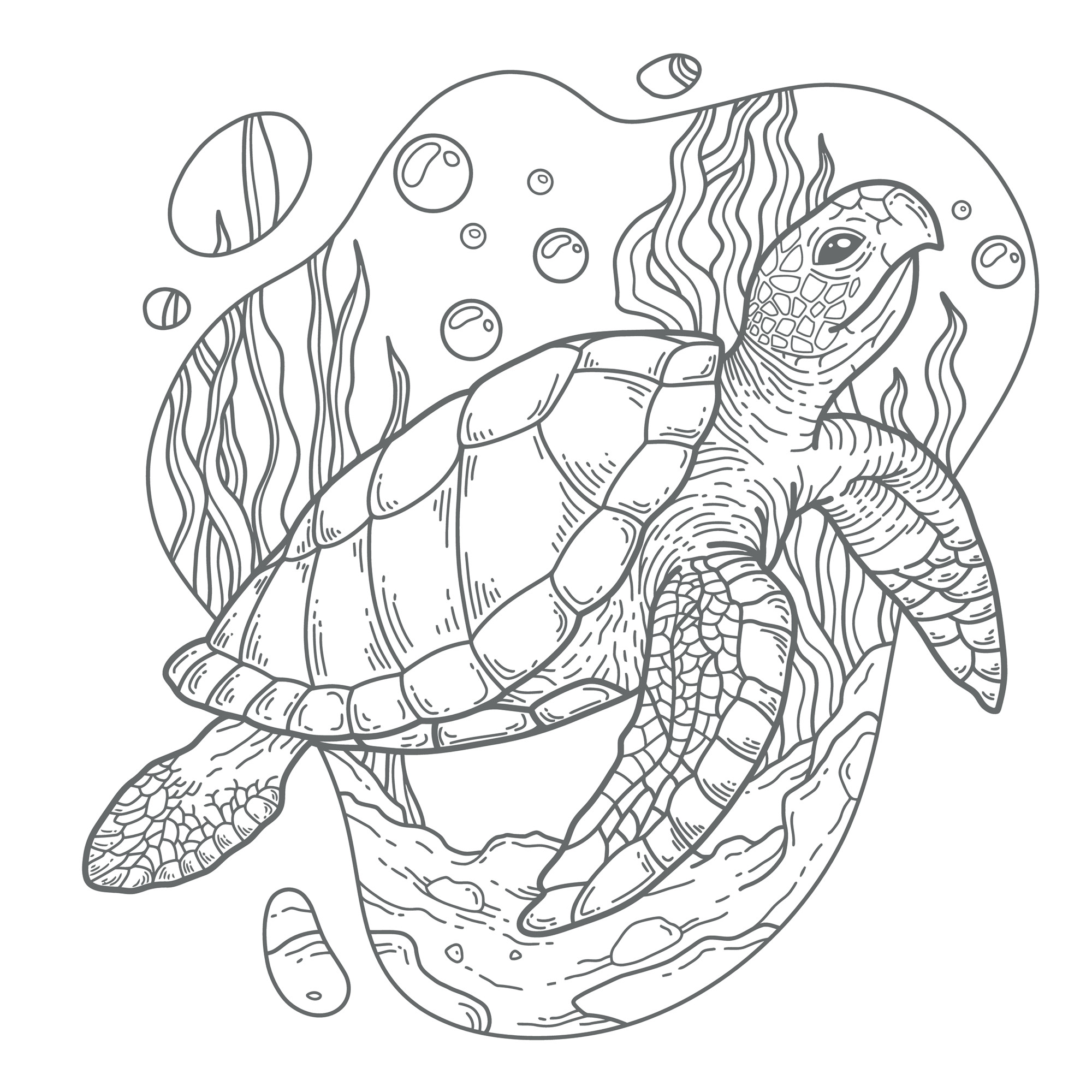
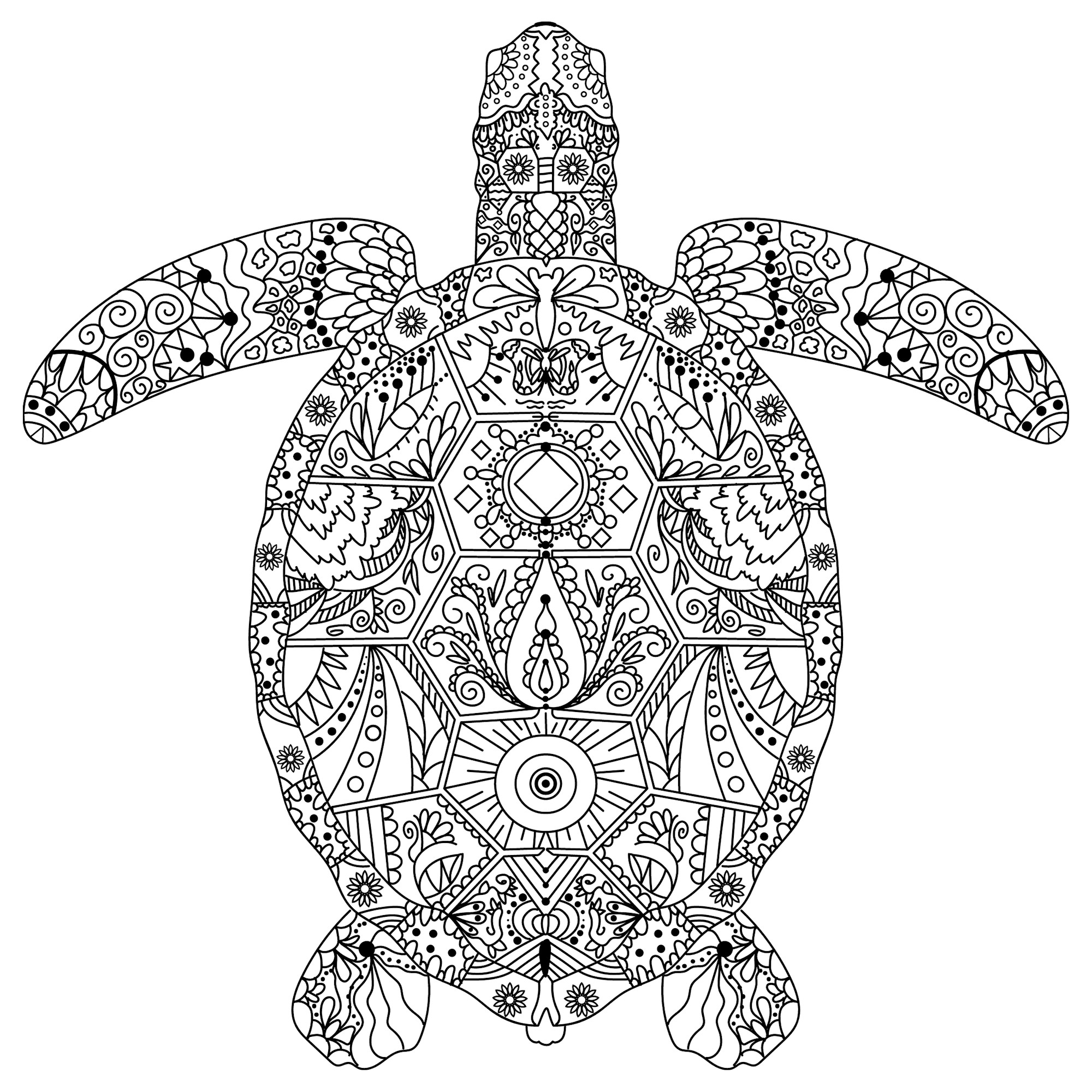
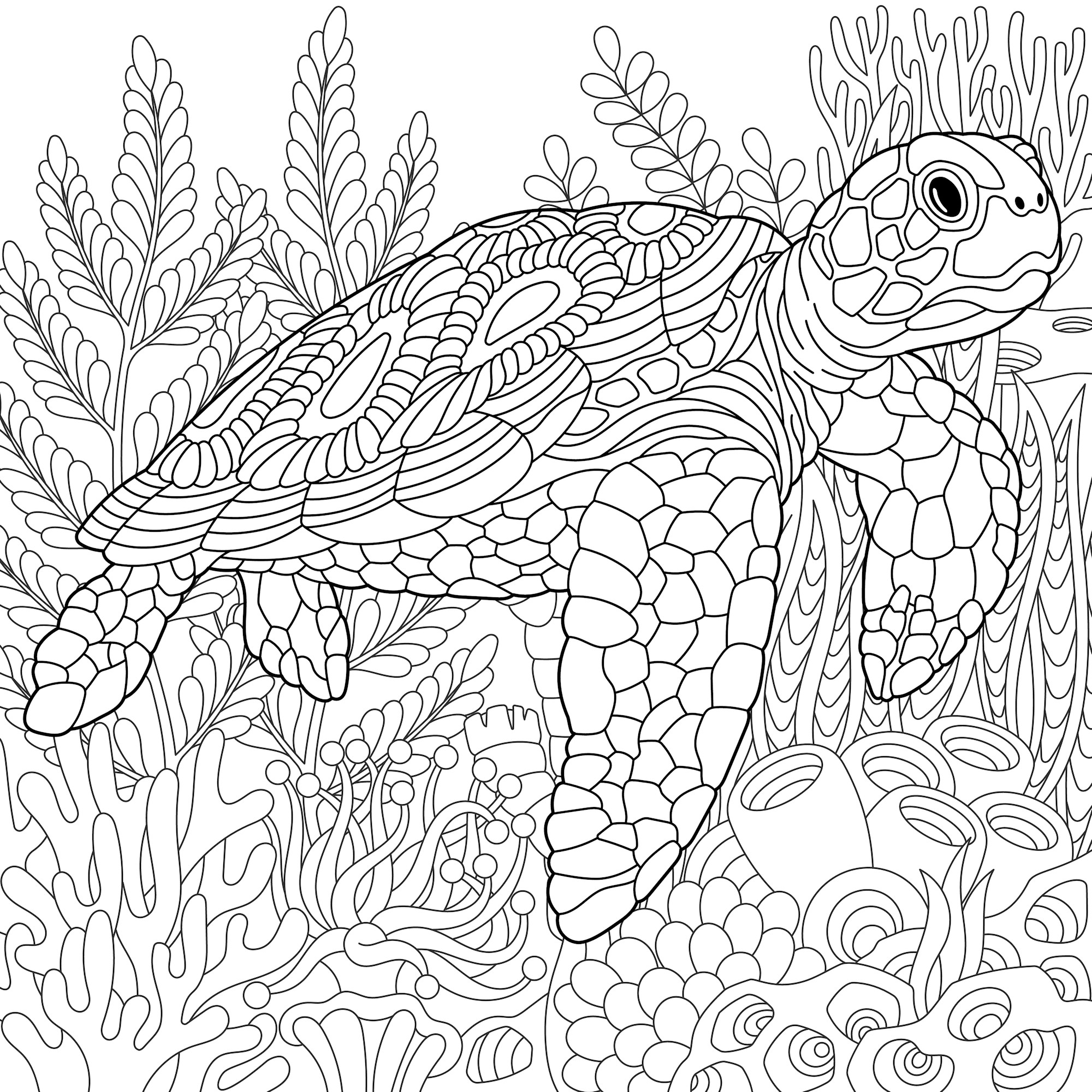
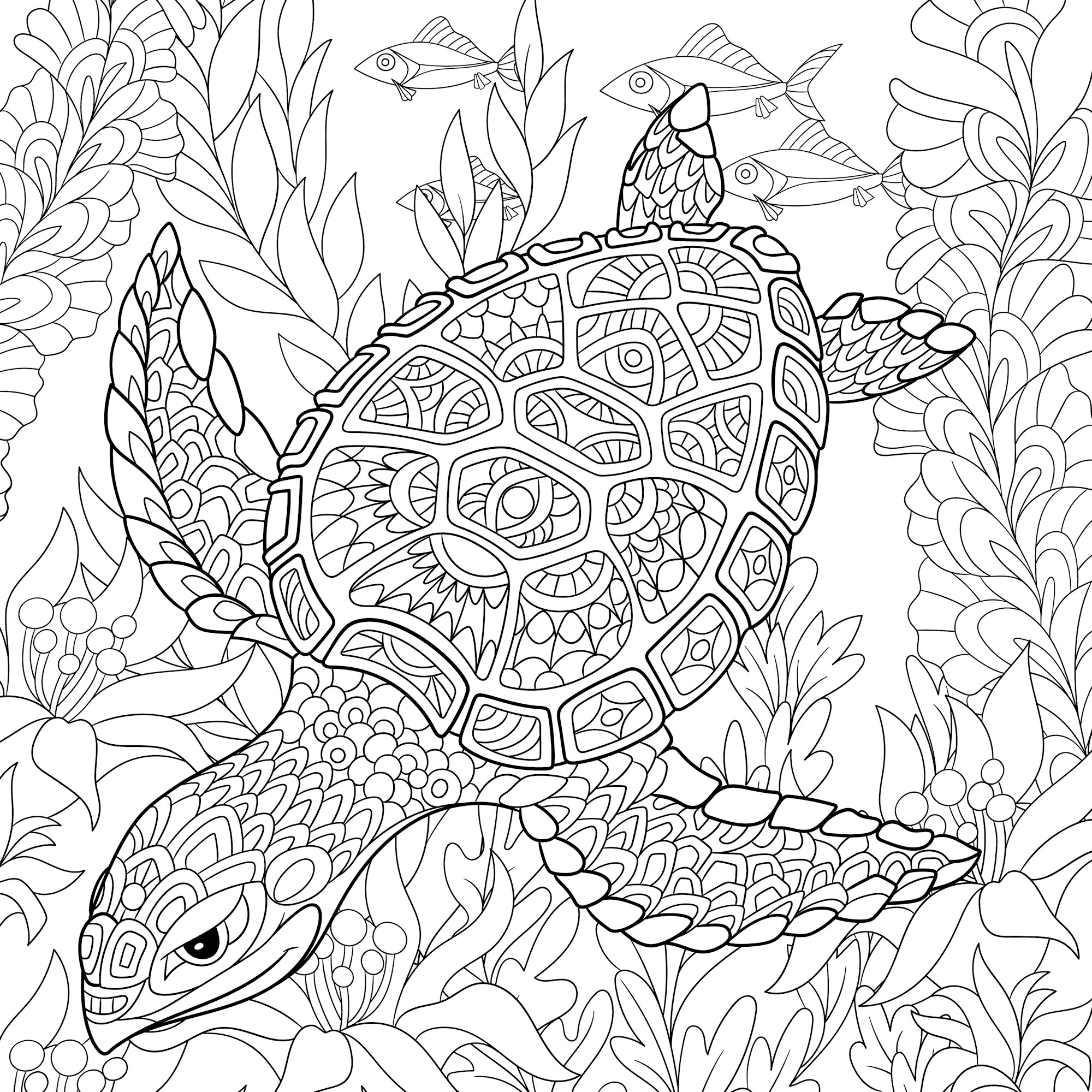
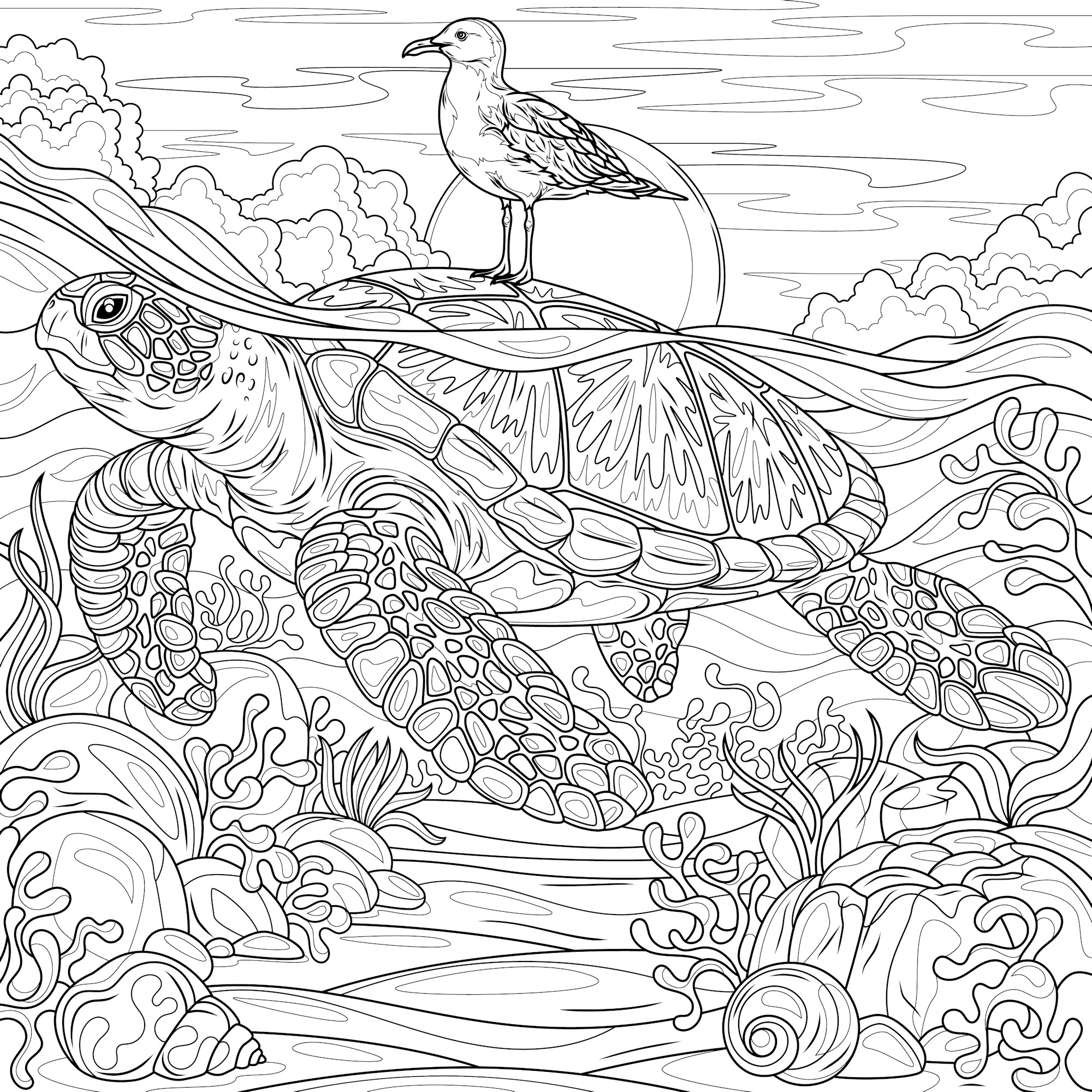
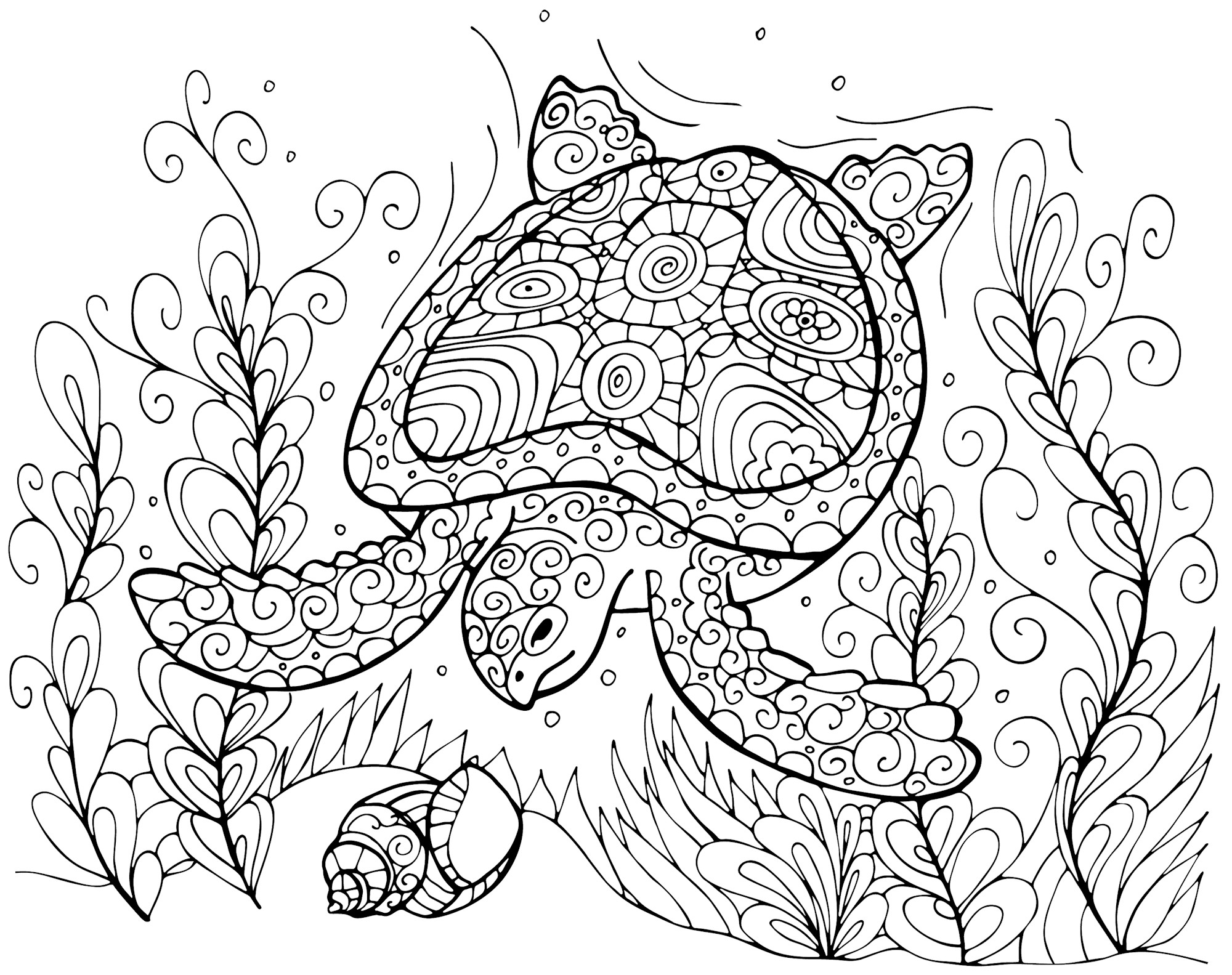
Dive into a colorful adventure with our collection of turtle coloring pages, featuring adorable cartoon turtles, graceful sea turtles, underwater scenes, shell patterns, ocean plants, seashells, and intricate mandala and zentangle designs.
Turtles are especially fun to color because their shells provide a natural canvas for creativity. You can fill a realistic sea turtle with olive green, brown, cream, and golden shades, decorate a cute cartoon turtle with rainbow spots, or turn every section of a detailed shell into a different jewel tone.
Our collection includes simpler pages for younger children as well as detailed underwater designs for older kids and adults. Some turtles swim beneath the waves, others glide close to the ocean surface, and several are surrounded by seaweed, seashells, and other marine details.
Choose your favorite printable, grab your crayons, markers, or colored pencils, and get ready to explore the wonderful world of turtles.
🐢 Explore Our Turtle Coloring Pages
There is plenty of variety in this turtle collection.
You’ll find cute turtles for kids, individual turtle outlines, swimming sea turtles, underwater turtle scenes, and a joyful turtle gliding near the ocean surface. Some pictures leave plenty of open space for children to create their own backgrounds, while others are already filled with ocean plants and underwater details.
For colorists who enjoy more intricate artwork, the collection also includes a turtle mandala, an underwater turtle filled with mandala and zentangle elements, and a stylized turtle swimming among sea algae.
There is even a charming scene featuring a turtle in the sea with a seagull perched on top, along with another stylized underwater turtle surrounded by seaweed and a seashell.
With simple, cute, realistic, and highly decorative designs all in one place, there is something here for almost every turtle fan.
For even more creatures from around the world, explore our Animal Coloring Pages.
💕 Cute Turtle Coloring Page
The simple cute turtle is perfect for younger children or anyone looking for an easy, cheerful coloring activity.
Natural turtle colors might include green, olive, brown, tan, gray, or cream, but a cartoon turtle can become anything you imagine.
Try:
- Mint green with a yellow shell
- Lavender with purple spots
- Turquoise and blue
- Pink and peach
- Rainbow shell sections
- Green with orange polka dots
Add a smiling sun, flowers, clouds, water, or little fish around the turtle if you want to expand the picture.
Children can also give their turtle a name and imagine where it is going.
For another adorable printable, visit our Cute Turtle Coloring Page for World Turtle Day.
🖍️ Easy Turtle Coloring Pages for Kids
Several turtle designs have large, simple areas that are especially good for young children.
Begin by choosing one color for the turtle’s body and another for the shell.
Then add smaller details such as:
- Shell sections
- Eyes
- Flippers or feet
- Spots
- Water
- Bubbles
Younger children do not need to worry about realistic colors. A blue turtle with a yellow shell is just as welcome as an olive-green one.
Simple turtle pages can also be used for color recognition.
Ask:
“Can you color one shell section green?”
“Can you add three blue bubbles?”
“Which color should we use for the water?”
Small prompts can turn coloring into gentle learning without making it feel like a worksheet.
🌊 Sea Turtle Coloring Page
The sea turtle designs are perfect for creating beautiful ocean palettes.
Start with natural shades such as olive green, brown, tan, cream, gray, and golden yellow. Then surround the turtle with turquoise, blue, and teal water.
A sea turtle’s shell often contains multiple shades rather than one flat color, so try layering several browns or greens across the different sections.
You might use:
- Olive
- Sage
- Golden brown
- Chestnut
- Tan
- Cream
Add darker shading along the edges of the shell and lighter highlights in the center of individual sections.
Even a little variation can give the turtle much more depth.
🏊 Sea Turtle Swimming Coloring Page
One design shows a sea turtle swimming gracefully through the water, which is a wonderful opportunity to create a feeling of movement.
Use long, soft strokes in the surrounding water.
Try several shades:
- Pale blue
- Aqua
- Turquoise
- Teal
- Royal blue
- Navy
Make the water lighter near the surface and gradually darker farther below if you want to suggest depth.
Add bubbles behind the turtle or draw tiny fish swimming nearby.
Curved lines around the flippers can also help make the turtle look as though it is gliding forward.
☀️ Turtle Near the Ocean Surface
The joyful turtle swimming near the ocean surface gives you the chance to experiment with sunlight coming through the water.
Keep the water near the top pale blue or turquoise.
Then gradually deepen it to royal blue or teal farther down.
Use pale yellow, cream, or white streaks to suggest shafts of sunlight shining into the sea.
The turtle’s shell can remain darker so the animal stands out against the glowing water.
For an imaginative version, create a sunset above the surface and let pink, gold, orange, and purple reflections reach down into the ocean.
🌿 Cute Turtle Under the Sea
The cute underwater turtle coloring page for kids already provides the beginning of a complete marine habitat.
Color the turtle first, then move outward into the plants and water.
Instead of making every ocean plant green, try:
- Teal
- Olive
- Emerald
- Yellow-green
- Rust
- Purple
- Red
Add colorful fish or little bubbles between the plants.
Children can also draw a treasure chest, starfish, crab, or octopus into any open areas.
Continue the adventure with our Under the Sea Coloring Pages.
🐚 Turtle With Seaweed and Seashell
One stylized underwater scene combines a turtle, seaweed, and seashell, giving colorists several different natural textures to explore.
Keep the turtle relatively neutral and let the surrounding ocean details provide brighter colors.
For example:
Turtle: olive, brown, cream
Seaweed: emerald, teal, yellow-green
Seashell: pink, peach, lavender
Water: aqua, turquoise, royal blue
Or reverse the idea and create an intensely colorful turtle against a softer underwater background.
The shell is especially good for repeating colors or creating geometric patterns.
🪸 Build a Coral Reef Around Your Turtle
A simple sea turtle page can easily become an entire coral-reef scene.
Draw:
- Branching coral
- Sea fans
- Tropical fish
- Seaweed
- Starfish
- Seashells
- Rocks
- Bubbles
Use bright coral pink, orange, yellow, purple, turquoise, and green.
Keep the turtle in earthy greens and browns so it stands out, or make the animal just as colorful as the reef.
You can even hide a tiny treasure chest somewhere behind the coral.
For more ocean inspiration, visit our Ocean Coloring Pages.
🐦 Turtle With a Seagull
One of the most unusual pictures in the collection features a turtle in the sea with a seagull perched on it.
This playful scene combines an ocean animal with a seabird, giving you two very different creatures to color.
Try blue-gray and white for the gull, olive and brown for the turtle, and turquoise for the sea.
Then imagine what is happening.
Did the seagull stop to rest?
Is the turtle surprised to have a passenger?
Are they traveling somewhere together?
Give both characters names and turn the picture into the beginning of a story.
🎨 What Colors Are Turtles?
There is no single “turtle color.”
Depending on the species, turtles can display shades and markings that include:
- Green
- Olive
- Brown
- Black
- Gray
- Tan
- Cream
- Yellow
- Orange
- Red
A spotted turtle, for example, can have a dark shell decorated with bright yellow or orange spots, while an eastern box turtle can display striking yellow-orange markings against a dark brown shell.
So even a nature-inspired turtle can be much more colorful than you might expect.
🌈 Create a Rainbow Turtle Shell
The shell is one of the best parts of any turtle coloring page.
Instead of coloring every section alike, assign each one a different color.
Try:
Rainbow Turtle
Red, orange, yellow, green, blue, and purple
Pastel Turtle
Mint, lavender, peach, pink, and baby blue
Ocean Turtle
Aqua, turquoise, teal, blue, and navy
Sunset Turtle
Gold, orange, coral, pink, and violet
Forest Turtle
Olive, sage, brown, rust, and cream
You can also decorate individual shell sections with stars, flowers, stripes, dots, hearts, or tiny waves.
🌀 Turtle Mandala Coloring Page
The turtle mandala is a great choice for older children, teens, and adults who enjoy more detailed coloring.
Instead of thinking about realistic turtle colors, treat every pattern as a separate piece of artwork.
A limited palette can make the finished page especially attractive.
Try:
Tropical Palette
Turquoise, coral, purple, yellow, and green
Jewel Palette
Emerald, sapphire, ruby, violet, and gold
Earth Palette
Olive, rust, brown, cream, and ochre
Cool Palette
Navy, aqua, lavender, teal, and silver
Repeat your chosen colors across different shell patterns to tie the whole design together.
✨ Intricate Underwater Turtle Mandala
Another page combines an underwater turtle with detailed mandala and zentangle elements.
This is the kind of page that does not need to be finished in one sitting.
Begin with the turtle shell and color one pattern at a time. Then move into the surrounding water and underwater details.
Fine-tip markers and sharpened colored pencils can make the smaller spaces easier to fill.
Try using brighter colors near the turtle and darker colors farther into the background.
The finished picture can look almost like a piece of decorative underwater artwork.
🌱 Zentangle Turtle Among Sea Algae
The stylized zentangle turtle swimming among sea algae combines elaborate animal patterns with flowing ocean plants.
Choose related colors for the turtle and seaweed.
For example, use turquoise, navy, purple, and teal throughout the turtle while coloring the plants emerald, lime, olive, and gold.
Or create a high-contrast design with a rainbow turtle against a deep blue-green sea.
The decorative shell gives you plenty of room to experiment with repeated color patterns, gradients, and even metallic pencils or gel pens.
🐢 What Makes a Turtle a Turtle?
Turtles are reptiles distinguished by their remarkable shells.
The upper portion of the shell is called the carapace, while the underside is called the plastron.
The shell is not simply something a turtle carries like a backpack. It is part of the animal’s skeleton and is closely integrated with its ribs and backbone.
That makes the shell much more fascinating than ordinary armor.
After coloring a turtle, older children can label:
Carapace — upper shell
Plastron — lower shell
Then add the head, limbs, and tail.
🛡️ A Turtle’s Shell Is Part of Its Body
Cartoons sometimes show turtles popping completely out of their shells, but real turtles cannot leave their shells behind.
The shell grows as the animal grows and includes bone covered by other protective structures.
Many turtle shells are also covered with sections called scutes.
Look at the patterned shell on your coloring page.
Each outlined section can become an opportunity to imagine those protective areas.
Rather than thinking of the shell as a separate house, think of it as an extraordinary part of the turtle itself.
🐢 Turtle or Tortoise?
People often use the words turtle and tortoise loosely, but there are useful differences.
In everyday usage, turtles are generally associated with aquatic or semi-aquatic environments, while tortoises are adapted primarily to life on land.
Tortoises also tend to have sturdier, more elephant-like legs for walking, while aquatic turtles can have webbed feet or flipper-like limbs depending on the species.
There are exceptions and regional differences in how these terms are used, so the distinction is not as simple as one rule.
Still, comparing a streamlined sea turtle with a heavy land tortoise makes the contrast easy to see.
🌊 Sea Turtle or Land Turtle?
Look at two imaginary turtle pictures.
One has long, paddle-like flippers and a streamlined shell.
The other has sturdy walking legs and a more domed shell.
Which one would be better suited to swimming through the ocean?
The first resembles a sea turtle.
Which one looks better suited to walking on land?
The second is more like a tortoise.
Children can draw one of each and create matching habitats: ocean waves for the sea turtle and a dry landscape for the tortoise.
🐾 Turtle Feet and Flippers
Different turtles move through very different environments, and their limbs reflect those lifestyles.
Sea turtles have large flippers that help them travel efficiently through ocean water.
Freshwater turtles may have webbed feet suited to swimming while still allowing movement on land.
Tortoises have stronger, sturdier limbs adapted mainly for walking.
Compare the different turtle drawings on the page and notice the limb shapes.
Then imagine what kind of habitat each animal seems best equipped to explore.
🥚 Turtles Lay Eggs
Turtles are reptiles, and female turtles lay eggs on land.
Sea turtles spend most of their lives in the ocean, but females must come ashore to nest.
A sea turtle uses its rear flippers to dig into the sand, deposits its eggs, covers the nest, and eventually returns to the sea.
The eggs remain beneath the sand while the embryos develop.
This fascinating life cycle makes sea turtles perfect for an ocean-and-beach learning activity.
🐣 Baby Sea Turtles Head for the Ocean
When sea turtle eggs hatch, the tiny turtles must make their way from the sandy nest toward the sea.
They often emerge together and quickly move across the beach.
Turn this into a drawing activity.
Draw:
- A nest in the sand
- Tiny hatchlings emerging
- Little tracks across the beach
- Ocean waves ahead
Older children can add obstacles such as driftwood or footprints while keeping the route clear for the hatchlings.
The result can become a simple sea turtle life-cycle poster.
🔄 Sea Turtle Life Cycle
Create four pictures representing a simplified sea turtle life cycle:
1. Eggs in a beach nest
2. Hatchling turtle
3. Young turtle growing at sea
4. Adult sea turtle
Arrange the drawings in a circle and add arrows between them.
Younger children can simply color each stage, while older students can write one sentence beneath every picture.
This works especially well as a homeschool or ocean-science activity.
🌍 Where Do Turtles Live?
Turtles have adapted to many different environments.
Depending on the species, they may live in:
- Oceans
- Rivers
- Lakes
- Ponds
- Marshes
- Forests
- Grasslands
- Deserts
That makes “turtle habitat” a much broader idea than the ocean alone.
Choose one of the simple turtle pages and decide where your animal lives.
A sea turtle can swim through blue water, while a freshwater turtle might rest on a log beside a pond.
A land-dwelling turtle or tortoise could instead be surrounded by grasses, shrubs, rocks, or desert plants.
For more habitat inspiration, explore our Nature Coloring Pages.
☀️ Why Do Turtles Bask?
Many freshwater turtles can be seen sitting on logs or rocks with their bodies exposed to sunlight.
Turtles are ectothermic, meaning their body temperature is strongly influenced by their environment.
Basking in sunlight helps some turtles warm themselves.
Draw a pond with a fallen log across the water.
Add three turtles sitting in the sunshine while fish swim underneath.
Then add reeds, dragonflies, frogs, and lily pads around the pond.
🏞️ Create a Freshwater Turtle Pond
Not every turtle coloring page needs an ocean background.
Create a freshwater habitat with:
- Lily pads
- Cattails
- Reeds
- Logs
- Frogs
- Dragonflies
- Fish
- Mud
- Rocks
- Flowers
A turtle can swim beneath the surface or sit on a log warming in the sun.
Try softer greens, browns, and blues instead of bright tropical reef colors.
The result can feel like a quiet pond on a warm summer afternoon.
🌊 Create an Ocean Turtle Habitat
For a sea turtle, build an entirely different scene.
Add:
- Seagrass
- Coral
- Fish
- Rocks
- Seashells
- Ocean waves
- Bubbles
The ocean can range from pale turquoise near the surface to deep navy below.
Add sunlight streaming down from above or create a mysterious deeper-water setting.
A single turtle becomes much more interesting once it has an entire habitat surrounding it.
🌱 What Do Sea Turtles Eat?
Different sea turtle species have different diets.
Green turtles are unusual among sea turtles because adults primarily eat plant material such as seagrasses and algae, although their diets can vary.
Other sea turtles may eat foods such as jellyfish, crabs, mollusks, sponges, or other marine organisms depending on the species.
This makes an interesting matching activity.
Draw several possible foods around a sea turtle and learn which species might eat them.
For more drifting ocean creatures, visit our Coloring Pages of Jellyfish.
🌿 Green Sea Turtle Coloring Ideas
The green sea turtle has a slightly confusing name: it is not simply called “green” because its shell is bright green.
NOAA notes that the name traditionally refers to the greenish color of its body fat.
For a green sea turtle-inspired picture, try:
- Olive
- Brown
- Golden tan
- Cream
- Gray-green
The shell can contain several mottled shades.
Surround the turtle with seagrass and algae to create a feeding habitat.
🖤 Leatherback Sea Turtle Inspiration
The leatherback looks dramatically different from many other sea turtles.
Instead of the familiar hard shell covered with scutes, it has a more flexible, leathery covering with prominent ridges.
Leatherbacks are also the largest living sea turtles.
Use dark colors such as:
- Charcoal
- Black
- Dark gray
- Blue-gray
Add lighter spots or highlights across the body.
A leatherback-inspired coloring page can create a striking contrast against bright blue ocean water.
📏 Sea Turtles Can Be Surprisingly Large
Sea turtles come in different sizes, and the leatherback is the giant of the group.
Smithsonian notes that the smallest sea turtles can be around dinner-plate size, while the largest leatherbacks can grow dramatically larger.
Turn this into a measurement activity.
Draw a small turtle and a large one side by side.
Then place familiar objects nearby for scale.
How much bigger is the giant turtle than the little one?
Comparing sizes visually can make animal facts easier to understand than numbers alone.
🦕 Turtles Have an Ancient History
Turtles belong to an extremely old branch of reptile evolution.
Their prehistoric relatives lived alongside dinosaurs, and the basic turtle body plan has a remarkably long history.
This makes turtles especially fun for children who enjoy prehistoric life.
Draw a turtle in a prehistoric landscape surrounded by ferns, cycads, and distant dinosaurs.
You can even invent an enormous ancient turtle species and give it a dramatic shell pattern.
🦖 Make a Prehistoric Turtle Scene
Create a completely imaginary prehistoric scene.
Draw:
- Giant ferns
- Rocky coastline
- Volcano
- Dinosaurs
- Ancient turtle
- Clouds
- Ocean
Color everything in earthy greens, browns, rust, gold, and gray.
Or turn prehistoric Earth into a fantasy landscape filled with bright colors.
If your child loves ancient creatures, pair turtle coloring with our dinosaur pages from the Animal Coloring Pages collection.
🧩 Design Your Own Turtle Shell
Print one of the simpler turtle pages and concentrate entirely on the shell.
Turn each section into a different pattern.
Try:
- Stripes
- Dots
- Hearts
- Stars
- Flowers
- Waves
- Zigzags
- Geometric shapes
Then invent a name for your turtle.
Perhaps the Star-Shell Turtle travels only at night, while the Flower-Shell Turtle lives in magical garden ponds.
Older children can design several imaginary species and create a fact card for each one.
🔢 Count the Shell Sections
Turtle shells also make easy counting activities.
Choose a section of the shell and count the shapes you see.
Then try simple instructions:
- Color three sections green.
- Color two sections yellow.
- Make four sections blue.
- Draw five bubbles around the turtle.
- Add three fish.
Older children can use different shell sections for addition or pattern activities.
For example:
Green, blue, green, blue…
Which color comes next?
🔤 T Is for Turtle
For preschool and kindergarten learners, combine coloring with letter practice.
Write:
T t
Then say:
T is for turtle.
Think of other T words:
- Tree
- Tiger
- Train
- Tomato
- Tent
- Toy
Children can draw several T objects around the turtle.
Perhaps a turtle is sitting beneath a tree beside a toy train.
The picture does not need to make sense to make the letter memorable.
🐢 How Does a Turtle Move?
Different turtles move in different ways.
Sea turtles propel themselves through the water using powerful flippers.
Freshwater turtles may paddle with webbed feet.
Land turtles and tortoises walk using sturdy legs.
Ask children to imagine each movement.
Pretend your hands are sea turtle flippers and move them through the air.
Then walk slowly like a tortoise.
Movement activities can be a fun break between coloring pages, especially for younger children.
🐬 Build an Ocean Animal Coloring Book
A sea turtle can become one page in a homemade ocean-animal book.
Add:
Write the animal’s name at the top of each page.
Older children can add:
- Animal group
- Habitat
- Diet
- One interesting fact
Staple the finished pages together and design an ocean-themed cover.
🐬 Turtle vs. Dolphin
A turtle and dolphin may both swim through the ocean, but they belong to very different animal groups.
A sea turtle is a reptile.
A dolphin is a mammal.
Both breathe air and must reach the surface, but their bodies, reproduction, temperature regulation, and many other characteristics differ.
Color one of each and compare:
- Body covering
- Flippers
- Tail
- Shell
- Head shape
- How they swim
This makes a simple introduction to animal classification.
🐠 Create an Underwater Animal Community
Start with the turtle, then add more marine creatures.
Imagine:
A dolphin swimming overhead.
A jellyfish drifting in the distance.
Tiny fish hiding among coral.
A crab walking across the seafloor.
A sea star beside a shell.
Use several coloring pages together or draw the extra animals yourself.
Soon your turtle becomes part of a much larger underwater world.
🌎 Why Do Sea Turtles Need Protection?
Sea turtles face a variety of threats, including accidental capture in fishing gear, loss and degradation of nesting and feeding habitat, marine debris, vessel strikes, direct harvest in some regions, and changing environmental conditions.
All sea turtle species occurring in U.S. waters receive protection under federal law.
For younger children, the conservation idea can stay simple:
Sea turtles need healthy oceans and safe beaches.
A finished turtle coloring page can become a gentle introduction to caring for marine wildlife.
🏖️ Help Keep Beaches Turtle-Friendly
During nesting season, even ordinary beach activities can affect sea turtles and hatchlings.
Age-appropriate ways families can help include:
- Giving nesting turtles plenty of space
- Never touching hatchlings
- Removing beach chairs and other obstacles
- Filling in large holes before leaving
- Keeping trash off the beach
- Following local turtle-friendly lighting rules
- Respecting protected nesting areas
Children can turn a coloring page into a Help Sea Turtles poster and add some of these ideas around the border.
💡 Why Can Beach Lights Be a Problem?
Newly hatched sea turtles naturally orient toward cues that help lead them toward the ocean.
Artificial lights near beaches can interfere with this process and cause hatchlings to travel in the wrong direction.
That gives children an interesting nighttime drawing activity.
Divide a sheet into two beach scenes.
On one side, draw a dark turtle-friendly beach with moonlight over the ocean.
On the other, show lots of bright artificial lights.
Then draw arrows showing the direction hatchlings should travel.
🧹 Make a Protect the Ocean Poster
Turn a completed sea turtle page into a conservation poster.
Add a message such as:
Protect Sea Turtles
Keep the Ocean Clean
Give Wildlife Space
Healthy Oceans Need Us
or
Keep Beaches Turtle-Friendly
Draw clean water, a sandy beach, seagrass, and other sea creatures around the turtle.
For younger children, the poster can focus simply on picking up litter and respecting animals.
🏫 Turtle Coloring Pages for the Classroom
Turtle printables fit naturally with lessons about reptiles, oceans, ponds, habitats, animal adaptations, life cycles, and conservation.
Teachers and homeschool families can use them for:
- Reptile units
- Ocean studies
- Pond lessons
- Sea turtle life cycles
- Habitat projects
- Letter T practice
- Counting
- Pattern activities
- Animal classification
- Creative writing
- Early-finisher activities
- Classroom displays
A child can color one turtle and write three facts beneath it.
Older students can choose a particular species and research its habitat, diet, size, and conservation status.
For more learning-focused printables, explore our Educational Coloring Pages & Activities.
📖 Turn Your Turtle Into a Story
The pictures in this collection offer plenty of story possibilities.
Where is the joyful turtle swimming?
Why is a seagull riding on another turtle?
What is hidden among the seaweed?
Where is the cute turtle going?
Maybe the zentangle turtle has a magical shell that changes patterns whenever it enters a new part of the ocean.
Give your turtle a name and write several sentences about what happens next.
Multiple coloring pages can become illustrations for an entire underwater storybook.
✏️ Draw Your Own Turtle
After coloring several printables, try drawing a turtle from basic shapes.
Start with a large oval for the shell.
Add a smaller head, then four limbs and a little tail.
For a sea turtle, make the front limbs long and flipper-like.
For a cute cartoon turtle, give it big eyes and a smiling face.
Then divide the shell into sections and create your own pattern.
The result does not need to be anatomically perfect. Focus on making a turtle with plenty of personality.
✂️ Turtle Coloring Page Crafts
Finished turtle coloring sheets can become part of many creative projects.
Try turning them into:
- Ocean collages
- Animal fact cards
- Homemade storybooks
- Sea turtle life-cycle displays
- Bookmarks
- Classroom decorations
- Puppets
- Conservation posters
- Nature notebooks
- Underwater murals
Children can cut out several finished turtles and glue them onto large blue paper.
Add fish, coral, seaweed, jellyfish, dolphins, shells, and bubbles to create one huge underwater world.
🖍️ Coloring Tips for Turtle Shells
Turtle shells can look especially interesting when you layer more than one shade.
Begin with a light brown, green, or tan.
Then add darker shades around the edges of individual shell sections.
Try combining:
- Olive
- Golden brown
- Tan
- Cream
- Chestnut
- Dark green
For a realistic sea turtle, irregular patches of several colors can create a more natural appearance.
For mandala and zentangle turtles, do the opposite: make every shell section as colorful and patterned as possible.
🌊 Coloring Tips for Underwater Scenes
Water does not need to be one flat blue.
Start with pale aqua near the surface and gradually introduce turquoise, teal, royal blue, and navy farther down.
Keep bubbles and areas of strong reflected light white or very pale blue.
Seaweed can use green, olive, brown, red, or purple.
Seashells can be cream, tan, pink, peach, lavender, or almost any fantasy shade.
Layering all of these colors can make even a simple turtle page feel like an entire underwater landscape.
🖨️ How to Use Your Turtle Coloring Pages
Choose your favorite turtle design, print it, and gather crayons, markers, colored pencils, or other art supplies.
Regular printer paper works well for everyday coloring. Heavier paper may be helpful if you plan to use paint, wet markers, glitter, glue, or other craft materials.
Then decide where your turtle is going.
Perhaps it is gliding through a turquoise ocean, exploring a colorful reef, swimming among seaweed, resting in a freshwater pond, or traveling through a completely imaginary rainbow world.
Every turtle can begin a different adventure.
🐢 Take Your Creativity Beneath the Waves
From cute turtles and easy children’s designs to graceful swimming sea turtles, underwater scenes, ocean-surface adventures, seaweed and seashell pictures, mandalas, and intricate zentangle artwork, this collection offers plenty of ways to explore turtles through color.
Create a realistic green sea turtle, invent a rainbow shell, learn how turtle shells work, follow hatchlings toward the ocean, design a pond habitat, or transform a finished printable into a conservation poster.
Choose your favorite page, gather your colors, and let your next turtle adventure begin.
🔗 Related Articles
- Ocean Coloring Pages
- Animal Coloring Pages
- Cute Turtle Coloring Page for World Turtle Day
- Under the Sea Coloring Pages
- Coloring Pages of Dolphins
- Coloring Pages of Jellyfish
- Coloring Pages of the Ocean
- Nature Coloring Pages
- Educational Coloring Pages & Activities
📚 Sources
- NOAA Fisheries — Green Turtle
- NOAA Ocean Service — How Do Sea Turtles Hatch?
- Smithsonian Ocean — Sea Turtles
- Smithsonian Institution — Five Fun Turtle and Tortoise Facts
- Smithsonian’s National Zoo — Eastern Box Turtle
- U.S. National Park Service — Turtles and Tortoises