Let your creativity bloom with our collection of rose coloring pages, filled with beautiful petals, leafy stems, romantic bouquets, stained-glass patterns, and even an adorable bee visiting a rose.
Roses are wonderful flowers to color because there are so many directions you can take them. Create a classic red rose, a delicate pink bloom, a cheerful yellow flower, or something completely imaginary in turquoise, purple, rainbow stripes, or shimmering fantasy colors.
Our collection includes simpler rose coloring pages for kids as well as more detailed floral designs that older children and adults can enjoy. Choose your favorite printable, gather your crayons, markers, or colored pencils, and create a rose garden entirely from color.
🌹 Explore Our Rose Coloring Pages
The rose pages in this collection offer several different styles, so you can choose a picture that matches your mood and coloring experience.
You’ll find a simple rose coloring page for kids, a beautiful stained-glass rose design, a cute kawaii bee beside a flower, a botanical-style rose with leaves, a heart-shaped bouquet filled with roses, and classic rose blossoms with plenty of petals to shade.
Some pages are perfect for quick afternoon coloring, while others have enough detail for a longer art project. You can keep the colors realistic or transform every flower into something that could only grow in an imaginary garden.
🖍️ Easy Rose Coloring Page for Kids
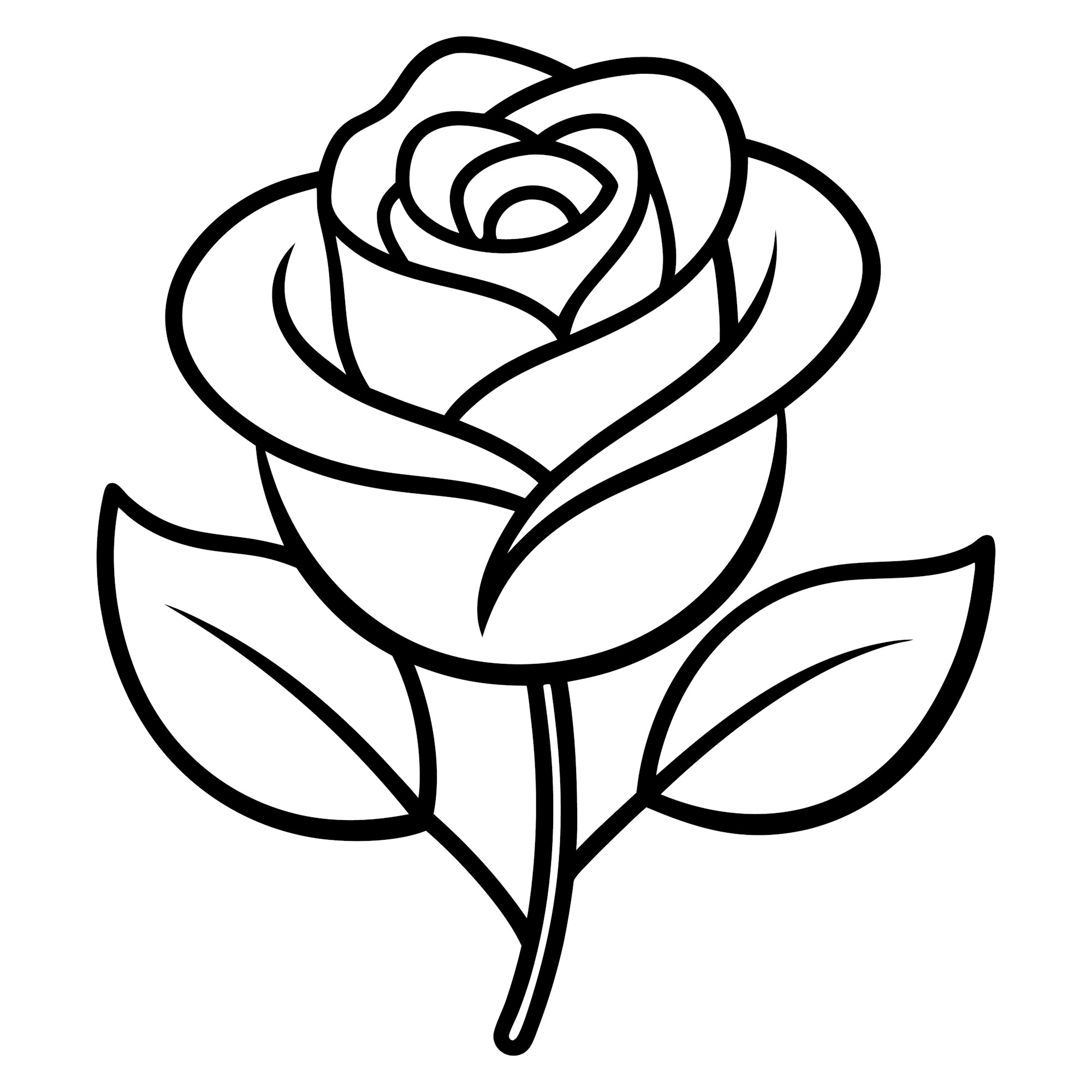
A simple rose with larger spaces is a wonderful starting point for younger children.
Kids can practice coloring individual petals, leaves, and stems without worrying about lots of tiny details. Red and green might be the traditional choice, but there is no reason to stop there.
Try a bright yellow rose with turquoise leaves, a pink-and-purple flower, or a bloom where every petal is a different color.
Children can also decorate the background with sunshine, clouds, butterflies, bees, hearts, or other flowers to transform one rose into an entire garden scene.
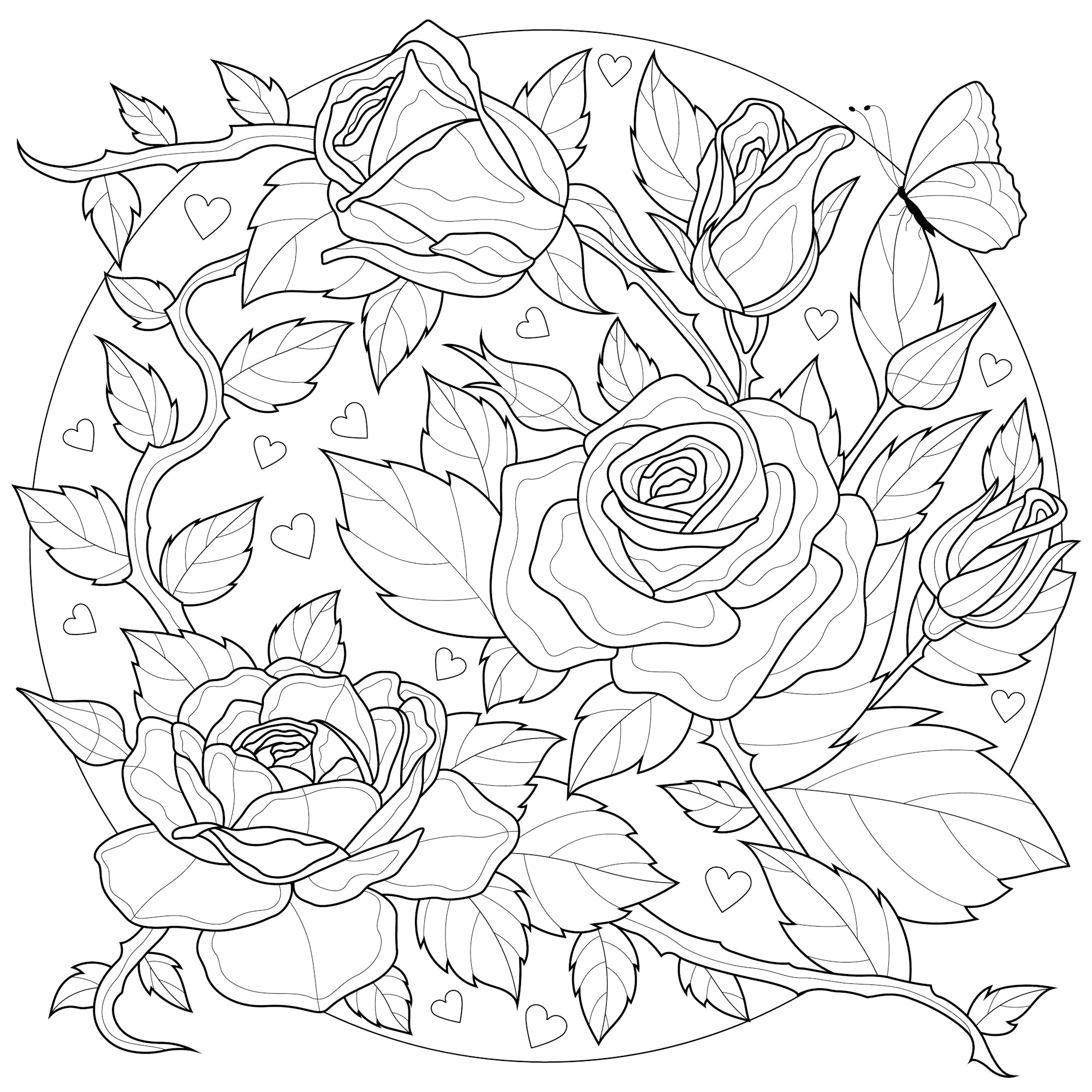
🪟 Stained Glass Rose Coloring Page
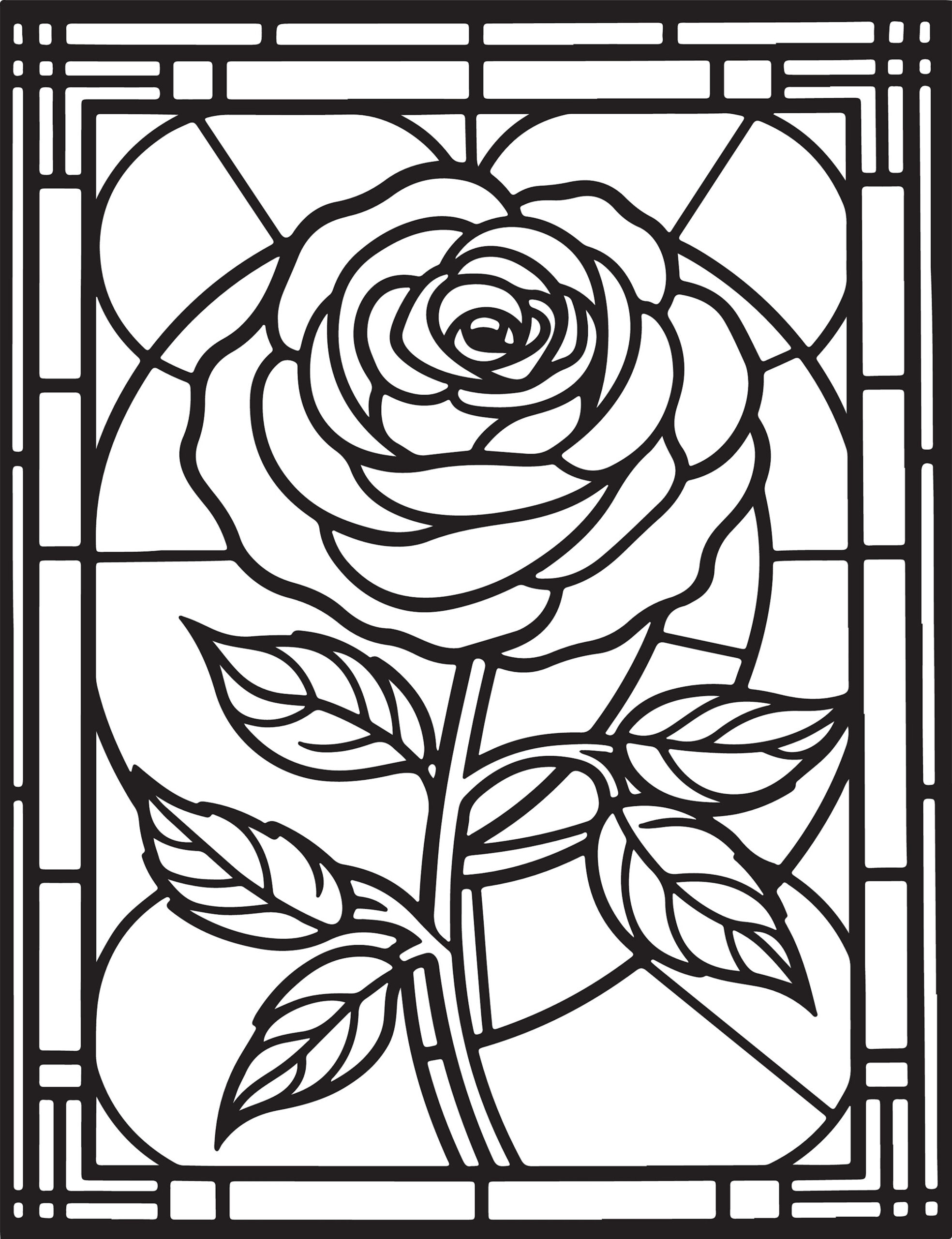
The stained glass rose is especially fun for colorists who enjoy patterns and bold contrasts.
Instead of coloring every petal the same shade, treat each section like a separate piece of colored glass. One petal might be ruby red while another becomes pink, purple, orange, or gold.
You could create a traditional stained-glass palette with jewel tones such as:
- Ruby red
- Sapphire blue
- Emerald green
- Amethyst purple
- Golden yellow
Another option is to use several shades of the same color. Begin with deep burgundy near the center of the rose and gradually transition through red, coral, and pale pink toward the outer petals.
Once all the sections are colored, darker outlines can make the design look even more like a glowing stained-glass window.
🐝 Cute Bee and Rose Coloring Page
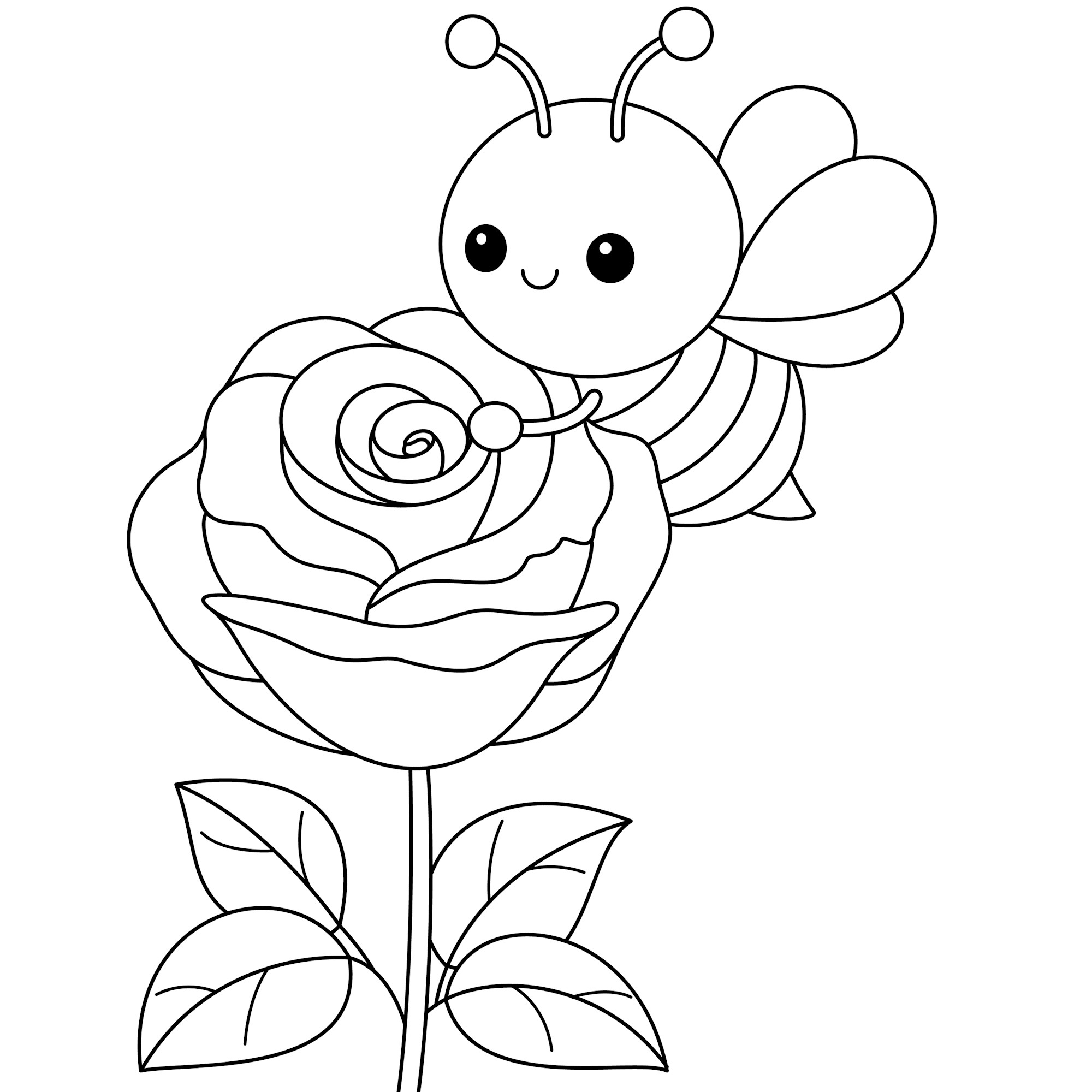
One of the sweetest designs in the collection combines a cute kawaii bee with a rose.
This page is a natural choice for younger children, spring activities, or anyone who enjoys adorable coloring pages. Color the bee in classic yellow and black, give it pastel stripes, or create a completely imaginary rainbow bee.
The rose can coordinate with the bee or stand out in a contrasting color.
You can also expand the scene by drawing additional flowers, buzzing bees, butterflies, clouds, or a sunny garden background.
The picture can even become a simple introduction to conversations about flowers and the insects that visit them.
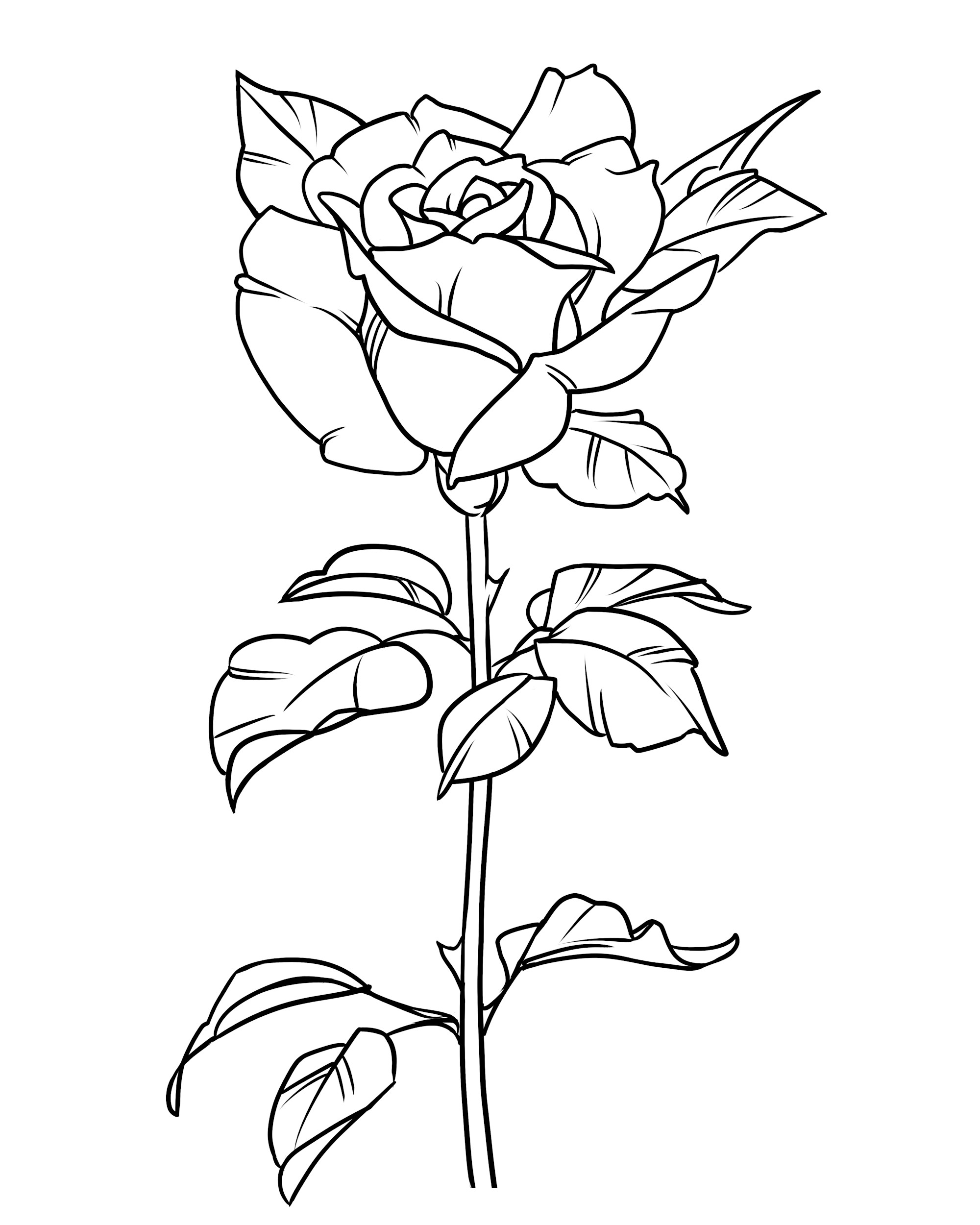
🌿 Rose With Leaves Coloring Page
A rose with its leaves and stem gives you the chance to color more of the plant rather than focusing only on the flower.
Real rose foliage often appears in rich shades of green, but using several greens can make the picture much more interesting. Try darker green along the edges or veins of the leaves and lighter green where you imagine sunlight hitting the plant.
Then choose a contrasting color for the flower.
Red petals against green leaves create the classic rose look, while yellow, peach, cream, pink, orange, or purple can completely change the mood.
Older kids and adults can also experiment with shading individual petals to make the flower appear more three-dimensional.
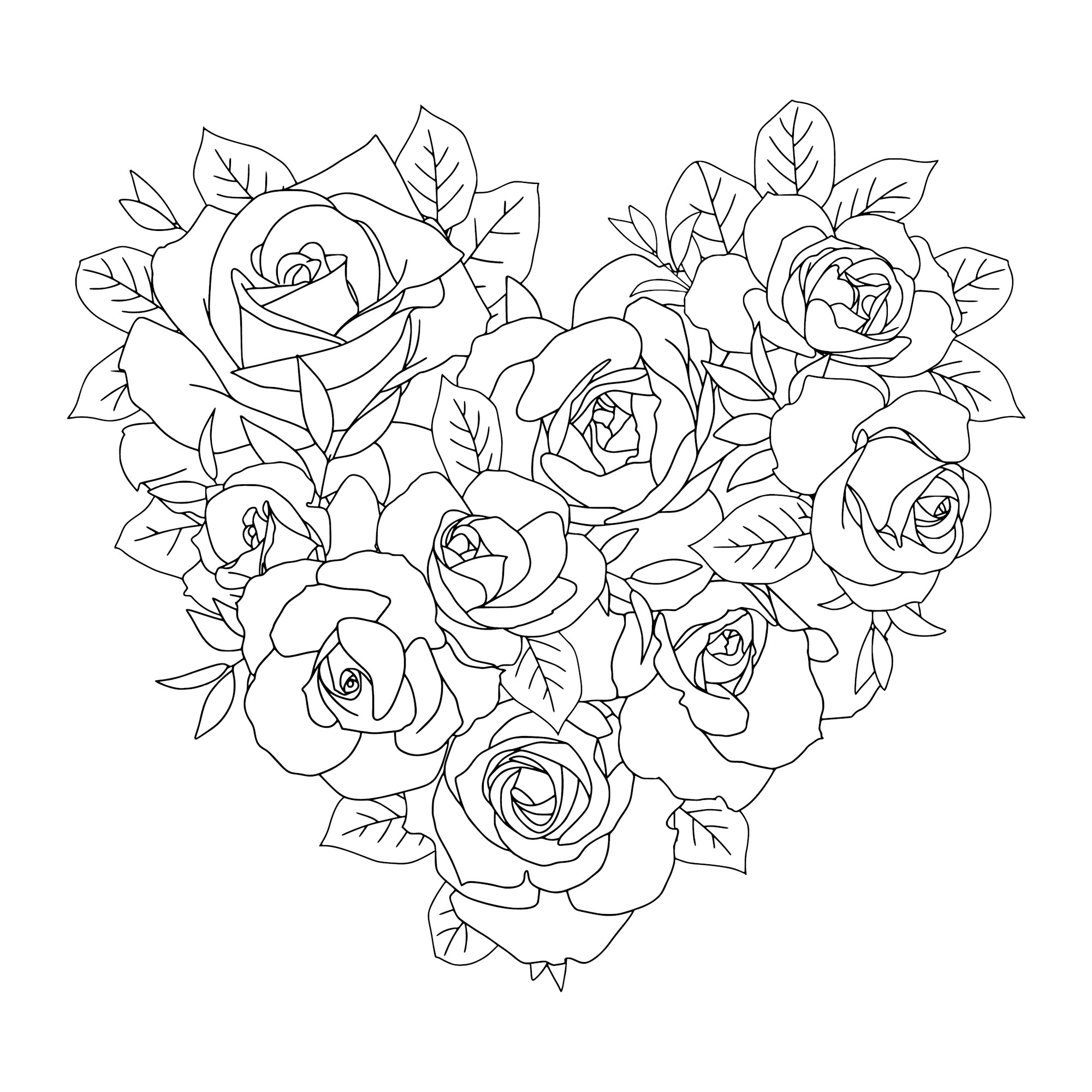
❤️ Heart Bouquet of Roses Coloring Page
Roses and hearts make a natural combination, which makes the heart bouquet of roses a lovely page for Valentine’s Day, Mother’s Day, anniversaries, birthdays, or simply creating something pretty for someone you care about.
Try filling the bouquet with several different colors rather than making every rose identical.
You could use:
- Red and pink for a romantic bouquet
- Pink, lavender, and cream for a softer look
- Yellow and orange for something sunny
- Purple and blue for a fantasy bouquet
- Every color of the rainbow for a cheerful design
Once finished, a rose bouquet coloring page can become a homemade card or a piece of framed artwork.
🌸 Classic Rose Flowers to Color
The classic rose flower designs give you plenty of petals to work with.
Roses can look especially beautiful when you avoid using one flat color across the entire bloom. Choose a main shade and then add darker areas between overlapping petals and lighter areas along their edges.
For example, a red rose might include burgundy, crimson, bright red, coral, and even touches of pale pink.
You can use the same idea with purple, yellow, peach, or pink roses.
The more petals a design has, the more opportunities there are to experiment with subtle changes in color.
🌈 What Colors Can Roses Be?
Garden roses come in a remarkable assortment of colors, including reds, pinks, yellows, oranges, peaches, creams, whites, and many shades in between.
That makes them especially easy to personalize when coloring.
Try one of these palettes:
- Classic Rose: red, burgundy, and deep green
- Blushing Garden: pale pink, rose pink, cream, and sage
- Sunshine Rose: yellow, gold, peach, and green
- Romantic Garden: lavender, dusty pink, cream, and violet
- Sunset Rose: orange, coral, pink, and yellow
- Fantasy Rose: turquoise, purple, blue, silver, and pink
- Rainbow Rose: red, orange, yellow, green, blue, and violet
You can also change colors from petal to petal or blend several shades together within the same flower.
✏️ How to Shade a Rose
Roses are excellent flowers for practicing basic shading because their overlapping petals naturally create areas of light and shadow.
Begin by coloring the entire petal lightly. Then add a darker version of the same color close to places where petals overlap.
Keep the outer or raised parts slightly lighter.
For example, if you are coloring a pink rose, begin with pale pink across each petal. Add darker rose pink near the folds and central areas, then blend the colors together.
Colored pencils work especially well for this technique because colors can be layered gradually.
There is no need to make the shading perfect. Even a small difference between light and dark areas can make the flower seem much more dimensional.
🌺 Design a Fantasy Rose
A coloring page does not need to follow nature.
Imagine a rose growing in a magical garden and decide what it might look like.
Perhaps the petals change from midnight blue to silver. Maybe the flower is rainbow-colored, glows in the dark, or has golden leaves.
Try adding:
- Stars
- Hearts
- Polka dots
- Stripes
- Sparkles
- Swirls
- Rainbow petals
- Metallic details
You could even draw tiny fairies, butterflies, or magical creatures around the finished flower.
This can be especially fun after coloring one rose realistically. Print another copy and see how different you can make it.
🌱 A Few Fun Rose Facts
Roses belong to the botanical genus Rosa and the rose family, Rosaceae. There are hundreds of rose species as well as thousands of cultivated varieties created by generations of gardeners and plant breeders.
Roses also come in many different forms. Some grow as compact shrubs, while others climb over walls, fences, arches, and trellises. Miniature roses can even be grown in containers.
Although the flowers receive most of the attention, rose plants also have leaves, prickly stems, and sometimes fruits known as rose hips.
Roses have been cultivated for thousands of years and have become some of the world’s most recognizable garden and cut flowers.
🍃 Learn the Parts of a Rose
A rose coloring page can also become a simple plant-learning activity.
Ask children to identify different parts of the plant, including:
- Flower
- Petals
- Stem
- Leaves
- Buds
- Prickles
Some rose coloring pages show only the flower, while others include much more of the plant.
After coloring, compare the drawing with a photograph or a real rose. Notice how the petals overlap, how leaves are arranged along the stem, and how colors change from the center of a bloom toward its edges.
🌹 Create Your Own Rose Garden
One rose is beautiful, but why stop there?
Use a blank sheet of paper to expand the coloring page into an entire rose garden. Draw bushes filled with flowers, a garden path, an arch covered in climbing roses, a bench, butterflies, birds, and perhaps a little fountain.
Every rose bush can have a different color.
You might create one area filled with red roses, another with yellow flowers, and a third overflowing with pink and lavender blossoms.
You could even add a mysterious gate leading into a secret garden.
💐 Design a Rose Bouquet
Another easy activity is to use the coloring pages as inspiration for your own bouquet.
Draw several roses together and add other flowers, leaves, ribbons, and greenery.
Then decide who the bouquet is for.
It could be a birthday bouquet, Mother’s Day gift, Valentine’s Day surprise, teacher thank-you, or simply an imaginary arrangement designed around your favorite colors.
Kids can also write a message underneath their bouquet and turn the finished artwork into a card.
💕 Rose Coloring Pages for Valentine’s Day
Roses are closely associated with Valentine’s Day, making these printables an easy February activity.
The heart-shaped rose bouquet is an obvious choice, but any of the rose pages can be transformed into Valentine artwork.
Use reds, pinks, purples, and white, then add hearts around the flowers.
Children could write:
Happy Valentine’s Day!
or add their own message before giving the finished page to a parent, grandparent, teacher, friend, or classmate.
🌷 Rose Coloring Pages for Spring
Roses also fit beautifully into spring and garden themes.
Pair the rose pages with other flower, plant, butterfly, or garden printables for a larger nature activity.
Children can color several different flowers and compare their shapes. They might notice that some flowers have large individual petals while a rose can contain many overlapping layers.
A collection of completed flower pages can also become a colorful spring bulletin board or homemade botanical book.
🏫 Rose Coloring Pages for Classrooms
Printable roses can work well for quiet classroom activities, spring lessons, art centers, nature studies, and holiday projects.
Teachers could use them for:
- Spring coloring activities
- Flower lessons
- Plant units
- Valentine’s Day projects
- Mother’s Day crafts
- Early-finisher activities
- Nature-study notebooks
- Bulletin-board decorations
- Homemade cards
- Creative writing prompts
Older students can experiment with shading and color theory, while younger children can simply enjoy filling the petals with their favorite colors.
📖 Turn Your Rose Into a Story
Flowers can inspire stories too.
Imagine that your rose grows in a magical garden. Who planted it? Why is it special? Does it bloom only at night? Does the bee visiting it know a secret?
Maybe every rose in the garden grants a different wish.
Children can name their flower, color it, and write a few sentences describing where it grows and what makes it unusual.
The stained-glass rose could even belong in the window of an imaginary castle, while the heart bouquet might be part of a story about a mysterious gift.
✂️ Rose Coloring Page Crafts
Once a rose is finished, there are plenty of ways to use it.
Try turning completed pages into:
- Homemade cards
- Valentine’s Day decorations
- Mother’s Day gifts
- Bookmarks
- Floral collages
- Scrapbook decorations
- Classroom displays
- Garden journals
- Framed artwork
- Gift tags
Several rose designs can also be cut out and arranged together on a larger sheet of paper to make one enormous paper bouquet.
Add a ribbon at the bottom and you have flowers that never wilt.
🖨️ How to Use Your Rose Coloring Pages
Choose the rose design you like best and print it at home or in the classroom.
Crayons are excellent for younger children and larger designs. Colored pencils are especially useful for layered petals and fine details, while markers can create bold, vivid flowers.
Regular printer paper is fine for most coloring. If you plan to use paint, markers, glitter, glue, or other craft materials, heavier paper may work better.
Then choose your colors and let the garden begin to grow.
🌹 Let Your Creativity Bloom
From a simple rose for kids to stained-glass flowers, kawaii bees, leafy botanical designs, heart-shaped bouquets, and classic rose blossoms, this collection offers plenty of ways to enjoy one of the world’s most familiar flowers.
Color a traditional red rose, experiment with soft pastels, practice shading individual petals, or create a flower that could never exist outside your imagination.
Choose your favorite printable, gather your art supplies, and let every petal become a new opportunity to create.
🔗 Related Articles
- Coloring Pages of Flowers
- Coloring Pages of Gardens
- Coloring Pages of Plants
- Nature Coloring Pages
- “Love” Heart & Flowers Coloring Page
- Spring Coloring Pages
📚 Sources
- Royal Botanic Gardens, Kew — Roses
- Royal Horticultural Society — Roses
- Royal Horticultural Society — How to Grow Roses