Coloring Pages of Volcanoes: Free Printable Volcano Coloring Pages for Kids
Get ready for an explosive coloring adventure with our coloring pages of volcanoes! Volcanoes are some of the most dramatic features on Earth, with towering mountains, glowing lava, billowing clouds, rocky islands, and tropical landscapes all providing wonderful opportunities for color.
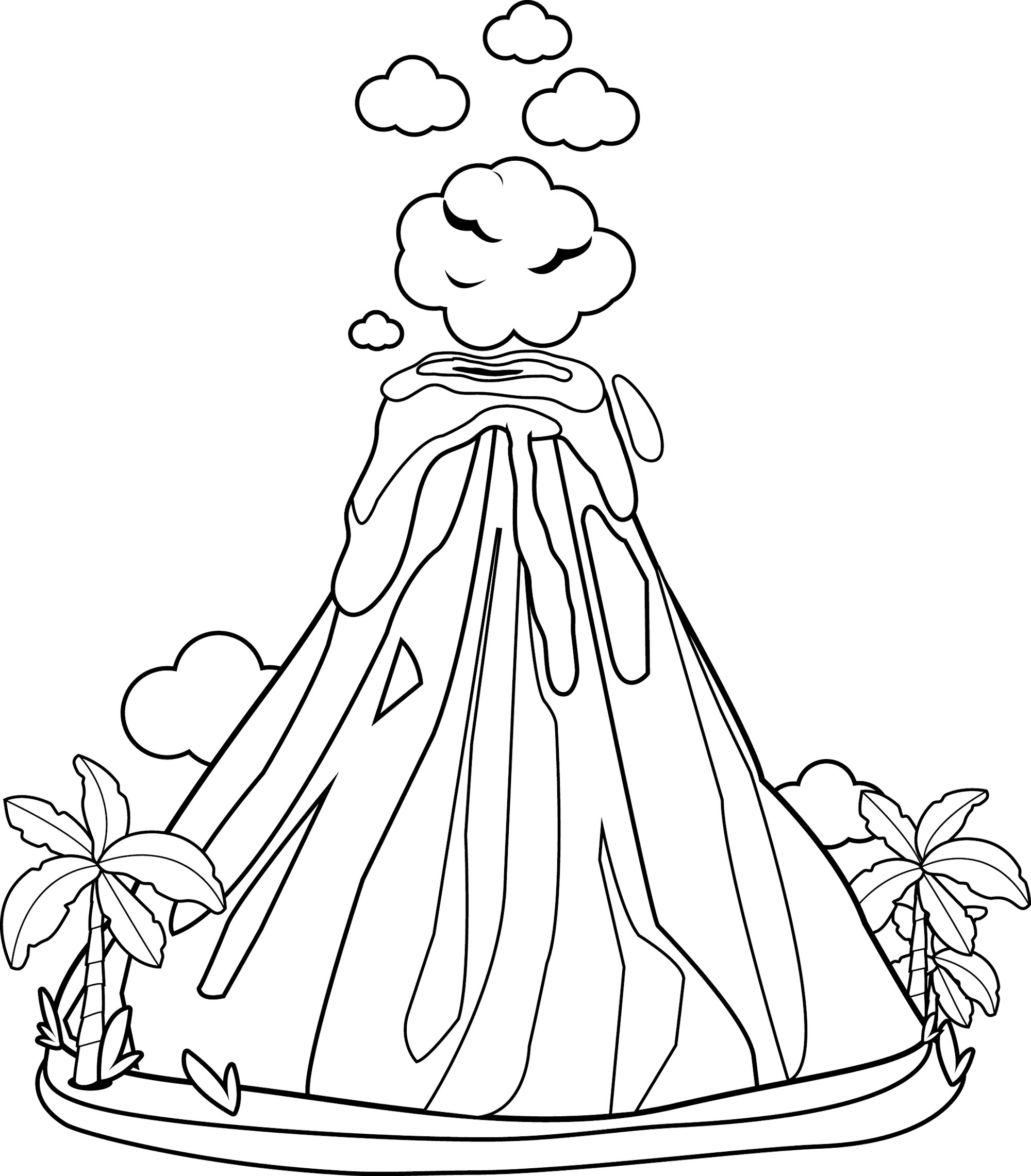
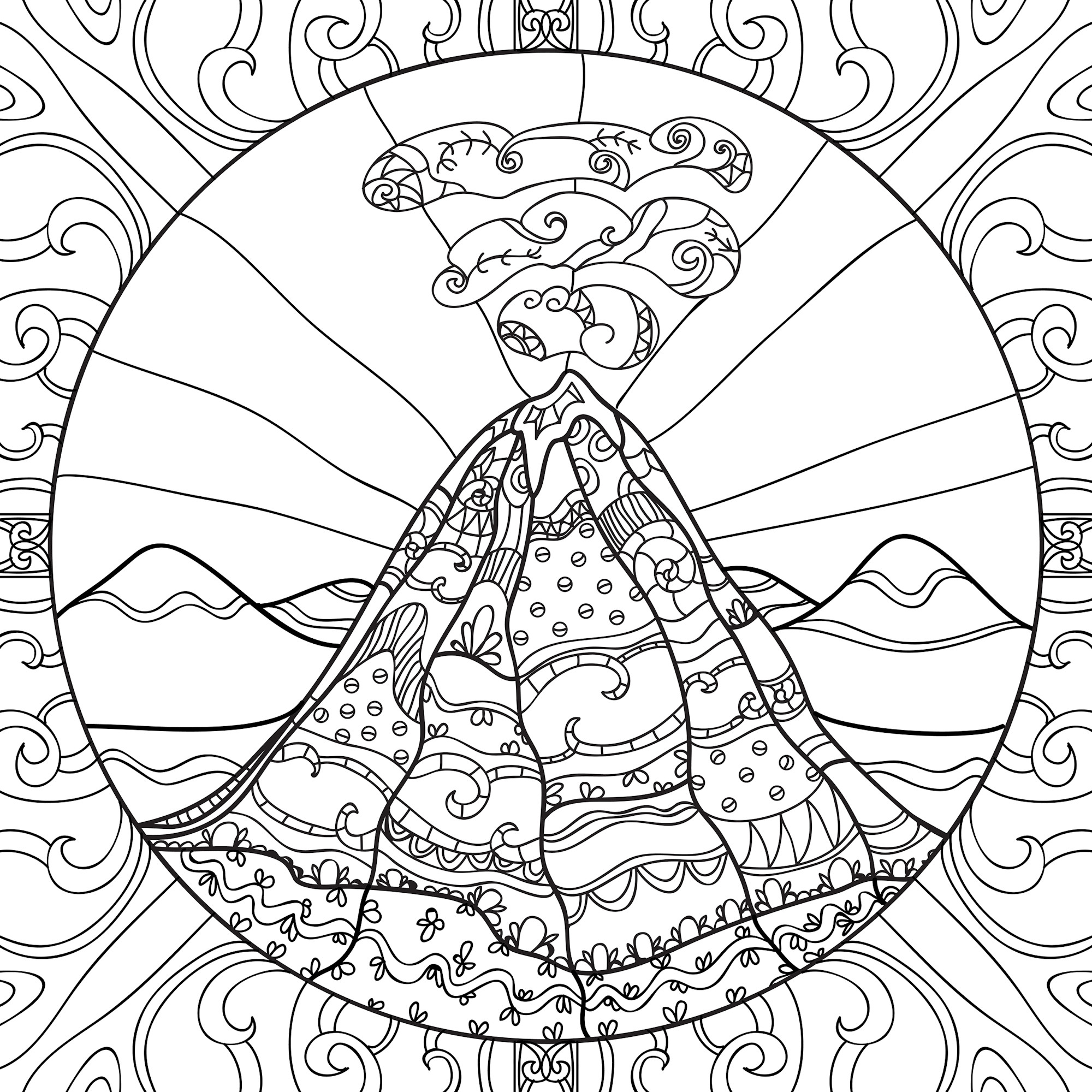
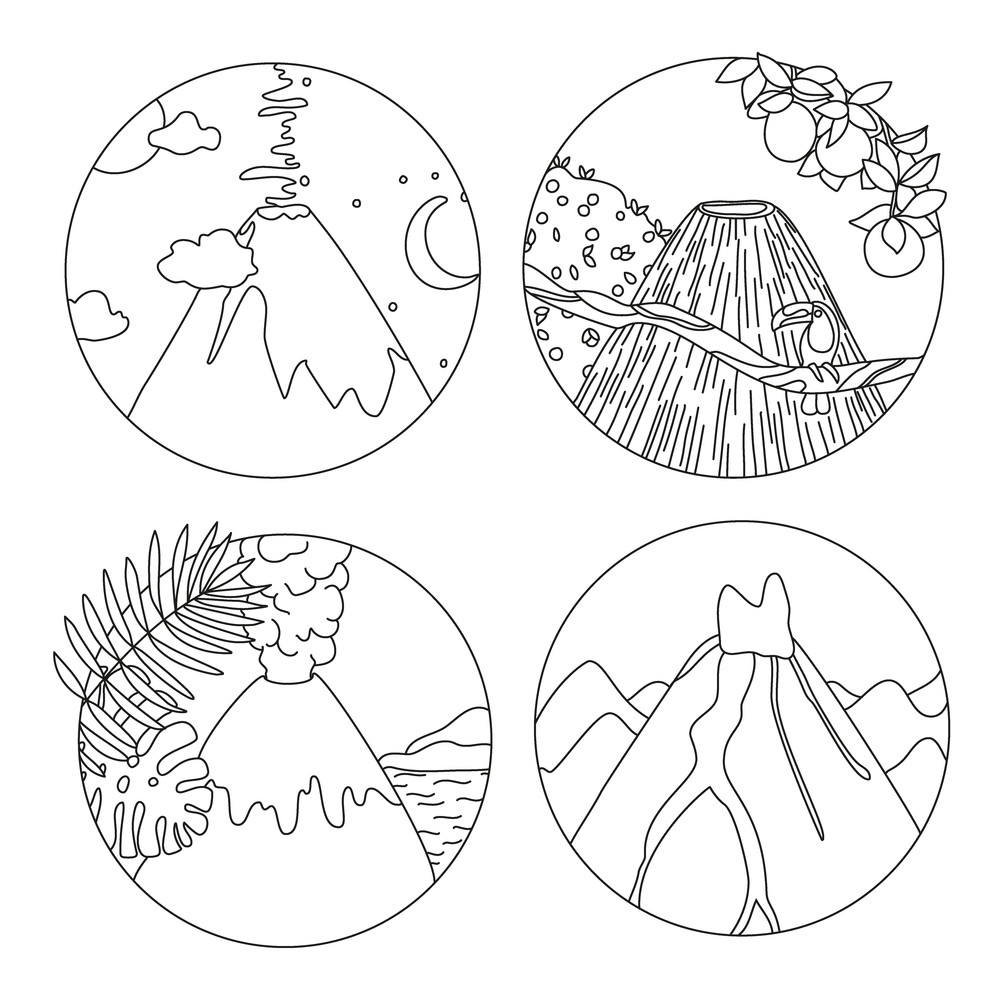
This collection includes several different ways to explore the volcanic world. You’ll find a classic erupting volcano, a volcano rising from an island, an abstract volcano design filled with patterns, and a beautiful landscape where volcanoes rise behind tropical plants.
Whether you are learning about volcanoes for a science lesson or simply want an exciting nature picture to color, grab your crayons, markers, or colored pencils and get ready to explore the fiery side of our planet.
🌋 Explore Our Volcano Coloring Pages
Volcanoes can create some of the most dramatic landscapes in nature, and these coloring pages capture several different sides of them.
One picture focuses on the familiar cone-shaped volcano many children imagine when they hear the word “volcano.” Another places an erupting volcano on an island surrounded by water. There is also a decorative abstract volcano design that invites creative color combinations, along with a tropical scene featuring volcanoes surrounded by lush vegetation.
That variety means you can approach each picture differently. One page might become a fiery eruption filled with reds and oranges, while another could become a peaceful island landscape surrounded by brilliant blue water and green tropical plants.
For even more outdoor scenes, explore our Nature Coloring Pages.
🔥 Color an Erupting Volcano
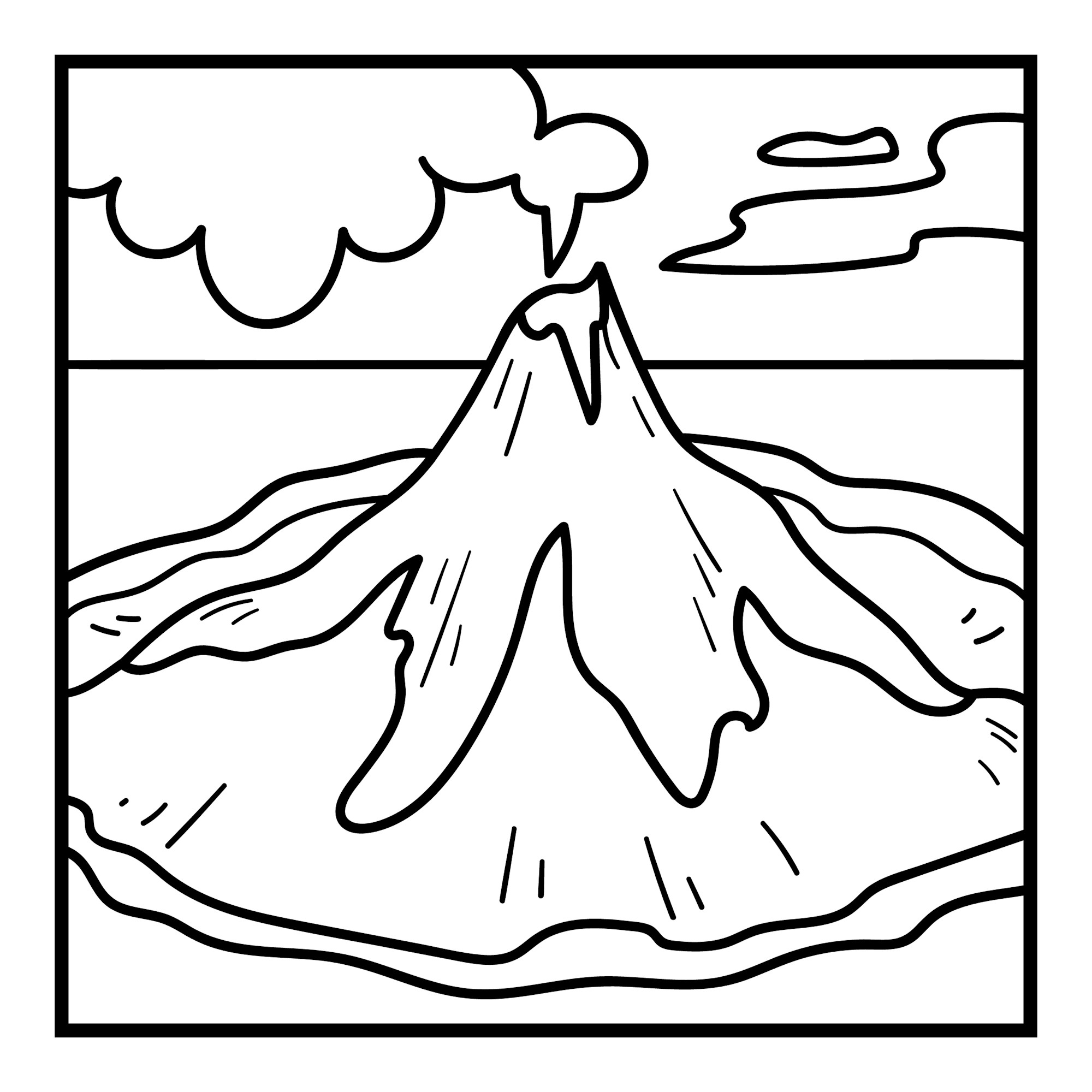
Nothing says “volcano” quite like glowing lava spilling down the side of a mountain.
An erupting volcano page gives kids plenty of opportunities to experiment with strong, dramatic colors. Lava can be colored in bright yellow near its hottest-looking areas, transitioning through orange and red as it moves across the landscape.
The surrounding rock can provide contrast with charcoal gray, black, brown, or deep reddish tones. An ash or eruption cloud can be shaded with gray, dark blue, purple, or even touches of brown.
For a nighttime eruption, color the sky deep navy or black and let the bright lava become the centerpiece of the picture. During the day, try blue skies and white or gray clouds above the eruption.
You can also add little glowing sparks or pieces of volcanic material around the opening of the volcano.
🌍 What Makes a Volcano Erupt?
A volcano provides an easy introduction to some fascinating Earth science.
Deep beneath Earth’s surface, temperatures can be hot enough for some rock to melt and form magma. Magma can rise through the surrounding rock and collect beneath volcanic areas. When magma reaches Earth’s surface during an eruption, it is called lava.
Not every volcanic eruption looks the same. Some eruptions produce flowing lava, while others can be much more explosive and send ash, gases, and pieces of rock into the air.
That makes volcano coloring pages especially useful for children who are studying geology, Earth science, mountains, natural hazards, or the structure of our planet.
For more learning-focused printables, visit our Educational Coloring Pages & Activities.
🏝️ Create a Volcanic Island
One of the pages in this collection features a volcano erupting on an island, combining two especially fun subjects to color: fiery lava and sparkling water.
Begin with the volcano itself. Use earthy brown, black, charcoal, and gray for the rocky slopes. Then make the lava stand out with yellow, orange, and red.
The surrounding ocean can use several shades rather than just one blue. Try pale turquoise near the shore, medium blue farther out, and deeper navy toward the horizon.
You could also add:
- White foam around the shoreline
- Palm trees
- Tropical flowers
- Birds
- Clouds
- Fish in the water
- A colorful sunset
- Small nearby islands
For more seaside scenery, continue your coloring adventure with our Coloring Pages of the Beach.
🌴 Volcanoes and Tropical Plants
Volcanic landscapes are not always barren expanses of dark rock.
One of the most beautiful pictures in this collection combines volcanoes with lush tropical vegetation. That contrast creates an especially interesting coloring page because fiery and earthy volcano colors can sit alongside vibrant greens, flowers, and foliage.
Try coloring the distant volcanoes in brown, gray, or muted purple. Then use several shades of green for the plants in the foreground.
Instead of coloring every leaf exactly the same, experiment with:
- Lime green
- Fern green
- Olive
- Emerald
- Forest green
- Blue-green
- Yellow-green
Adding different shades gives the plants more depth and makes the volcanic landscape feel much richer.
If you enjoy botanical scenes, our Coloring Pages of Plants have even more leaves, flowers, trees, houseplants, and nature-inspired designs.
🎨 Try the Abstract Volcano Coloring Page
Not every volcano picture has to look realistic.
The abstract volcano design in this collection is perfect for experimenting with patterns and unexpected colors. Instead of trying to reproduce a real volcanic landscape, think of the page as a piece of decorative artwork inspired by the shapes of lava, mountains, and eruptions.
You could create a warm palette using:
- Crimson
- Orange
- Yellow
- Burgundy
- Rust
- Gold
Or turn the entire scene into a cool fantasy volcano with turquoise, purple, navy, lavender, and icy blue.
Another idea is to give every section of the pattern a different color. Use rainbow shades, alternating warm and cool tones, or a limited palette of three or four favorite colors.
Abstract coloring pages are especially good for older kids and adults who enjoy relaxing with patterns rather than trying to make everything look realistic.
🏔️ Volcanoes Come in Different Shapes
The classic coloring-book volcano is usually drawn as a tall cone, but real volcanoes come in several forms.
Stratovolcanoes, also called composite volcanoes, often form the tall, steep-sided mountain shapes that many people associate with volcanoes. They are built from layers of volcanic material accumulated over time.
Shield volcanoes have much broader, gentler slopes. Their shape develops as repeated lava flows spread outward over large areas. Many famous Hawaiian volcanoes are shield volcanoes.
Cinder cones tend to be smaller. They form as pieces of volcanic material accumulate around an eruptive opening or vent.
You don’t need to identify the exact type shown in every coloring picture. Simply noticing that volcanoes can have different shapes is a great first step toward learning more about geology.
🧡 What Color Is Lava?
Bright red is probably the color most strongly associated with lava, but a good lava picture can include several colors.
Very hot glowing material may appear yellow, orange, or brilliant red, while cooling material can become darker red, brown, gray, and eventually black.
For a fun coloring effect, begin with yellow through the middle of a lava flow. Add orange around the yellow, followed by red along the outside. Dark brown, gray, or black can represent cooler rock around the edges.
This creates the illusion that the lava is glowing from within.
You can also add highlights with pale yellow or leave a few small white areas if you want the hottest sections to look especially bright.
☁️ Coloring Volcanic Clouds
The cloud rising above an erupting volcano gives you another chance to experiment with shading.
Instead of filling the entire cloud with one flat gray, try combining several shades. Use pale gray around the outside, medium gray through the center, and darker charcoal closer to the volcano.
Purple, brown, or blue-gray can add even more dimension.
For a very dramatic picture, make the sky behind the cloud lighter so the eruption plume stands out. Alternatively, place the eruption against a colorful sunset filled with orange, pink, purple, and gold.
The great thing about coloring is that the scene doesn’t need to match a photograph. You can exaggerate the colors as much as you like.
🌈 Make a Rainbow Volcano
Who says volcanoes have to be brown, gray, and red?
A coloring page is a perfect place to invent a completely imaginary volcano.
Try:
- Rainbow lava
- Purple mountains
- Pink eruption clouds
- Turquoise rocks
- Blue lava
- Golden volcanic islands
- Multicolored tropical plants
- A rainbow stretching over the crater
Younger children may especially enjoy turning the volcano into something bright and whimsical rather than frightening.
Continue the colorful theme with our Coloring Pages of Rainbows.
🦖 Add Dinosaurs to Your Volcano Scene
Volcanoes and dinosaurs are commonly paired together in prehistoric artwork, movies, toys, and children’s activities, making them a fun combination for imaginative coloring.
After finishing your volcano, try drawing a dinosaur into the landscape. Add a long-necked dinosaur wandering near tropical plants, a Triceratops crossing the foreground, or a tiny dinosaur watching the distant mountain.
You could even print one of our Coloring Pages of Dinosaurs and create a matching prehistoric color palette for both pages.
It is worth remembering that dinosaurs lived across a huge span of geological time, so the classic scene of every type of dinosaur standing beside an erupting volcano is more imaginative than scientific. For a coloring activity, though, prehistoric creativity is part of the fun.
🧠 Turn Volcano Coloring Into a Science Activity
These pages can easily become part of a classroom, homeschool, or at-home science activity.
After coloring, talk about some simple volcano vocabulary:
Magma is molten or partially molten material beneath Earth’s surface.
Lava is magma that has reached the surface.
A vent is an opening through which volcanic material can emerge.
A crater is a depression that may form around a volcanic vent.
Volcanic ash consists of small fragments of material produced during explosive volcanic activity. Despite its name, it is not the same soft material created by burning paper or wood.
Younger children can simply learn the difference between magma and lava. Older students may enjoy exploring volcano types, plate tectonics, volcanic hazards, or famous volcanoes around the world.
✏️ Label Your Own Volcano
Another easy learning activity is to transform the coloring sheet into a simple volcano diagram.
After finishing the picture, add labels for features such as:
- Volcano
- Crater
- Lava
- Eruption cloud
- Vent
- Mountain slope
Older children could draw a cross-section of a volcano on a separate sheet of paper and label additional underground features.
It doesn’t have to become a complicated geology lesson. Even learning two or three new terms can turn a fun coloring activity into useful science practice.
✂️ Volcano Crafts and Activities
Once the coloring page is finished, there are plenty of ways to continue the volcano theme.
Try using your completed picture to create:
- A volcano science notebook
- A geology poster
- A classroom bulletin board
- A homemade volcano book
- A volcanic island collage
- A prehistoric dinosaur scene
- A nature scrapbook
- A volcano fact sheet
- A paper mountain landscape
- A story about an imaginary island
Kids could also invent their own volcano and give it a name. Where is it located? Is it on an island, in the mountains, or in a fantasy land? Does anything live nearby?
Draw the imaginary volcano and write a short story about it.
🖍️ Best Coloring Supplies for Volcano Pages
Crayons are a great choice for younger children because they work especially well across large areas such as mountains, skies, oceans, and lava flows.
Colored pencils are useful when a design includes smaller plants, patterns, rocks, or details. They also make it easier to blend several shades together.
Markers can produce the intense reds, oranges, yellows, greens, and blues that work beautifully in volcano scenes. If using markers, slightly heavier paper may help prevent ink from bleeding through.
Older colorists can also experiment with layering. Start with a light color and gradually add darker shades around rocks, lava flows, clouds, or leaves.
🖨️ How to Use These Free Volcano Coloring Pages
Choose the volcano design you would like to color and print your favorite page. Regular printer paper works well with crayons and colored pencils, while heavier paper can be useful for markers or craft projects.
Then decide what kind of volcanic world you want to create.
Your volcano might be a realistic rocky mountain with glowing orange lava. It might rise from a tropical island surrounded by turquoise water. It could erupt beneath a dark night sky or sit peacefully behind a jungle filled with brilliant green plants.
Or forget realism completely and create a pink-and-purple volcano pouring rainbow lava into a bright blue sea.
The choice is yours.
🌋 Let Your Creativity Erupt
Volcanoes combine so many exciting coloring elements in one picture: mountains, rocks, lava, clouds, oceans, tropical vegetation, patterns, and dramatic skies.
That makes these free printable volcano coloring pages fun for children who love science and nature as well as anyone who simply enjoys creating colorful landscapes.
Choose your favorite volcano, gather your coloring supplies, and let your imagination erupt.
🔗 Related Articles
- Nature Coloring Pages
- Educational Coloring Pages & Activities
- Coloring Pages of Dinosaurs
- Coloring Pages of Plants
- Coloring Pages of the Beach
- Coloring Pages of Rainbows
📚 Sources
- U.S. Geological Survey — About Volcanoes
- U.S. Geological Survey — How Do Volcanoes Erupt?
- U.S. Geological Survey — Principal Types of Volcanoes
- U.S. Geological Survey — Volcano Hazards Program
- Smithsonian Institution — Global Volcanism Program